When you buy a vehicle, you own it completely; that includes the right to diagnose, understand, and repair it, using any tool and any technician you choose, without asking your local dealership for permission.
That firm belief is why YOUCANIC was founded and still operates today, going far beyond just selling a diagnostic tool. Our platform was built to educate and empower through repair guides, how-to videos, and step-by-step tutorials, covering thousands of procedures across hundreds of different vehicle makes and models. This information exists today because a tool without the right knowledge only solves half the problem. A vehicle owner who understands what their scanner is telling them and knows what to do about it is no longer wholly dependent on overpriced dealership maintenance and repair costs. This idea shapes every product decision we make, every piece of content we publish, and every position we take as the automotive industry continues to move in the opposite direction, restricting what vehicle owners can do with their own property.
What This Movement Means in Practice:
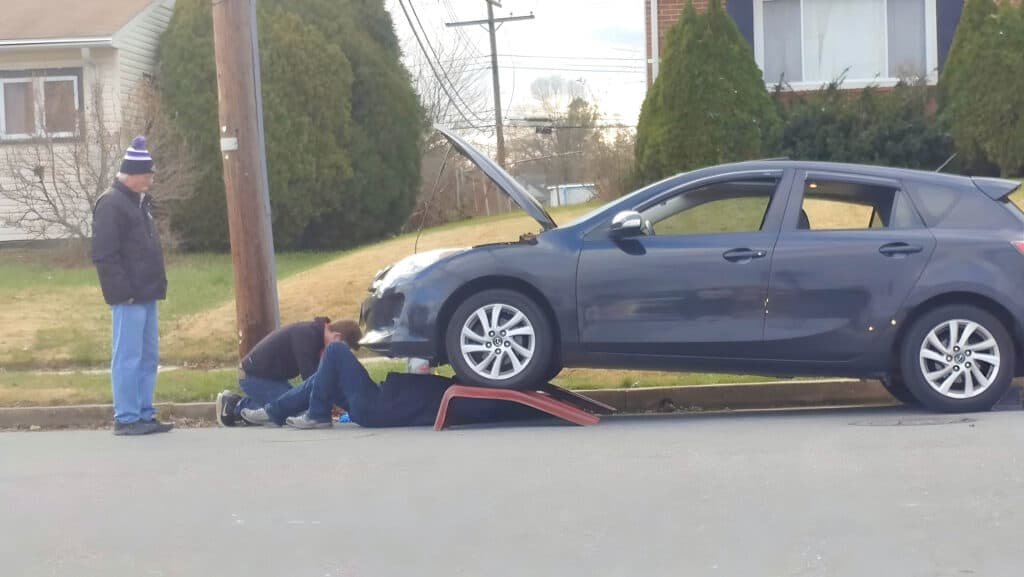
The Right to repair is not some abstract political concept:
You should be able to read and clear your own vehicle’s fault codes. A check engine light is your car’s way of telling you something is wrong. That information belongs to you, not your local dealership, and once the issue is fixed, you should be able to clear those codes on your own. You, with a tool, in your driveway; no dealership intervention required!
You should be able to run your own service procedures. An oil change reset, a TPMS relearn after rotating tires, and a throttle body relearn after cleaning are routine maintenance procedures that any competent tool should be able to perform. Locking these necessary procedures behind a paywall or manufacturer permissions does not benefit the individual car owner.
You should be able to do your own repairs. Replacing brake calipers, clearing ABS fault codes, performing an ABS bleed procedure, and resetting adaptations after a transmission service are all repairs that independent technicians and vehicle owners have done free from dealership control for decades. Blocking these repairs behind authentication systems only makes independent repair more difficult, increasing the need for overpriced dealership service.
You should be able to use any qualified repair shop. The independent repair industry serves millions of Americans who cannot afford the sky-high dealer labor rates or who simply prefer to work with shops they trust. Restricting access to diagnostic tools through manufacturer authorization programs puts independent shops at a major disadvantage and, at the end of the day, only benefits the manufacturer.
Independent repair is a car owner’s right that, in recent years, has been kicked to the curb!

Why We Founded YOUCANIC
In December 2015, we founded YOUCANIC with one conviction: the imbalance of information between dealerships and vehicle owners was unacceptable.
For years now, the auto repair industry has operated on one very simple, yet warped principle: we know, and you don’t. Diagnosis was a black box, and repair estimates were take-it-or-leave-it. A vehicle owner who wanted to understand what was wrong with their car had two options: trust the dealership’s explanation, or find a mechanic they trusted more. Either way, diagnostic information was someone else’s to give or withhold.
Our mission was never just to sell a scanner. It was to eliminate that dependency entirely.
A good scan tool closes the diagnostic gap, but knowledge closes the confidence gap, which is just as important. A vehicle owner who can read a fault code but doesn’t know what it means, doesn’t know if the repair is urgent, and doesn’t know if the issue is something they can resolve themselves. That owner is still dependent on whoever they take their car to, leaving them vulnerable to unnecessary repairs and inflated estimates.
YOUCANIC is fighting to close that gap by making step-by-step repair guides and videos filmed by real mechanics on real vehicles with real problems, covering everything from reading your first fault code to replacing an ABS module for free, on youcanic.com and YouTube. We make it easy for anyone to learn how to fix anything in their car.
YOUCANIC scanners give vehicle owners and independent technicians access to the same depth of diagnostic capability as dealer tools across hundreds of vehicle makes and models, with thousands of active tests, special functions, adaptations, resets, and teach-ins. The extensive repair platform behind it gives users the knowledge to do something with the information the tool provides. This is what genuine owner empowerment looks like: access and understanding that gives users the ability to see what is wrong and take action.
Everything YOUCANIC builds comes back to the same principle: you own your vehicle, you have the right to repair it, and we are here to make sure you have both the tools and the knowledge to exercise that right, no dealership, subscription, or manufacturer permissions required.
The FCA Security Gateway Module: A Case Study in What’s Wrong With Today’s Automotive Industry
The most prominent example of right-to-repair restrictions in the automotive industry today is the FCA Security Gateway Module (SGM), which has been installed on nearly every Stellantis vehicle since 2018, including Jeep, Ram, Dodge, Chrysler, Fiat, and Alfa Romeo.
The SGM acts as a firewall between the OBD-II diagnostic port and the vehicle’s internal networks. Without bypassing it, a scan tool can only read basic emissions codes but can’t clear any fault codes, run bidirectional tests, perform service resets or calibrations, or execute special functions. Without dealership intervention, car owners pretty much can’t do any maintenance on their own cars because everything is blocked by the SGM.
FCA’s justification for this move is cybersecurity. In 2015, security researchers demonstrated a remote hack of a 2014 Jeep Cherokee through its UConnect cellular connection, a real vulnerability that the industry needed to address. FCA cited this event and NHTSA cybersecurity guidance when deploying the SGM on virtually all of their cars, starting in 2018.
The problem is that the hack did not go through the OBD-II port. A scan tool that is physically plugged into the OBD-II port by a person sitting in or next to the vehicle was not the attacker in question. Blocking physical diagnostic tool access does not address remote cellular vulnerabilities; it instead addresses a completely different issue: preventing third-party tools from working freely on FCA vehicles.
Completely cutting off access for tons of independent mechanics and scanner brands would have sparked outrage, so FCA created AutoAuth, a subscription service that lets users fully scan their car for about $40-60 per year, restoring the diagnostic access the SGM took away. Pay the subscription fee, authenticate online, and your scanner works. As long as you keep paying, have a stable internet connection, and don’t experience any server outages that would lock you out of your car for who-knows-how-long, that is.
We do not support AutoAuth, and we never will.
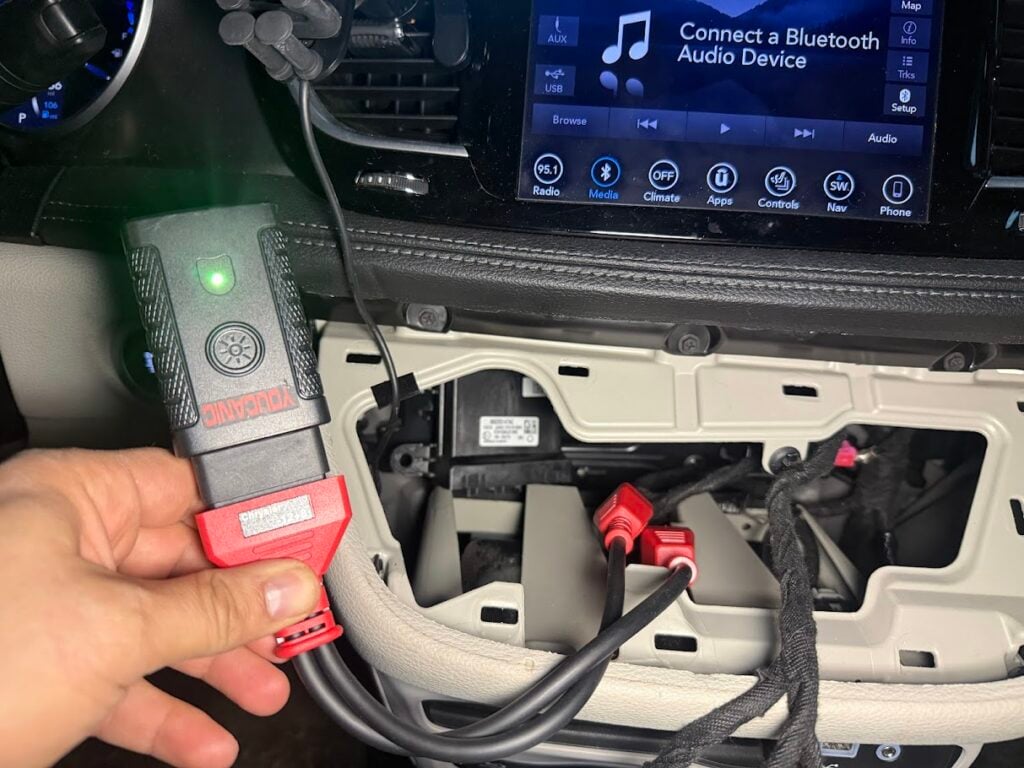
UCAN-II Pro scanners use a physical 12+8 pin adapter to bypass the SGM entirely. You won’t need a subscription, an internet connection, or manufacturer permission for it to work, and the best part: absolutely no visibility to Stellantis. You plug in the adapter, and you have instant access to your vehicle’s diagnostic network. It’s your vehicle, not theirs.
We have written a detailed technical analysis of the SGM, AutoAuth, and the alternative solutions that would have addressed the genuine cybersecurity concerns without restricting owner access. In that article, we also proposed a specific alternative: hard-coding full diagnostic access to be available only when the vehicle is in Park with the engine off, which would make the 2015 attack scenario physically impossible while preserving every legitimate diagnostic use case, at no extra cost and no subscription on the part of the everyday consumer.
That solution was not built because it generates no revenue.
[Read the full analysis: The FCA Security Gateway Module: Why We Use a 12+8 Adapter, Why AutoAuth Is the Wrong Path, and What a Real Safety Solution Would Look Like →]
The Broader Pattern That is Emerging
While SGM is the clearest current example, it is not an isolated incident. SGM was the start of a trend that the automotive industry has been building towards for a long time now.
Telematics data collection: Modern vehicles are rolling computers that generate continuous data on location, driving habits, fuel consumption, and diagnostic events. Who owns that data? In most cases, the manufacturer claims broad rights to collect, use, and monetize it. Vehicle owners often have limited visibility into what is collected and no meaningful control over how it is used.
Over-the-air update control: Manufacturers are now pushing software updates to vehicles remotely, modifying performance characteristics, changing the behavior of systems the owner purchased, and, in extreme cases, enabling or disabling features post-sale. Even though you buy a vehicle because of specific features you like, manufacturers today can just take them away after the fact with little to no notice.
Subscription-gated features: An increasing number of manufacturers have moved toward subscription models for features that were previously one-time purchases: heated seats, advanced driver assistance systems, remote start, and enhanced navigation are all now locked behind an additional paywall. The hardware exists in the vehicle; the owner pays for it in the purchase price, yet access is still locked behind an additional, recurring fee.
Parts authentication: Some manufacturers are now moving toward systems that prevent third-party replacement parts from functioning correctly unless they are registered through the manufacturer’s system. Let’s say an independent shop installs a non-OEM replacement part to resolve a drivability issue in a car; the vehicle’s software may reject or limit its functionality simply because it was not authorized through the OEM parts channel. This can lead to further driveability issues.
In short, your car is a product that the manufacturers continue to control after the sale. Tour car is not your own, and your right to fully own, use, and repair what you have purchased is slowly but surely being taken away.
This is wrong. Vehicle owners should have explicit, legally protected rights to access their vehicle’s diagnostic data, modify their vehicle’s software configuration, use any qualified repair shop, install any compatible replacement part, and perform their own maintenance and repairs without manufacturer interference.
What We Are Doing About It
YOUCANIC is a small company based in Towson, Maryland. We do not have lobbyists or a legal team on retainer for right-to-repair litigation, but we do have a platform and a voice that we will continue to utilize to uplift our growing community of car owners who want the right to repair their own cars.

We build tools that work without manufacturer permission. Our line of YOUCANIC Pro scanners, with the 12+8 adapter included in every order, is a direct expression of this. Every vehicle owner who can diagnose and service their own FCA vehicle without paying Stellantis for access is a small exercise of their right to repair and a small act of rebellion against the manufacturers who take advantage of their customers.
We teach. When someone knows how to use a tool properly, a whole world of possibilities opens up for them. That’s why every repair guide and how-to video we publish is a direct transfer of knowledge from the professional repair world to the vehicle owner, allowing them to break free of dealership dependence. When someone knows how to interpret a fault code, understands what a bidirectional test means, and can follow a step-by-step procedure through to completion, they are no longer dependent on whoever is willing to help them. Our content platform exists to make that knowledge available for free, forever, to anyone who needs it.
We document the specific technical ways in which access restrictions harm vehicle owners. Vague complaints about manufacturer power will never change anything. We are compiling specific, documented examples of how dealership restrictions are only harming consumers, detailing what they aren’t able to do on their own car and how much it costs them in the end.
We are filing a formal complaint with the Federal Trade Commission, highlighting the unfair trade practices of the SGM and AutoAuth systems that are only restricting competition in the independent repair market. We encourage other independent repair professionals and vehicle owners who have been affected to do the same at ftc.gov/complaint.
We support right-to-repair legislation. At the state and federal levels, right-to-repair bills are being introduced, debated, and in some cases passed. We support these efforts and will make our documented position available to legislators and advocates who are building the case for even stronger owner protections.
What You Can Do
If you own a 2018+ FCA/Stellantis vehicle:
You are directly affected by the SGM. You can:
- Use the YOUCANIC UCAN-II Pro with the included 12+8 adapter to restore full diagnostic access to your vehicle
- File a complaint with the FTC at ftc.gov/complaint, describing the specific functions you cannot perform on your own vehicle without a subscription.
- Contact your Congressional representative and ask them to support federal right-to-repair legislation
If you are an independent repair shop:
The SGM and AutoAuth systems put you at a structural disadvantage relative to dealers on every FCA vehicle you service. Your documented experience where you could not perform a repair without paying for manufacturer access is exactly the kind of evidence that the FTC and congressional investigators need.
If you are a vehicle owner of any make:
The trend toward manufacturer-controlled diagnostic access is not limited to FCA. It is the direction the industry as a whole is taking. Pay attention to the right-to-repair legislation in your state, support organizations working on this issue, and simply understand which rights you currently have and which you do not. These are all good starting points.
Our Commitment
We founded YOUCANIC because we believed vehicle owners deserved better. A decade later, that belief has not changed, and the challenges to achieve our goals have only become more specific, more technical, and more urgent.
We will keep building tools that work without manufacturer permission. We will continue to publish our position honestly, even if it creates friction with industry partners and competitors. We will keep bringing up specific, documented cases that highlight how access restrictions harm owners, independent repair, and, frankly, are not justified by the safety arguments used to defend them.
The right to repair what you own is common sense, not some “radical new idea.” We will keep shouting it from the rooftops for as long as we need to.
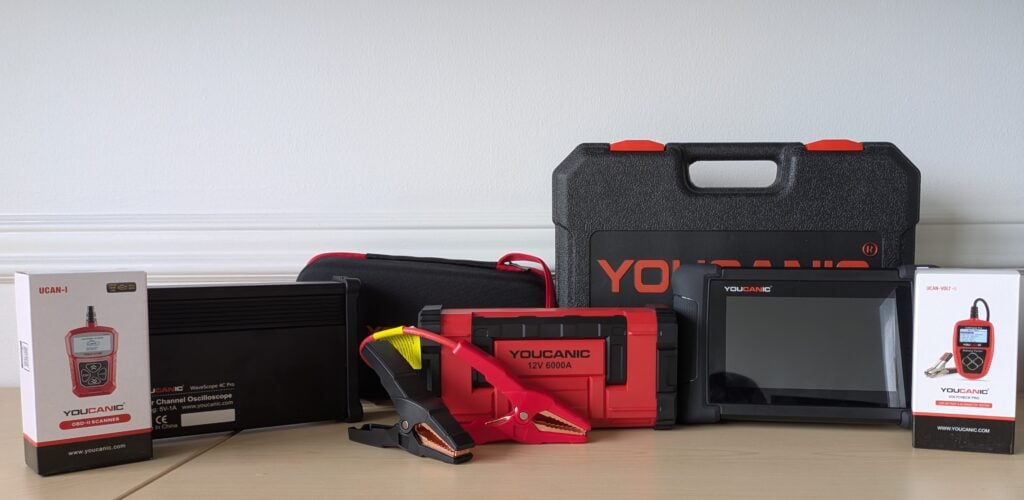
YOUCANIC was founded in December 2015 in Towson, Maryland. We build the UCAN-II Pro full-system diagnostic scanner and operate youcanic.com, a free automotive repair guide platform covering thousands of procedures across 140+ vehicle makes.
Shop the UCAN-II Pro: shop.youcanic.com Free repair guides: youcanic.com FCA SGM full analysis: youcanic.com/fca-security-gateway-module File an FTC complaint: ftc.gov/complaint