
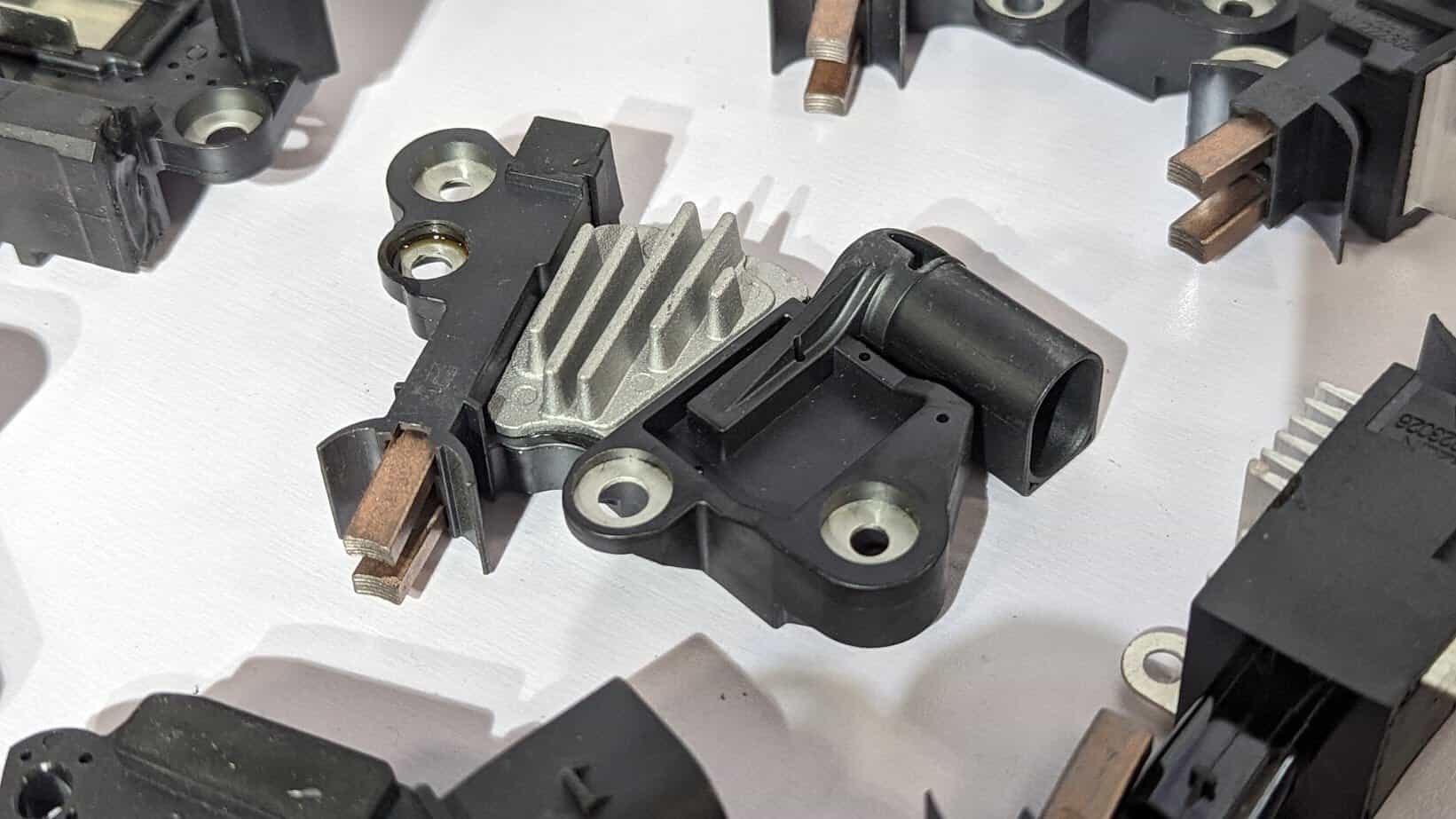
Voltage regulator
📖 YOUCANIC Automotive Glossary
A voltage regulator is an electrical component designed to maintain a consistent and stable output voltage from a vehicle’s charging system, regardless of load conditions, engine speed, or temperature variations. It is typically integrated into the alternator assembly or externally mounted and functions by controlling the electrical current delivered to the rotor field winding. By modulating the field current through electronic switching circuits, the regulator precisely adjusts the alternator’s magnetic field strength, thereby maintaining the charging voltage within a specified range, typically between 13.5 and 14.5 volts for automotive applications.
Modern voltage regulators use advanced electronics—often solid-state semiconductor components—to achieve rapid, precise control and include protective features to prevent overvoltage and undervoltage conditions that could damage sensitive electronic modules and battery systems. When the regulator detects higher than acceptable voltage, it reduces the current supplied to the alternator’s rotor winding, lowering output voltage. In contrast, in low-voltage conditions, it increases current to boost output. Accurate voltage regulation is critical to ensuring reliable battery charging, optimal electrical system performance, and the prevention of premature battery failure or electrical component damage.
« Back to Glossary