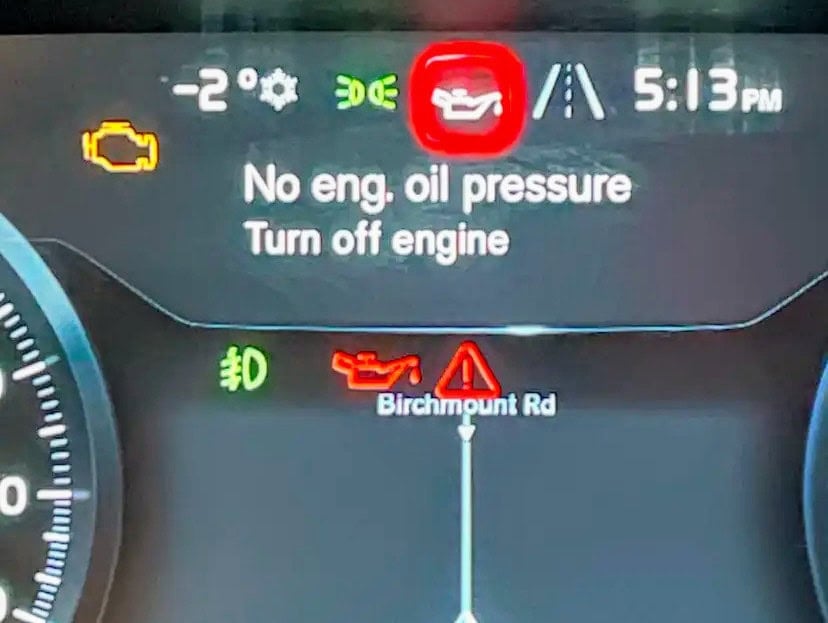
Volvo No Engine Oil Pressure: What it means & How to Fix it

Easy
1-3
When the “Low Engine Oil” warning message appears on the dashboard of your vehicle, it means there is an issue with the oil pressure that requires attention. Ignoring this warning can reduce engine operation and damage your engine over time. It is crucial to diagnose and address the low oil pressure light and warning as soon as possible.
The engine needs oil to lubricate its moving parts so that they do not wear down as quickly. When the “Low Engine Oil Pressure” warning light turns on, it may indicate a faulty sensor or low oil pressure delivery. This must be fixed immediately to prevent dangerous driving conditions and costly repairs.
DO NOT DRIVE or KEEP THE ENGINE RUNNING WITH THE OIL LIGHT ON. PULL OVER, TURN OFF THE ENGINE AND CALL YOUR MECHANIC.
🛠️ Pro Tip: Use an OBD-II scanner to check for error codes related to the issue.

Before taking your car to a mechanic, try these DIY fixes:
If everything is in good condition, the issue may sometimes be caused by faulty wiring or a malfunctioning Engine Control Module (ECM). Seek assistance from an expert.

➡️No. Driving without enough oil pressure can lead to engine overheating.
➡️This is because they have confirmed that the issue is only a faulty sensor, and the ECM is not restricting the engine from starting. If the oil pump is working properly and the oil and oil filter are in good condition, the engine may not overheat. (However, do not attempt this. Use a scanner to diagnose fault codes, take your vehicle to a trusted mechanic, or visit a workshop as soon as possible.)
➡️Yes, because a non-genuine oil filter may not function properly. This can cause the oil filter to clog, blocking the lubrication pathway, or it may fail to filter the engine oil, allowing unfiltered oil to reach the internal components. This can allow foreign particles to circulate and cause engine damage.
➡️Yes, but some vehicles drive it by a chain or gear. In most vehicles, the oil pump is driven by a belt; however, there are a few models where the oil pump is driven by a chain or gear instead.
➡️Yes, but the warning will likely reappear unless a glitch in the system triggers the warning message. If the problem is not simply a glitch, the error message will return, signaling that an actual problem should be resolved as soon as possible.
Volvo Low Engine Oil Pressure message is a critical alert that should never be overlooked, as it may indicate serious underlying engine problems. By systematically troubleshooting, scanning for fault codes, and checking oil pressure, you can quickly diagnose the issue, potentially preventing costly damage and ensuring your Volvo remains safe and reliable. If you are unfamiliar with this issue, do not drive with the oil light on. Call or have a mechanic diagnose the vehicle immediately.
Elbert G. Nonog is an Automotive Technical Writer and Training Manager with over 10 years of experience across major brands including Chevy, MG, Ford, Volkswagen, and Toyota. Rising from technician to leadership roles, Elbert excels at transforming complex automotive concepts into accessible training materials and documentation. His expertise spans conventional and electric vehicle systems, nationwide dealership training, and aftersales operations management. With TESDA certification and pursuing further education from the Technological University of Philippines, Elbert effectively bridges the gap between automotive engineering and practical application for industry professionals and enthusiasts.

Rushit Hila is a dedicated automotive engineer with ASE G1 certification and specialized training from an esteemed Automotive Specialty School. His hands-on experience and technical expertise in advanced diagnostics, system integration, and performance optimization make him a trusted voice in the industry.
Searching...