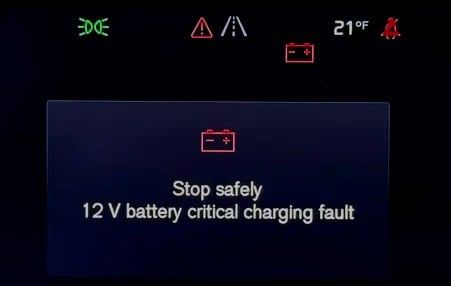
If you see a “stop safely 12V battery critical charging fault” warning message in your Volvo, be that XC60, XC90, S90 or other model, it means an issue with the battery or charging requires attention. Ignoring this warning can lead to sudden stalling while driving. Pulling over to diagnose and address the problem as soon as possible is crucial.
Volvo 12V Battery Critical Charging Fault: Common Causes
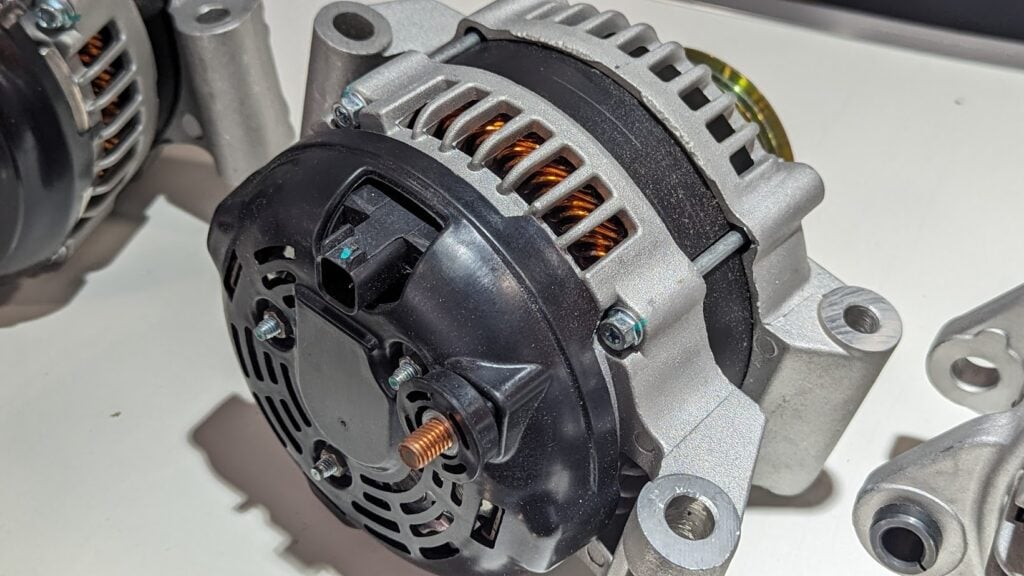
The charging components, notably the alternator in your vehicle, effectively charge the battery, ensuring it delivers ample power to all electrical components. When this fault message appears, it means your battery or the alternator is faulty.
⚠️ Why You Should Fix It As Soon As Possible:
[Safety Risk] – It can cause engine stalling, which is dangerous while driving.
[Performance Issues] – It can cause insufficient power supply, leading to slower response times for electrical components.
[Costly Repairs if Ignored] – Ignoring the issue may result in battery drainage, electrical failure, and vehicle breakdown.
[Estimated Repair Cost] – The estimated cost for repairs is approximately $500 to $1,300, excluding towing service.
Common Causes
Defective Battery – A defective battery won’t supply the vehicle’s electrical components with sufficient current.
Worn-Out Battery Cable – A worn-out or defective cable may fail to deliver electricity to the electrical components.
Broken Serpentine Belt – A snapped alternator or serpentine belt will prevent the alternator from operating.
Faulty Alternator or Regulator – A faulty alternator will not charge the battery and may sometimes overcharge it, making it even more unsafe. Regulators also fail, but they are parts of the alternator and are often replaced as one unit.
Blown Fuse or Faulty Relay – Fuses and relays are electrical safety devices designed to protect components from short circuits. If one of them fails, the system may stop functioning.
🛠️ Pro Tip: Use an OBD-II scanner to check for error codes related to the issue.
Common Symptoms:
Battery Warning Light on Dashboard – The system triggers a battery warning light if it detects low voltage.
Battery Not Charging – A defective battery or a faulty alternator may prevent proper charging.
Hard Starting – Low battery voltage can make it difficult for the engine to start.
Engine Stall – A faulty alternator may not provide enough voltage to the battery, leading electrical component to malfunction, resulting engine stall.
Troubleshooting & Fixes:
Charging System Basic Trouble Shooting Guide.
Before taking your car to a mechanic, try these DIY fixes:
Check Battery Health – Use a battery tester, multimeter, or scanner to check for low voltage (below 12.4 V).
Inspect Wiring & Connections – Look for loose or frayed wires around the battery and alternator.
Inspect fuses – look for damaged or melted fuses in your vehicle’s fuse box. This could be an indicator of an electrical issue in your car. Only replace old fuses with new ones of the same amperage.
Check Charging Condition – Use a battery tester, multimeter, or scanner to check the charging system (13V to 14.7V is the normal voltage when the engine is running )
Use an OBD-II Scanner – Read and clear error codes to see if the issue is temporary.
Why is my battery discharging? ➡️It is normal for a battery to discharge whether in use or not. It also degrades over time. Typically, a battery’s lifespan is 3 to 5 years, depending on maintenance and usage.
How can I prevent my battery from failing? ➡️Turn off unnecessary electrical loads in your vehicle when not needed. Start your vehicle and let it run for about 30 minutes if it has not been used for two weeks.
Why is my alternator failing? ➡️An alternator can fail due to wear and tear or short circuits caused by mechanical and electrical issues.
Can I still drive with a faulty charging system? ➡️No, it is unsafe to drive with a faulty charging system. The battery will eventually drain, leading to a loss of power and possible engine stalling.
What should I do if my vehicle stalls due to a faulty charging system? ➡️Stay calm and move to a safe location if possible. Call for roadside assistance for a jump-start or towing service.
Final Thoughts
The faulty charging system should never be ignored, which could indicate a serious issue with your vehicle’s power supply. Troubleshooting and scanning for fault codes can save time and money, ensuring your car stays safe and reliable.
Rushit Hila is a dedicated automotive engineer with ASE G1 certification and specialized training from an esteemed Automotive Specialty School. His hands-on experience and technical expertise in advanced diagnostics, system integration, and performance optimization make him a trusted voice in the industry.
Elbert Nonog, Automotive National Cert., BS Mechanical Eng.
Diagnostic Specialist13+ years of experience
Elbert G. Nonog is an Automotive Technical Writer and Training Manager with over 10 years of experience across major brands including Chevy, MG, Ford, Volkswagen, and Toyota. Rising from technician to leadership roles, Elbert excels at transforming complex automotive concepts into accessible training materials and documentation. His expertise spans conventional and electric vehicle systems, nationwide dealership training, and aftersales operations management. With TESDA certification and pursuing further education from the Technological University of Philippines, Elbert effectively bridges the gap between automotive engineering and practical application for industry professionals and enthusiasts.
Searching...
33% OFFFlash Sale — Ends Soon
⭐⭐⭐⭐⭐ 4.8 stars · 247 Verified Reviews
Stop paying $150 every time a warning light comes on.
The UCAN-II-D gives you full system diagnostics, bidirectional controls, and lifetime free updates. One scanner. Own it forever.
Was
$750
→
Now
$499
Save $251
+ Free shipping · No subscription ever
Free lifetime updates included — no annual fees ever