
Mitsubishi Lancer Battery Replacement Guide DIY
Reviewed/Verified by:

Can’t start your Mitsubishi Lancer due to a dead battery? Learn how to fix the problem by replacing the dead battery. This article provides instructions on changing the battery on a Mitsubishi Lancer. Replacing the battery on a Mitsubishi Lancer is easy and can be completed in less than thirty minutes.
At a Glance
- Vehicle: Mitsubishi Lancer
- Battery: Group 35, at least 520 cold cranking amps (confirm with your old battery)
- Tools: 10mm socket, deep socket or wrench, terminal brush
- Order: Negative off first, positive on first
- Time: Under 30 minutes
- First: Remove the air inlet pipe over the battery

What you will need
- Group Size 35 Battery
- Minimum Cold Cranking Amps 520
- 10mm socket
- Battery terminal brush
- Battery protector
- Deep socket or open-end wrench.
Procedure
- Pull the hood release under the dashboard to open the hood.
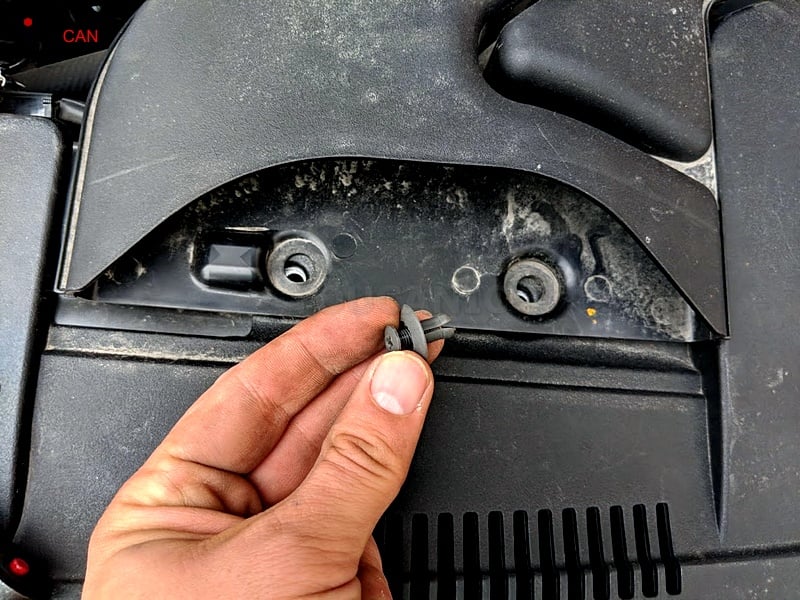
- Remove the engine air inlet pipe on top of the battery. First, you need to remove two small plastic retainers.

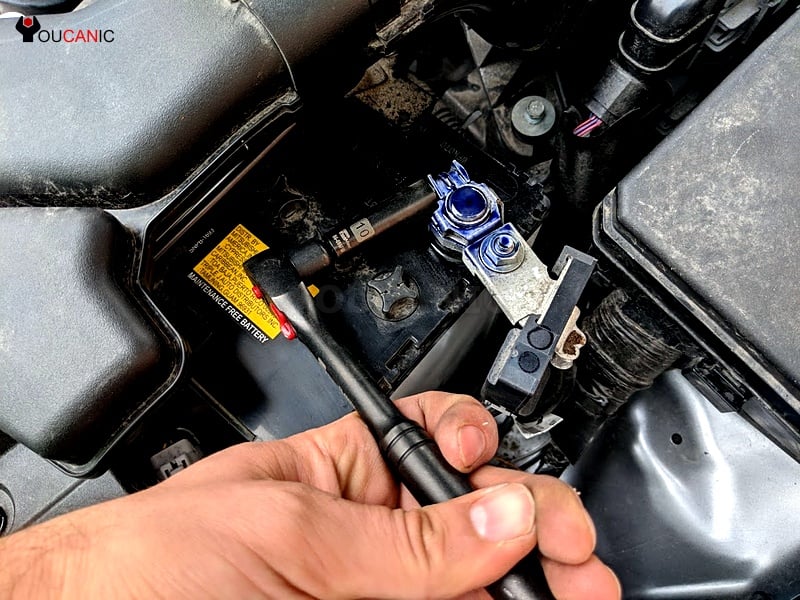
- Disconnect the negative battery terminal. First, loosen the 10mm nut, then pull up on the cable.
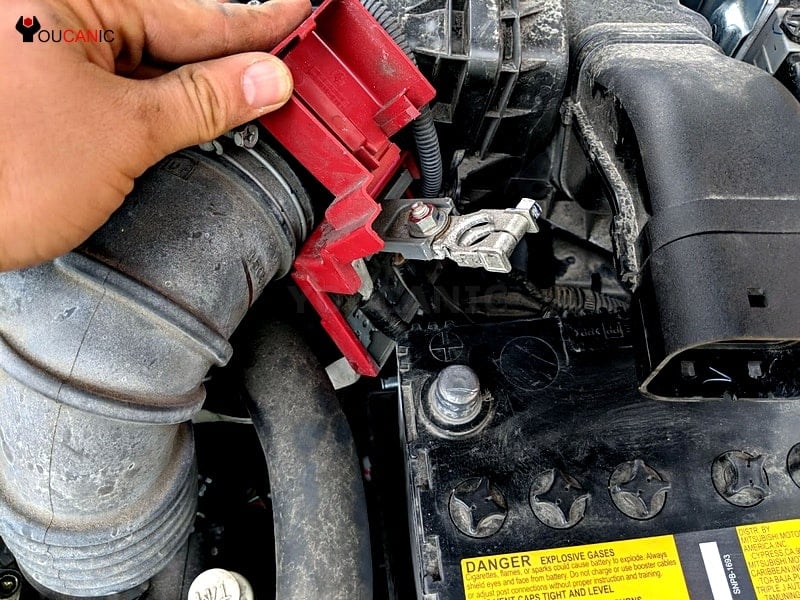
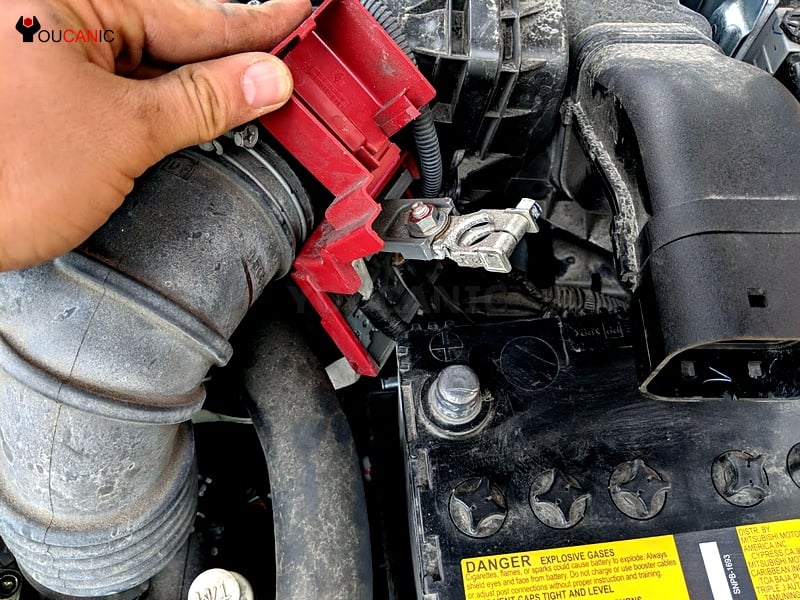
- Remove the red plastic cover from the top of the battery. Loosen the 10mm nut on the positive battery terminal. Disconnect the positive terminal.
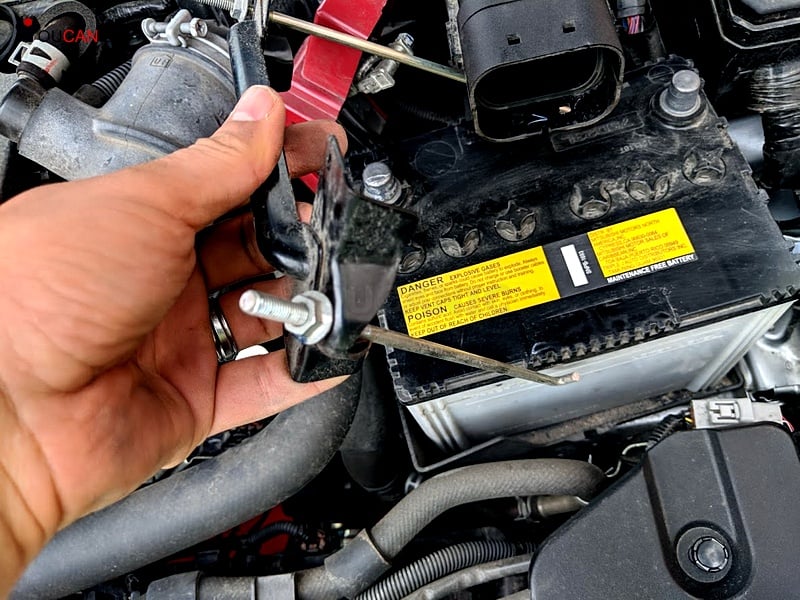
- Loosen the 10mm nut on the top bracket. Then, pull the bracket bolt down and away from the battery.
- Remove the battery from the battery tray. Place the new battery in the car.
- Install the top bracket. Don’t over-tighten the bracket bolts or risk cracking the battery case.
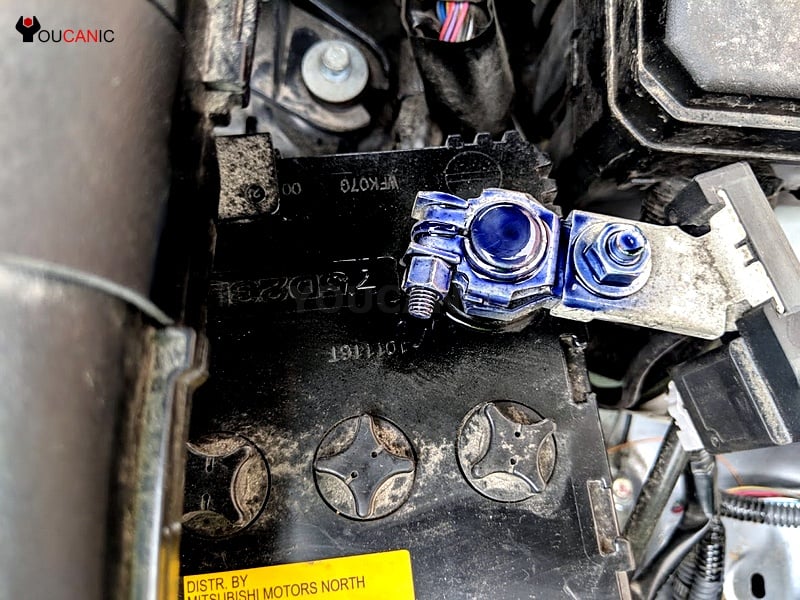
- Clean battery posts and terminals with a battery wire brush.
- Connect the positive battery terminal first. Ensure the cable doesn’t move.
- Connect the negative battery last.
- Spray battery protector on the battery posts.
- Connect the engine air intake hose.
After Replacing the Battery
- Confirm the new battery matches the old one. Group size 35 is common on the Lancer, but check the label on your old battery or your owner’s manual.
- Reset the clock and radio presets. Let the engine idle for a few minutes so it can relearn its idle.
- If the new battery goes flat again within weeks, the problem is likely the charging system or a parasitic drain rather than the battery.
With the engine running, battery voltage should read roughly 13.5 to 14.5 volts. A scan tool such as the YOUCANIC UCAN-II Pro shows live charging voltage and reads stored codes on supported models, which helps you confirm the alternator is doing its job.
Check these troubleshooting and repair guides for more help on your Mitsubishi Lancer.

🔧 Find out what is actually wrong before you pay someone to guess
Dealer level diagnostics at home with the YOUCANIC UCAN-II Pro.
- ✔ Covers most makes and models, including many luxury brands. Send us your VIN and we will confirm your car before you order
- ✔ Reads every module, not just the engine, so you find the faults a basic reader says are not there
- ✔ Commands the car: test a fan or pump, bleed ABS, retract an electronic parking brake, register a battery
- ✔ No subscriptions. Free lifetime updates, so the price you pay is the whole price
- ✔ Backed by real mechanics in the USA you can email before and after you buy
Featured in The Wall Street Journal
Frequently Asked Questions
What size battery does a Mitsubishi Lancer take?
Group size 35 with at least 520 cold cranking amps is common. Check the label on your old battery to confirm.
Which battery terminal do I disconnect first?
Disconnect the negative terminal first and reconnect it last.
Do I need to remove anything to reach the Lancer battery?
Yes. Remove the engine air inlet pipe on top of the battery, held by two plastic retainers.
Why does my new battery keep dying?
A weak alternator or a parasitic drain is likely. Check charging voltage with the engine running.
Related Guides
- Mitsubishi Mirage G4 Battery Replacement
- Mitsubishi Key Fob Battery Replacement
- 2007 to 2017 Mitsubishi Lancer Most Common Problems
- 2002 to 2007 Mitsubishi Lancer Most Common Problems


