Noise When Letting Off the Gas Pedal: Causes and How to Fix It
Reviewed/Verified by:

Hearing strange engine noises when releasing the gas pedal can be worrying and indicate a potential problem with your vehicle. A single thud or clunk as you lift off usually comes from worn engine or transmission mounts or play in the driveline, such as U joints, CV joints or a differential mount, because the drivetrain shifts as the load reverses. Rattles, pops and hisses point more to the exhaust. This article will guide you through troubleshooting engine noise when releasing the gas pedal in your vehicle. From checking common causes to identifying the source of the problem, we aim to help you diagnose and solve the issue efficiently and effectively.
At a Glance
- A single thud or clunk when lifting off: check engine and transmission mounts first, then U joints, CV joints and the differential mount.
- Rattle: often a loose exhaust heat shield.
- Popping or hissing: an exhaust leak or misfire.
- Have a helper hold the brake firmly and shift between Drive and Reverse while you watch the engine move from the side, never from in front of the car.
- Read the engine codes if the check engine light is on.
- If the check engine light is on with the noise, a scanner such as the YOUCANIC UCAN-II Pro reads the codes and shows live data to narrow it down on supported models.
How to Troubleshoot Noises When Releasing, Taking Foot Off Gas Pedal
Symptoms
- The car thuds when letting off the gas.
- Noise when taking the foot off the accelerator.
- Clunk noise when letting off the gas pedal.
- Knock sound when letting off the gas.
Common Causes
The type of noise narrows it down. Rattles, pops and hisses usually come from these:
- Loose heat shield: The heat shield that covers the exhaust system can sometimes become loose, causing a rattling noise when the car is in motion.
- Worn muffler: A damaged or worn-out muffler can produce a rumbling or growling noise.
- Engine misfire: An engine misfire can cause a popping or pinging noise when you release the gas pedal.
- Transmission issues: Problems with the transmission, such as a worn-out clutch or a failing torque converter, can cause noise when taking your foot off the gas pedal.
- Exhaust leaks: Leaks in the exhaust system can cause a whistling or hissing noise when you release the gas pedal.
The list goes on. Worn mounts, suspension, and steering problems can cause a knocking noise when taking the foot off the accelerator pedal. In fact, worn mounts and driveline play are the most common causes of a thud or clunk. Here is what to check:

🔧 Find out what is actually wrong before you pay someone to guess
Dealer level diagnostics at home with the YOUCANIC UCAN-II Pro.
- ✔ Covers most makes and models, including many luxury brands. Send us your VIN and we will confirm your car before you order
- ✔ Reads every module, not just the engine, so you find the faults a basic reader says are not there
- ✔ Commands the car: test a fan or pump, bleed ABS, retract an electronic parking brake, register a battery
- ✔ No subscriptions. Free lifetime updates, so the price you pay is the whole price
- ✔ Backed by real mechanics in the USA you can email before and after you buy
Featured in The Wall Street Journal
Differential Mount
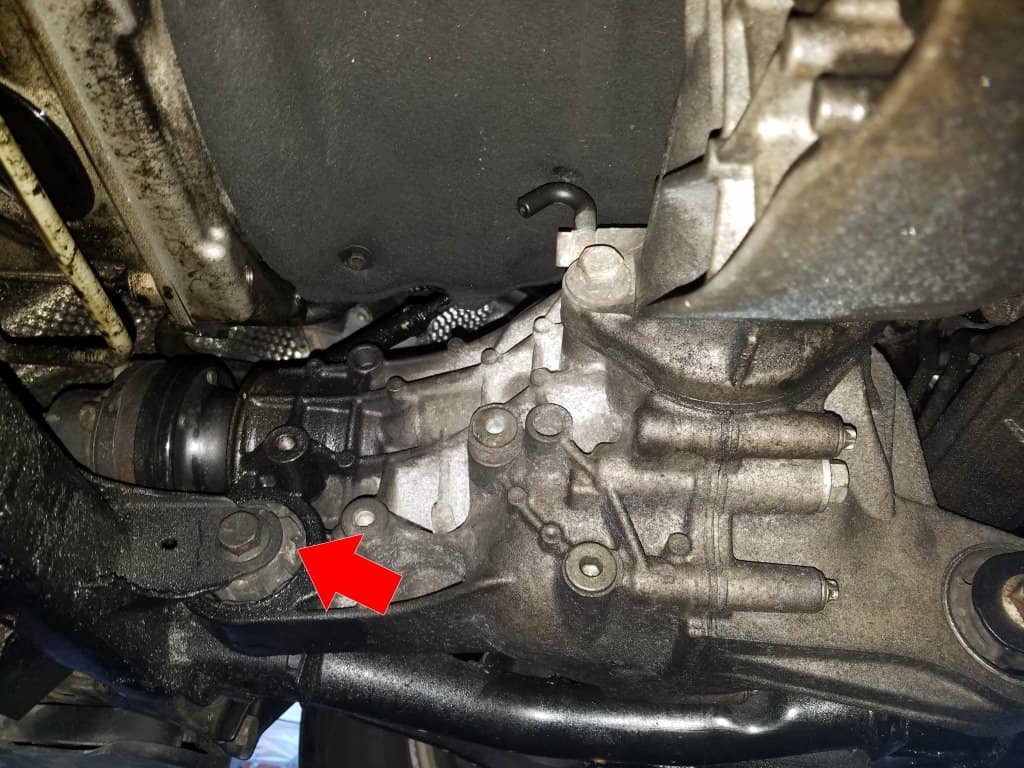
The rubber bushings should be replaced if there is any play or cracks. Also, visually inspect the rest of the front differential bushings for cracks. There are three bushings.  A bad front differential bushing caused these symptoms. The bushing in the picture will crack and create too much free play for the differential. To verify, jack up the car. Grab the end of the front differential (carrier) and check for play. The rearmost bushing seems to fail most often.
Engine or Transmission Mount

A damaged or worn engine or transmission mount can cause noise when pressing or releasing the gas pedal. Engine and transmission mounts are designed to secure the engine and transmission to the vehicle’s frame and absorb any vibrations from the engine and transmission. When a mount is damaged or worn, the engine or transmission can move around and cause clunking, knocking, or rattling noises. A worn engine mount can cause excessive movement in some cases, leading to other problems, such as driveline vibration, premature wear on other components, and decreased vehicle stability. If you suspect a damaged or worn engine or transmission mount is causing noise when you press or release the gas pedal, it’s recommended to have it inspected and replaced as soon as possible.
Control Arm Bushing

Control arm bushings are crucial in maintaining the proper alignment and stability of your vehicle’s suspension system. When these bushings wear out, they can cause many problems, including noise when letting go of the accelerator pedal or under quick acceleration. The control arm bushings absorb shock and vibrations from the road and transfer them to the vehicle’s chassis. If the bushings are worn, the control arm can move around and produce clunking or knocking noises, especially when the gas pedal is released or the vehicle is accelerating quickly. Additionally, worn control arm bushings can also affect the handling and alignment of the vehicle, leading to uneven tire wear and decreased driving comfort. A professional must inspect your control arm bushings if you hear any strange noises when releasing the gas pedal or under quick acceleration.
Diagnosing and repairing the noise source as soon as possible is important to avoid further damage to your vehicle. Do not ignore a car that thuds when taking the foot off the accelerator pedal. Your vehicle may have a serious issue that needs to be repaired immediately or risk putting yourself and your passenger at risk. Have an auto mechanic perform a vehicle inspection to determine why your car makes a knocking sound when letting off the gas pedal.
Frequently Asked Questions
Why does my car clunk when I let off the gas?
The most common cause is a worn engine or transmission mount that lets the drivetrain shift when the load changes. Worn U joints, CV joints or a differential mount can do the same.
Is it safe to drive with a clunk when releasing the gas?
A mild clunk from a worn mount is not an emergency, but get it checked soon. A broken mount can stress hoses, the exhaust and the axles.
Why does my exhaust pop when I take my foot off the gas?
A small amount of popping on deceleration can be normal on some cars. Loud or new popping can mean an exhaust leak or a misfire, so read any stored codes.
Check these troubleshooting and repair guides for more help on your vehicle.