Nissan Check Engine Coolant Level & Add Antifreeze
Reviewed/Verified by:

This guide provides instructions on how to check the engine coolant level and add antifreeze to Nissan vehicles.
At a Glance
- Check only with the engine fully cool; never open a hot cap.
- The level should sit between the MIN and MAX marks on the reservoir.
- Top up with Nissan blue coolant, pre mixed 50/50.
- Overheating or a high temperature warning: stop driving.
- Needing to top up repeatedly means a leak; find it.
If your Nissan is overheating, the temperature gauge has moved to hot. Pull over as soon as it is safe, and follow the instructions below to check the coolant level.
How to Check/Add Engine Coolant

What you will need
- NISSAN Antifreeze Coolant
- Nissan’s engine cooling system is filled at the factory with a pre-diluted mixture of 50% Genuine Antifreeze (blue) and 50% water.
- Most Nissan vehicles use blue coolant.
Procedure
- Park your Nissan safely and allow the engine to cool down completely. Never open the reservoir or radiator cap on a hot engine: the system is under pressure and can spray scalding coolant.
- Locate the hood release underneath the dashboard on the driver’s side. Pull the lever until you hear the Nissan hood pop open. Next, you need to release the hood safety latch at the front of your Nissan.
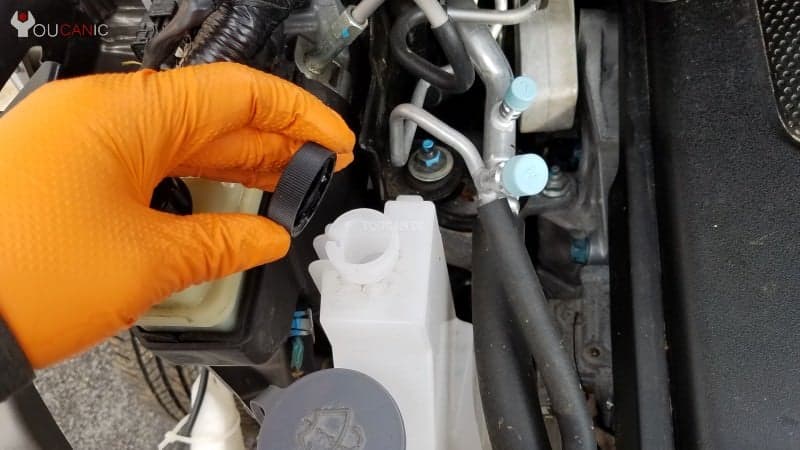
- Locate the coolant overflow reservoir tank.
 Location of engine coolant reservoir on a Nissan Sentra
- Look at the coolant reservoir tank’s side and note the low and high levels.
- If the level is below the minimum mark, you will need to add coolant. Remove the coolant reservoir cap and add engine coolant.

- Add engine coolant/antifreeze. Only add the recommended Nissan coolant.
 Location of engine coolant reservoir on a Nissan Sentra


Do not keep driving your Nissan if the engine is overheating or the high engine temperature light comes on in your Nissan.

🔧 Find out what is actually wrong before you pay someone to guess
Dealer level diagnostics at home with the YOUCANIC UCAN-II Pro.
- ✔ Covers most makes and models, including many luxury brands. Send us your VIN and we will confirm your car before you order
- ✔ Reads every module, not just the engine, so you find the faults a basic reader says are not there
- ✔ Commands the car: test a fan or pump, bleed ABS, retract an electronic parking brake, register a battery
- ✔ No subscriptions. Free lifetime updates, so the price you pay is the whole price
- ✔ Backed by real mechanics in the USA you can email before and after you buy
Featured in The Wall Street Journal
Can I add coolant directly to the radiator?
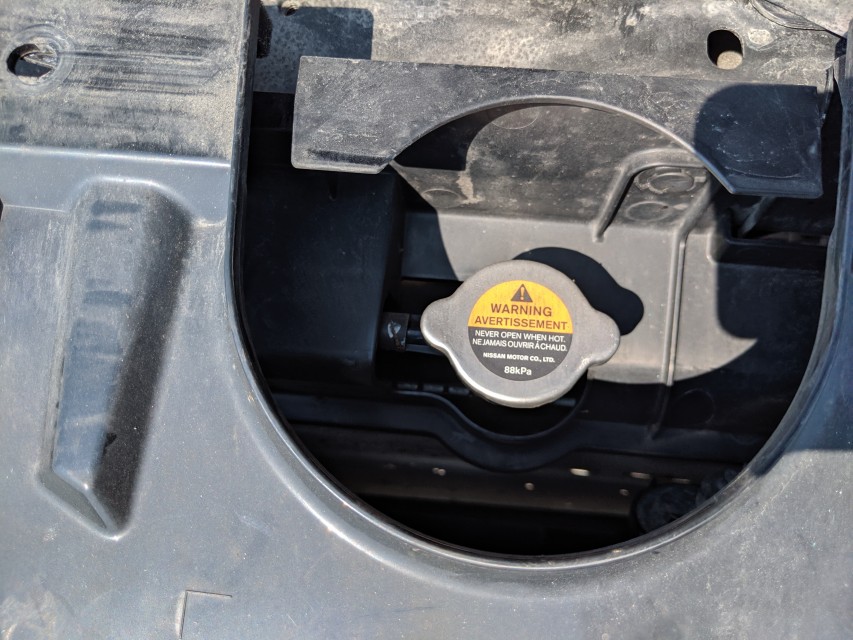
It is possible to add engine coolant to the radiator when completely cool. It would be best to be extremely careful when opening the radiator cap. The coolant must have cooled down, or you will risk being burnt.
If the level keeps dropping
Coolant does not get used up. If you have to top up more than once, there is a leak. Look for dried blue or pink crust around the radiator, hoses, water pump and reservoir, and check for a sweet smell or fogged windows inside the car, which can point to a leaking heater core. White exhaust smoke with a falling level can mean a head gasket problem and needs prompt diagnosis.
Frequently Asked Questions
What coolant does a Nissan use?
Most Nissans built since about 2010 use Nissan Long Life Coolant, which is blue and sold premixed 50/50. Older models used green coolant. Check your owner’s manual.
Can I mix green and blue coolant in my Nissan?
It is best not to. Top up with the same type that is in the system, and flush completely if you want to switch.
Why does my Nissan keep losing coolant?
Coolant is not used up, so a dropping level means a leak. Check the radiator, hoses, water pump and reservoir, or have the system pressure tested.
Check these troubleshooting and repair guides for more help on your Nissan.