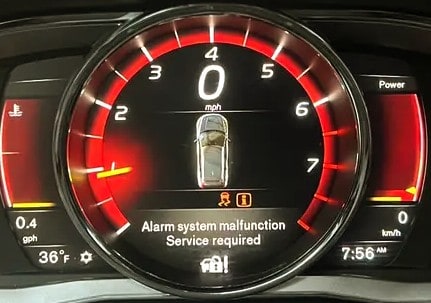
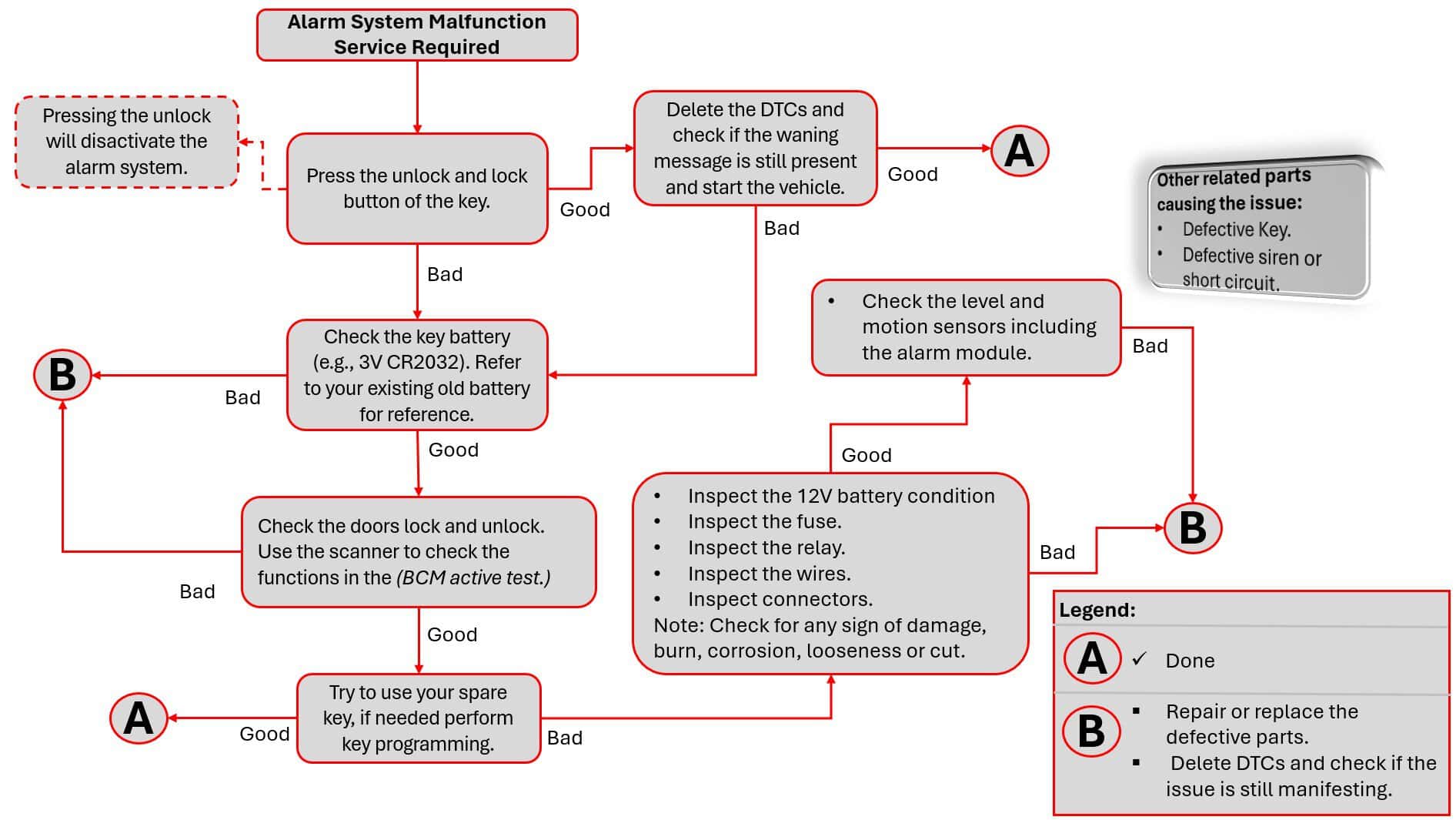
When the “Alarm System Malfunction” warning message appears on the dashboard of various Volvo models, including XC90, XC60, V40, S60, XC70, etc, this error means an issue with the anti-theft system requires attention. Diagnosing and addressing the problem as soon as possible is essential to prevent issues such as the alarm going on randomly, for example, at night, or the alarm not going off at all if someone tries to steal the vehicle.
What Does the Alarm System Malfunction Message Mean?
The alarm system is responsible for protecting your vehicle from theft. It is designed to alert the user of any malicious activity in the car if left unattended. If an error message appears, it means your Alarm System is malfunctioning.
⚠️ Why You Should Fix It As Soon As Possible:
Safety Risk – A failing alarm system can put your car at a higher risk for theft.
Performance Issues – It can prevent your Volvo from starting, and the alarm can turn on at inappropriate times.
Costly Repairs if Ignored – Ignoring the issue may drain the battery and damage other related components.
Estimated Repair Cost – The estimated repair cost is approximately $200 – $1,200.
Common Causes
Dead Battery– A dead or dying battery will cause poor communication to the vehicle. Preventing the alarm system from deactivating when the alarm is triggered. If needed, check your battery condition and replace it with the correct battery specification. Replace the keyfob battery as well at the same time.
Blown Fuse – Fuses protect the vehicle’s electrical components from short-circuiting. You can check the fuses using a multimeter tool to confirm their condition. A good fuse should give you a reading of less than 5 ohms.
Faulty Relay – Relays prevent electrical components from overheating or high-voltage fluctuations. Check the relay for any signs of burning, corrosion, or damage. Use a multimeter to check the terminals 85 and 86 of the relay. A good coil will give you a reading of about 50-200 ohms. Next, check the terminals 30 and 87. There must be no reading or “OL.” If terminals 85 and 86 are supplied with the 12V, it will magnetize the contact of terminals 30 to 87, giving you a reading of less than 5 ohms.
Faulty Wiring – Faulty or broken wires and connectors may cause electrical and communication problems. Inspect for any signs of looseness, corrosion, burns, or cable damage, including the sockets. Loose cables can usually be snapped back in place, but snapped or fraying wires will need to be replaced.
Mismatched or Defective Key – A mismatched or defective key will not be recognized by the vehicle immobilizer, making it impossible to deactivate the alarm if triggered. This will also prevent the vehicle from starting. This issue can be resolved by programming the key transponder to the vehicle’s module. If the key is defective, replacement is necessary.
Faulty Door Lock – A defective door lock may get stuck due to aging or mechanical and electrical malfunctions. Check the operation and response of the door lids and actuators.
Faulty Alarm Module – A faulty alarm module will cause the system to malfunction. Check for any signs of burn, corrosion, and damage to the module, especially the connector pins. Some alarm systems have built-in small batteries that may discharge, causing the alarm service required message.
Level and Motion Sensor – A faulty level or motion sensor can trigger a signal to the module at any time, activating the alarm. Sometimes, a defective sensor may not signal to the module, causing the alarm to not operate and causing vehicle theft risk.
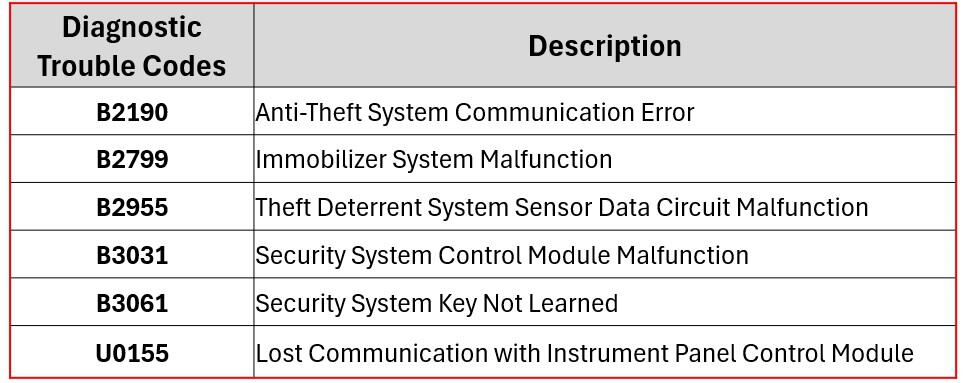
🛠️ Pro Tip: Use an OBD-II scanner to check for error codes related to the issue.
Common Symptoms
Alarm System Service Message or Malfunction Indicator Light On – If the system detects a fault in any component, it will send a warning message or activate the malfunction indicator light on the dashboard.
The alarm siren will always create sound – If there is a malfunction in the alarm system, like a short to ground or short to battery, this will sometimes allow the siren to have a direct supply causing alarm sound.
The vehicle won’t start – If the alarm system is actively triggered, the vehicle immobilizer will block the communication signal, preventing the engine from starting. Pressing the unlock button on your key will deactivate the alarm. The vehicle can be started after unlocking the vehicle by pressing the unlock key button.
The doors cannot unlock or lock – If the alarm is actively triggered and the key cannot deactivate the alarm, the key may have a low battery, or you could have a mismatched or defective key or faulty door locks.
Troubleshooting
Before taking your car to a mechanic, try these DIY fixes:
Check Battery Health – Use a battery tester, multimeter, or scanner to check for low voltage. Voltage levels under 12.4 volts are considered too low, indicating that your battery needs to be replaced or recharged.
Inspect Wiring & Connections – Look for loose or frayed wires around the battery and alternator.
Inspect Fuses – Look for damaged or melted fuses in your vehicle’s fuse box. This could be an indicator of an electrical issue in your car. ONLY REPLACE OLD FUSES WITH NEW ONES OF THE SAME AMPERAGE.
Use an OBD-II Scanner – Read and clear error codes to see if the issue is temporary.
Reset the System – If a glitch causes the warning light/error message, it can be cleared by disconnecting the battery for 30 minutes or using a scan tool.
Are you still having trouble with your Volvo’s security system? Check out our YouTube guide to diagnose your car like a pro!
How do I avoid battery discharging if I have a faulty alarm?
➡️To prevent the battery from dying because of the alarm, remove the 12V battery negative terminal and use the mechanical key to lock and unlock your vehicle.
Will the vehicle start if the alarm system is disabled?
➡️Yes, the vehicle can start if the alarm is disabled in your vehicle. However, removing it is not advisable, as it increases the risk of theft.
Can the vehicle be started if the siren is removed?
➡️No, removing the siren will not solve the issue if the alarm system is in active mode or actively triggered. You can only start the vehicle once the alarm is deactivated.
Is there a way to unlock the vehicle with a defective key while the alarm is active?
➡️Yes, the best way to unlock the vehicle is by using your key and pressing the unlock button. If the keyfob is not working, the emergency key found inside your keyfob will also unlock the door. But it will not stop the alarm sound. Visit a workshop to solve the issue as soon as possible.
What to do if the alarm activates and what does it mean?
➡️If the alarm activates or is triggered, the sensors detect a movement in your vehicle. Check your vehicle for any theft and report immediately. Sometimes, the alarm button from your key is pressed, causing the vehicle to alarm.
Final Thoughts
The malfunctioning alarm system should never be ignored, as it could indicate a serious issue with your vehicle’s anti-theft. Following these troubleshooting steps and scanning for fault codes can save time and money while ensuring your car remains safe and reliable.
Experts Who Contributed to This Article
Elbert Nonog, Automotive National Cert., BS Mechanical Eng.
Diagnostic Specialist13+ years of experience
Elbert G. Nonog is an Automotive Technical Writer and Training Manager with over 10 years of experience across major brands including Chevy, MG, Ford, Volkswagen, and Toyota. Rising from technician to leadership roles, Elbert excels at transforming complex automotive concepts into accessible training materials and documentation. His expertise spans conventional and electric vehicle systems, nationwide dealership training, and aftersales operations management. With TESDA certification and pursuing further education from the Technological University of Philippines, Elbert effectively bridges the gap between automotive engineering and practical application for industry professionals and enthusiasts.
rhila, ASE Certified
Diagnostic Specialist15+ years of experience
Rushit Hila is a dedicated automotive engineer with ASE G1 certification and specialized training from an esteemed Automotive Specialty School. His hands-on experience and technical expertise in advanced diagnostics, system integration, and performance optimization make him a trusted voice in the industry.
Searching...
33% OFFFlash Sale — Ends Soon
⭐⭐⭐⭐⭐ 4.8 stars · 247 Verified Reviews
Stop paying $150 every time a warning light comes on.
The UCAN-II-D gives you full system diagnostics, bidirectional controls, and lifetime free updates. One scanner. Own it forever.
Was
$750
→
Now
$499
Save $251
+ Free shipping · No subscription ever
Free lifetime updates included — no annual fees ever