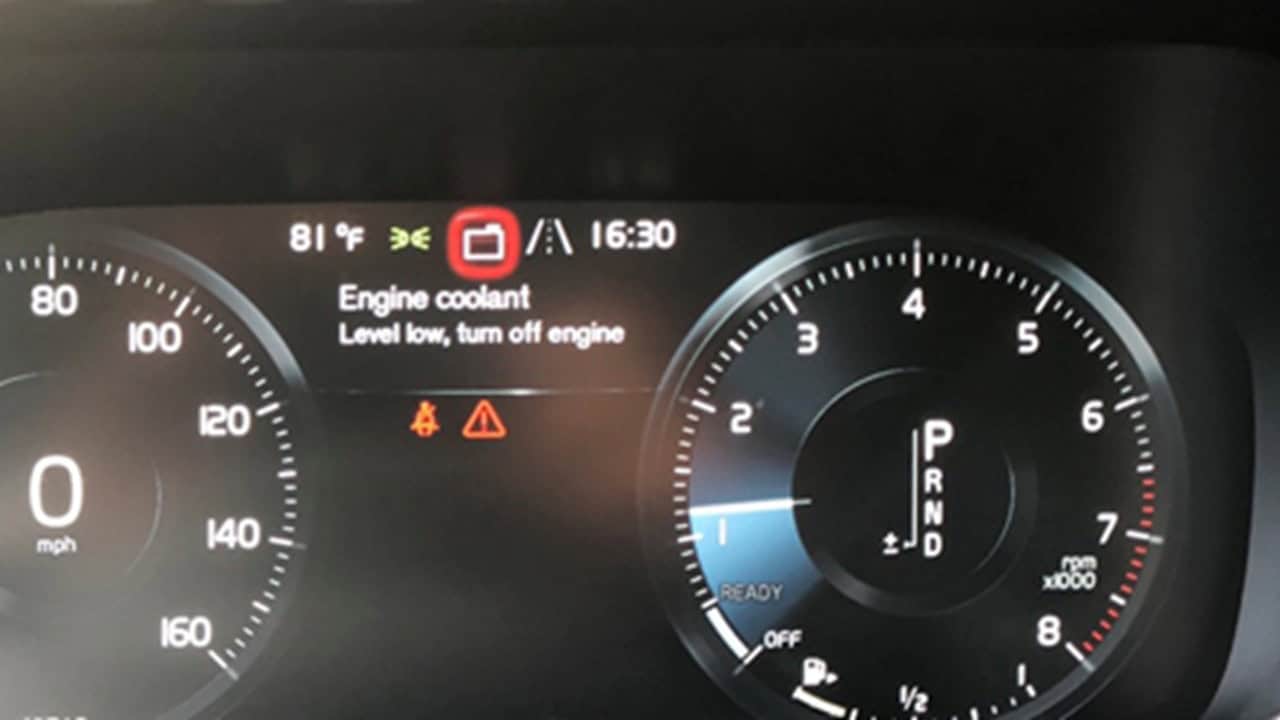
Volvo “Engine Coolant Level Low, Turn Off Engine” Common Causes & Troubleshooting

Easy
1 hour - 4 hours
$297
When the “Engine Coolant Level Low” warning message appears on your Volvo’s dashboard, it means you need to check your coolant level under the hood. You must find a safe place to stop as soon as possible to check it. Turn off the engine and inspect the coolant level of your vehicle. The coolant must be on the maximum level. Inspect for any signs of coolant leak on the engine. A pinkish color fluid indicates a coolant leak.

The engine coolant is responsible for maintaining the engine at its normal operating temperature. When the warning light or message appears on the dashboard, it means the engine coolant is low which may lead to engine overheating if ignored.
⚠️ Why You Should Fix It
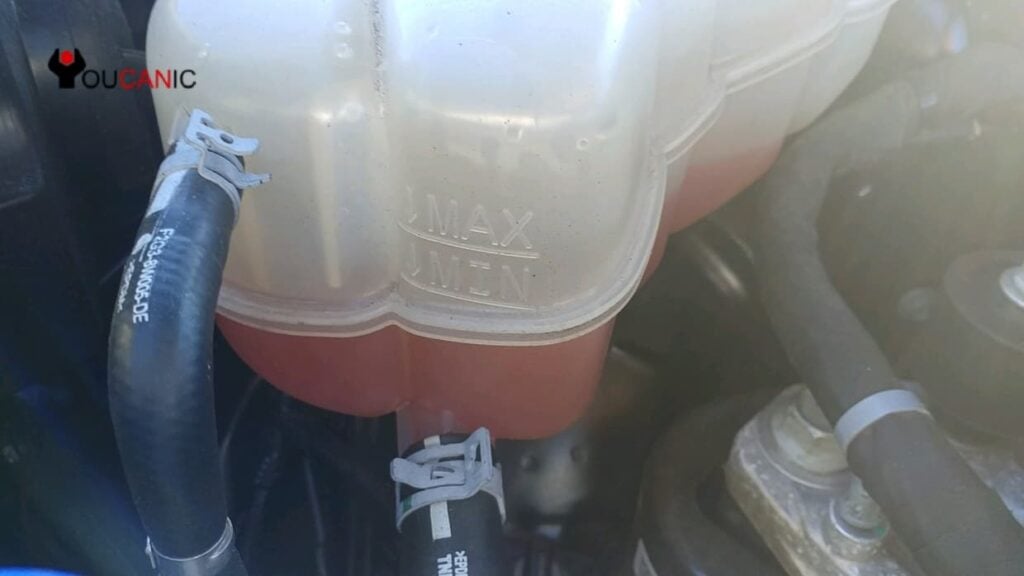
⚠️ Low Engine Coolant – A low engine coolant is normally caused by leaks.
⚠️Coolant Leaks – When there is a leak in the cooling system, the reservoir will get low or empty. A broken gasket, sealant, or clamp hose may cause the coolant leak.
⚠️Faulty Reservoir Level Sensor – A faulty sensor may malfunction causing the warning message issue.
⚠️Faulty Coolant Cap – A faulty coolant cap may block the return of coolant to the reservoir.
⚠️Faulty Wire – A loose or frayed wire may disable the communication signal to the ECM causing the warning message issue.
🛠️ Pro Tip: Use an OBD-II scanner to check for error codes related to the issue.

Before taking your car to a mechanic, try these DIY fixes:
In this section, we will focus on troubleshooting steps for those rare cases when the coolant level is correct, but you still get a low engine coolant level on the dashboard of your Volvo.
Before you start your troubleshooting, you must prepare yourself first. Use personal protective equipment (PPE) (e.g., gloves, goggles, and face mask). Prepare the essential tools like a multimeter, pliers, screwdrivers, and wrenches, including your OBD-II scanner.
The easiest and fastest way to determine the cause of the issue is by checking your vehicle using the OBD-II scanner and run a full vehicle scan. Check the fault codes and read the description of what these codes refer to.
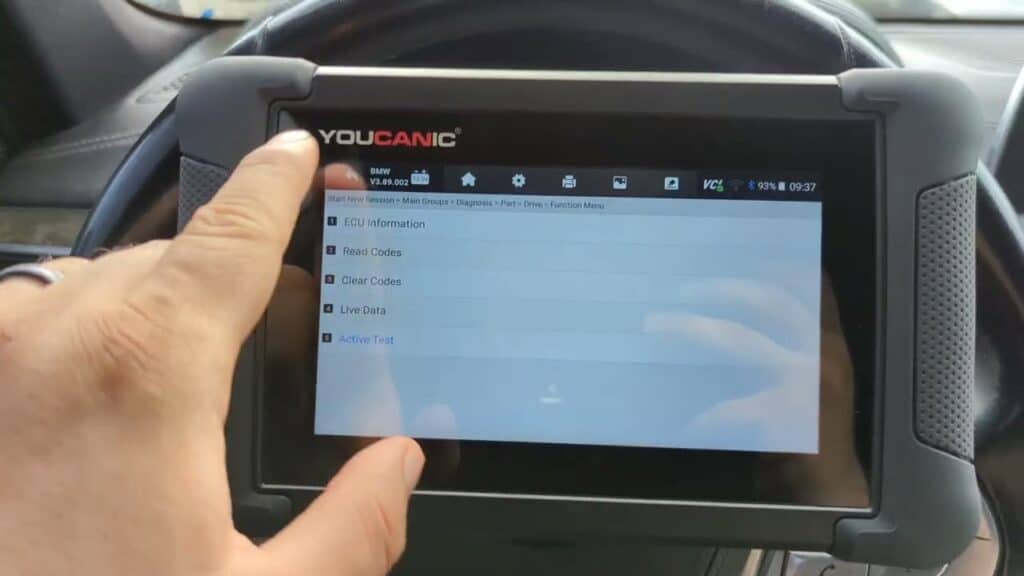
Take a picture of the codes for your reference before clearing the DTCs. The purpose is to erase the history of fault codes and to focus on the current DTCs. Choose the codes connected to the warning message or warning light and save this data.

Seek help from professionals if you can’t solve the issue.
If you scan your vehicle with an OBD-II scan tool, you may see one of these codes:
➡️ It is recommended to use the top off or use the correct coolant for your vehicle. But in an emergency, a small amount of water can be used, but only for top-off, rather than having a low coolant level. You must know that you need to consider the weather conditions of your area. If the weather in your area has a low temperature, water is not recommended as it can quickly freeze, causing your vehicle to experience different issues.
➡️Every vehicle model has a preventive maintenance schedule, where the coolant replacement is included. (Check your owner’s manual) Generally, the replacement is 30,000 miles or every 2 years. If you think your coolant is insufficient to cool your engine or have seen any sign like decolorization (e.g., colorless coolant, dirty). Early replacement is necessary.
➡️The best way to check your coolant level is early morning when the engine is cold and not yet started. During that time, the engine is relaxed. Visualize if your coolant is at the maximum level. Top off, if necessary, using the correct coolant.
➡️ Yes, it is expected to have a slight coolant loss in your vehicle, especially when using your car on a long drive. If your speed increases, the engine temperature will also increase. To maintain the temperature, more coolant is needed to cool the engine, and some of this coolant evaporates.
➡️You can check your condition using a coolant tester (refractometer). But if you don’t have this tool, you can check the coolant condition by checking first your service history. Check when the coolant was replaced. Next, check the color of the coolant decolorization. If colorless, this indicates that your coolant needs to be replaced. This may affect the cooling performance and the antifreeze.
A Volvo’s low engine coolant level should never be ignored, as it could indicate a serious issue with your vehicle’s cooling system. Following these troubleshooting steps and scanning for fault codes can save time and money while ensuring your car remains safe and reliable.
Elbert G. Nonog is an Automotive Technical Writer and Training Manager with over 10 years of experience across major brands including Chevy, MG, Ford, Volkswagen, and Toyota. Rising from technician to leadership roles, Elbert excels at transforming complex automotive concepts into accessible training materials and documentation. His expertise spans conventional and electric vehicle systems, nationwide dealership training, and aftersales operations management. With TESDA certification and pursuing further education from the Technological University of Philippines, Elbert effectively bridges the gap between automotive engineering and practical application for industry professionals and enthusiasts.

Rushit Hila is a dedicated automotive engineer with ASE G1 certification and specialized training from an esteemed Automotive Specialty School. His hands-on experience and technical expertise in advanced diagnostics, system integration, and performance optimization make him a trusted voice in the industry.
Searching...
⭐⭐⭐⭐⭐ 4.8 stars · 247 Verified Reviews
The UCAN-II-D gives you full system diagnostics, bidirectional controls, and lifetime free updates. One scanner. Own it forever.
+ Free shipping · No subscription ever