
Replace Brake Pad Wear Sensor Mercedes-Benz
Reviewed/Verified by:

If you replace the brake pads but not the brake pad wear sensor on a Mercedes-Benz, the brake pad warning message on your dashboard will not clear. In this guide, you will learn how to test a brake pad wear sensor and find step-by-step procedures to replace the brake pad wear sensor on Mercedes-Benz cars and SUVs. Are you more of a visual learner? Check out our video guide below!
At a Glance
- Why replace it: the brake wear message stays on until the worn sensor is replaced
- Test: a good sensor shows continuity; an open circuit means it has worn through
- Location: usually one per axle on the inner pad of one wheel
- Tools: multimeter, lug wrench, small screwdriver
- Tip: route the new wire through the original clips

How to Test a Mercedes Brake Pad Wear Sensor
- Unplug the sensor and measure resistance across its two pins with a multimeter.
- Continuity (near 0 ohms): the sensor loop is intact.
- Open circuit (no continuity): the sensor has worn through and must be replaced.
- A worn through sensor cannot be reused, even if the new pads are thick.
Not sure what the warning means? Read what the Mercedes check brake pad wear message means.
What you will need
- Multimeter
- Brake pad wear sensor (Mercedes-Benz)
Procedure
- Unlock the vehicle and go to the driver’s seat.

- Insert the key fob into the ignition switch and turn it to accessories.
- If the cluster shows check brake pad wear, this means that you need to replace the sensor or the brake pad.

- Loosen the lug nuts on the wheel where you didn’t replace the wear sensor.
- Jack up the vehicle and put jack stands to support the car.

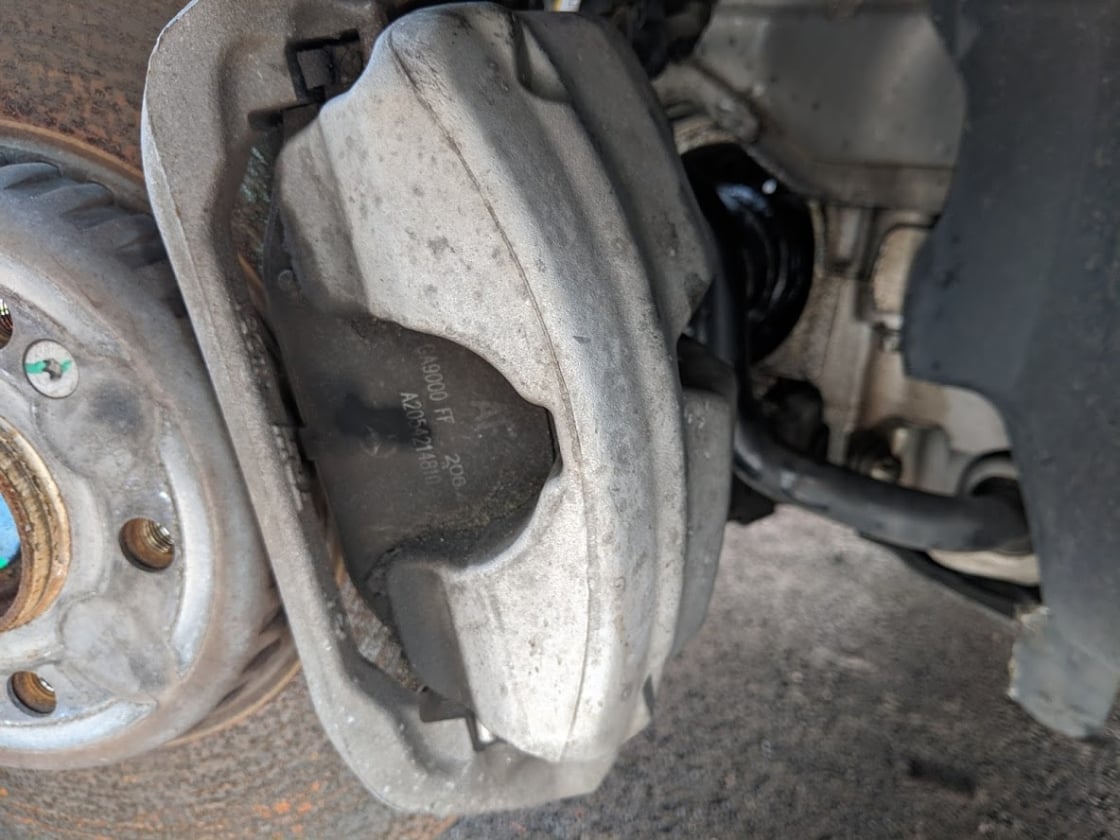
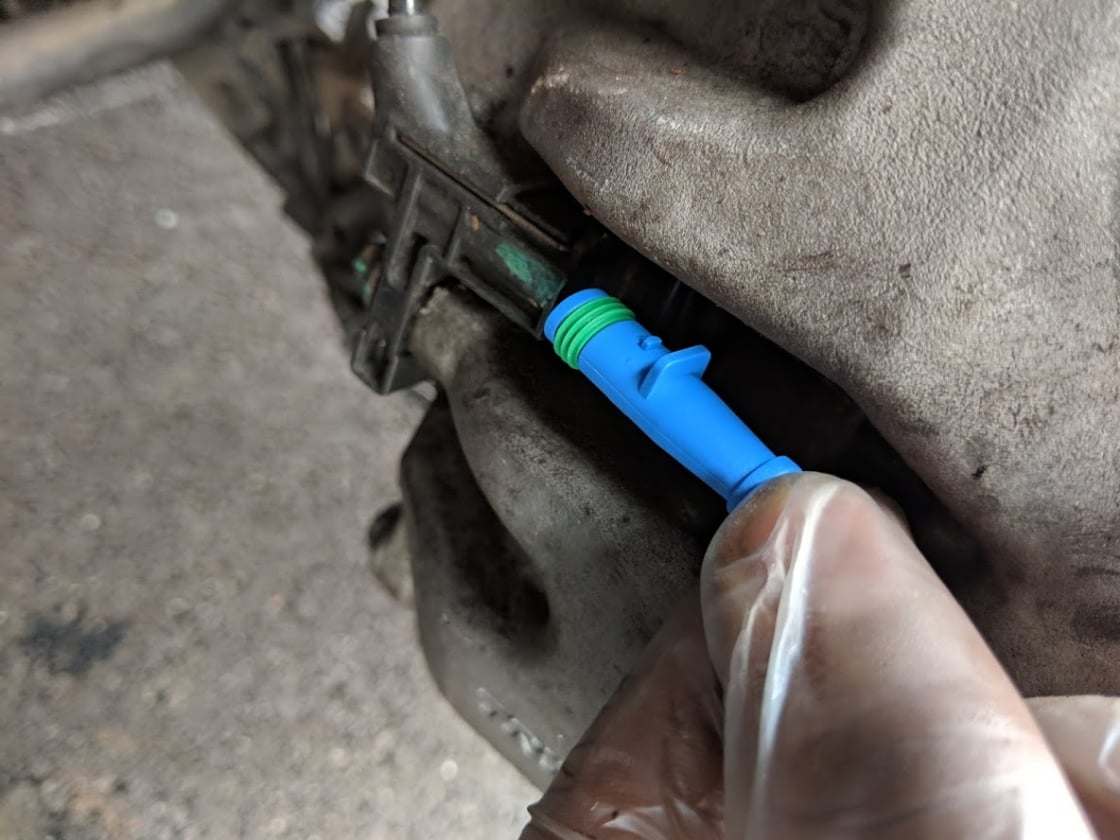
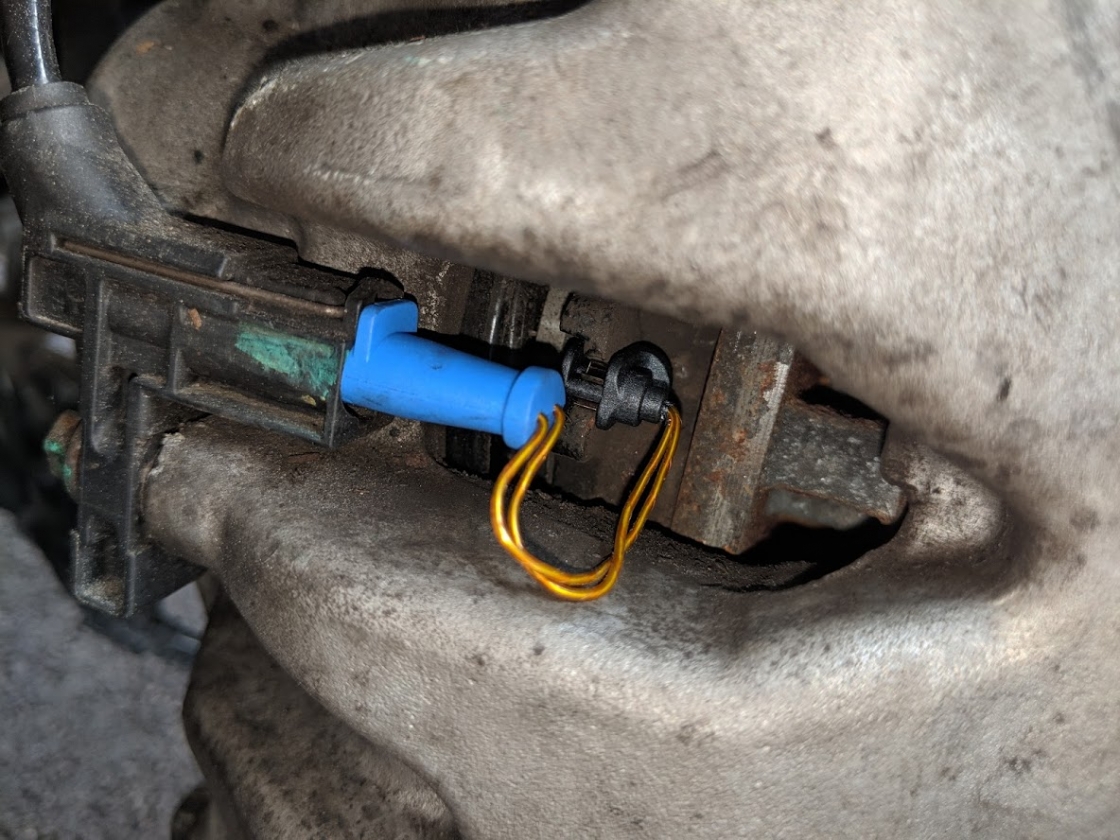
- Carry the front wheel away from the vehicle. Find the sensor on the caliper itself.


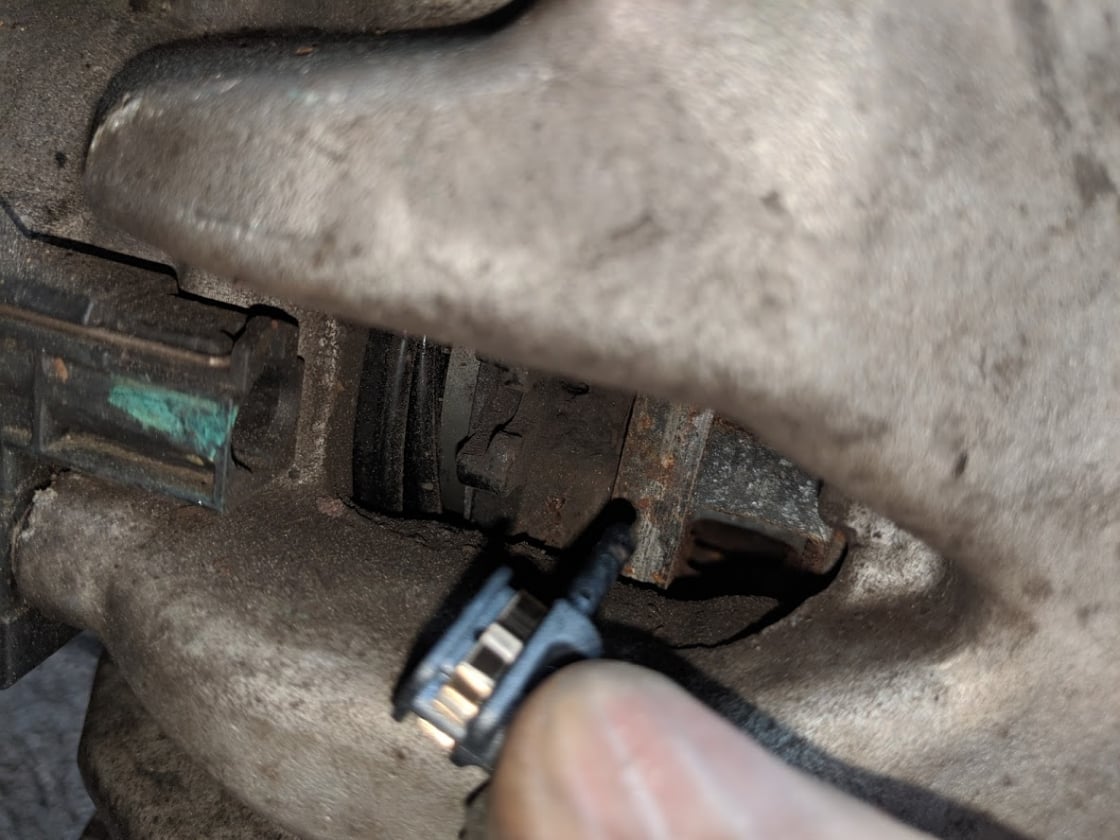
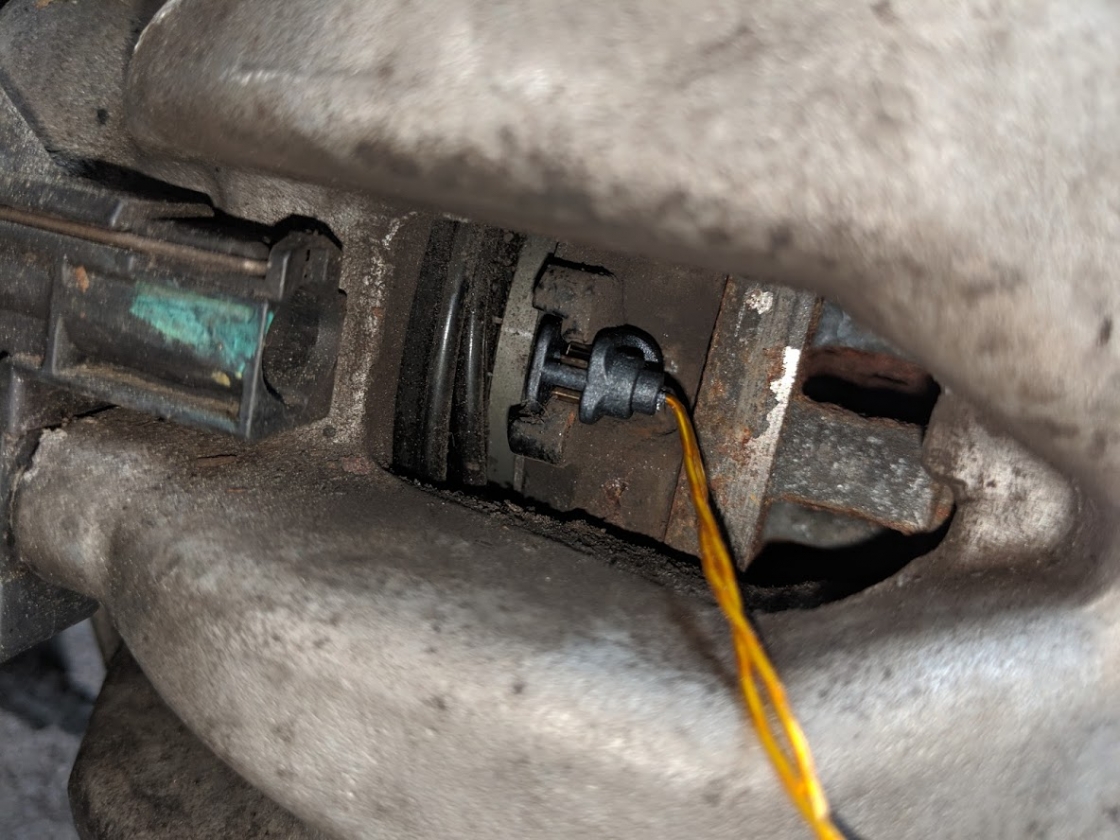
- Remove the brake pad wear sensor by simply pulling out the sensor’s connector and popping it out from the brake pad using a pick tool or screwdriver.


- Get a multimeter and set it to the resistance settings.
- Connect the probes of the multimeter to the sensor connector. If there’s no beep sound once you connect the probes, there’s a problem with the sensor. The sensor needs to be replaced.
- If there’s no beeping sound, it means that you need to replace the vehicle’s brake pad. To replace the sensor, simply pull it out of the connector and brake pad. Then, push the new sensor into the connector and brake pad in reverse order.


More Photos and Video
Frequently Asked Questions
Do I need to replace the brake wear sensor every time I change pads?
Only if it has worn through or was damaged. If the warning was on, the sensor needs replacing.

🔧 Find out what is actually wrong before you pay someone to guess
Dealer level diagnostics at home with the YOUCANIC UCAN-II Pro.
- ✔ Covers most makes and models, including many luxury brands. Send us your VIN and we will confirm your car before you order
- ✔ Reads every module, not just the engine, so you find the faults a basic reader says are not there
- ✔ Commands the car: test a fan or pump, bleed ABS, retract an electronic parking brake, register a battery
- ✔ No subscriptions. Free lifetime updates, so the price you pay is the whole price
- ✔ Backed by real mechanics in the USA you can email before and after you buy
Featured in The Wall Street Journal
How do I know which wheel has the wear sensor?
Follow the thin wire from the inner brake pad on each axle; Mercedes usually fits one sensor per axle.
Why is the brake wear warning still on after new pads and sensor?
The sensor may not be fully plugged in, or the sensor on the other axle has worn through. Check both axles.
If other warnings appear alongside the brake wear message, such as ABS or ESP lights, read the stored codes before replacing parts. The YOUCANIC UCAN-II Pro reads ABS and chassis codes on supported models across more than 140 makes.
Check these troubleshooting and repair guides for more help on your Mercedes-Benz.
Need some extra help? Get real, helpful answers from real mechanics with YOUCANIC DIY Assist support. Email our support team and get a reply within 24 hours to help you with any technical questions you may have.