
BMW Won’t Start Due to IBS Sensor Fault
Reviewed/Verified by:

This article will discuss the BMW intelligent battery sensor, the BMW IBS. We will explain what the IBS sensor does, common problems associated with the sensor, and how to troubleshoot IBS problems yourself.
At a Glance
- What the IBS is: the Intelligent Battery Sensor clamps onto the negative battery terminal and reports battery state to the car. When it fails, the charging strategy goes wrong and the car can refuse to start.
- Symptoms: no start or slow crank with a battery that tests fine, charging warnings, electrical faults that come and go, and a battery that keeps going dead.
- Check first and free: the IBS connector and the terminal clamp. Corrosion or a loose clamp produces the same symptoms as a dead sensor.
- Part cost: $60 to $180. Shop: $150 to $350. Dealer: $300 to $500.
- Important: after fitting a new IBS or a new battery, the battery must be registered. Skip it and the problem comes straight back.
The IBS (Intelligent Battery Sensor) is a critical component in the BMW electrical system, as it monitors and manages the battery’s charge level. If the IBS sensor is faulty, the battery’s charge level may be inaccurately reported, causing the vehicle’s control module to take incorrect actions. This can result in the BMW not starting or exhibiting other related electrical problems.
How to Troubleshoot BMW Won’t Start Due to IBS Sensor Fault
What is BMW’s intelligent Battery Sensor: IBS?
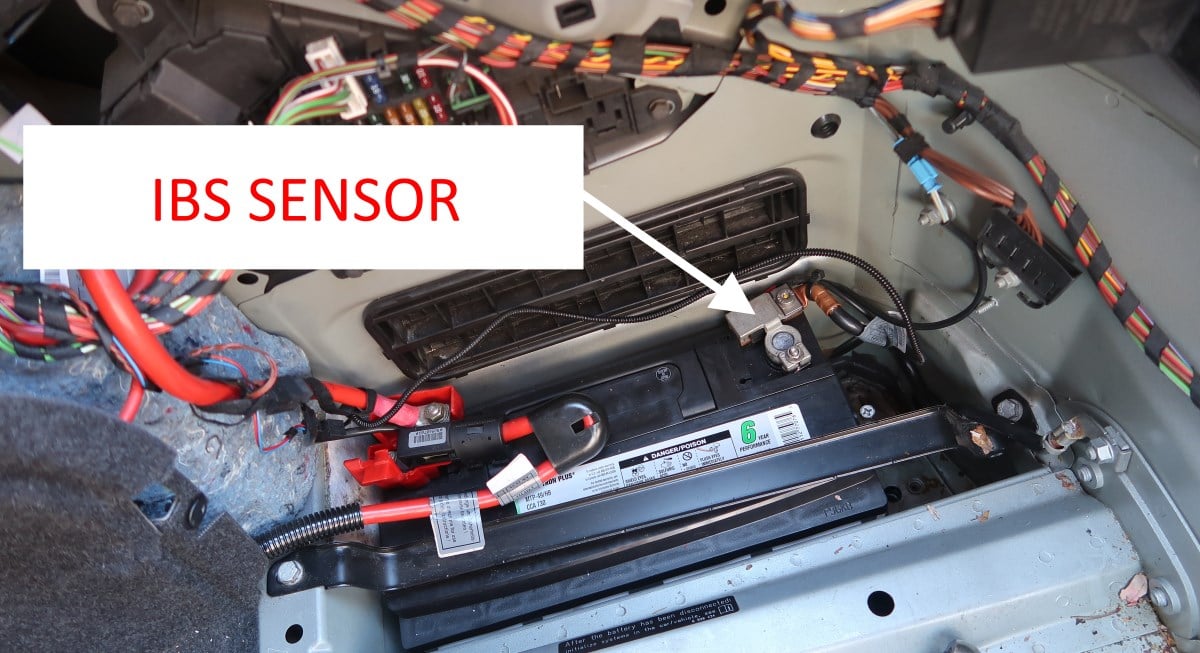
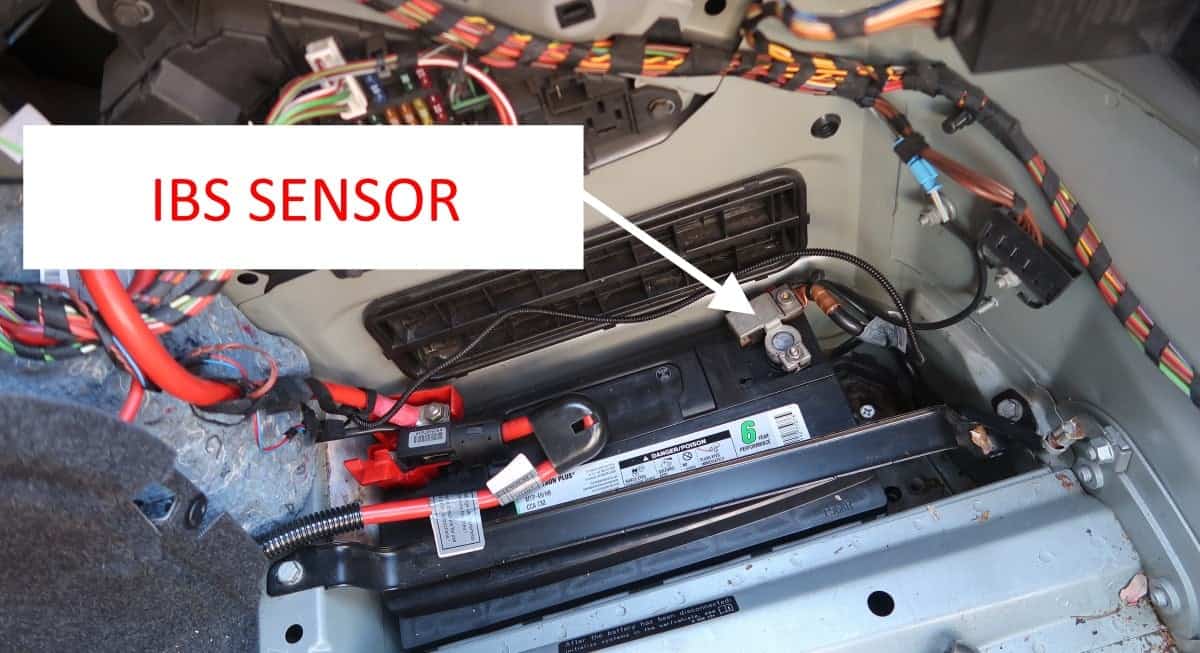
The IBS sensor is located on the negative battery cable and consists of two components: a voltage sensor and a temperature sensor. The voltage sensor measures the battery voltage and communicates this information to the vehicle’s control module. The temperature sensor measures the battery temperature and compensates for the voltage readings accordingly.

🔧 Stop paying the dealer for every warning light
Get dealer level diagnostics at home with the YOUCANIC Full System Scanner.
- ✔ Works with all makes and models, including most luxury brands
- ✔ Topology map view shows all vehicle modules on one screen for faster diagnostics
- ✔ Bi directional controls to test fans, pumps, actuators and more so you do not have to guess
- ✔ Special resets and calibrations such as ABS bleed, EPB service, battery registration and more
- ✔ Free lifetime updates with no recurring fees
BMW IBS failure symptoms
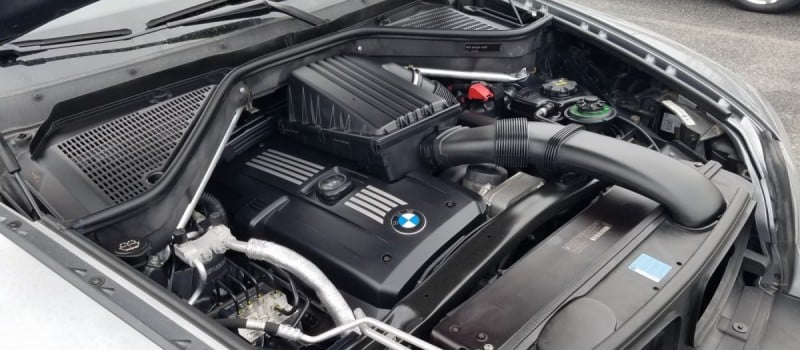
When the IBS sensor is faulty, the voltage and temperature readings may be incorrect, leading the vehicle’s control module to make incorrect battery charging and usage decisions. This can result in the BMW not starting or exhibiting other related electrical problems.

Here are some common symptoms of a BMW IBS (Intelligent Battery Sensor) failure:
- Engine not starting: The IBS sensor plays a critical role in managing the battery’s charge level, and a failure of this component can result in the engine not starting.
- Battery warning light illuminated: If the IBS sensor is not functioning correctly, it can cause the battery warning light to illuminate on the dashboard.
- Battery drains quickly: A faulty IBS sensor can cause the battery to discharge faster than normal, leading to frequent battery replacements.
- Electrical faults: A malfunctioning IBS sensor can cause other electrical faults in the vehicle, such as flickering lights, radio or power windows not functioning, or other electrical components not working properly.
- Engine stalls or stutters: If the IBS sensor does not accurately report the battery’s charge level, it can cause the engine to stall or stutter.
- BMW battery will drain when parked
- BMW will not go to “sleep,” drains the battery
- IBS is not able to wake up the DME
- Voltage fault, DME not on. This can be caused due to a short at the B+ line.
- Voltage fault DME on, which can be caused to ground short
- The car battery is dead. The car won’t start.
It’s important to note that a failing IBS sensor may cause other related electrical issues and should be addressed as soon as possible. A trained technician can diagnose the problem using a diagnostic scan tool and perform any necessary repairs or replacements to restore proper function to the vehicle’s electrical system.
Battery plays a critical role in BMW cars. The Intelligent Battery Sensor (IBS) monitors various battery parameters such as voltage, current, and temperature.
The IBS sensor is mounted on the battery negative terminal with a ground cable and two connectors. One of the IBS cables connects to get power from the positive terminal. The second cable is connected to the DME and measures the battery load. This is known as the Bit Serial Data Interface or BSD.
BMW IBS sensor measures several battery parameters, such as:
- Terminal Voltage
- Charging current
- Discharge current
- Battery Temperature
- SoC (State of Charge)
- SoH (State of Health
How to Troubleshoot BMW IBS Sensor
Addressing IBS sensor faults as soon as they are detected is important to prevent further damage to the battery and electrical system andensure reliable vehicle operation.
To diagnose and repair the issue, a trained technician must use a diagnostic scan tool to retrieve the fault codes and data from the vehicle’s control module. The technician will inspect the IBS sensor and its connections and perform necessary repairs or replacements.
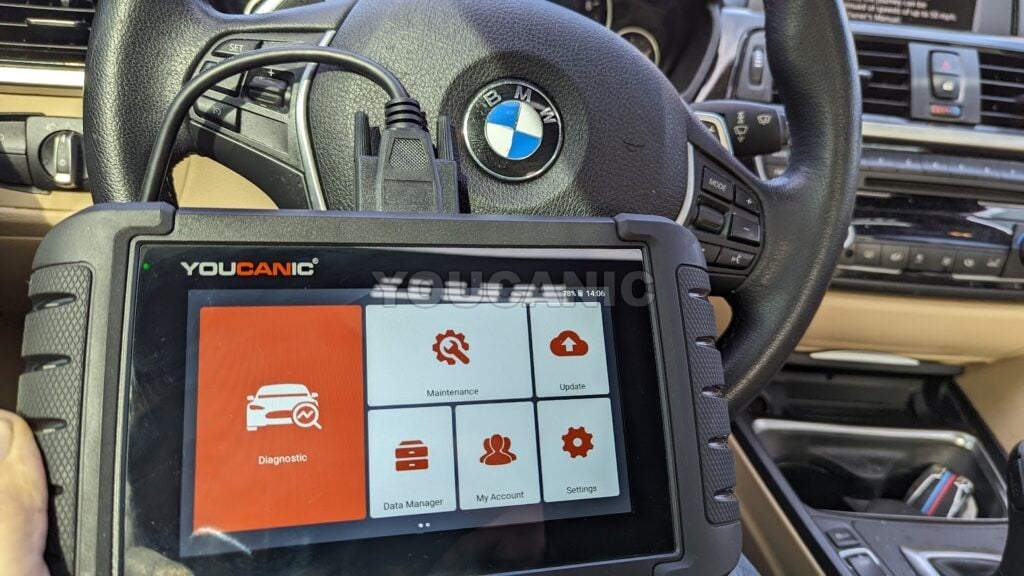
Also, scan the DME module for fault codes to determine if the IBS sensor on BMW is defective. You will need a BMW diagnostic scanner, such as the YOUCANIC Full System Scanner, that can read fault codes on every control module of your vehicle, if it is supported.
- Locate the OBD-II port under the dashboard, driver’s side.
- Plug your diagnostic scanner into the port.
- Turn on the ignition, but do not start the engine.
- Turn on your scanner and allow it to communicate with the onboard diagnostic system.
- Select your BMW make and model.
- Go to Control Units.
- Select DME from the menu.
- Select read fault codes.
Fault codes related to the IBS sensor are stored in the DME module. The DME will check the current, voltage, and temperature. These messages may be stored in the DME module if there is a problem with the IBS sensor. Common DTCs that you may see include:
- Voltage Fault
- 299B DME Intelligent Battery Sensor
- 002E8D DME: Intelligent Battery Sensor, signal transmission
Recall
BMW may recall vehicles if they have been manufactured with safety defects. To find out if your BMW has an IBS sensor recall, call the dealer and provide them with the VIN or check for recalls online.
How much does a new BMW IBS Sensor cost?
Depending on the series, a new BMW IBS sensor costs roughly $150 to $250. Buy against the part number for your specific chassis rather than by model name, since the sensor differs across the range and the connector is not universal. Note that on many BMW models the IBS is supplied as part of the complete negative battery cable rather than on its own, so check what you are actually ordering before comparing prices.
Can I bypass the IBS Sensor on a BMW?
Disconnecting the IBS cable from the negative terminal will disable the IBS communication with DME. This is not a solution. Bypassing the BMW IBS sensor is not recommended. If you bypass the IBS sensor, no information from the battery and its charge status will be available for the DME.
Register the battery, or the IBS will keep complaining
A large share of apparent IBS faults are not sensor failures at all. They are the consequence of a battery having been replaced without being registered to the vehicle. The IBS reports what the battery is actually doing, the module compares that against the profile it holds for the battery it believes is fitted, and when a brand new battery behaves nothing like the worn out one in its records, faults get stored.
So if the car has had a battery in the recent past, establish whether it was registered before buying a sensor. Registration writes the new battery’s capacity, technology and serial number into the module, and it takes a couple of minutes with the right tool. Skipping it also means the charging system keeps undercharging the new battery, which is why so many replacement batteries fail early on these cars.
Handle the sensor carefully
Because the IBS is bolted directly to the negative battery terminal, it takes a beating during routine work. When disconnecting the battery, release the clamp from the post rather than unbolting the sensor from the clamp, and never lever against the sensor body.
The other rule is about jump starting and charging. Never clamp a jump lead or a battery charger directly onto the negative battery post on a car fitted with an IBS. Everything the charging system knows passes through that sensor, and clamping past it hides the current from it and can damage it outright. Use the designated ground point in the engine bay instead, which is there for exactly this reason.
As the article notes above, bypassing the sensor is not a fix. Without it the module has no idea what the battery is doing, so it falls back to a conservative charging strategy, and on many models the result is a car that progressively undercharges its battery and starts throwing increased discharge warnings instead.
Read the code before replacing anything
IBS faults are stored in the engine control module rather than anywhere a generic reader can reach, which is why owners regularly report that their code reader finds nothing while the car refuses to start. The stored code also distinguishes between a sensor that has failed, a communication fault in the single wire link between the sensor and the module, and a plausibility fault caused by an unregistered battery. Those are three different repairs at three very different prices.
A full system scanner that supports BMW will read that code, show the live voltage, current and temperature the IBS is reporting, and perform the battery registration. If the sensor is reporting sensible figures that track what you measure at the terminals with a multimeter, the sensor is doing its job and the fault lies elsewhere.
What This Repair Costs
| Repair | Typical total cost |
|---|---|
| DIY, IBS sensor | $60 to $180 |
| Independent shop | $150 to $350 |
| BMW dealer | $300 to $500 |
| Battery registration | No cost with a capable tool, $50 to $200 at a shop |
| Battery replacement if it was killed by bad charging | $300 to $550 |
Rough US estimates for planning, not quotes. Prices vary widely by model, parts brand and region, so get a written quote before committing.
Do not cut the IBS off and clamp the cable directly to the terminal. It is a common shortcut and it leaves the car with no battery data at all, which causes charging faults and kills batteries.
When to Stop and Hand It Over
- The fault remains with a new IBS and a registered battery.
- Charging voltage is still wrong, which points at the alternator or the power module.
- The negative cable itself is corroded into the sensor body and needs replacing as an assembly.
Registering the Battery After the Repair
Two steps here are out of reach for a generic OBD2 reader. It cannot read the power management module where the IBS fault is stored, and it cannot send the battery registration that must follow the repair.
The YOUCANIC Full System Scanner reads BMW power management and body module codes, shows live battery current and voltage from the IBS so you can confirm the new sensor is reporting, and performs battery registration and type coding. On a car that has already eaten one battery, that last capability is what stops it eating another.
Check the simple things first. Clean the terminal, reseat the IBS connector, and load test the battery before ordering a sensor.



Thank you the detailed info.
However, I cannot find any info for the IBS on a 2005 750i E65. The negative cable is different to any shown and doesn’t seem to have the IBS built in.
would appreciate any/all advice
Regards
Rod Harper
Australia