2011 to 2019 Mitsubishi Outlander Sport Fuse Chart and Location
Reviewed/Verified by:

If something electrical has stopped working on your Mitsubishi Outlander Sport, a blown fuse is the cheapest thing it could be. There are two fuse boxes: one under the dashboard on the driver’s side behind a trim cover, and one in the engine bay near the battery holding the higher current fuses and the main relays. If a replacement fuse blows straight back out, stop fitting fuses and start looking for the short.
At a Glance
- Two fuse boxes: under the dashboard on the driver’s side behind a trim cover, and in the engine bay near the battery.
- The same layout applies to the ASX and RVR sold in other markets.
- Never fit a larger fuse. The rating protects the wiring, not the component.
- A fuse that blows again right away means a short. Start with any aftermarket accessories on that circuit.
- Fuse good but circuit dead? Check the relay and the ground connection.
Where the fuse boxes are located
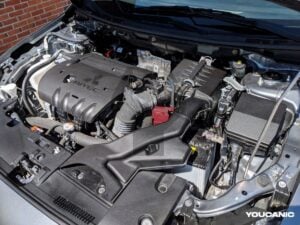
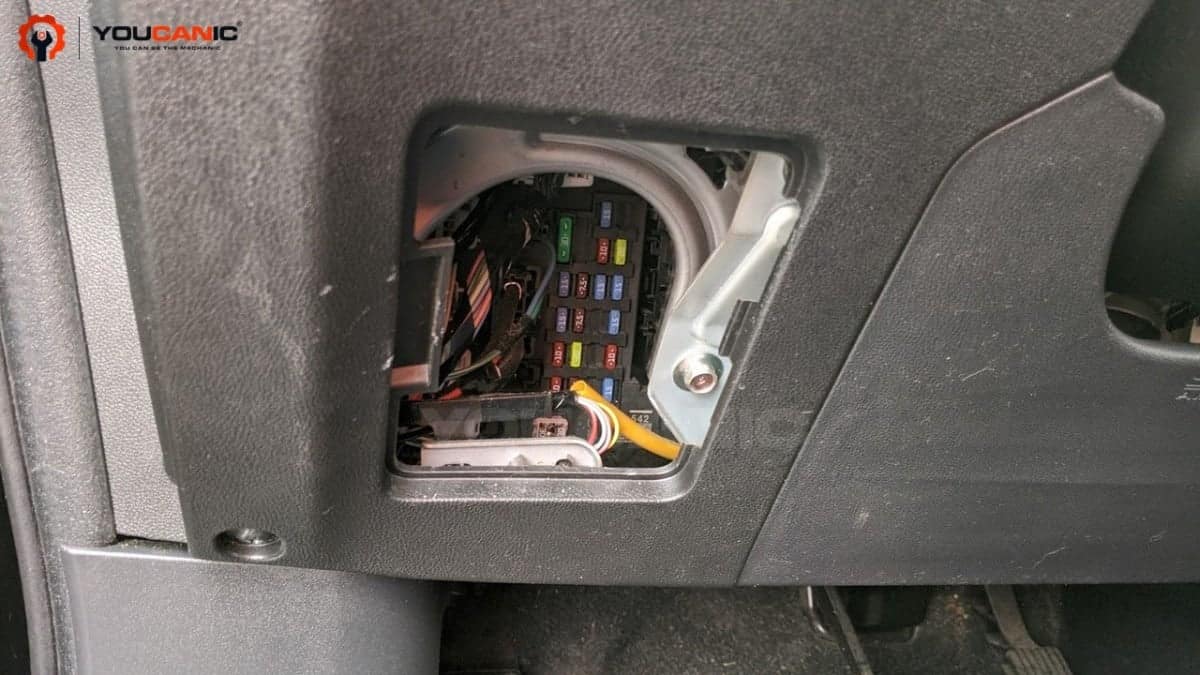
The Outlander Sport has two fuse boxes. The interior box is under the dashboard on the driver’s side, behind a removable trim cover near the kick panel, and it carries the fuses for the cabin electrics such as the radio, the power outlets, the interior lighting and the instrument panel. The engine compartment box sits in the engine bay close to the battery and holds the higher current fuses and the main relays for items such as the cooling fan, the fuel pump, the headlights and the ignition system.
Both boxes have a diagram printed on the underside of the lid that matches the charts below. Always check the lid of your own vehicle as well, because fitment varies with trim level, market and model year, and a car with options your neighbor’s does not have will carry fuses in positions that are empty on theirs.

🔧 Find out what is actually wrong before you pay someone to guess
Dealer level diagnostics at home with the YOUCANIC UCAN-II Pro.
- ✔ Covers most makes and models, including many luxury brands. Send us your VIN and we will confirm your car before you order
- ✔ Reads every module, not just the engine, so you find the faults a basic reader says are not there
- ✔ Commands the car: test a fan or pump, bleed ABS, retract an electronic parking brake, register a battery
- ✔ No subscriptions. Free lifetime updates, so the price you pay is the whole price
- ✔ Backed by real mechanics in the USA you can email before and after you buy
Featured in The Wall Street Journal


| Passenger | ||
| Fuse # | System | Ampere |
| 1 | Heater | 30A* |
| 2 | Stoplights/Brake lights | 15A |
| 3 | Rear fog light | 10A |
| 4 | Windshield wiper | 30A |
| 5 | Optional | 10A |
| 6 | Door locks | 20A |
| 7 | Radio | 15A |
| 8 | Control unit relay | 7.5A |
| 9 | Interior lights/Dome lights | 15A |
| 10 | Hazard warning flasher | 15A |
| 11 | Rear window wiper | 15A |
| 12 | Gauges | 7.5A |
| 13 | Cigarette lighter | 15A |
| 14 | Ignition switch | 10A |
| 15 | Sunroof | 20A |
| 16 | Outside rearview mirrors | 10A |
| 17 | All-wheel drive system | 10A |
| 18 | Back up lights | 7.5A |
| 19 | Accessory socket | 15A |
| 20 | Power window control | 30A* |
| 21 | Defogger | 30A* |
| 22 | Heated door mirror | 7.5A |
| 23 | 115V Power Outlet | 15A |
| 24 | Power seats | 25 (20) A |
| 25 | Heated seats | 30A |
 Engine compartment | ||
| Fuse # | System | Ampere |
| 1 | Front fog lights | 15A |
| 2 | Engine | 7.5A |
| 3 | Automatic transaxle | 20A |
| 4 | Horn | 10A |
| 5 | Alternator | 7.5A |
| 6 | Headlight washer | 20A |
| 7 | Air conditioner | 10A |
| 8 | ETV/ Oil cooler fan | 15A |
| 9 | Security horn | 20A |
| 10 | Wiper deicer | 15A |
| 11 | n/a | n/a |
| 12 | Power gate | 30A |
| 13 | Daytime running lights | 10A |
| 14 | Left headlight/ high beam | 10A |
| 15 | Right headlight/high beam | 10A |
| 16 | Left headlight/low beam | 20A |
| 17 | Right headlight/low beam | 20A |
| 18 | Left headlight/low beam halogen | 10A |
| 19 | Right headlight/low beam halogen | 10A |
| 20 | ENG/POWER | 10A |
| 21 | Ignition coil | 10A |
| 22 | ENG/POWER | 20A |
| Fuel line heater | 25A | |
| 23 | Fuel pump | 15A |
| 24 | Starter | 30A* |
| 25 | n/a | n/a |
| 26 | Anti-lock braking system | 40A* |
| 27 | Anti-lock braking system | 30A* |
| 28 | Air conditioning condenser fan motor | 30A* |
| 29 | Radiator fan | 40A* |
| 30 | IOD | 30A |
| 31 | Audio amplifier | 30A |
| 32 | Diesel | 30A |
| 33 | Spare fuse | 10A |
| 34 | Spare fuse | 15A |
| 35 | Spare fuse | 20A |
How to tell which fuse has blown
Pull the suspect fuse straight out and hold it up to the light. A blade fuse has a colored plastic body with a metal strip running between the two prongs, visible through the plastic. On a good fuse that strip is continuous. On a blown one it is broken in the middle, or the inside of the plastic is darkened and sooty. Most fuse boxes have a small plastic puller clipped inside the lid, and a pair of needle nose pliers will do the same job.
If the strip is hard to see, test the fuse with a multimeter set to continuity while it is out of the box. A good fuse beeps, a blown one does not. You can also test fuses in place with a test light by probing the two small metal contacts on the top of each fuse with the circuit switched on; if the light comes on at one side and not the other, that fuse has blown.
The color of a blade fuse indicates its rating, and the rating is printed on the top. Replace a blown fuse only with one of the same rating.
Never install a larger fuse
This is worth saying plainly because it is the most common and the most expensive mistake. The amperage rating of a fuse is chosen to protect the wiring in that circuit, not the component on the end of it. Putting a 20 amp fuse where a 10 amp belongs allows the circuit to carry current the wire was never designed for, and the next thing to fail is the harness rather than a part you can unplug. In a car that means a melted harness at best and a fire at worst.
Keep a handful of spare fuses in the common ratings in the glove box. They cost a few dollars for an assortment and they turn a stranded evening into a two minute job.
If the new fuse blows immediately
A fuse that fails the moment you switch the circuit on is doing exactly what it was designed to do. Something downstream is shorted to ground, and fitting another fuse will only waste fuses. Start with anything added to the car after it left the factory on that circuit, because aftermarket stereos, dash cameras, trailer wiring, phone chargers and remote starters account for most repeat failures.
If the circuit is untouched, look for a wire that has chafed through its insulation where the harness passes through the body panels or flexes with a door, the tailgate or the hood. Water intrusion into a connector will do the same thing, and on a vehicle of this age a corroded connector in a door jamb is a common find.
When the fuse is fine but nothing works
Fuses are only part of the protection. Many of these circuits pass through a relay mounted in the same box, and a relay that clicks is not necessarily passing current through its contacts. The quickest test available to you is to swap the suspect relay with an identical one from a circuit you can live without for a moment, such as the rear window defroster, and see whether the fault follows it.
Check the ground connection for the component before condemning the component itself. If several unrelated things stopped working at the same time, a corroded chassis ground that they all share is far more likely than several parts failing on the same day. Where the symptom is a warning light rather than a dead circuit, read the stored codes first, since a full system scanner will name the circuit involved and save you working through the chart by elimination.
Frequently Asked Questions
Which fuse is the cigarette lighter on a 2011 to 2019 Outlander Sport?
The chart lists the cigarette lighter as fuse 13 and the accessory socket as fuse 19, both rated 15A.
Which fuse controls the fuel pump on the Outlander Sport?
The fuel pump is fuse 23, rated 15A. Check it if the engine cranks but will not start.
Why does my Outlander Sport horn not work?
Check fuse 4, the 10A horn fuse. Fuse 9 is the 20A security horn, which only affects the alarm.
More guides: browse all of our Mitsubishi repair and troubleshooting guides.