Kia Optima Drive and Water Pump Belt Replacement
Reviewed/Verified by:

Do you need to replace the serpentine belt of your Kia Optima? This step-by-step procedure replaces the serpentine and water pump belts on a 2016 to 2020 Kia Optima. Follow the procedures below to learn how to remove and install the serpentine belt on a Kia Optima.
At a Glance
- Fits: 2016 to 2020 Kia Optima with the 2.4 liter engine, which uses a serpentine belt and a separate water pump belt.
- Access: through the driver side front wheel liner, with the car safely on jack stands or ramps.
- Tools: 17mm wrench for the tensioner, a 22mm wrench, jack stands and wheel chocks.
- The water pump belt is a stretch fit belt; it goes on by turning the crankshaft, not with a tensioner.
- Replace both belts together if they are original or cracked.

What you will need
- Floor jack or car ramps
- Jack stands
- Wheel chocks
- 17mm Wrench
- 22mm Wrench
- Drive Belts
- Serpentine belt
- Water pump belt
Procedure
- Park the vehicle. Jack up the vehicle or put it on car ramps.

- Support the vehicle with jack stands and wheel chocks at the rear wheel.

- Remove the front wheel liner on the driver’s side of the vehicle to gain access to the serpentine belt.
- Go under the vehicle and locate the tensioner pulley/idler pulley. Driver’s side of the engine.

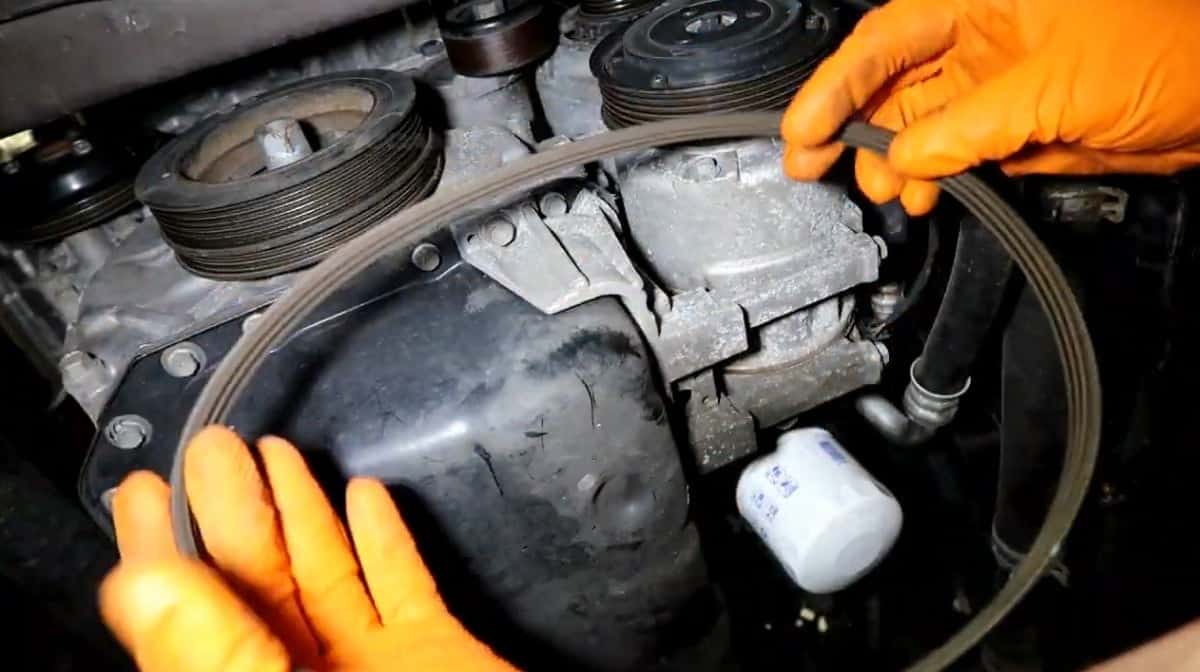
- Twist the bolt counterclockwise on the tensioner pulley using a 17mm wrench to loosen the tension on the serpentine belt and pull the serpentine belt out.


- Release the tensioner pulley when the serpentine belt is removed.
- Remove the belt from the water pump and crankshaft. Turn the crankshaft pulley using a 22mm wrench, and as you move the pulley, remove the belt.


- Get the new belt, line it up back to the pulley, and twist the crankshaft to install the new belt.


- Get the new serpentine belt and line it up back to the pulleys.
- Twist the tensioner pulley counterclockwise and install the serpentine belt on the pulleys. Ensure that every groove of the belt is aligned with the ribs of the pulley.


Photograph the belt routing before removing it
This is thirty seconds that saves an hour. Take a clear picture of how the belt wraps each pulley before you release the tensioner, because the routing is not obvious once the belt is off and getting it wrong means the water pump or alternator turns the wrong way. Many cars also have a routing diagram on a sticker under the hood or on the radiator support, which is worth checking against your photo.
Replace the tensioner and idlers with the belt
A belt that has been squealing or has worn unevenly is often telling you about the tensioner rather than itself. Before fitting the new belt, spin each idler and the tensioner pulley by hand with the belt off and listen for roughness or play, and check the tensioner arm moves smoothly through its travel and springs back. These parts wear at a similar rate to the belt, and fitting a new belt onto a tired tensioner will have it squealing again within months.

🔧 Find out what is actually wrong before you pay someone to guess
Dealer level diagnostics at home with the YOUCANIC UCAN-II Pro.
- ✔ Covers most makes and models, including many luxury brands. Send us your VIN and we will confirm your car before you order
- ✔ Reads every module, not just the engine, so you find the faults a basic reader says are not there
- ✔ Commands the car: test a fan or pump, bleed ABS, retract an electronic parking brake, register a battery
- ✔ No subscriptions. Free lifetime updates, so the price you pay is the whole price
- ✔ Backed by real mechanics in the USA you can email before and after you buy
Featured in The Wall Street Journal
Know the difference between squeal and chirp
A squeal on start up or under electrical load is usually a glazed or loose belt. A rhythmic chirp that keeps time with engine speed normally means a pulley is slightly out of line or a bearing is failing. Chasing the first with a new belt works. Chasing the second with a new belt does not, because the misalignment will chew the new one up as well.
Check the belt for the right reasons
Modern belts rarely crack the way older ones did. The wear that matters is material loss in the grooves, which lets the belt sit deeper and slip, and that is hard to see by eye. Lay a straight edge or a coin across the ribs: if it drops noticeably into the grooves, the belt is finished even though it looks intact. Small cracks across the ribs are normal, cracks running along them are not.
Safety
- Do this with the engine off and the key away from the car.
- Support the car on jack stands or ramps and chock the rear wheels before reaching under it.
- Keep fingers clear of the belt and pulleys while turning the crankshaft by hand.
Frequently Asked Questions
Why does the Optima have two belts?
The serpentine belt drives the alternator and A/C compressor, while a short separate belt drives the water pump. Both wear, so check both when one squeals.
Can I reuse a stretch fit water pump belt?
No. Once removed it loses its tension. Cut the old one off and fit a new stretch fit belt.
How do I know the belt is worn?
Squealing at startup, cracks across the ribs, or a glazed, shiny surface. Replace it before it breaks, because a broken water pump belt can lead to overheating.
More guides: browse all of our Kia repair and troubleshooting guides.