
2004 to 2013 BMW 3-Series Check or Add Brake Fluid
Reviewed/Verified by:

Is the low brake fluid light displayed on your BMW instrument cluster? This guide will provide instructions on adding brake fluid to the 2004 to 2013 BMW 3-Series.
At a Glance
- Check with the car on level ground; the level should be between MIN and MAX.
- Use only the brake fluid type printed on the reservoir cap.
- Wipe the cap clean before opening; brake fluid damages paint.
- A slow drop is normal as pads wear; a fast drop means a leak.
- Brake warning light with a soft or sinking pedal: do not drive.
Symptoms
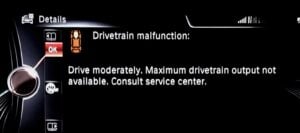
Common symptoms that indicate that you need brake fluid include the brake warning light staying on in your BMW.
- Low Brake Fluid Warning
- Red Brake Light On
- ABS Warning
What you will need
- BMW Brake Fluid
Procedure
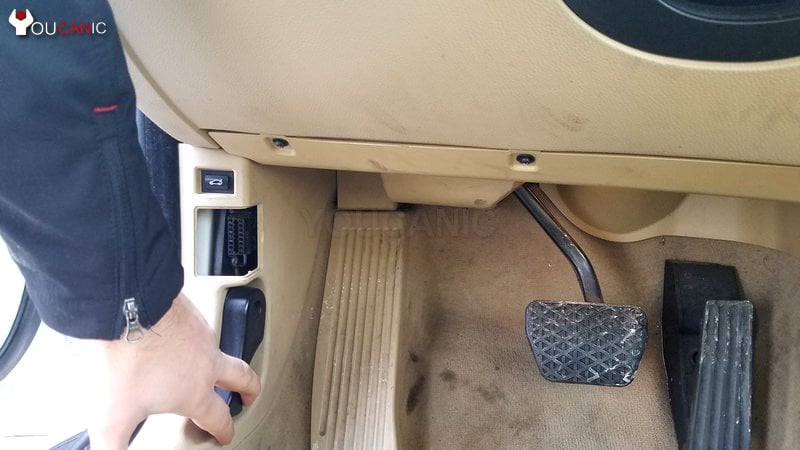
- Open Hood. Pull the hood release under the dashboard to release the hood.

- Locate the brake fluid reservoir on your BMW 3-Series and clean it with a clean cloth. The reservoir is below the plastic cover on the driver’s side, and you will need to remove the plastic cover to access it.
- Determine Low/Maximum level. Check the brake fluid level on the BMW 3-Series. Determine the current brake fluid level by looking at the maximum and minimum marks on the reservoir’s side.

- Add the recommended brake fluid. Add brake fluid until the level is below the MAX/Full mark. Do not fill the brake reservoir with brake fluid to the top.
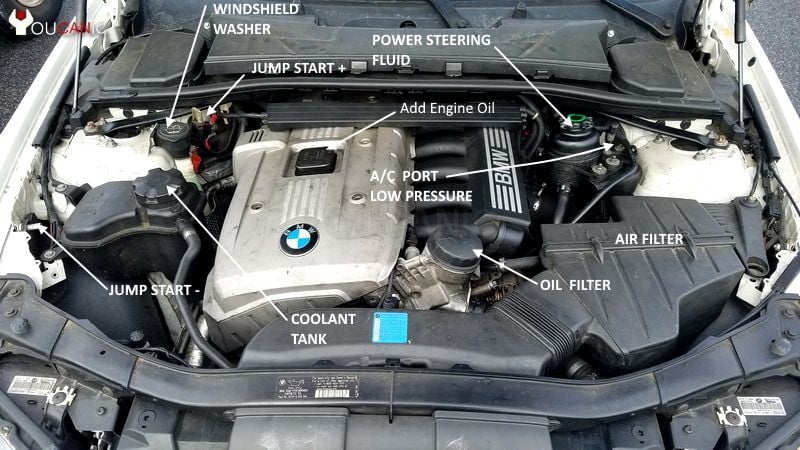

These instructions apply to 2004 to 2013 BMW 3-Series models such as

🔧 Find out what is actually wrong before you pay someone to guess
Dealer level diagnostics at home with the YOUCANIC UCAN-II Pro.
- ✔ Covers most makes and models, including many luxury brands. Send us your VIN and we will confirm your car before you order
- ✔ Reads every module, not just the engine, so you find the faults a basic reader says are not there
- ✔ Commands the car: test a fan or pump, bleed ABS, retract an electronic parking brake, register a battery
- ✔ No subscriptions. Free lifetime updates, so the price you pay is the whole price
- ✔ Backed by real mechanics in the USA you can email before and after you buy
Featured in The Wall Street Journal
- 316i
- 318i
- 320i
- 323i
- 325xi
- 328i
- 330i
- 335i
- 320d
- 325d and M3
Why the brake fluid level drops
The level falls slowly as the brake pads wear, because the caliper pistons move out and hold more fluid. A slow drop over many months is normal and usually means the pads are due for inspection. A noticeable drop in a short time means a leak: check for wet spots inside each wheel, along the brake lines and at the master cylinder. If the brake warning light is on and the pedal feels soft or sinks, do not drive the car.
Do not overfill. When new pads are fitted the pistons are pushed back and the level rises again, so a reservoir topped to MAX on worn pads can overflow later. Use only the fluid type printed on the reservoir cap.
Frequently Asked Questions
What brake fluid does a 2004 to 2013 BMW 3 Series use?
Use the type printed on the reservoir cap, typically DOT 4 on these cars. Do not mix in other fluid types.
Why is my BMW brake fluid low?
A slow drop is normal as the pads wear. A sudden drop or a wet spot near a wheel means a leak that needs fixing right away.
How often should BMW brake fluid be changed?
BMW sets a time based interval, commonly every two years, shown by the brake fluid service reminder.
Check these troubleshooting and repair guides for more help on your BMW.