Toyota Add or Check Brake Fluid Level
Reviewed/Verified by:

Checking and topping up the brake fluid is straightforward and the procedure below covers it. One thing to be clear about first: adding fluid does not fix a soft or spongy brake pedal. A pedal that feels springy, travels further than usual or sinks toward the floor means air in the system, a hydraulic leak or a failing master cylinder. Topping up a reservoir that is low because fluid is escaping hides the warning without fixing anything and the system will simply empty again, so find the cause before driving the car.
At a Glance
- Use the fluid type printed on the reservoir cap (usually DOT 3 on Toyotas); check your owner’s manual.
- Keep the level between MIN and MAX; wipe the cap clean before opening.
- A slowly falling level is normal as pads wear; a sudden drop means a leak.
- Topping up does not fix a soft or sinking pedal; find the hydraulic fault first.
- Brake fluid damages paint; wipe spills right away.
What You Need
- Brake fluid
- The recommended brake fluid is printed on the cap of the brake fluid reservoir and is also listed in your owner’s manual.
- Clean cloth
- Gloves
Procedure
- Park the Toyota on level ground and set the parking brake. Turn off the ignition.
- Open the hood by pulling the release lever located under the driver’s side of the dashboard.

- Depress the safety lever at the front of the vehicle and open the hood.
- Locate the brake fluid reservoir on the engine bay, on the driver’s side.

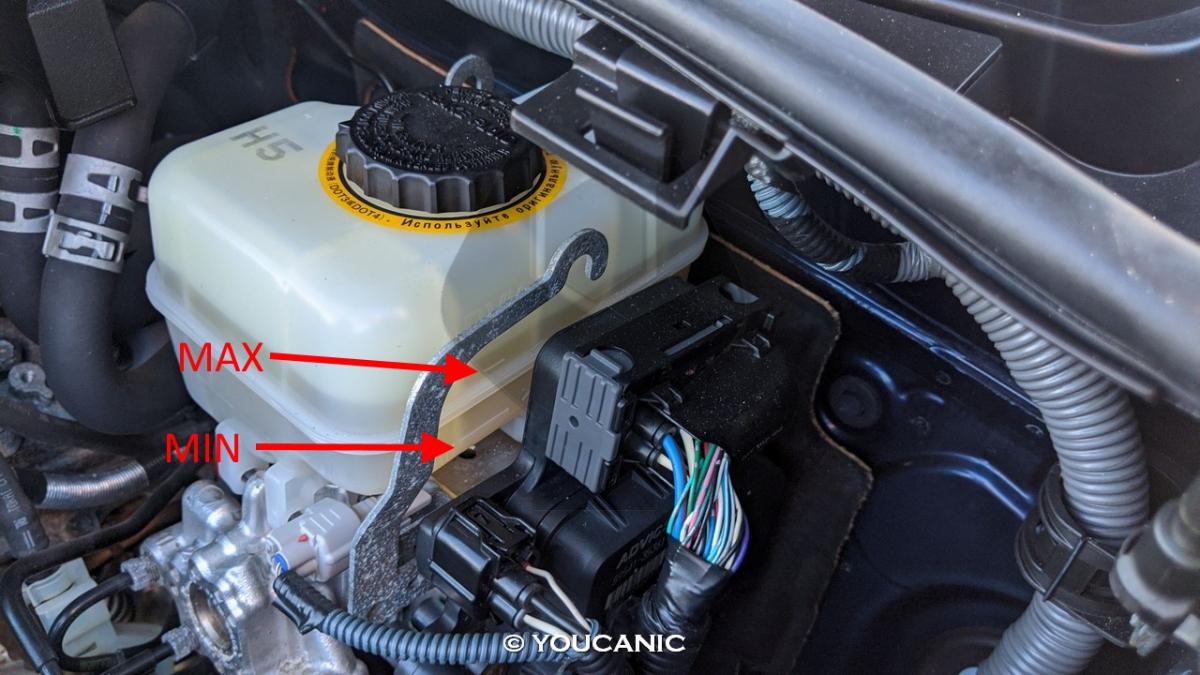
- Notice the level markings on the brake fluid container. Check to see if your brake fluid level is below the MIN marking. If it is, continue to the next step.
- Use a clean cloth to clean the top of the reservoir. Note the recommended brake fluid type. The following example shows that this Toyota requires DOT3 brake fluid, as seen on top of the cap.
- Remove the cap. You will have to lift or turn the cap counter-clockwise to remove it.
- Add the recommended brake fluid to bring the level between the MIN and MAX marks.




Toyota Brake Light Still On After Adding Brake Fluid

If the brake light stays on after adding brake fluid, do not drive without having the vehicle checked by a mechanic. The brake system is closed, and your vehicle should not lose any brake fluid, no matter how many miles are on the vehicle.
The only acceptable reason you may have to top off Toyota brake fluid is when the brake pads wear down. The brake fluid moves from the reservoir to the brake calipers to compensate for the brake pad wear. If you must regularly add brake fluid, have the vehicle inspected by a certified mechanic.

🔧 Find out what is actually wrong before you pay someone to guess
Dealer level diagnostics at home with the YOUCANIC UCAN-II Pro.
- ✔ Covers most makes and models, including many luxury brands. Send us your VIN and we will confirm your car before you order
- ✔ Reads every module, not just the engine, so you find the faults a basic reader says are not there
- ✔ Commands the car: test a fan or pump, bleed ABS, retract an electronic parking brake, register a battery
- ✔ No subscriptions. Free lifetime updates, so the price you pay is the whole price
- ✔ Backed by real mechanics in the USA you can email before and after you buy
Featured in The Wall Street Journal
Frequently Asked Questions
What brake fluid does my Toyota use?
Use the type printed on the reservoir cap, usually DOT 3. Do not mix in other fluids unless your manual allows it.
Is it normal for Toyota brake fluid to go down?
A slow drop is normal as the brake pads wear. A sudden drop or a puddle near a wheel means a leak that needs fixing right away.
How often should Toyota brake fluid be changed?
Follow the interval in your maintenance schedule. Brake fluid absorbs moisture over time, which lowers its boiling point.
Check these troubleshooting and repair guides for more help on your Toyota.