
How To Check And Add Brake Fluid On Your Volkswagen
Reviewed/Verified by:

This guide covers how to check the brake fluid level on a Volkswagen, how to top it up correctly, which fluid specification to use and how to tell when the fluid itself needs replacing. One thing to be clear about before you start: a soft or spongy brake pedal is not fixed by adding fluid. A pedal that feels springy, travels further than usual or sinks slowly toward the floor means air in the system, a hydraulic leak or a failing master cylinder. Topping up the reservoir will hide the warning without fixing anything, and on a system that is losing fluid that is genuinely dangerous. If that is your symptom, find the cause before driving the car.
At a Glance
- Check with the car on level ground; the level should be between MIN and MAX.
- Use only the brake fluid type printed on the reservoir cap.
- Wipe the cap clean before opening; brake fluid damages paint.
- A slow drop is normal as pads wear; a fast drop means a leak.
- Brake warning light with a soft or sinking pedal: do not drive.

Procedure
- Park the Volkswagen on the level ground.
- Turn off the ignition and set the parking brake(s).
- Pull the hood release under the dashboard.
- Go to the front of the vehicle, release the hood latch, and lift the hood.
- Secure the hood with the hood prop rod, or ensure it remains upright.
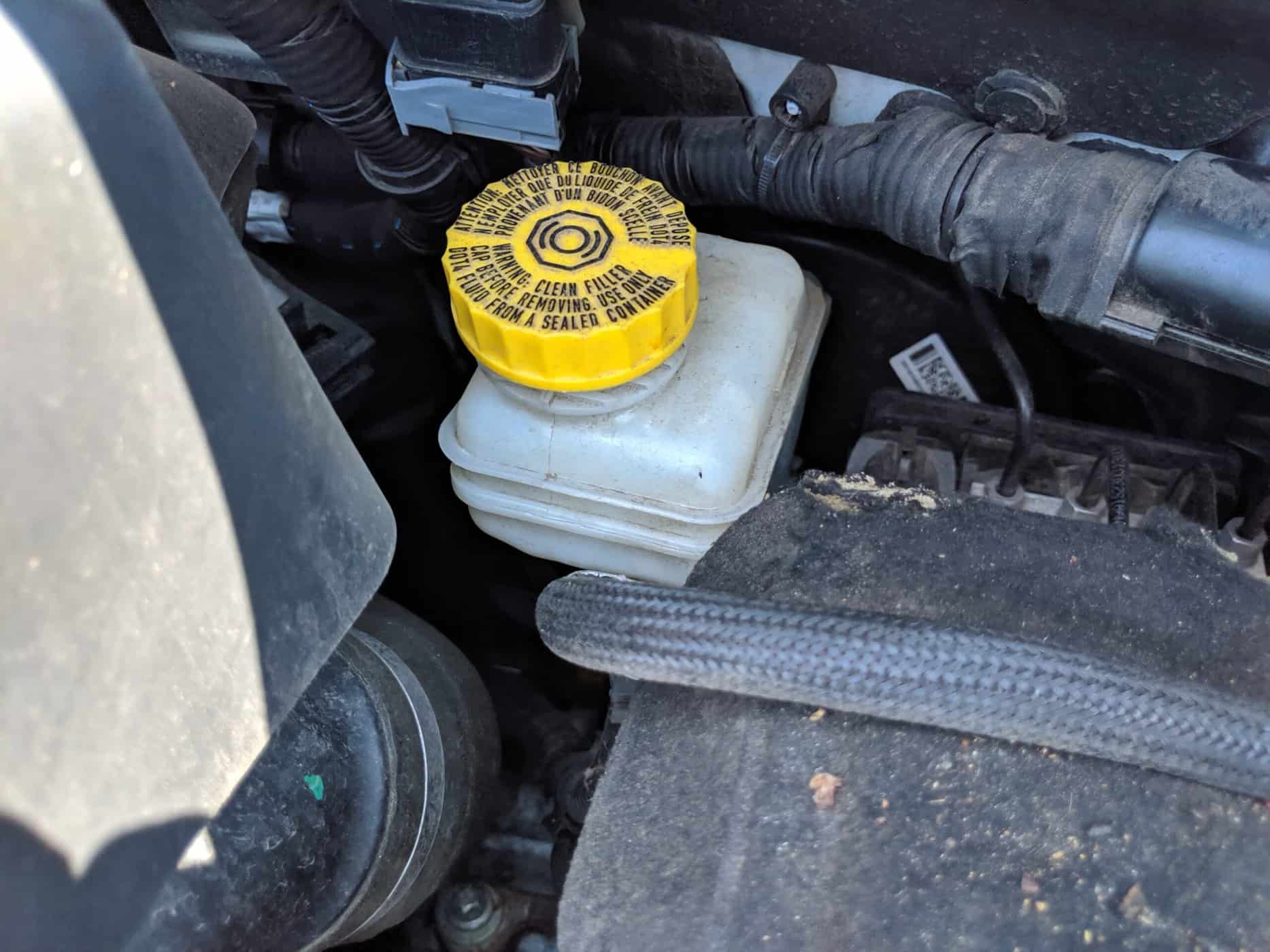
- Locate the brake fluid reservoir in the engine bay on the driver’s side: it is a white reservoir with either a black or yellow cap.

- Look at the side of the container to determine the brake fluid level. If it is below the MIN mark, you must add brake fluid.

- Clean the cap with a lint-free cloth, then inspect the top to determine the required brake fluid type for your Volkswagen.
- Remove the cap and add brake fluid. Do not fill above the MAX line.

VW Brake Fluid Type

Every VW model is different. The best way to determine your VW’s brake fluid type is to check the brake fluid reservoir cap. On top of the brake fluid cap, you will find the brake fluid recommended for your particular Volkswagen.
The most common brake fluid type used on Volkswagen vehicles is DOT4, with VW part number B 000 750 M2. Older Volkswagen vehicles may use DOT 3 brake fluid, while newer models use DOT 5. Always check the recommended brake fluid or the owner’s manual on the brake fluid cap.

🔧 Find out what is actually wrong before you pay someone to guess
Dealer level diagnostics at home with the YOUCANIC UCAN-II Pro.
- ✔ Covers most makes and models, including many luxury brands. Send us your VIN and we will confirm your car before you order
- ✔ Reads every module, not just the engine, so you find the faults a basic reader says are not there
- ✔ Commands the car: test a fan or pump, bleed ABS, retract an electronic parking brake, register a battery
- ✔ No subscriptions. Free lifetime updates, so the price you pay is the whole price
- ✔ Backed by real mechanics in the USA you can email before and after you buy
Featured in The Wall Street Journal
Aftermarket brake fluids can be used if they are the correct type and meet the specifications.
Notes
- Allow the engine to cool down. The engine may be hot and can potentially cause burns.
How to tell whether the fluid itself is finished
Color is a poor guide and most people judge by it anyway. Fresh fluid is pale straw, old fluid is darker brown, but a system can have dangerously high moisture content while still looking acceptable, and some fluids darken quickly without being degraded.
The number that matters is water content, because water is what lowers the boiling point. Brake fluid absorbs moisture from the air continuously, whether the car is driven or parked, and once boiled under heavy braking it turns to vapor, which compresses. The pedal goes to the floor at the exact moment you need it. That is why the bottle quotes two boiling points: a dry figure for fresh fluid and a much lower wet figure for fluid that has absorbed three percent water.
You can measure it. Inexpensive electronic brake fluid testers dip into the reservoir and read moisture content directly, and chemical test strips do the same job for a few dollars. As a rule of thumb, anything at or above three percent water means the fluid is due for replacement regardless of mileage or how it looks. Bear in mind both methods only test the fluid in the reservoir, which is the newest in the system; the fluid sitting in the calipers has been there longer and is worse.
This is why Volkswagen specifies a change by time rather than distance, typically every two years after the first service interval. It is the most commonly skipped item on the schedule and one of the few that is purely a safety item, since nothing about it affects how the car feels until the day it matters.
Buy a small sealed bottle and use it once. An opened container that has stood in the garage has already taken on water, which defeats the point of fresh fluid. And wash off any spill immediately with plenty of water rather than wiping it, because brake fluid lifts paint within minutes.
Why the level drops, and when not to top it up
Brake fluid sits in a sealed hydraulic system and is not consumed, so the level in the reservoir falls for only two reasons, and they call for opposite responses.
The normal one is pad wear. As the friction material wears down, the caliper pistons sit further out and the fluid filling the space behind them comes from the reservoir. A level falling slowly over months with no other symptom is this. Do not top it up. When new pads are fitted and the pistons are pushed back, that fluid returns to the reservoir, and one filled to maximum will overflow.
The one that matters is a leak. If the level has dropped quickly, if it keeps dropping after a top up, or if the pedal feels soft, travels further than it used to or sinks slowly toward the floor, the system is losing fluid or has air in it. Topping up hides the warning without fixing anything and the system will empty again. Find the cause before driving the car.
If the fluid is at the correct level but the brake or ABS warning light stays on, the cause is electrical, such as a fluid level sensor, pad wear sensor or ABS fault. A scan tool such as the YOUCANIC UCAN-II Pro reads Volkswagen ABS and brake codes on supported models so you can see which one it is.
Frequently Asked Questions
How often should I change the VW brake fluid?
We recommend flushing the VW brake system every two years. Moisture can accumulate and corrode brake lines, causing pistons to seize and metal pipes to rust.
How often should I check the brake fluid level on my vehicle?
It is normal to check the brake fluid level once a year, but we recommend doing so more often if you live in a high-humidity area.
Related Guides
- 2009 to 2013 Honda Fit Check Add Brake Fluid
- 2013 to 2020 Ford Fusion Check Level Add Brake Fluid
- Check/Add Brake Fluid Mazda 3 2013 to 2018
- 2006 to 2013 S-Class Mercedes-Benz Check or Add Brake Fluid


