
Hyundai 4-Cylinder Engine Alternator Replacement
Reviewed/Verified by:

Learn how to replace the alternator on a Hyundai vehicle. These instructions will help you change the alternator on most Hyundai vehicles equipped with the 4-cylinder engine, including the Sonata, Accent, Santa Fe, Veloster, Tucson, and Kona, etc.
At a Glance
- Test before buying. A healthy battery reads about 12.6 volts at rest, and the alternator should charge at roughly 13.5 to 14.7 volts with the engine running.
- Disconnect the negative battery cable before you start.
- Belt tension: on the engine shown the alternator sets the tension. Many newer Hyundais use an automatic tensioner instead.
- Check the belt, tensioner and cables so the new alternator does not fail the same way.
- Match the part number and pulley type of the old unit, and return the core.
 The pictures in this guide show how to replace alternators on the Hyundai Elantra, and the basic steps are similar on other Hyundai four cylinder engines. The main difference is how the belt is tensioned, which is covered in the steps below.
What you will need
- Hyundai Alternator
- Ratchet wrench
- Metric Socket Set
- Flathead screwdriver
- Torque wrench
Procedure
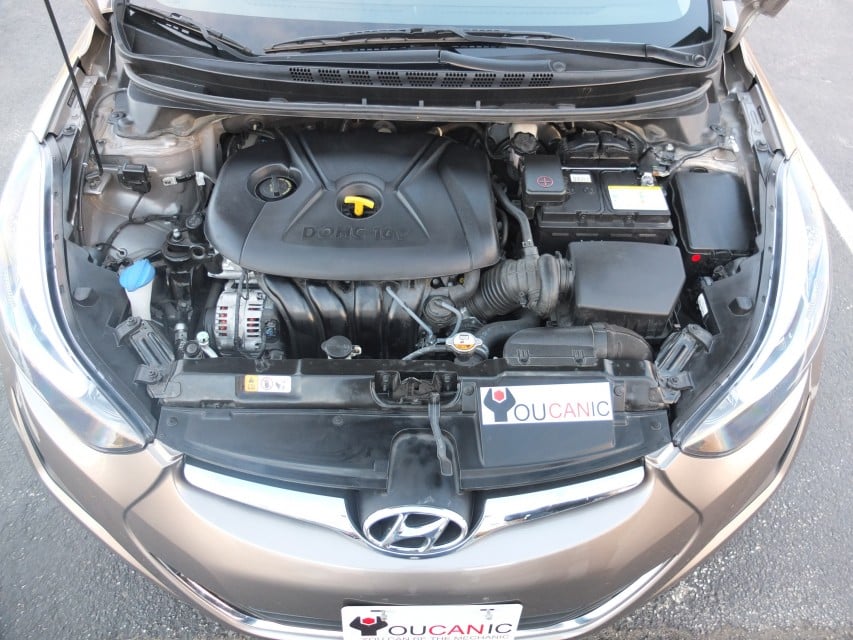
- Park your Hyundai, set the parking brake, turn off the ignition, and open the hood.

- Locate the battery in the engine bay. Disconnect the negative battery terminal before you start work on the alternator.
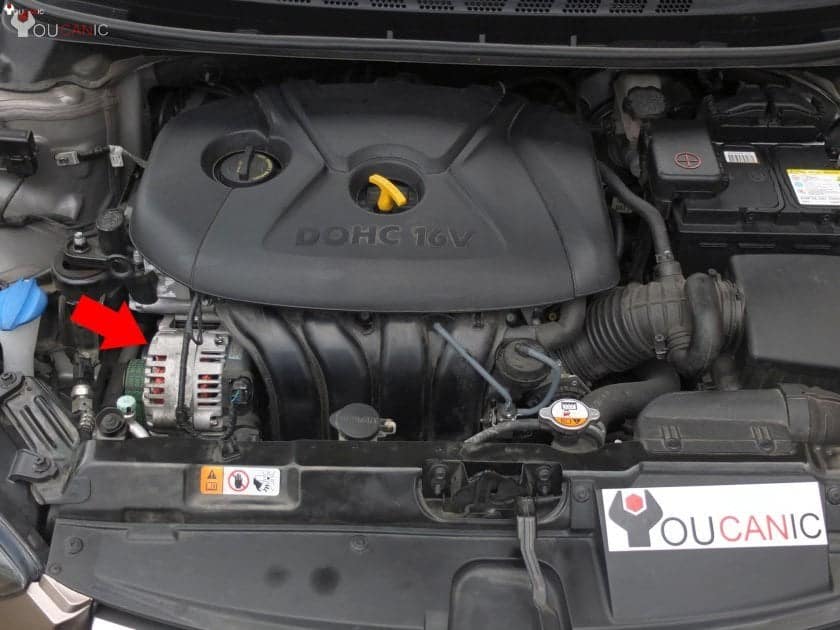
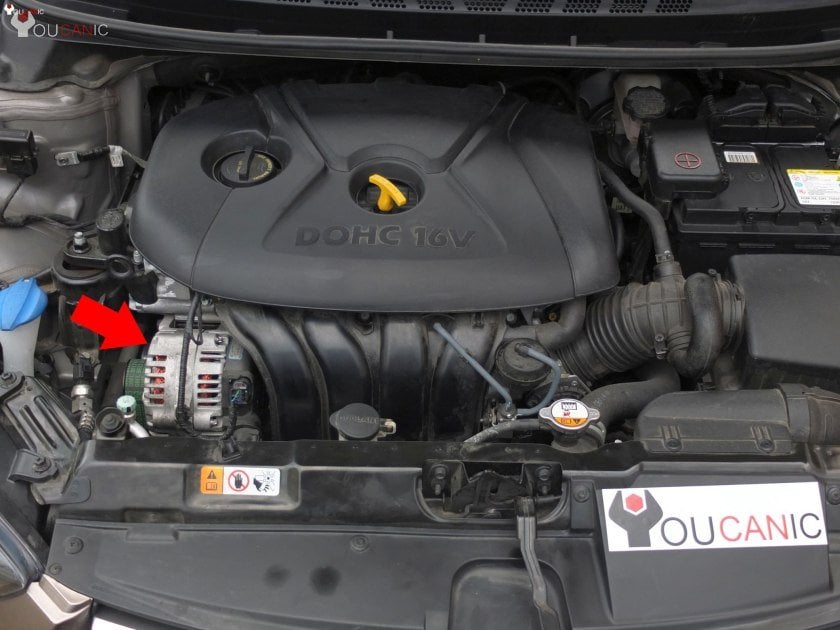
- Locate the alternator on the engine.

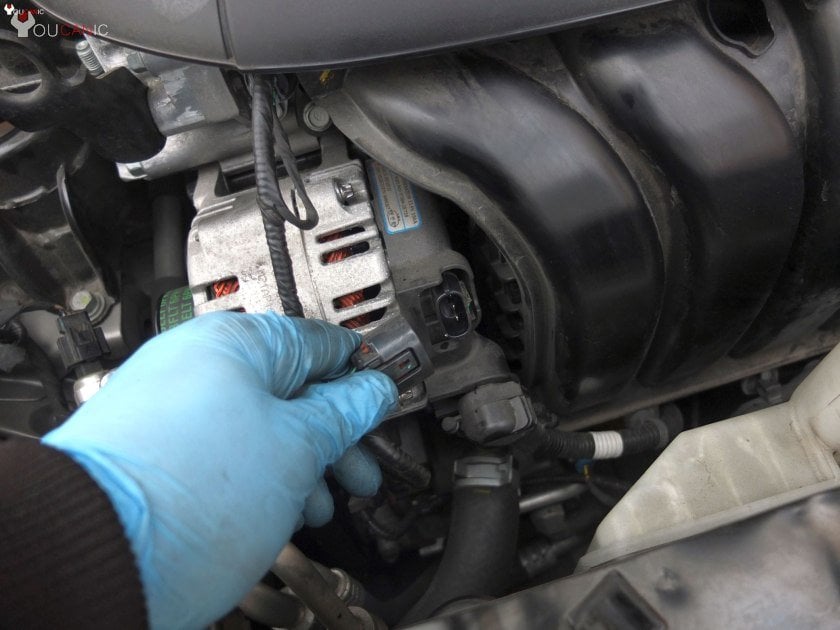
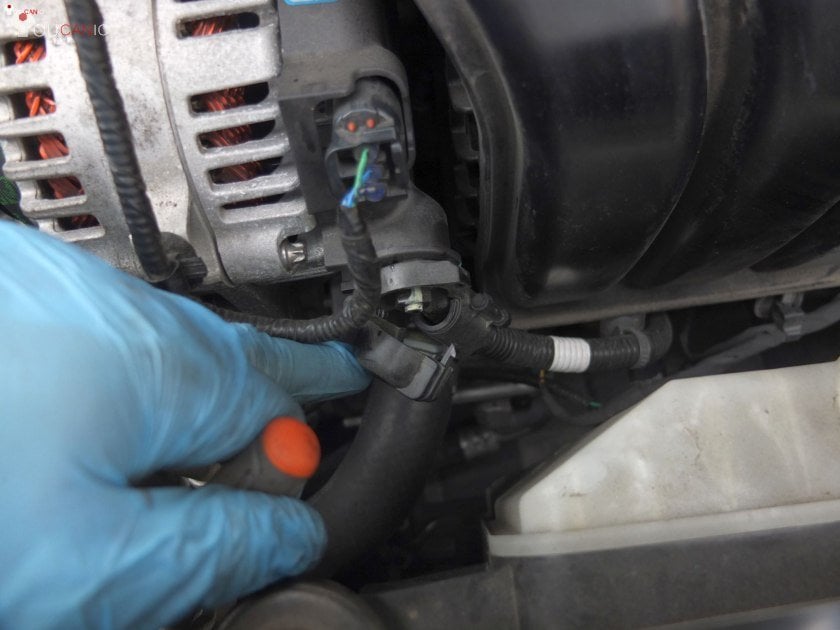
- Disconnect the alternator electrical cables by pressing on the electrical connector and then pulling it.
- Next, remove the 12 mm bolt that secures the main alternator harness.
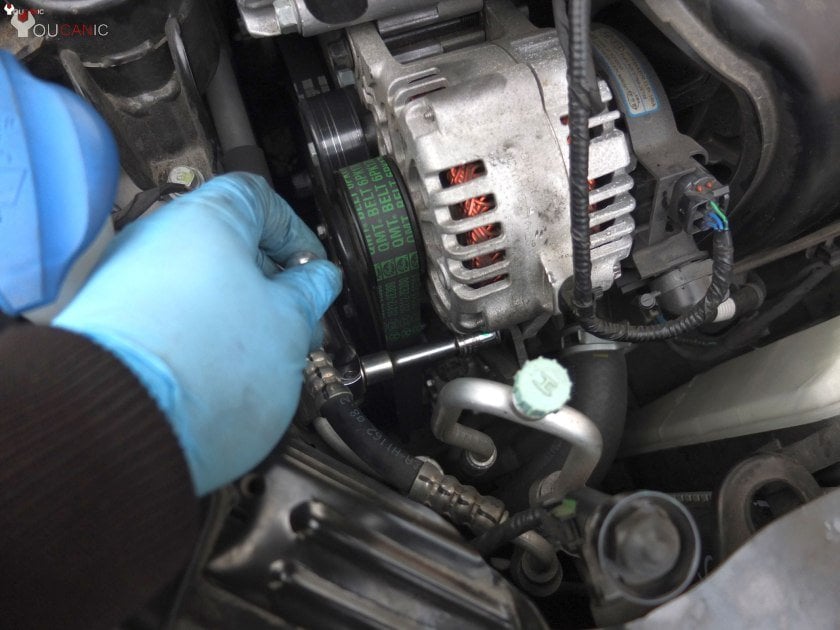
- Next, you need to remove the serpentine belt. Loosen the two alternator bolts. A 12 mm and a 14 mm bolt need to be removed. Loosen the bolt that tightens the serpentine belt. Now, you can push the alternator down and remove the serpentine belt.
- Remove the alternator. The electrical connector should be disconnected at this point.
- Install the new alternator in reverse order.
- On the engine shown, the alternator itself sets the belt tension. Pull the alternator out until the belt is tight, then tighten the adjusting bolt and the pivot bolt to the torque in your service manual. If the belt squeals when you start the car, it is too loose and needs adjusting again. Many newer Hyundai engines use an automatic belt tensioner instead: on those, rotate the tensioner with a wrench to slip the belt off and on, and there is no tension to set.
Video

Test the charging system before you buy an alternator
An alternator is not a cheap part, and a dead battery is not proof that the alternator has failed. The two fail in ways that look identical from the driver’s seat, and a tired battery will destroy a healthy alternator by making it work at full output continuously. Test both before you spend anything. With the engine off and the car having sat for a few hours, a healthy battery reads about 12.6 volts across its terminals. Start the engine and the reading should rise to somewhere between roughly 13.5 and 14.7 volts, which shows the alternator is charging. A reading that stays around 12 volts with the engine running means the alternator is not contributing, while a reading above about 15 volts points at a failed voltage regulator and will boil a battery dry. Most parts stores will carry out a proper load test on both the battery and the alternator free of charge, and that test is far more reliable than a voltmeter alone. Be aware that many later Hyundai models use a managed charging system where the engine control module deliberately varies alternator output to save fuel. On those cars the voltage legitimately rises and falls while you drive, and a low reading taken at the wrong moment is not evidence of a fault. If you see a charging warning light, read the stored code rather than relying on a voltmeter, because a full system scanner will show the commanded and actual charging voltage and tell you whether the module is limiting output on purpose.Check these before fitting the new alternator
Three things cause what looks like a repeat alternator failure. The first is the serpentine belt and its tensioner. A glazed belt slipping on the pulley will not drive the alternator hard enough to charge under load, and a weak tensioner does the same thing. If the belt squeals on a cold start or when you switch on the headlights, deal with that before blaming the alternator. The second is the main charging cable and the ground straps. The heavy cable from the alternator to the battery and the engine to body ground straps both corrode, and the resulting voltage drop looks exactly like a weak alternator. Measure the voltage at the alternator output and again at the battery positive terminal with the engine running; a difference of more than a few tenths of a volt means you have resistance in that cable rather than a charging fault. The third is the battery itself. Fitting a new alternator to a battery with a dead cell will have the new alternator running at maximum output permanently, and it will fail early. If the battery is more than about five years old and has been fully drained, replace it at the same time. When you do buy, a remanufactured unit from a reputable supplier is usually good value, but check whether the price includes the core charge and keep the old unit to return. Compare the part number and the pulley type against your original before fitting, since clutch pulleys and solid pulleys are not interchangeable and the wrong one will cause belt noise and premature wear.Frequently Asked Questions
How do I know the Hyundai alternator is bad and not the battery?
With the engine running, a healthy charging system shows about 13.5 to 14.7 volts at the battery. If the voltage stays near 12 volts with a good battery, the alternator is the likely cause.
Can I drive with a failing alternator?
Only a short distance. The car runs on battery power until it is drained, then it stalls and may lose power steering assist. Turn off accessories and head to a safe place.
Do I need to disconnect the battery to replace the alternator?
Yes. The alternator output cable is always live, so disconnect the negative battery terminal first to avoid a short.

No subscriptions • lifetime updates
🔧 Find out what is actually wrong before you pay someone to guess
Dealer level diagnostics at home with the YOUCANIC UCAN-II Pro.
- ✔ Covers most makes and models, including many luxury brands. Send us your VIN and we will confirm your car before you order
- ✔ Reads every module, not just the engine, so you find the faults a basic reader says are not there
- ✔ Commands the car: test a fan or pump, bleed ABS, retract an electronic parking brake, register a battery
- ✔ No subscriptions. Free lifetime updates, so the price you pay is the whole price
- ✔ Backed by real mechanics in the USA you can email before and after you buy
Featured in The Wall Street Journal
MSRP $749 $499
See if it covers your car
Free USA shipping · 31 day money back guarantee · USA support
More guides: browse all of our Hyundai repair and troubleshooting guides.
Yo bro I’m having the hardest time putting the serpentine belt back on.