Lexus OBD-II Diagnostic Port Location
Reviewed/Verified by:

On every 1996 and newer Lexus, the OBD II port is a standard 16 pin socket under the dashboard on the driver’s side, usually just left of or below the steering column. Plug a scanner in there to read check engine codes and live engine data.
At a Glance
- Location: under the driver’s side dashboard, near the steering column, on all 1996 and newer Lexus models.
- Pictures below cover the IS 250, ES 330, ES 350 and GX.
- Generic readers show engine codes only; ABS, VSC, airbag and body codes need a Toyota and Lexus capable scanner, such as the YOUCANIC UCAN-II Pro.
- Will not connect: ignition on, plug fully seated, and check the fuse shared with the 12 volt outlet.
Where do I find the OBD-II port on my Lexus?

The onboard diagnostics port (OBD) is under the dashboard on the driver’s side of Lexus vehicles. The exact spot varies a little by model. However, it is usually located near the steering column under the dashboard. Some common places to look include:
- Below the steering wheel
- Low on the driver’s side of the lower dash panel
- Near the driver’s side kick panel
It is recommended to consult the owner’s manual for the specific location of the OBD II port in your Lexus vehicle. The port is often shaped like a rectangle and has a 16-pin connector that can be used to connect a diagnostic scanner to the vehicle’s computer system. Take a look at these pictures for more help.

🔧 Find out what is actually wrong before you pay someone to guess
Dealer level diagnostics at home with the YOUCANIC UCAN-II Pro.
- ✔ Covers most makes and models, including many luxury brands. Send us your VIN and we will confirm your car before you order
- ✔ Reads every module, not just the engine, so you find the faults a basic reader says are not there
- ✔ Commands the car: test a fan or pump, bleed ABS, retract an electronic parking brake, register a battery
- ✔ No subscriptions. Free lifetime updates, so the price you pay is the whole price
- ✔ Backed by real mechanics in the USA you can email before and after you buy
Featured in The Wall Street Journal
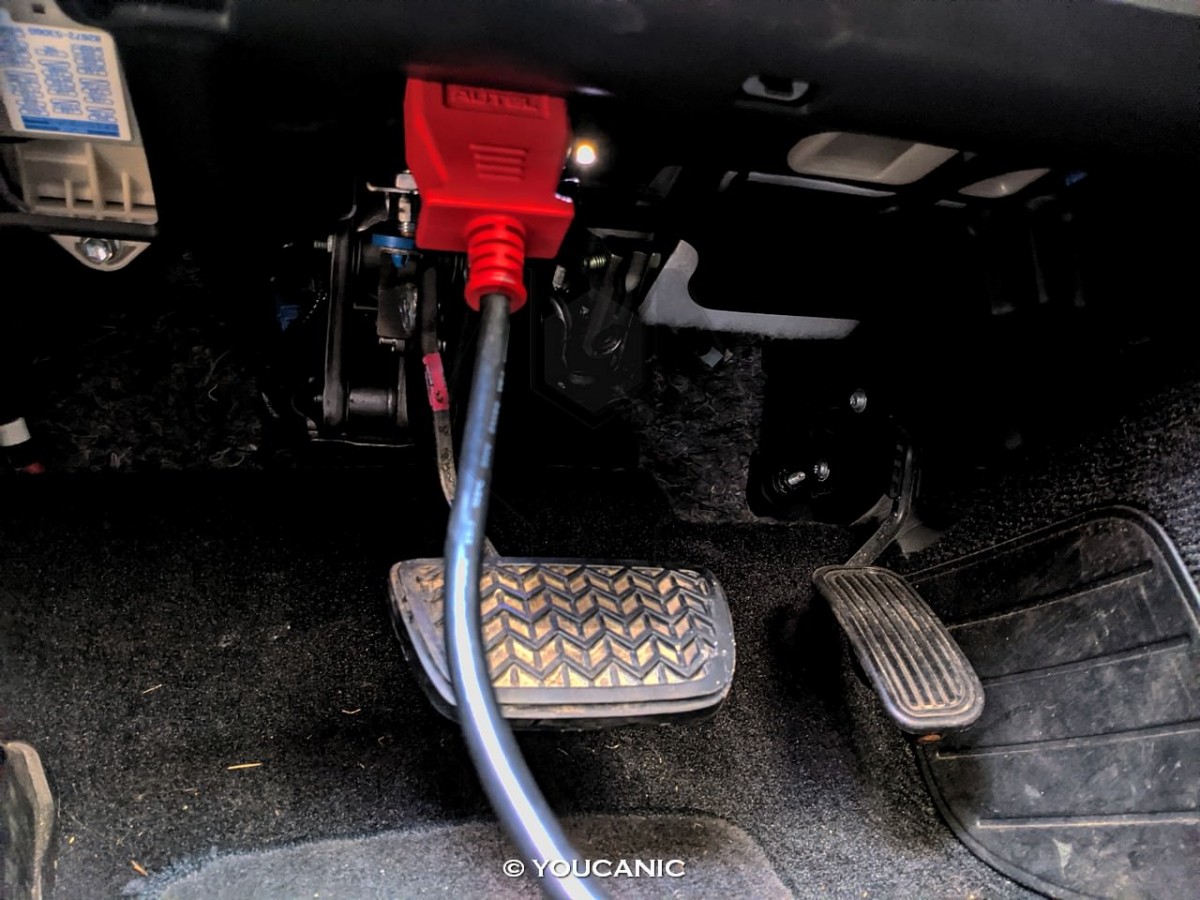
2007 Lexus IS 250 OBD II Port Location

2004 Lexus ES 330 OBD-II Port Location

2016 Lexus GX OBD II Port Location
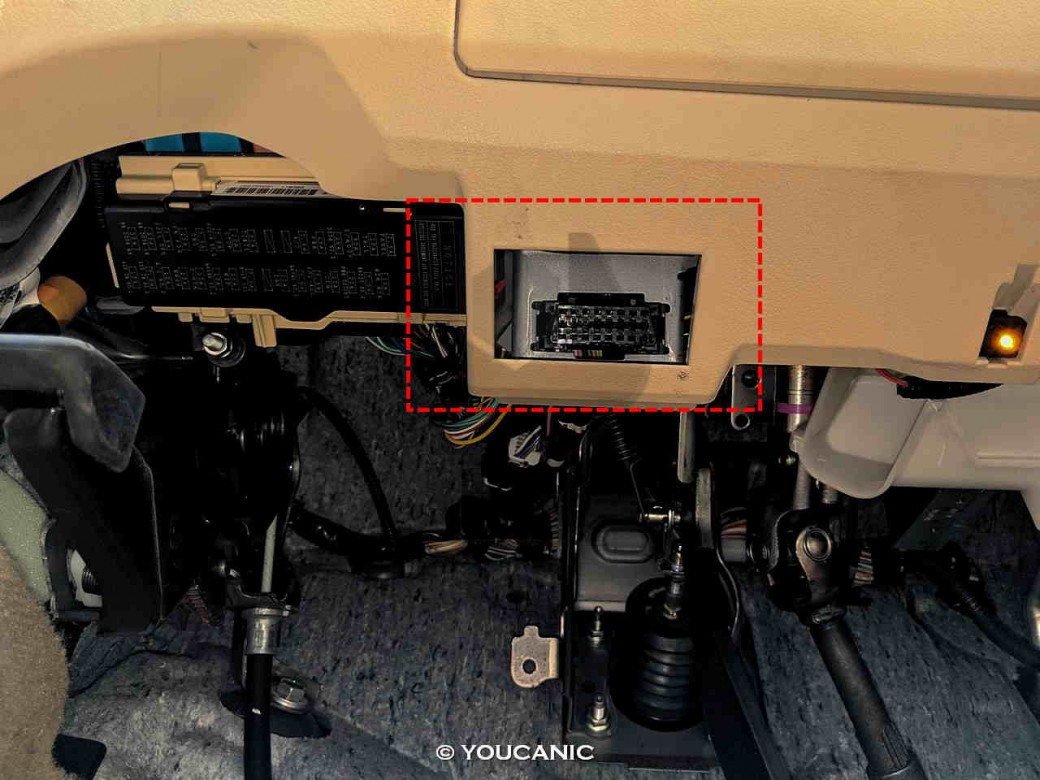
2010 Lexus ES 350 OBD-II Port
Scanner connected but not communicating?
Turn the ignition to the ON position so the dashboard lights come on without starting the engine, because Lexus modules will not respond to a scan tool with the ignition off. Then check the plug is pushed fully home, since a partly seated connector powers the tool from the port while failing to pass any data.
If the scanner gets no power at all, test the fuse that feeds the diagnostic socket before assuming the port has failed. On most Lexus models it shares a circuit with the accessory socket, so if the 12 volt outlet is also dead you have found it.
What a basic reader will not show you
A generic OBD2 reader only reaches emissions related engine data. On a Lexus that leaves out the ABS and VSC stability control, the airbag system, the transmission and the body modules, which is where most dashboard warnings actually originate. It is the reason a car with warning lights can still report no codes stored.
Reading those systems requires a full system scanner that supports Toyota and Lexus specific protocols.
Lexus Models Built Before 1996
Lexus models older than 1996 use the earlier Toyota diagnostic connector under the hood instead of the 16 pin OBD II port. On those cars you can read engine codes by bridging two terminals and counting the check engine light flashes; see our guide to reading Toyota and Lexus codes without a scanner.
What to do next: Lexus hides its faults in the right places
These cars are reliable enough that when a light does appear, the cause is usually a specific sensor rather than a general condition. That makes reading the correct module worth more here than guessing from symptoms, and it is where a basic tool runs out of road.
- Read the brake controller for any ABS, VSC or traction warning. Those three lights often come on together and the code behind them is not in the engine module.
- Check live wheel speed data. A sensor that drops out only while moving will not always leave a code behind, and this is the fastest way to catch it.
- Confirm the battery before condemning electronics. Low voltage sets faults across modules on these cars and sends people after parts they do not need.
- Clear, then drive, then look again. Stored history and current faults are different things and only the second one needs fixing.
Our guide on Lexus Read & Clear ABS Fault Codes covers that process in detail.
The YOUCANIC UCAN-II Pro reads the brake, body and chassis modules alongside the engine and performs the available service functions, with a seven day rental if this is a single repair. Email support with your VIN to confirm coverage for your model year.
When you do not need any of this
One engine code, looked up, decision made. Or a tracker fitted. The port location is all those need.
Frequently Asked Questions
Is the Lexus OBD II port the same as a Toyota one?
Yes. Lexus uses the same standard 16 pin OBD II connector and the same diagnostic system as Toyota, so a scanner with Toyota coverage works on a Lexus.
How do I scan a Lexus hybrid?
Plug in the scanner and put the car in READY mode or ignition on. Hybrid system codes are stored in their own modules, so use a scanner that reaches the hybrid control system, not just the engine.
Why is the VSC light on but my reader shows no codes?
On many Lexus models an engine fault switches the VSC and traction systems off as a precaution. A basic reader may miss codes stored in the skid control module, so scan all modules before replacing parts.
Related guides: How to Read and Clear Fault Codes on a Lexus · Lexus Dashboard Warning Lights Symbols