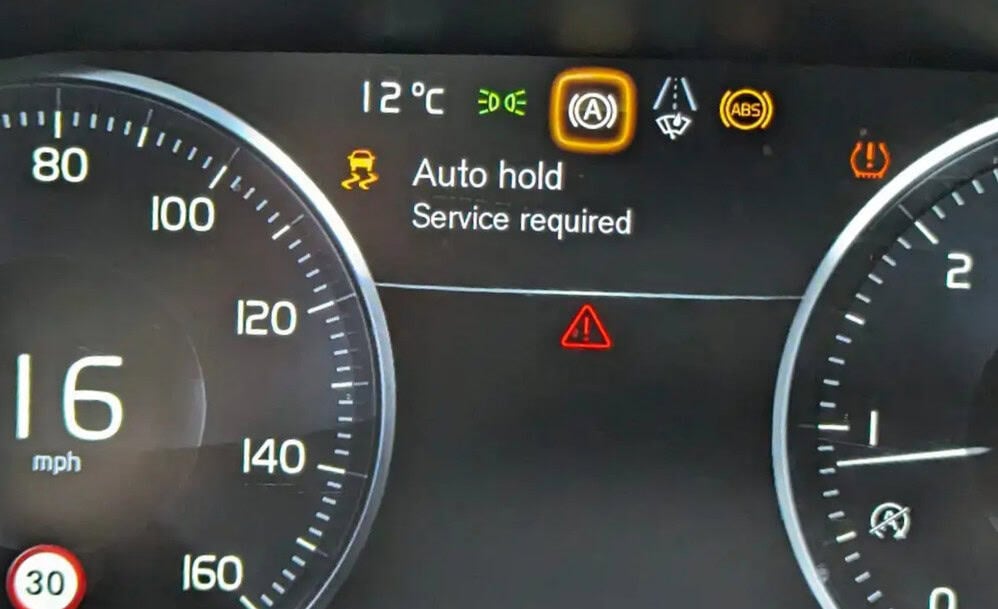
Volvo Auto Hold Service Required: Causes, Troubleshooting & DIY Fixes

Medium
1-5 hr
$280
When the “Auto Hold” warning message appears on your Volvo dashboard, it means there is an issue with the brake system that requires attention. Ignoring this warning will disable the function of your Auto Hold feature. It is important to diagnose and address the issue as soon as possible.
The “Auto Hold” is a safety feature in newer cars that automatically keeps your vehicle stationary without requiring you to keep your foot on the brake pedal. It is designed to make driving safer and more comfortable, especially in stop-and-go traffic and on inclined roads. If the “Auto hold Service required” warning message appears, it means your Auto Hold feature and other systems connected to it may be malfunctioning
⚠️ Why You Should Fix It As Soon As Possible
🛠️ Pro Tip: Use an OBD-II scanner to check for error codes related to the issue.

Before taking your car to a mechanic, try these DIY fixes:
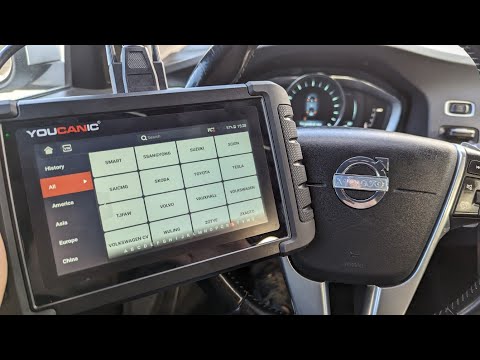
Follow this video to learn how to perform a full system scan on a Volvo.

➡️The best time to use Auto Hold is in traffic or on slopes. However, you can always keep it on, depending on your driving habits.
➡️Yes, Auto Hold is an additional safety feature designed for a more convenient driving experience. However, ensure that your brake pads are in good condition and your Electronic Parking Brake (EPB) is functioning correctly. We recommend visiting a workshop as soon as possible to repair the issue.
➡️Yes. Unfastening the seatbelt will disable Auto Hold, as it is a key requirement for activation.
➡️No, parking your vehicle using Auto Hold is not advisable. Instead, activate the Electronic Parking Brake (EPB). In some vehicles, Auto Hold will automatically engage the EPB when the vehicle is parked and the engine is turned off. (Refer to your vehicle manual for details.)
➡️No, conventional handbrakes do not have the Auto Hold function because they rely on a mechanical system that requires manual operation by the driver.
A faulty Auto Hold should never be ignored, as it could indicate a serious issue with your vehicle’s braking, comfort, and safety. Following these troubleshooting steps and scanning for fault codes can save you time and money while ensuring your car remains safe and reliable.
Elbert G. Nonog is an Automotive Technical Writer and Training Manager with over 10 years of experience across major brands including Chevy, MG, Ford, Volkswagen, and Toyota. Rising from technician to leadership roles, Elbert excels at transforming complex automotive concepts into accessible training materials and documentation. His expertise spans conventional and electric vehicle systems, nationwide dealership training, and aftersales operations management. With TESDA certification and pursuing further education from the Technological University of Philippines, Elbert effectively bridges the gap between automotive engineering and practical application for industry professionals and enthusiasts.

Rushit Hila is a dedicated automotive engineer with ASE G1 certification and specialized training from an esteemed Automotive Specialty School. His hands-on experience and technical expertise in advanced diagnostics, system integration, and performance optimization make him a trusted voice in the industry.
Searching...
⭐⭐⭐⭐⭐ 4.8 stars · 247 Verified Reviews
The UCAN-II-D gives you full system diagnostics, bidirectional controls, and lifetime free updates. One scanner. Own it forever.
+ Free shipping · No subscription ever