
Honda CVT Transmission Fluid Change Guide
Reviewed/Verified by:

Do your Honda CVT gears slip, your transmission has a whining/grinding noise, and you can’t go into reverse? Old, worn CVT fluid can cause these symptoms, and changing it is the first, cheapest step. If the transmission keeps slipping or will not engage reverse after a fluid change, it needs a proper diagnosis.
At a Glance
- Fluid: Honda HCF 2 for CVTs; about 4 quarts on hand, though a drain and fill takes less.
- Drain plug about 35 ft lb with a new washer.
- Final level check: car level, fluid warm, until a small trickle runs from the check hole.
- A fluid change won’t cure a CVT that already slips or won’t engage; get it diagnosed.
- Some models need the CVT fluid life reset or a scan tool procedure afterwards.
- A scanner such as the YOUCANIC UCAN-II Pro reads transmission codes and live data on supported Hondas.
When to Change Honda CVT Fluid
- When the Maintenance Minder shows the transmission fluid code (often code 3).
- Shudder or judder when pulling away from a stop.
- Whining that gets louder with speed, or slow engagement into Drive or Reverse.
- Fluid that is dark brown or smells burnt.
If the transmission already slips, flares or will not engage, read the transmission codes before spending money on fluid. Codes such as P0841 (fluid pressure sensor) or pressure control solenoid faults point to a problem that a fluid change will not fix.
What you will need
- Honda CVT Transmission fluid ( 4 quarts)
- Vehicle ramps
- Jack stands
- Wheel chocks
- Torque wrench
- Drain pan
- Oil funnel (long)
- 3/8″ Ratchet wrench
Procedure
Drive your Honda up on car ramps. Secure the rear wheel with wheel chocks. Place the car in Park and set the parking brake.

🔧 Find out what is actually wrong before you pay someone to guess
Dealer level diagnostics at home with the YOUCANIC UCAN-II Pro.
- ✔ Covers most makes and models, including many luxury brands. Send us your VIN and we will confirm your car before you order
- ✔ Reads every module, not just the engine, so you find the faults a basic reader says are not there
- ✔ Commands the car: test a fan or pump, bleed ABS, retract an electronic parking brake, register a battery
- ✔ No subscriptions. Free lifetime updates, so the price you pay is the whole price
- ✔ Backed by real mechanics in the USA you can email before and after you buy
Featured in The Wall Street Journal
Remove the splash shield from under the engine. It is held in place with four Philips screws. Remove the plastic right below the transmission.
Remove the drain bolt with a 3/8 ratchet. Allow the transmission fluid to drain fully. Replace the washer on the drain bolt and wipe it clean before installation.
Reinstall the drain bolt and tighten it to 35 ft-lb.
Remove the 17mm bolt on the side of the transmission housing. This is where you will check the transmission fluid level if your Honda does not have a dipstick. The level is full when transmission fluid starts to drip out of this hole. 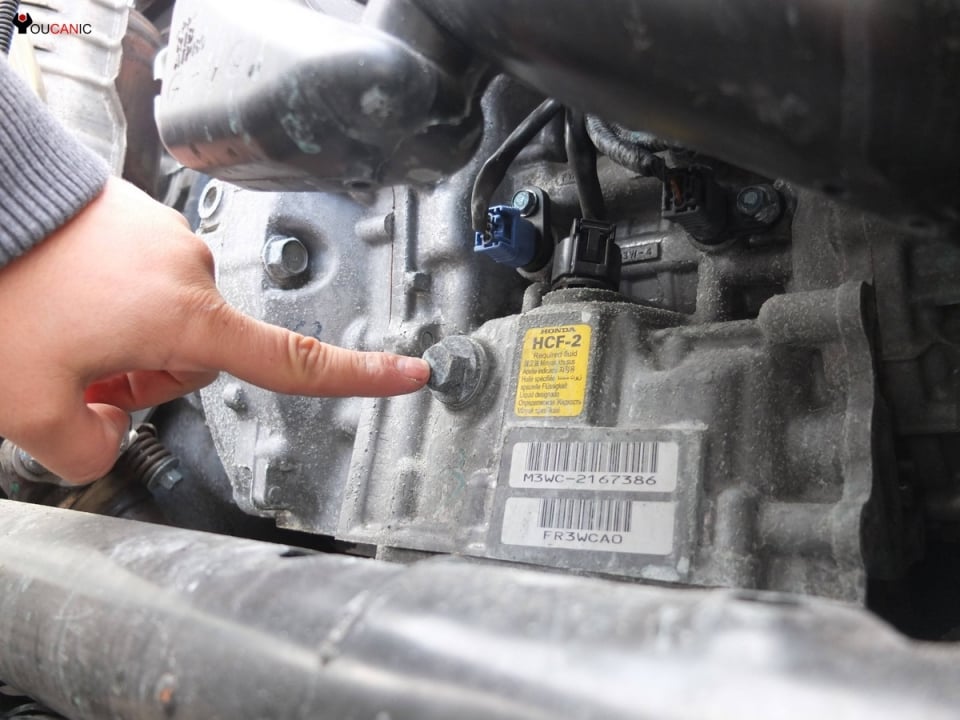
Remove the fill plug located at the top of the automatic transmission housing. This is a black plug with a hook at the end.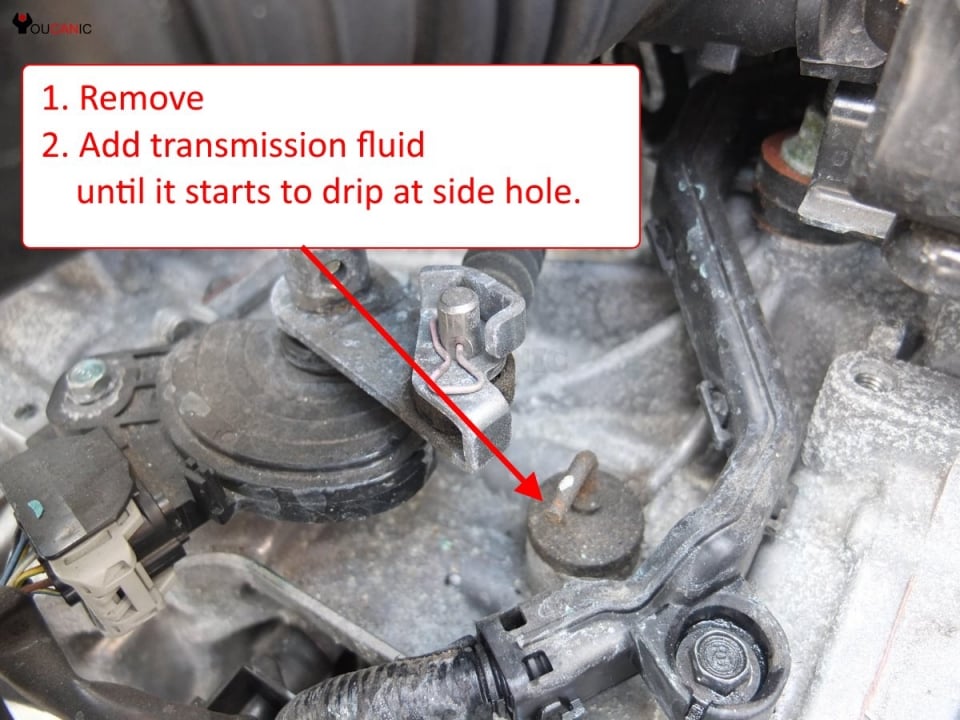
Add Honda HCF 2 CVT fluid (or the fluid listed in your owner’s manual) until it starts to drip at the check hole. The level is only accurate with the car level, so if it is on front ramps, add roughly the amount that drained out and do the final level check after lowering it or raising all four corners evenly.
Remove the funnel and reinstall the cap for the filler hole. Install the 17mm bolt on the side of the transmission housing.
Start the engine, check for any issues/leaks, and drive it for 15 minutes to bring it to normal operating temperature.
Recheck the automatic transmission fluid level via the check hole. There should be a small amount of automatic transmission fluid dripping from the hole when removing the 17mm bolt. If there is no transmission fluid dripping from the check hole, top off until you see transmission fluid dripping from the check hole.
Torque Specifications
- Drain bolt: 35 ft-lb.
Notes
- When you drain the transmission pan and refill, you only change about 40% of the transmission fluid.
- Check transmission fluid level at operating temperature with the engine off: car on level ground.
Guide and pictures are from a 2015 Honda Civic, but owners of other Honda vehicles with CVT transmissions such as Fit, Freed, HR-V, Mobilio, Jazz, and Insight will also find these instructions helpful.
Check these troubleshooting and repair guides for more help on your Honda.
Frequently Asked Questions
How often should I change Honda CVT fluid?
Follow the Maintenance Minder. Many owners change it every 25,000 to 50,000 miles, sooner with towing, hills or heavy city driving.
Can I use universal CVT fluid in my Honda?
Use Honda HCF 2 or the fluid listed in your owner’s manual. Honda CVTs are sensitive to fluid type, and the wrong fluid can cause judder.
How much CVT fluid does a Honda take?
A drain and fill replaces only part of the fluid, usually around 3 to 4 quarts depending on the model. Fill until fluid trickles from the check hole with the engine warm and the car level.
Related guides: Troubleshooting Honda Transmission Problems · Check Honda Transmission Fluid | No Dipstick Present