
Kia Lower Ball Joint Replacement
Reviewed/Verified by:

Learn how to change lower ball joints on most Kia vehicles. These instructions and pictures are for the 2011 to 2016 Kia Optima, but owners of Kia Cadenza, K900, Soul, Niro, Sportage, Sorento, Sedona, Forte, and Rio will also find these instructions helpful.
At a Glance
- Shown on: 2011 to 2016 Kia Optima; similar on Forte, Soul, Sorento, Sportage and more
- Symptoms: Clunking over bumps, loose steering, uneven tire wear
- Check: Rock the raised wheel top to bottom and watch the ball joint for play
- Note: On many Kias the ball joint comes with the control arm
- After: Get a wheel alignment
How to Replace Kia Lower Ball Joint
Signs of a Worn Lower Ball Joint
- Clunking from the front suspension over bumps
- Wandering or loose steering
- Uneven inner or outer tire wear
How to Check the Ball Joint
- Raise the front of the car so the wheel hangs. Grab the tire at the top and bottom and rock it. Play you can feel or see at the ball joint means it is worn.
- Look for a torn rubber boot; dirt and water inside wear the joint quickly.
- Rule out wheel bearings, tie rod ends and sway bar links, which can cause similar play or noise.
Many Kia lower ball joints are part of the control arm, so the whole arm may need replacing. Get a wheel alignment afterward.
What you will need
- Kia Lower Ball Joint
- Jack Stand
- Floor Jack
- Ratchet
- Breaker Bar
- 10 to 21mm Metric Socket Set
Procedure
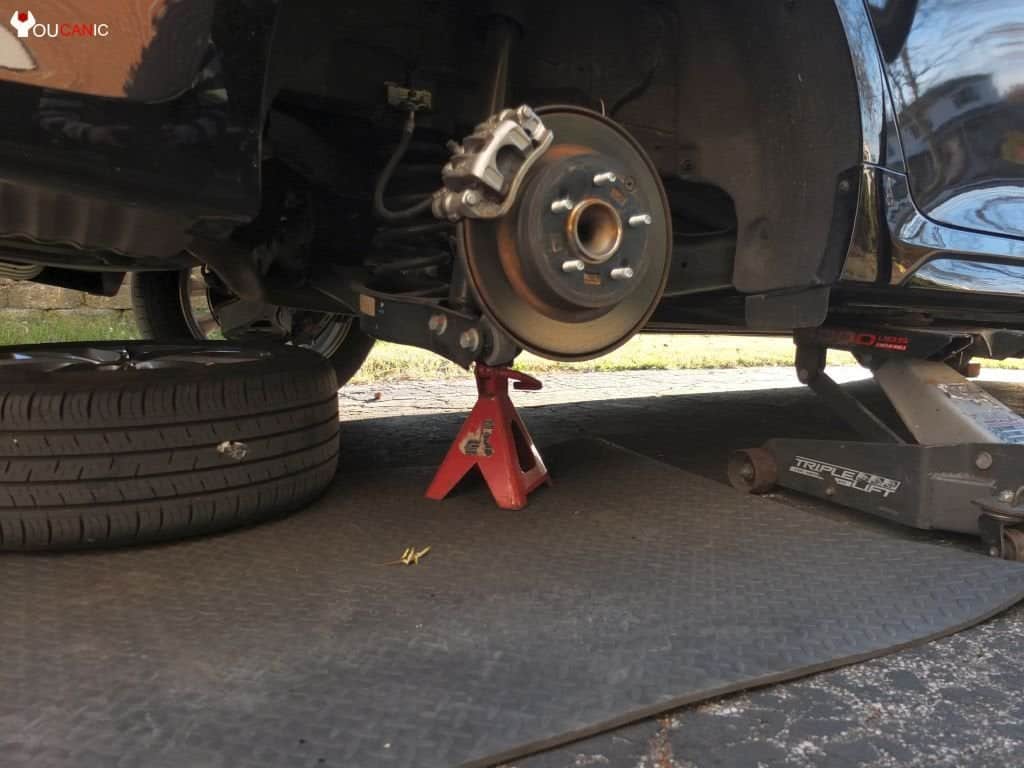
- Raise vehicle: Park the car and put it in (P) park. Set the parking brake. Jack up your vehicle and place the jack stand under the car. Next, remove the front wheel.

- Remove ball joint bolts. Remove the bolts that hold the lower ball joint in place.
- Remove nut and bolt: Remove the bolt by the knuckle. This allows the lowering of the ball joint.
- Replace ball joint: Remove the old ball joint. You may need to use a ball joint fork to separate your old ball joint from the knuckle.

- Install new ball joints in reverse order and tighten the bolts according to specifications.
- Alignment is recommended after ball joints are replaced to ensure good tire wear.


You may consider replacing the lower control arm together with the ball joint. This is an alternative if you have a pressed ball joint type and don’t want to deal with pressing the ball joint in and out of the control arm.

🔧 Find out what is actually wrong before you pay someone to guess
Dealer level diagnostics at home with the YOUCANIC UCAN-II Pro.
- ✔ Covers most makes and models, including many luxury brands. Send us your VIN and we will confirm your car before you order
- ✔ Reads every module, not just the engine, so you find the faults a basic reader says are not there
- ✔ Commands the car: test a fan or pump, bleed ABS, retract an electronic parking brake, register a battery
- ✔ No subscriptions. Free lifetime updates, so the price you pay is the whole price
- ✔ Backed by real mechanics in the USA you can email before and after you buy
Featured in The Wall Street Journal
Check out more Kia repair guides and the article on how to read codes and troubleshoot vehicle problems yourself.
Frequently Asked Questions
What are the signs of a bad lower ball joint on a Kia?
Clunking over bumps, loose or wandering steering and uneven tire wear are common signs.
How do I check a Kia ball joint?
Raise the wheel off the ground and rock the tire top to bottom. Visible play at the ball joint means it is worn.
Is the Kia lower ball joint part of the control arm?
On many Kia models it is, so the control arm is replaced as an assembly.
Do I need an alignment after replacing a ball joint?
Yes. Have the alignment checked to prevent tire wear and pulling.



Would this apply to the 2009 Amanti as well
My 2011 kia sorento does not have the three bolts you are talking about to hold the ball joint in place. I replaced the lower ball joint but now I can’t get the bolt back into the knuckle. Hlep me.