

VW P0190 Code Fuel Rail Pressure Sensor Causes | Location
Reviewed/Verified by:

If you are getting code P0190, the FRP sensor is likely faulty; other possibilities include a damaged connector to the FRP sensor and a damaged wire harness. In rare cases, it may indicate a problem with the ECU or fuel pump.
At a Glance
- P0190 is an electrical fault in the fuel rail pressure sensor circuit. A zero reading points to the sensor or its wiring.
- Check for 5 volts at the sensor with the ignition on, then check the signal and ground wires.
- Fuel pressure on direct injection is very high. Never loosen a fuel line or the sensor with the engine running or hot.
- A standard gauge goes on the low pressure side only, never on the high pressure rail.
- Compare commanded and actual rail pressure in live data to separate a sensor fault from a pump problem.
Under the Engine Control Unit, live sensor data, we found a zero reading from the fuel rail pressure sensor. The Engine Control Unit showed a current P0190 code caused by a zero reading from the Fuel Rail Pressure (FRP) sensor. Zero readings can be either due to damaged wires or failed sensors. This guide provides procedures on how to troubleshoot code P0190 on a Volkswagen.

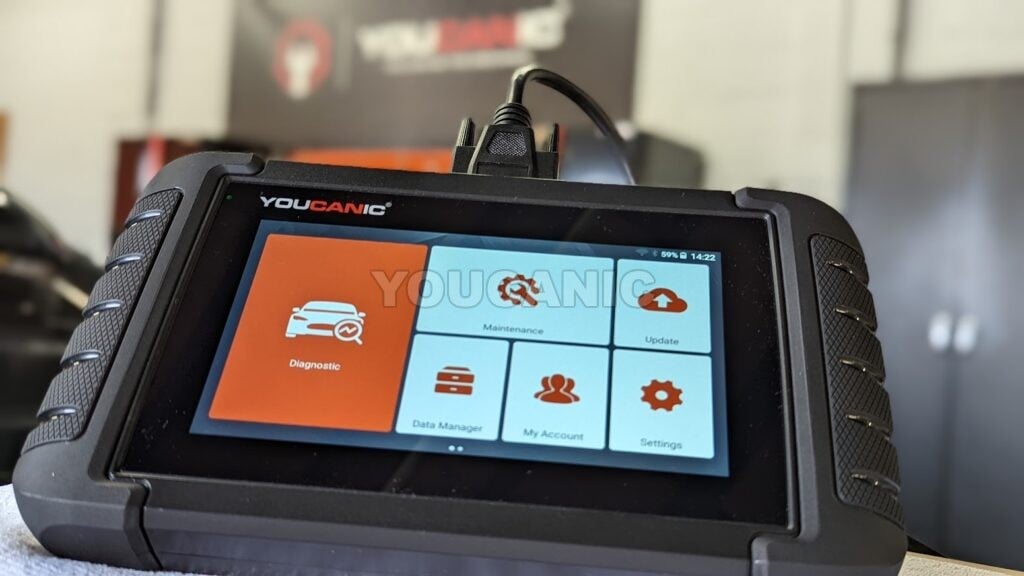
The YOUCANIC UCAN-II Pro can read and clear fault codes in the engine and other control modules on supported vehicles.

🔧 Find out what is actually wrong before you pay someone to guess
Dealer level diagnostics at home with the YOUCANIC UCAN-II Pro.
- ✔ Covers most makes and models, including many luxury brands. Send us your VIN and we will confirm your car before you order
- ✔ Reads every module, not just the engine, so you find the faults a basic reader says are not there
- ✔ Commands the car: test a fan or pump, bleed ABS, retract an electronic parking brake, register a battery
- ✔ No subscriptions. Free lifetime updates, so the price you pay is the whole price
- ✔ Backed by real mechanics in the USA you can email before and after you buy
Featured in The Wall Street Journal
Fault code P0190 indicates an electrical problem with the fuel rail pressure sensor. Code P0190 is unlikely to be caused by a mechanical problem. P0190 is a generic trouble code, meaning it applies to Volkswagen and all vehicles 1996 and newer equipped with OBD-II.

Symptoms
Symptoms that are often present when code P0190 is current:
- Check engine or service engine soon light on.
- The engine is hard to start.
- Engine stalls at idle
- The engine cranks but won’t start.
- Poor acceleration
- Lack of power
- Engine stalling
- Hesitation
Possible Causes
Potential problems that can cause the P0190 fault code:
- Faulty Fuel Rail Pressure (FRP) sensor
- Damaged, loose, or corroded FRP sensor connector
- Damaged wire harness
- Fuel pump issues or fuel pump relay
- Dirty fuel filter
Fuel Rail Pressure Sensor Location

The fuel rail pressure sensor is located on the engine. Once you remove the engine cover, you can see the fuel rail. The fuel rail pressure sensor is mounted on the fuel rail.
If you are getting fault code P0190, check for power at the sensor. You should get five volts at the sensor with the ignition on. Then check the signal and ground wires for continuity back to the engine computer with a digital multimeter. If the car does not start, check the low pressure fuel supply. On a direct injection engine the in tank pump supplies only a few bar, roughly 3.5 to 6 bar (50 to 90 psi) on many VW engines, and the engine driven high pressure pump raises it to well over 100 bar once the engine runs. A standard fuel pressure gauge must only go on the low pressure side, never on the high pressure rail.
If the sensor sends values out of range, fault code P0190 will be stored as active, and the check engine light will come on. It is more likely that you will have a faulty sensor or damaged wires (high resistance). Fault code P0190 occurs when a Fuel Rail Pressure (FRP) circuit malfunctions. The Engine Control Unit (ECU) will detect that the fuel rail pressure sensor has an open circuit or is operating outside the normal range and show code P0190.
Before you touch the fuel rail, read this
This sensor is mounted on the high pressure side of the fuel system, and on a modern common rail engine that means pressures of many hundreds of bar, far beyond anything on an older port injected car. Fuel escaping from a loosened fitting at that pressure comes out as an invisible jet fine enough to pass straight through skin.
A high pressure fuel injection injury is a surgical emergency, not a cut. It often looks like a pinprick and feels minor at first, then causes severe tissue damage over the following hours. If it happens, go to the hospital immediately and tell them it was a high pressure fluid injection.
The practical rules are simple. Never loosen a fuel line or the sensor itself with the engine running or immediately after it has been switched off. Let the system depressurize first, which on most engines means leaving it for a period with the ignition off, and follow the depressurization procedure in the service information for your engine rather than assuming. Never crack a union to see whether fuel comes out. Wear eye protection, keep a fire extinguisher nearby, and disconnect the battery before unplugging electrical connectors in the fuel system.
Test the circuit before condemning the sensor
As the article notes above, the sensor runs on a five volt reference. With the connector unplugged and the ignition on you should find close to five volts on the reference pin and a clean ground on another. If the reference is missing, the fault lies between the sensor and the engine control module, and a new sensor will change nothing.
With the sensor connected and the engine not running, the signal voltage should sit near the bottom of its range, because the rail is at rest. The reading reported earlier in this article, a flat zero from the sensor in live data, is a classic signature of either a failed sensor, a lost reference voltage or an open circuit in the signal wire. A reading that is present but implausible is more likely to be a genuine pressure problem.
Check the connector for corrosion and for diesel or oil contamination, and flex the harness by hand while watching the live value. This sensor sits in a hot part of the engine bay and its wiring suffers for it.
When the pressure really is wrong
If the sensor and its wiring both check out, the next question is whether the rail is actually reaching the pressure the module commanded. A sensor reporting low pressure accurately is a very different problem from a sensor lying about it.
Start on the low pressure side, because it is cheaper and more common. A clogged fuel filter, a tired in tank lift pump or a restricted supply line starves the high pressure pump, which then cannot build rail pressure however hard it works. A fuel filter that is overdue is worth replacing before anything else.
Beyond that, the high pressure pump itself is the concern, and on certain Volkswagen Group engines it deserves specific attention. Early direct injection gasoline engines are known for wear at the cam follower that drives the pump, and when that follower wears through, metal debris enters the fuel system. If you find metallic glitter in the fuel filter or on the pump, stop and investigate properly, because contamination of that kind means the injectors and lines need attention too and simply fitting a pump will not end the problem.
Watch the commanded and actual rail pressure side by side while the engine runs. A full system scanner that reads Volkswagen live data will show both values together, and the gap between them tells you immediately whether you are chasing a sensor, a supply problem or a failing pump.
Frequently Asked Questions
What does code P0190 mean on a Volkswagen?
P0190 means the engine computer sees an electrical fault in the fuel rail pressure sensor circuit. A zero reading usually points to the sensor or its wiring.
What are the symptoms of P0190?
A check engine light, hard starting or a crank no start, stalling, hesitation and lack of power are common.
Where is the fuel rail pressure sensor on a VW?
It is mounted on the fuel rail on top of the engine, visible once the engine cover is removed.
How do I test the fuel rail pressure sensor?
With the ignition on, check for 5 volts at the sensor, then check the signal and ground wires. Compare commanded and actual rail pressure in live data before replacing parts.
Related Guides
- VW P0108 Code Manifold Air Pressure (MAP) Barometric Pressure Sensor
- VW P2294 Code Fuel Pressure Regulator
- VW Clock Spring & Steering Angle Sensor Replacement
- Reset VW Steering Angle Sensor


