

Quick & Easy Hyundai Spark Plug Replacement Guide
Reviewed/Verified by:

This tutorial provides instructions on changing spark plugs on the Hyundai four-cylinder 2.0L and 2.4L engines, also known as the Theta II engine, which is used in many models such as the Hyundai Elantra, Sonata, Genesis, ix35, Santa Fe, Tucson, and many Kia models.
At a Glance
- Applies to Hyundai and Kia Theta II 2.0 and 2.4 four cylinder engines (Sonata, Optima, Santa Fe, Sportage, Tucson and others).
- Work on a cold engine. The cylinder head is aluminum and its threads are easy to damage.
- Coil bolts first: a 10 mm socket removes each coil, then a spark plug socket removes the plug.
- Torque the plugs to the figure in your service manual with a torque wrench, and fit them dry unless the manual says otherwise.
- Check the coil boots for carbon tracking while they are out.

What you will need
- Hyundai OEM Spark Plugs
- Spark Plug Socket
- 3/8 Extension
- Ratchet
Procedure

- Clean the area near the spark plugs and around the ignition coils. Remove any dirt near the spark plugs to avoid them from falling into the cylinders later.
- Use a 10 mm socket to loosen the bolt that secures the coil. The Theta II Kia/Hyundai engine uses a coil-on-plug design.
- Unplug the ignition coil connector by pressing the locking tab and then pulling the connector away. Pull the ignition coil up once the bolt and connector have been removed.
- If the ignition coil is hard to remove, try twisting it slightly before lifting it up and out.
- Blow dirt away from the spark plug recess before you remove the spark plugs. Use a 16-mm spark plug removal tool, ratchet, and a 3/8″ extension to remove the spark plugs from the engine.
- Rotate counterclockwise to remove the spark plugs. You may need a magnet tool to pull out the spark plug.
- It is time to install the new spark plug. Checking or inspecting the gap using a spark plug gapping tool is a good idea.
- Certain spark plugs may come pre-gapped, while certain plugs should not be gapped. Only use anti-seize on the threads if your service manual calls for it. Most modern plugs have plated threads and are meant to go in dry, and anti-seize changes how much clamping force a given torque produces.
- Install the new spark plugs by hand and tighten them using your ratchet. Do not over-tighten the spark plugs, or you may strip the threads. If you have a torque wrench handy, tighten to the specified torque. Check out the torque specs below.
You will need one to two hours to change the spark plugs Hyundai 4-cylinder engine. Replacing the spark plugs yourself can save you money.
Torque Specifications
- Ignition Coil Bolts: 3.9 ~ 5.9N.m (0.4 ~ 0.6kgf.m, 2.9 ~ 4.3lb-ft)
- Spark Plugs: use the torque in your service manual or printed on the plug box. Hyundai and Kia list a specific figure for each engine, so do not guess on aluminum threads.
Hyundai Spark Plugs Replacement Cost
Replacing spark plugs on the Hyundai vehicles listed here will cost you less than $30, assuming you already have the tools. If a mechanic at your local repair shop changes your spark plugs, expect to pay between $150 to $250.

🔧 Find out what is actually wrong before you pay someone to guess
Dealer level diagnostics at home with the YOUCANIC UCAN-II Pro.
- ✔ Covers most makes and models, including many luxury brands. Send us your VIN and we will confirm your car before you order
- ✔ Reads every module, not just the engine, so you find the faults a basic reader says are not there
- ✔ Commands the car: test a fan or pump, bleed ABS, retract an electronic parking brake, register a battery
- ✔ No subscriptions. Free lifetime updates, so the price you pay is the whole price
- ✔ Backed by real mechanics in the USA you can email before and after you buy
Featured in The Wall Street Journal
How can I reset the Check Engine Light after replacing my spark plugs?
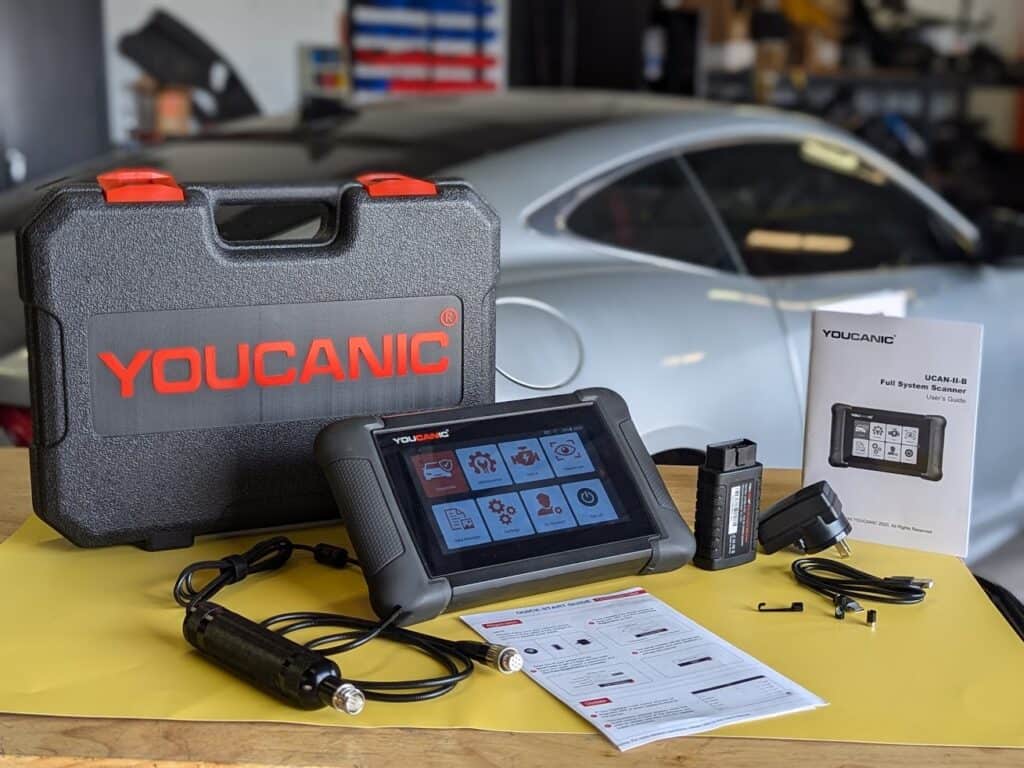
You can use the YOUCANIC UCAN-II Pro to read and clear the fault codes on your Hyundai Engine Control Unit. This scanner can also diagnose the engine and other control modules on supported models.
Theta/Theta-II Engine: 2.0L (1998cc)
(G4KA, G4KD, G4KF, G4KH)
2011 Hyundai Sonata Limited 2.0T, turbo GDI engine
- Hyundai Genesis Coupe Port Injected 2.0 Turbocharged (2010-)
- Hyundai Sonata GDI 2.0 Turbocharged (2011-)
- Kia Rondo (2007-)
- Kia Forte 2.0 (2009 to 2013)
- Kia Optima GDI 2.0 Turbocharged (2011-)
- Kia Sportage GDI 2.0 Turbocharged (2011-)
- Kia Sorento GDI 2.0 Turbocharged (2016-)
- Hyundai ix35 MPI 2.0 (2010-)
- Hyundai Santa Fe (Sport Models) GDI 2.0 Turbocharged (2013-)
Theta/Theta-II Engine: 2.4L
(G4KC, G4KE, G4KG, G4KJ)
- Hyundai Sonata (2006 to 2010)
- Hyundai Sonata GDI (2011-)
- Hyundai Sonata (2011-) (Middle East)
- Hyundai Tucson (2010-)
- Hyundai Santa Fe (2010-)
- Kia Optima (2006 to 2010)
- Kia Optima GDI (2011-)
- Kia Rondo (2007-)
- Kia Cadenza GDI (2011-)
- Kia Sportage (2011-)
- Kia Sorento (2011-)
- Kia Forte (2010 to 2013)
Work on a cold engine and use a torque wrench
Hyundai and Kia engines have aluminum cylinder heads, and aluminum threads are easy to ruin. Let the engine cool completely before removing anything. Pulling plugs from a hot head is the most common way to strip the threads, and repairing a stripped plug hole means either a thread insert or, in the worst case, removing the head.
Torque the new plugs to the figure given above rather than going by feel. Under tightening leaves a poor seal and lets combustion gases past, while over tightening crushes the sealing washer and can pull the threads out of the head. This is one of the few jobs where a torque wrench genuinely is not optional.
Skip the anti-seize. Modern plugs come with a plated shell designed to be installed dry, and the manufacturers specifically advise against it. Anti-seize acts as a lubricant on the threads, which means the torque wrench reads the specified figure well before the plug is actually tight enough, and you end up over tightening it without realizing.
A few things worth checking while the coils are out
With the coil packs removed you have easy access to parts you will not see again for a long time. Look inside each coil boot for carbon tracking, the fine black lines that show the spark has been finding a path to ground down the outside of the plug instead of jumping the gap. A boot that is tracking will make a brand new plug misfire straight away, and new boots cost very little.
Look at the old plugs before you throw them away, because they record how the engine has been running. A light tan or grey insulator is normal. Black and sooty suggests a rich mixture, oily deposits point to oil getting past valve stem seals or rings, and a white blistered insulator with eroded electrodes suggests the engine has been running hot or lean. If one plug looks noticeably different from the other three, that cylinder is worth investigating.
Fit the plug type your engine is specified for and do not try to re-gap iridium or platinum plugs. The fine center electrode on these is delicate and prying at it will snap the tip off or crack the insulator. They come pre-gapped, so check the gap gently with a wire gauge and fit them as supplied.
Finally, do not expect new plugs to fix a misfire that was already there. Worn plugs cause misfires, but so do failing coils, injectors, vacuum leaks and low compression. If the check engine light returns after the service, read the code to find out which cylinder is complaining. A full system scanner shows misfire counts per cylinder in live data, which tells you immediately whether the problem moved with the plugs or stayed with the cylinder.
Frequently Asked Questions
How often should Hyundai spark plugs be replaced?
Follow the interval in your maintenance schedule. Long life iridium plugs last much longer than older copper plugs.
Do new spark plugs come pre gapped?
Many do, but check the gap against the spec for your engine before installing. Do not pry on a fine iridium tip to adjust it.
Why is my engine misfiring after changing the plugs?
A coil not fully seated, a loose coil connector or a cracked plug are common causes. Recheck your work before buying parts.


Good point. There is a video added to this guide now that should help you follow through.
This was a good tutorial but if you call something easy and that anyone can do it but then proceed to walk through the tutorial calling for loosening, removing etc., specific parts might I suggest including pictures of the parts you are talking about as the only people who could legitimately follow these instructions are people who wouldn’t need them in the first place.
I was thinking of taking it in but now that I know how easy it is to change the plugs yourself I will just save $200.
I was quoted just over $200 to change spark plugs Hyundai Sonata. I thought I would give it a try after watching this tutorial. The video clip helped a lot. The only diffiuclt part was disconnecting the plugs from the coil.
Thanks so much…keep up the great work. Matt C.