How to Test Car Battery Correctly: A Step-by-Step Guide
Knowing how to test your car battery properly can save you from unexpected breakdowns and costly replacements. Many people rely on a simple voltmeter to check their battery voltage, but this tool only provides the voltage output of the battery and doesn’t offer a comprehensive view of the battery’s health. In this guide, created in the spirit of YOUCANIC’s expert advice, we’ll walk you through the right way to test a car battery to ensure it’s reliable and ready to power your vehicle.
Understanding Why Voltage Alone Isn’t Enough
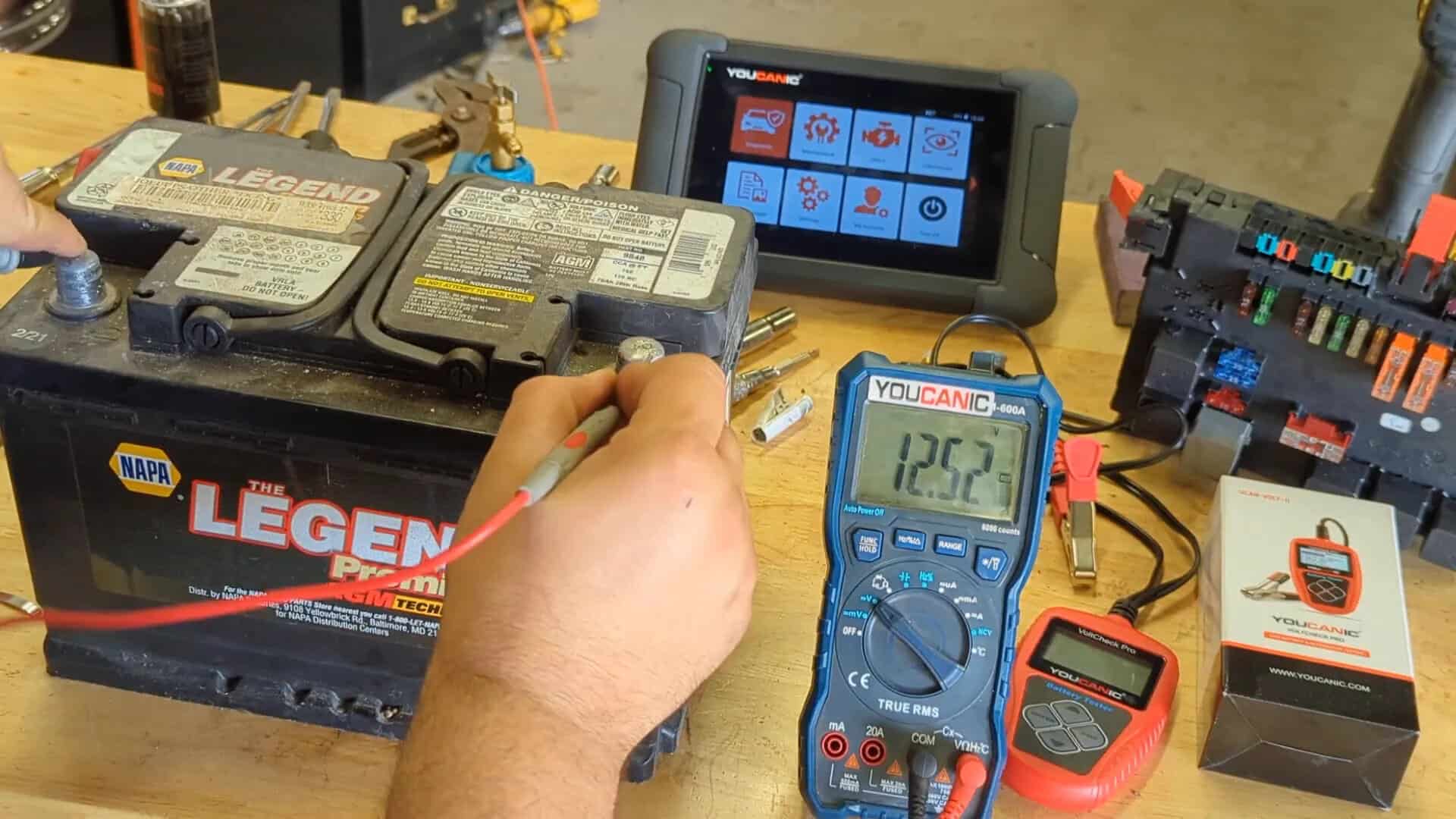
Many tutorials recommend testing your battery with a voltmeter to check the voltage. While this tool can tell you if the battery is completely dead or discharged, it won’t let you know if the battery is actually in good condition. For example, a reading around 12.5 volts can make it look like your battery is charged and healthy, but this voltage reading alone doesn’t guarantee the battery can deliver the power your car needs to start reliably, especially in colder weather.
Use a Dedicated Battery Tester
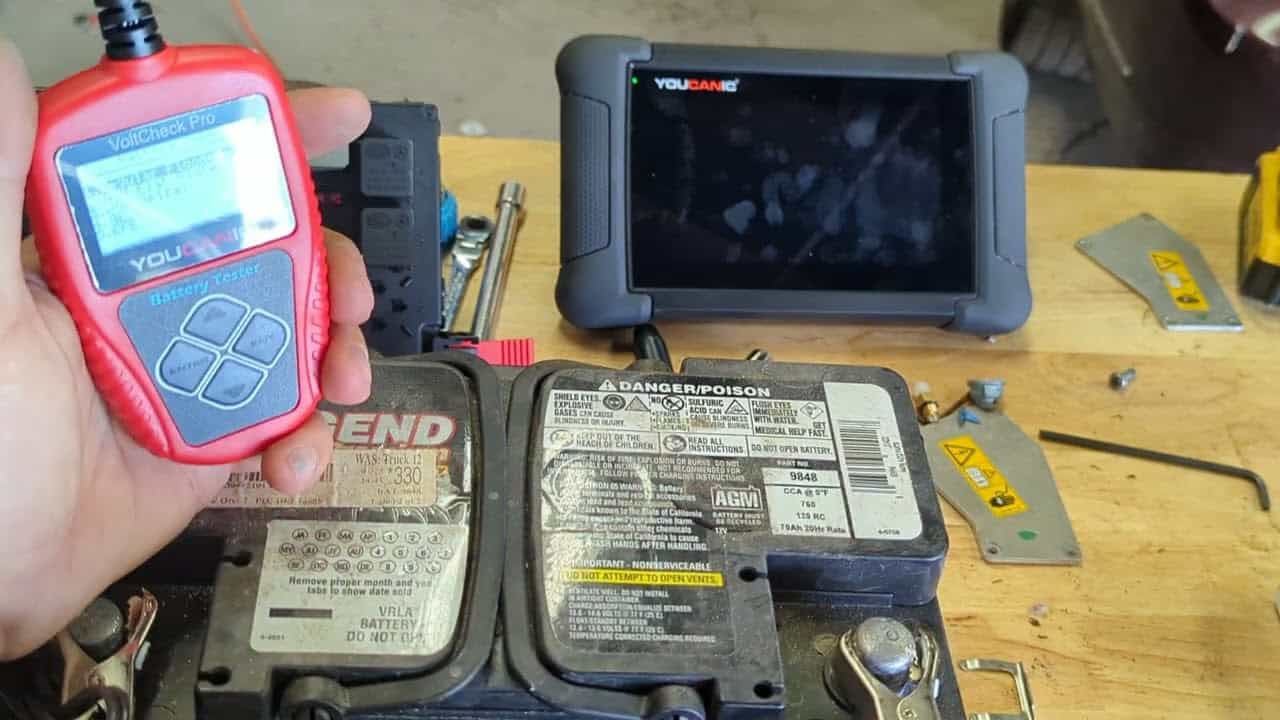
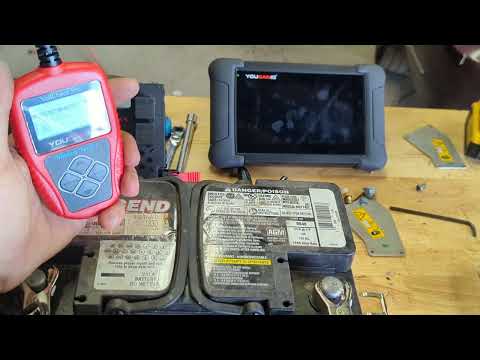
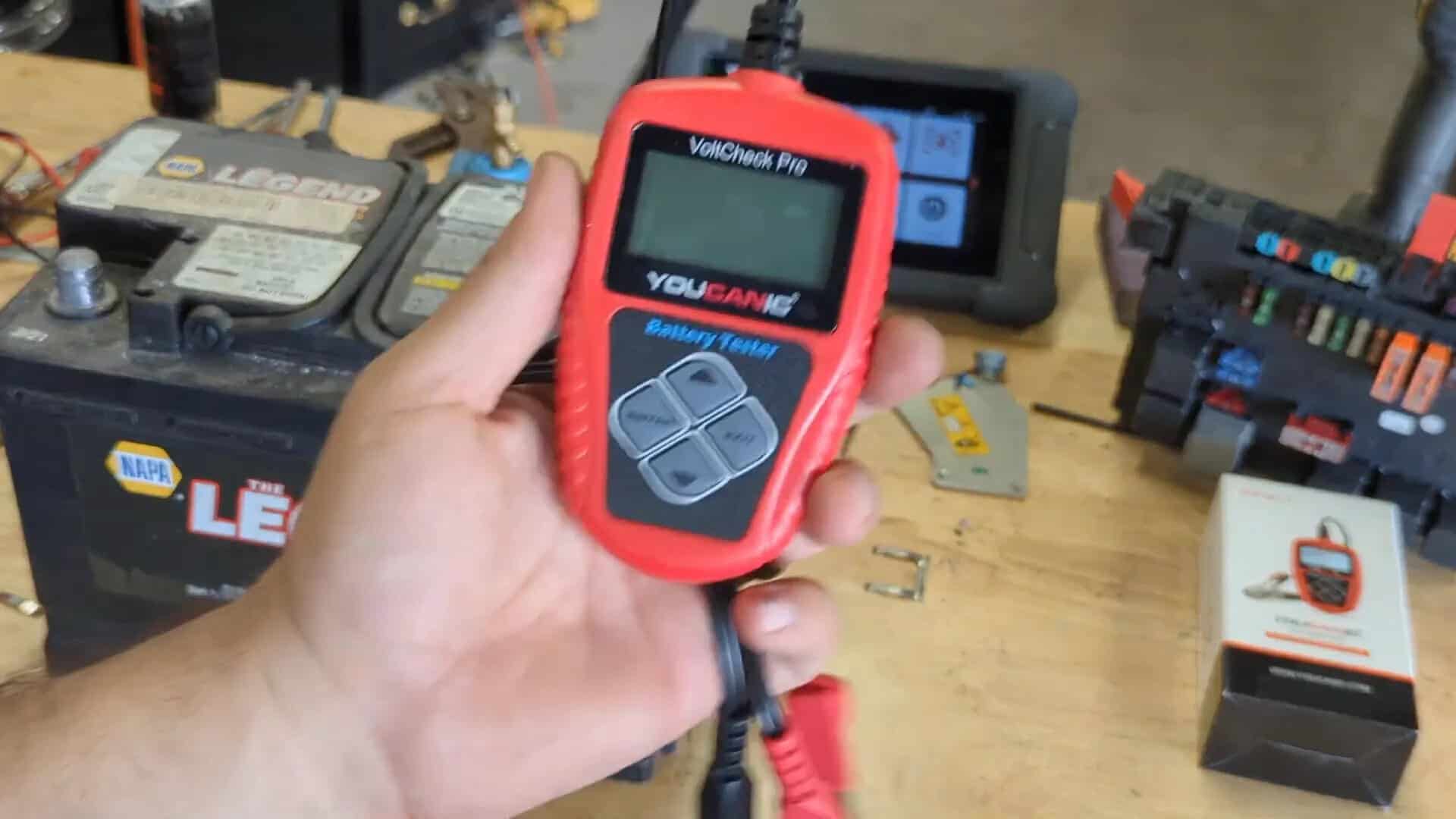
To get an accurate assessment of your battery’s condition, you need a specialized battery tester. The YOUCANIC Battery Tester is a handy tool designed to measure not just voltage but also the battery’s overall health, charge level, and cranking power. This device helps you avoid surprises by accurately diagnosing whether your battery needs replacement or can still reliably serve your vehicle.

🔧 Stop paying the dealer for every warning light
Get dealer level diagnostics at home with the YOUCANIC Full System Scanner.
- ✔ Works with all makes and models, including most luxury brands
- ✔ Topology map view shows all vehicle modules on one screen for faster diagnostics
- ✔ Bi directional controls to test fans, pumps, actuators and more so you do not have to guess
- ✔ Special resets and calibrations such as ABS bleed, EPB service, battery registration and more
- ✔ Free lifetime updates with no recurring fees
Prepare the Battery and Tester
Before testing, it’s best to remove the battery from the car or at least disconnect the negative terminal cable. This helps ensure accurate readings without interference from other electrical systems in the vehicle. Connect the black clamp of the tester to the battery’s negative terminal and the red clamp to the positive terminal.
On the tester, you’ll find options to test the battery either in the vehicle or out of the vehicle. Choose the appropriate mode based on your setup. In this guide, we will focus on testing the battery out of the vehicle for the most precise results.

Select Battery Type and Enter Specifications
Next, select the type of battery you are testing. Most car batteries fall into one of the following categories:
- Regular flooded lead-acid battery: These are common in older vehicles; they have small caps on top to add acid or water.
- AGM (Absorbent Glass Mat) battery: Found in many newer vehicles, typically from 2015 onward.
- Gel batteries or EFP (Enhanced Flooded Battery): Less common but still used in some applications.
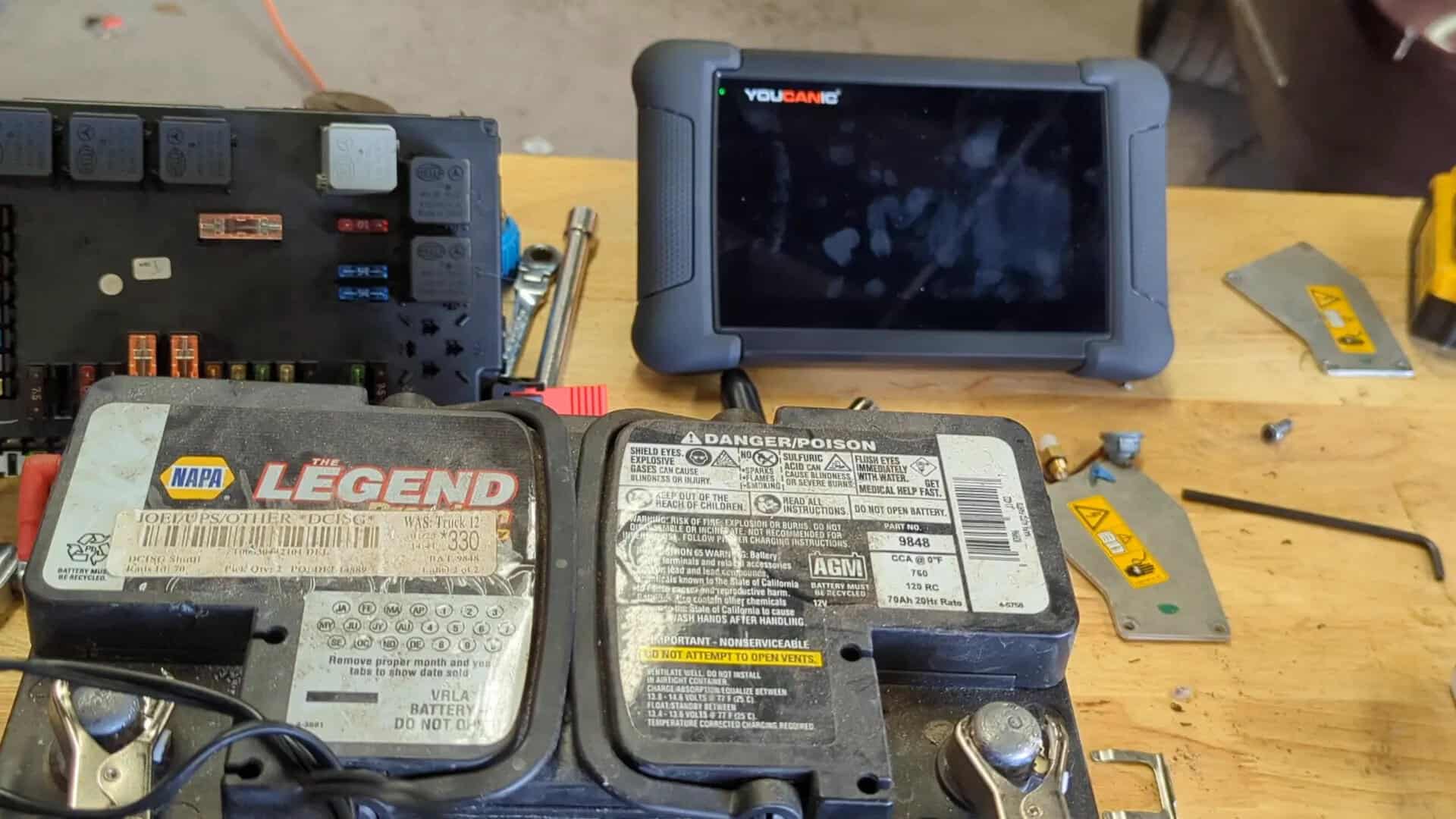
Identify your battery type by checking the label on the battery itself. For example, a regular flooded battery will have visible caps, while AGM batteries are sealed and labeled as such.
Then, input the Cold Cranking Amps (CCA) rating, which is also listed on the battery label. This number indicates the battery’s ability to start the engine in cold temperatures. For instance, if your battery label shows 760 CCA, enter that value into the tester.
Confirm Temperature and Start the Test
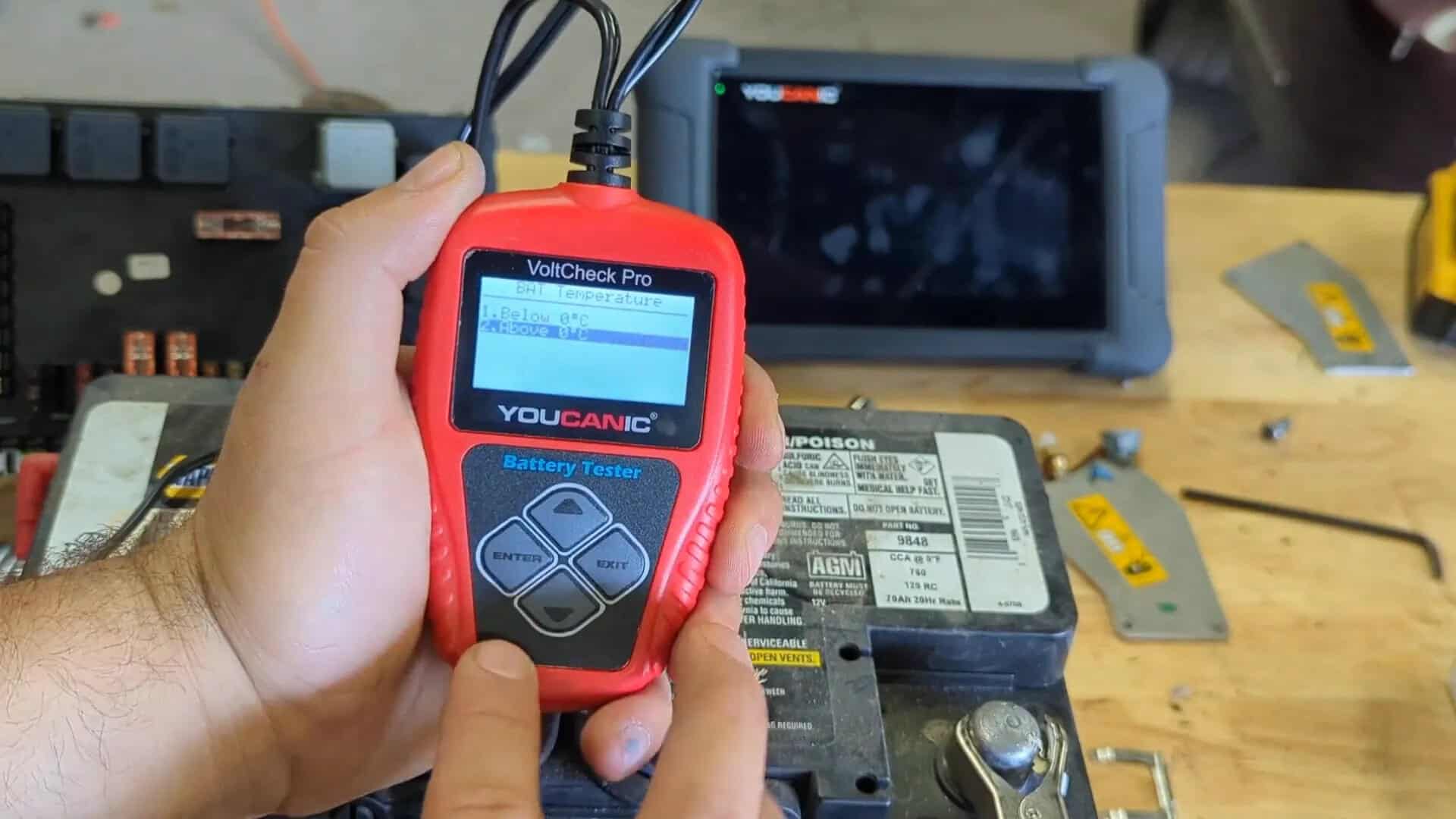
The tester will ask for the battery or ambient temperature. This helps the device adjust its calculations since battery performance varies with temperature. Unless your battery just came from a hot engine bay, the temperature will typically be above freezing (above 0°C or 32°F). Confirm the temperature and proceed.
The test takes about 20 to 30 seconds. During this time, the tester measures the battery’s voltage, internal resistance, state of charge (SOC), and state of health (SOH).
Interpret the Results
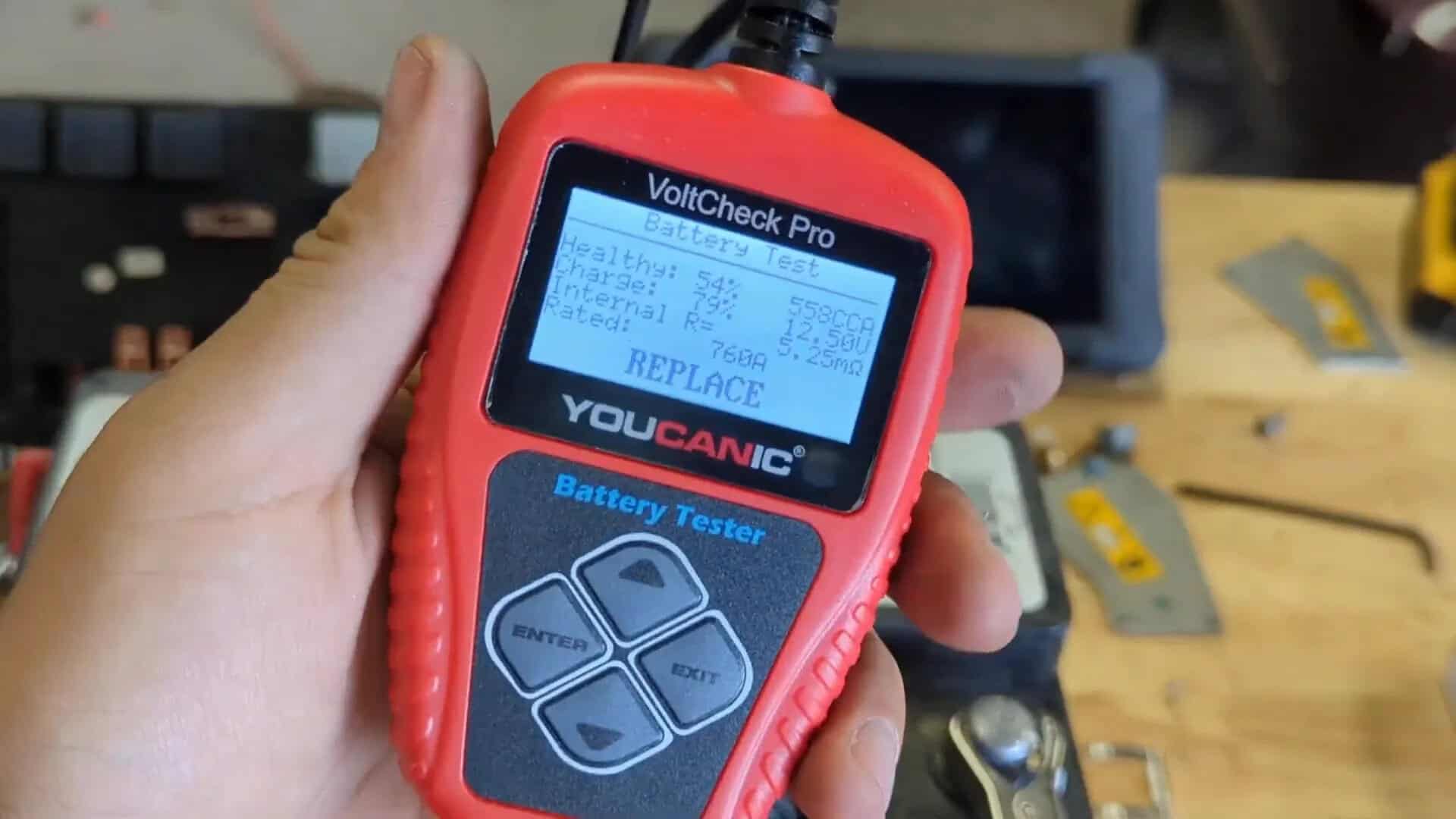
Once the test is completed, the battery tester will show you several important readings:
- Voltage: Indicates the current battery level. For example, a battery with 12.6 volts is fully charged.
- State of Charge (SOC): The percentage of charge remaining in the battery.
- State of Health (SOH): The overall condition of the battery as a percentage of its original capacity.
- Cranking Amps Delivered: The amount of power the battery can provide during engine start.
For example, a battery reading 12.6 volts with a 54% SOH and 80% SOC is partially charged and in poor health. Even if it can crank a small four-cylinder engine in summer, it will likely fail during cold winter starts, leaving you stranded.
Decide Whether to Replace Your Battery
If your battery’s state of health is below 50-60%, it’s time to consider replacement. A battery with low SOH struggles to deliver the necessary power and may leave you stuck, especially when temperatures drop.
Remember, a voltmeter reading alone cannot reveal these critical details. Using a dedicated battery tester, such as the YOUCANIC Battery Tester, gives you peace of mind and helps you avoid unexpected battery failures.
Frequently Asked Questions (FAQ)
Can I test my car battery with just a voltmeter?
While a voltmeter can tell you if a battery is completely dead or discharged, it cannot accurately assess the battery’s health or ability to start the car reliably. A dedicated battery tester is needed for a comprehensive evaluation.
What are Cold Cranking Amps (CCA) and why are they important?
CCA measures a battery’s ability to start an engine in cold temperatures. The higher the CCA, the better the battery can handle cold starts. Matching the tester’s input to your battery’s CCA rating ensures accurate test results.
What does State of Health (SOH) mean?
SOH is a percentage that reflects the overall condition and remaining capacity of your battery compared to its original state. A high SOH means your battery is healthy; a low SOH indicates it’s aging or failing.
Is it better to test the battery in or out of the vehicle?
Testing the battery out of the vehicle or with the negative terminal disconnected provides more accurate readings. Testing in the vehicle can be done, but may introduce interference from the car’s electrical system.
How often should I test my car battery?
It’s a good idea to test your battery at least once a year, especially before winter, to ensure it can handle cold starts and prevent unexpected failures.