Isuzu OBD2 Port Location
Reviewed/Verified by:

The Isuzu OBD II (OBD2) port lets you read fault codes, view live data, and connect tracking or monitoring devices.
At a Glance
- Where it is: under the dashboard on the driver’s side, just left of the steering column, on Isuzu cars and SUVs.
- NPR trucks: look above the brake pedal.
- Commercial trucks may use a limited data set or a heavy duty connector, so check that your scanner supports Isuzu trucks.
- Turn the ignition on with the engine off before reading codes.
Where is the OBD2 port on an Isuzu?

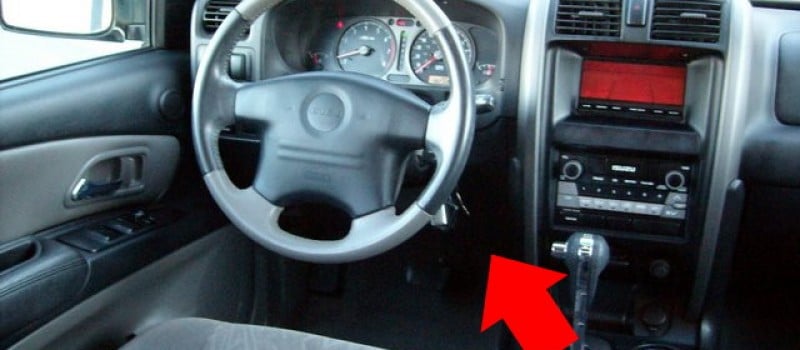
On Isuzu vehicles, the OBD2 port is located under the dashboard on the driver’s side, right to the left of the steering column.
The ECU’s Onboard Diagnostic system will send data through the OBD2 port, which can diagnose engine, transmission, ABS, Airbag, and other problems. To access these systems, you will need an Isuzu OBD2 Scanner.

🔧 Find out what is actually wrong before you pay someone to guess
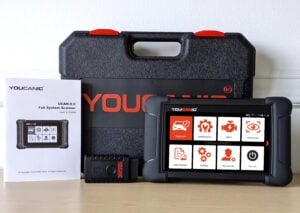
Dealer level diagnostics at home with the YOUCANIC UCAN-II Pro.
- ✔ Covers most makes and models, including many luxury brands. Send us your VIN and we will confirm your car before you order
- ✔ Reads every module, not just the engine, so you find the faults a basic reader says are not there
- ✔ Commands the car: test a fan or pump, bleed ABS, retract an electronic parking brake, register a battery
- ✔ No subscriptions. Free lifetime updates, so the price you pay is the whole price
- ✔ Backed by real mechanics in the USA you can email before and after you buy
Featured in The Wall Street Journal
I can’t find the OBD2 port on an Isuzu.
First, make sure to look deep under the dashboard. On some Isuzu’s, the OBD-II is deep under the dashboard, so you may need to slide under it and use a flashlight to locate it.
Where is the OBD2 port located on an Isuzu NPR?
You can find the OBD2 port on an Isuzu NPR above the brake pedal.
Where is the OBD2 port located on an Isuzu Trooper?

On an Isuzu Trooper, the OBD2 port can be located inside the plastic cover under the dashboard on the driver’s side. You need to pull out the plastic cover.
What is the difference between OBD, OBD2, and OBD-II?
OBD stands for Onboard diagnostic system.
OBD-II is the correct name, but sometimes it is called OBD2.
OBD-II is found on all 1996 and newer Isuzu vehicles sold in the US. In Europe, all 2000 and newer Isuzu vehicles have an OBD-II port.
Troubleshooting with YOUCANIC UCAN-II Pro
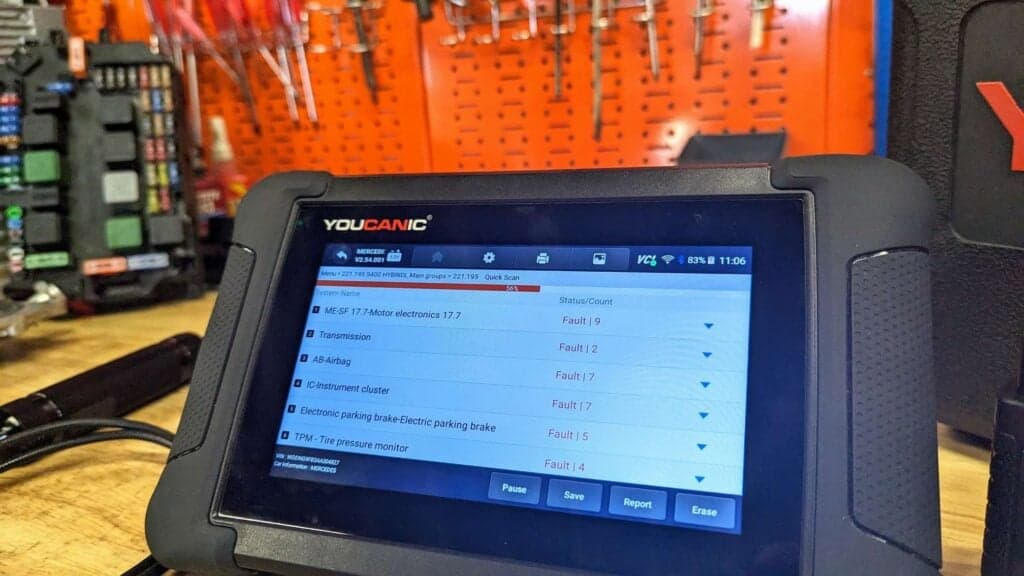
The scanner is a perfect example of an OBD-II scanner for troubleshooting your Isuzu. This powerful device can read and clear fault codes from all the systems, perform bi-directional tests, maintenance and repair resets, and many more professional-grade functions that can help you determine the cause of the problem in your Isuzu.
Commercial Isuzu trucks are a different proposition
This is the part that catches people out, because the Isuzu range spans two very different kinds of vehicle. A passenger model such as a Trooper or a Rodeo behaves like any other light vehicle: standard sixteen pin connector, standard protocols, and an ordinary code reader will talk to it.
The medium duty commercial trucks are not the same. Light vehicle emissions diagnostic requirements are written around vehicles below a certain gross weight rating, and trucks above that threshold were never obliged to follow them in the same way. Depending on the model, the year and the engine, a commercial Isuzu may present a standard sixteen pin socket that only supports a limited data set, or a heavy duty round connector using a commercial vehicle protocol instead.
The practical consequence is that a cheap code reader can connect to an NPR or an NQR, find nothing, and leave you believing there are no faults stored. Before buying a tool for a commercial Isuzu, check what connector your truck has and confirm the tool explicitly supports Isuzu commercial vehicles rather than just listing Isuzu as a make.
Diesel models need more than code reading
On an Isuzu diesel, a large share of the jobs people actually need to do are not code reads at all. Forcing a particulate filter regeneration, resetting the oil life and service intervals, priming the fuel system after a filter change, performing injector flow compensation coding when an injector is replaced, and relearning the throttle all require a tool that can send commands to the engine module rather than simply listen to it.
That is the dividing line to understand when choosing equipment. Bidirectional capability, not code reading, is what separates a tool that can finish a job from one that can only tell you a job exists. Dealer level software covers all of it, and a full system scanner with bidirectional support covers most of it at a fraction of the cost.
If the scanner will not power up
Assuming the plug is fully seated, a completely dead socket is usually a blown fuse rather than a faulty tool. The connector takes its power from a fuse in the interior fuse box, often shared with an accessory circuit, so the port dies while the rest of the vehicle behaves normally. Check that fuse first.
If the fuse is good, look into the socket with a flashlight. Pin sixteen supplies battery voltage and pins four and five provide the grounds, and terminals get pushed back into the housing by a plug inserted at an angle. On a working truck that has had trackers, logging devices and telematics units plugged in and out over the years, a damaged or loose terminal is common. Most Isuzu models also need the ignition switched on, with the engine not running, before the tool will communicate.
Finally, if a telematics or tracking device is permanently installed in the socket, unplug it before diagnosing anything. These keep the diagnostic network awake, can conflict with a scan tool sharing the same bus, and on a vehicle that sits over a weekend they are a common cause of a dead battery.
What to do next: find out which Isuzu you actually have
Before you buy or borrow any tool, settle one question, because on Isuzu it decides everything. A light duty Isuzu car or SUV speaks standard OBD2 through the connector described above. An N series truck may use a commercial vehicle protocol instead, and a tool built for cars can latch onto that connector, report no communication or no codes found, and leave you thinking the truck is fine when it is not.
- Identify the vehicle class first. Cars and SUVs, standard OBD2. NPR, NQR and the rest of the N series, expect a commercial protocol and check the tool supports it before paying for anything.
- Read every module, not just the engine. On the passenger vehicles, the fault behind a warning light often sits in ABS, body or transmission, and those are precisely the modules a basic reader skips.
- Record the freeze frame with the code. On a commercial vehicle that spends its life loaded, the conditions when the fault set tell you far more than the code number.
- Decide whether the repair needs commands sent to the vehicle. Clearing an adaptation or running a service function is a different capability from reading codes, and it is the capability cheap tools lack.
The YOUCANIC UCAN-II Pro covers the light duty Isuzu range and reads all available modules, with a seven day rental if you need it once. For an N series truck, email support with the VIN before you order. We would rather tell you the protocol is outside the tool than take the money and have you discover it in the yard.
When you do not need a scan tool here
If you came to this page to fit a tracker, an insurance dongle or a gauge, you are done. The port location is all you needed and none of the above applies to you.
Frequently Asked Questions
Does the car have to be running to use an OBD2 Scanner?
Most scanners read codes with the ignition on and the engine off. Some live data readings and tests need the engine running. Follow the instructions for your scanner and the test you are doing.
What is the difference between a scanner and a code reader?
A code reader is a simplified version of a scan tool, but it can only perform basic scans of trouble codes. A scan tool can read and clear trouble codes and provide advanced data reading and playback features, knowledge bases, and diagnostic procedures.