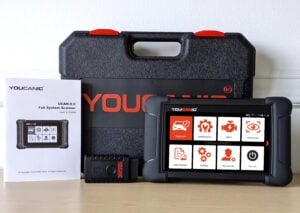

Fiat OBD2 Port Location
Reviewed/Verified by:

On most Fiat vehicles, the OBD-II diagnostic connector, or OBD port for short, is located under the dashboard on the driver’s side, above the hood release handle. In certain models, such as the Fiat Punto, the OBD2 port is inside the fuse panel in the dashboard and requires removing the plastic cover.
At a Glance
- Where it is: under the dashboard on the driver’s side, above the hood release on most Fiats.
- Punto and some others: the port is inside the fuse panel to the left of the steering column, behind a plastic cover.
- Newer Fiats may have a Security Gateway that lets scanners read codes but blocks clearing and resets until it is unlocked.
- Dead port? Check the fuse it shares with the power outlet first.
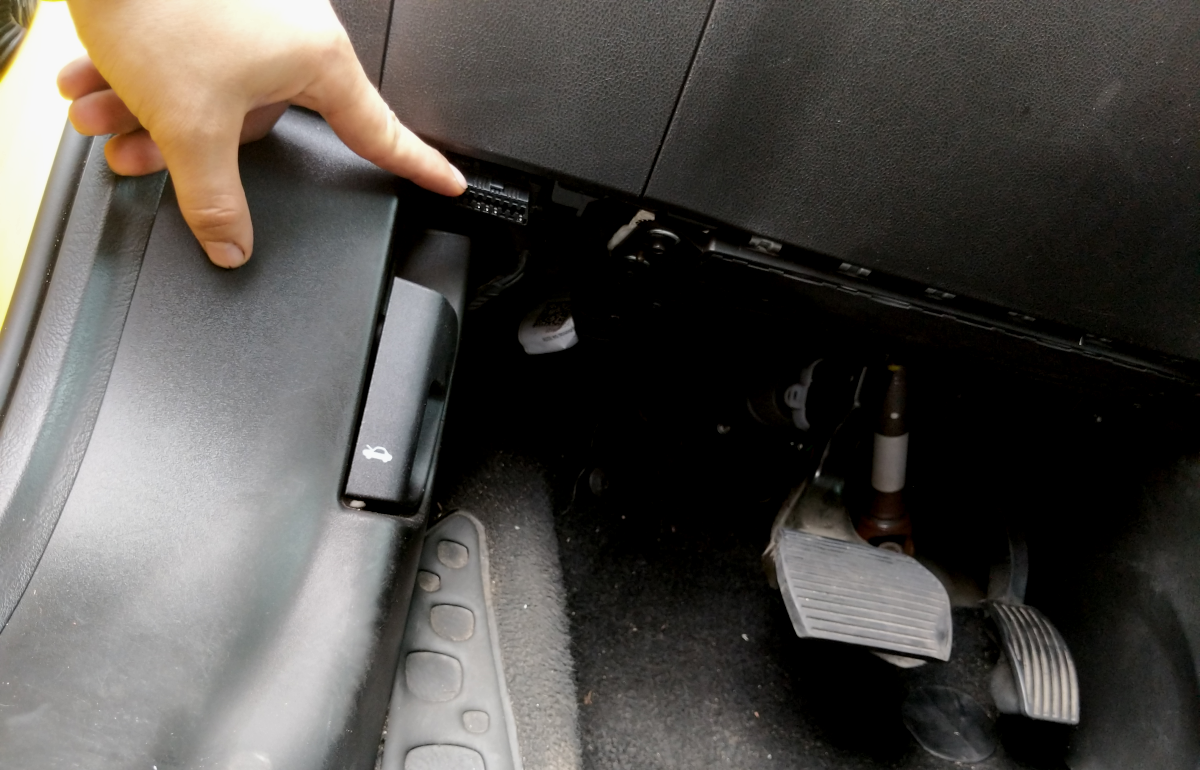
I can’t find the OBD2 port on a Fiat.
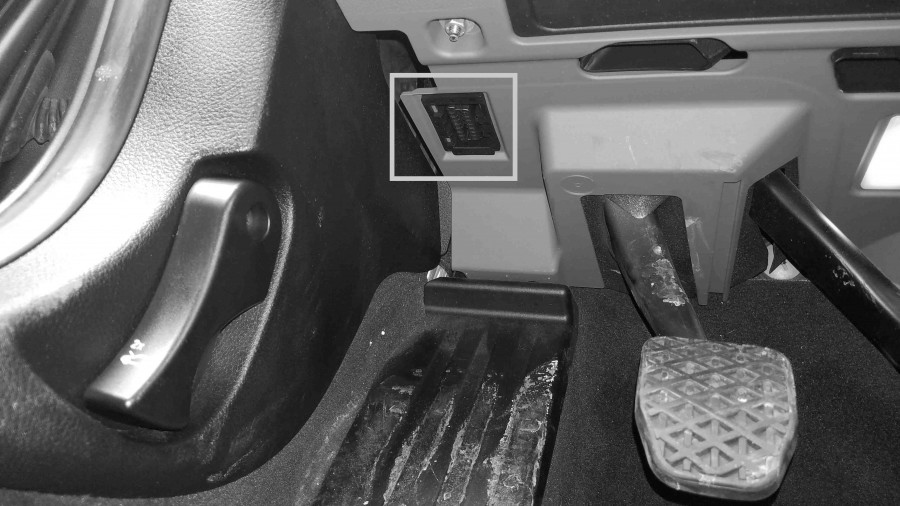
First, make sure to look carefully under the dashboard.
On some Fiats, the OBD-II is deep under the dashboard, so you may need to slide under the dash and use a flashlight to locate it.
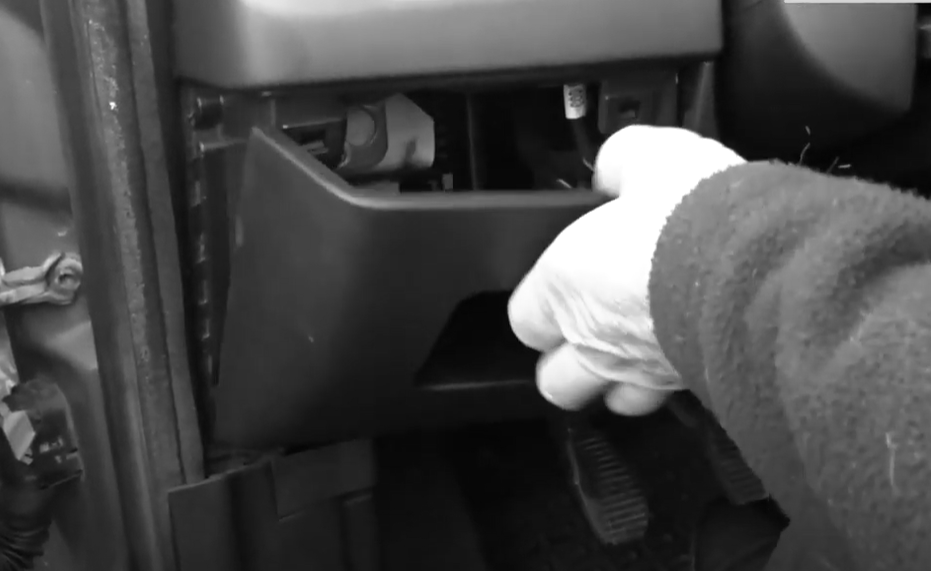
Or the OBD2 port may also be next to the interior fuses. To access the port, remove the plastic trim from the dashboard to expose the fuses and the OBD2 port.

🔧 Find out what is actually wrong before you pay someone to guess
Dealer level diagnostics at home with the YOUCANIC UCAN-II Pro.
- ✔ Covers most makes and models, including many luxury brands. Send us your VIN and we will confirm your car before you order
- ✔ Reads every module, not just the engine, so you find the faults a basic reader says are not there
- ✔ Commands the car: test a fan or pump, bleed ABS, retract an electronic parking brake, register a battery
- ✔ No subscriptions. Free lifetime updates, so the price you pay is the whole price
- ✔ Backed by real mechanics in the USA you can email before and after you buy
Featured in The Wall Street Journal
Where is the OBD port on a Fiat 500?
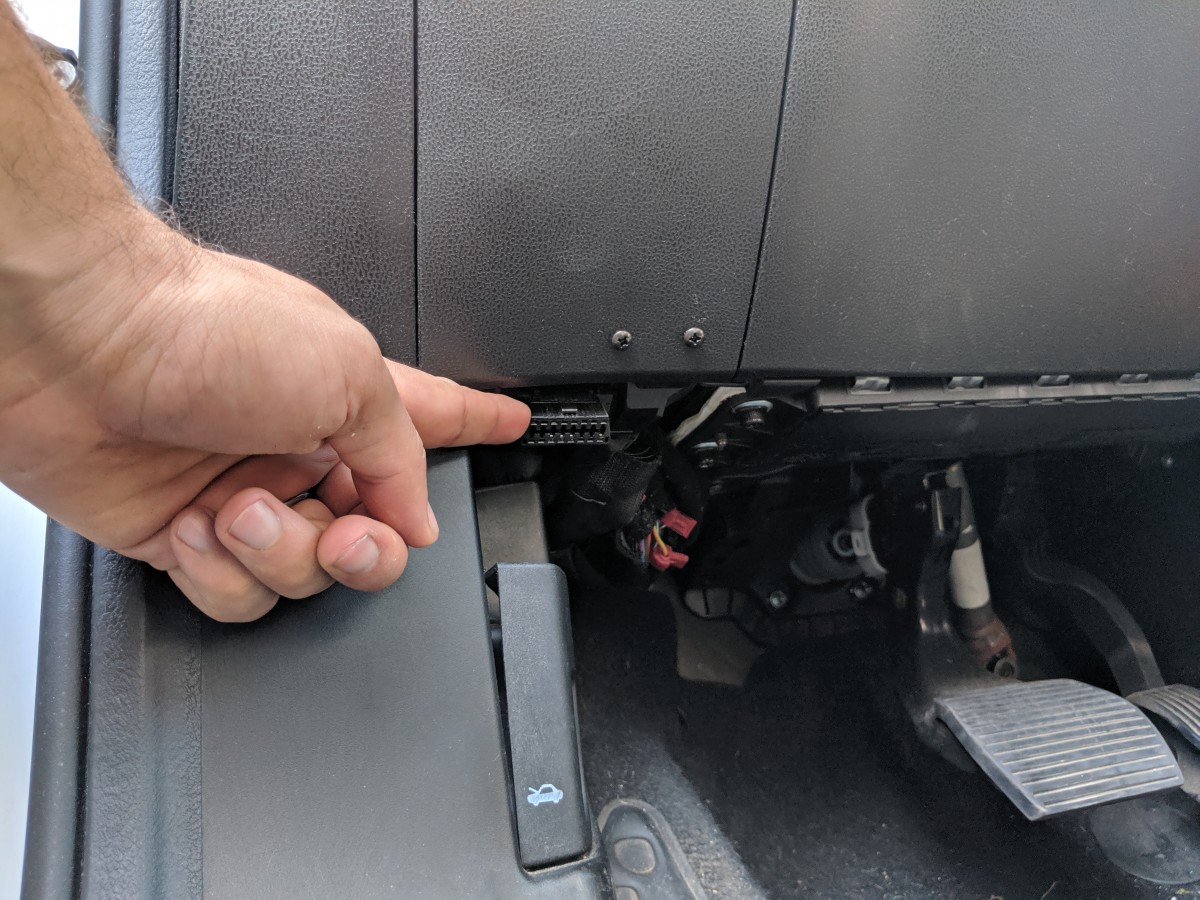
The OBD2 port on a Fiat 500 can be found on the driver’s side under the dashboard. You must open the rectangular plastic trim in specific years and remove the insert to access the OBD2.
Fiat Panda OBD2 port location?
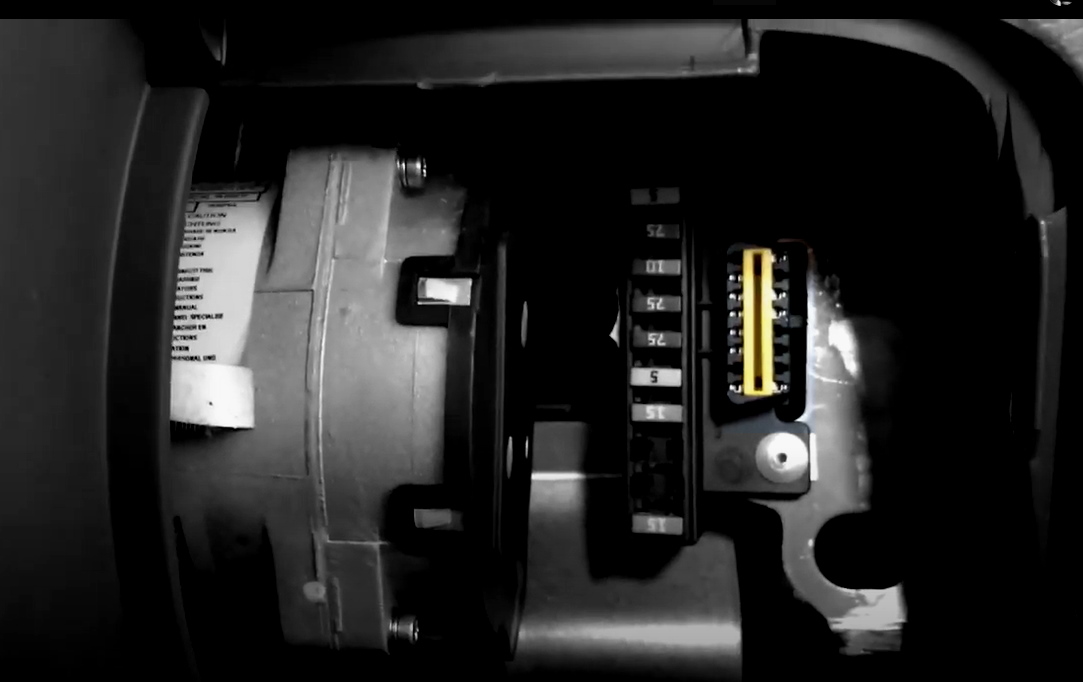
On Fiat Panda, the OBD2 port can be located inside the fuse box next to the steering column. Remove the plastic cover to the left of the steering column to expose the fuses, and you will also see the yellow OBD2 port. The plastic cover is held in place with two screws. Remove the cover that is on the side of the driver’s door.
Where is the OBD2 port on a Fiat Punto?
The OBD2 port on a Fiat Punto is located behind the plastic panel to the left of the steering column. Pull out the panel and see fuses and the yellow OBD port.What is the difference between OBD, OBD2, and OBD-II?
OBD stands for Onboard diagnostic system. OBD-II is the correct name, but sometimes it is called OBD2.
Every Fiat sold in the US since the brand returned in 2011 has OBD-II. European Fiats use the same 16 pin socket under the EOBD rules. Older Fiats used a manufacturer specific diagnostic connector instead (see below).
Troubleshooting With a Full System Scanner
 The YOUCANIC UCAN-II Pro is built for this kind of troubleshooting. On supported Fiat models it reads and clears fault codes in the engine, ABS, airbag and body modules, and can perform bidirectional tests, perform maintenance and repair resets, and perform many more professional-grade functions that can help you determine the cause of the problem in your Fiat.
On a 2018 or newer Fiat, expect the Security Gateway
This is the single most important thing to know before buying a scan tool for a recent Fiat. From around the 2018 model year, Fiat Chrysler fitted a Security Gateway module, usually shortened to SGW (see our security gateway module location guide), between the diagnostic socket and the vehicle’s internal networks. It sits in the middle of the conversation and decides what an aftermarket tool is allowed to do. Reading fault codes and live data still works normally. What the gateway blocks is everything that writes to the vehicle: clearing codes, bidirectional actuator tests, service and maintenance resets, bleeding procedures, key programming and module coding. The practical result catches people out badly, because the scanner connects, communicates and displays the fault perfectly, and then refuses to clear it. There are two legitimate ways around it. Independent shops can register with the manufacturer’s authentication service and unlock the gateway through an authorized tool, which is the route a professional workshop takes. For a home mechanic, the common approach is a Security Gateway bypass cable, a short adapter that plugs in behind the dashboard near the gateway module and allows the scanner direct access to the vehicle network. These are inexpensive and widely sold, and fitting one takes a few minutes, but it does mean the tool is connecting past a security device, so it is worth understanding what you are doing before you start. This is also why a scan tool that worked perfectly on your older Fiat may appear crippled on a newer one. The tool has not changed, the vehicle has.If the scanner will not power up at all
Assuming the connector is fully seated, a dead socket is almost always a blown fuse rather than a faulty tool. The diagnostic connector takes its power from a fuse in the interior fuse box, frequently shared with the cigarette lighter or another accessory circuit, so the port goes completely dead while the rest of the car behaves normally. Check that fuse first, and test the cigarette lighter socket as a quick indication. If the fuse is good, shine a flashlight into the socket. Pin 16 supplies battery voltage, with pins 4 and 5 providing the grounds, and terminals get pushed back into the housing by a plug inserted at an angle. A receded terminal can usually be eased back into place with a small pick. Most Fiat models also need the ignition switched on, with the engine not running, before the tool will communicate at all.Very old Fiats may not have an OBD-II socket
If your Fiat predates the changeover, the sixteen pin socket described above may not be fitted. The requirement came into force for gasoline cars sold in Europe from 2001 and for diesels from 2004, and in the United States from 1996. Earlier Fiats used a manufacturer specific three pin diagnostic connector, often located in the engine bay rather than in the cabin, and reading them requires a Fiat specific adapter rather than a standard OBD-II lead. One last point on what a basic tool can see. The OBD-II standard only covers emissions related engine data, which is why an inexpensive reader shows a check engine light code and nothing else. The ABS, airbag, body, climate and transmission modules all communicate through the same socket using Fiat specific protocols, so if the warning light you are chasing is anything other than the check engine light, you need a full system scanner that supports those modules.What to do next: reading is open, writing may not be
On a Fiat built from 2018 onward there is a second question waiting behind that connector. The security gateway sits between the port and the vehicle network, and it does not block diagnosis. Codes, live data and freeze frame all come through untouched. What it blocks is anything written back to the car.
- Plug in and read first. If you want to know why a light is on, nothing is in your way and no extra hardware is required.
- Work out whether your repair writes to the car. Clearing a code, resetting an adaptation, bleeding ABS and performing a service function are all write operations. Reading is not.
- Only if it writes, deal with the gateway. There are two legitimate routes and which one suits you depends on whether this is a one off repair on your own car.
- Check your model year before assuming any of this applies. An older Fiat 500 or Panda has no gateway at all and behaves like any other OBD2 car.
If you do need to write to the car, our guide to the FCA Chrysler Jeep Dodge Fiat Ram Security Gateway Module Location explains where the module sits on a Fiat and what each of the two routes involves.
The YOUCANIC UCAN-II Pro reads every module on these cars and performs service functions, and is available as a seven day rental. Because what gets through the gateway depends on your year and your chosen route, email support with your VIN and the procedure you want to run before ordering.
When none of this matters
Pre gateway Fiats, and any job that stops at reading a code. Most visitors to this page fall into one of those two groups and need nothing beyond the socket.
Frequently Asked Questions
Where is the OBD2 port on a Fiat 500?
On most Fiat 500 models it is under the driver’s side of the dashboard, as on other Fiats. Look up from the footwell with a flashlight if you cannot see it.
Why will my scanner read codes but not clear them on a newer Fiat?
That is the Security Gateway at work. Reading is allowed, but clearing codes and running tests need an authorized connection or a bypass at the gateway module.
Do older Fiats use the same connector?
Fiats sold before OBD2 rules applied may use an older round or proprietary connector, often near the fuse box. Those need an adapter and a scanner that supports the older protocol.