Kia ABS Wheel Speed Sensor Replacement
Reviewed/Verified by:

Is the ABS warning light displayed on your Kia Forte dashboard? Learn how to fix the problem by replacing your vehicle’s ABS wheel speed sensor. This guide is a step-by-step procedure for replacing the wheel speed sensor of the Kia Forte 2018 to 2022. This procedure may apply to other models as well.
At a Glance
- Most common cause: a failed wheel speed sensor or a corroded connector, particularly on cars that see road salt.
- Second cause: low battery voltage. Kia disables ABS when voltage sags, with no hardware fault present at all.
- Third cause: a damaged tone or encoder ring, which lives in the hub or wheel bearing. This is the expensive version of the same symptom.
- How to find the corner: read the ABS code, then compare live wheel speed on all four wheels while rolling. The bad one reads zero or spikes while the other three track together.
- Safe to drive? The base brakes work normally. ABS, traction and stability control do not. Allow extra stopping distance, especially in the wet. If the red BRAKE warning light is on as well, do not drive the car until the brakes are checked, because brake force distribution or the fluid level may be affected.
What you will need
- Kia ABS Wheel Speed Sensor
- Flathead Screwdriver
- Phillips screwdriver
- Prying Tool
- Mechanic Toolset Metric
- 10mm Socket
- 12mm Socket

Procedure
- Park the vehicle on a flat-level ground surface.
- Loosen the lug nuts on the front wheel using a lug wrench or a breaker bar.
- Jack up the vehicle’s front and support it with jack stands.
- Remove the wheel from the vehicle.
- Locate the wheel speed sensor on the back of the rotor.
- Remove the bolt on the sensor using a 10mm socket. Turn the bolt counterclockwise to loosen.

- Pull the sensor out of the knuckle. Use a pick tool to pull the sensor if it doesn’t come off easily.

- Remove the cable bracket’s 12mm bolt on the upper part of the steering knuckle. Use a 12mm socket and turn it counterclockwise to remove the bolt.

- Remove the other cable bracket with a 10mm bolt on the wheel liner. Use a 10mm socket and turn it counterclockwise to remove the bolt.

- Pull the cable brackets out of the vehicle.
- Remove the push clips on the top of the fender well. Use a flat screwdriver/prying tool to remove the push clips.
- Remove the screws on the bottom part of the fender liner using a Phillips screwdriver. Then pull the clip out using a prying tool.

- Pull the fender liner to the side to have access to the connector of the wheel speed sensor.
- Pull the cable clips out of the vehicle using a prying tool or pick tool.
- Disconnect the electrical connector of the wheel speed sensor by pressing the clip and pulling the connector out.

- Connect the new wheel speed sensor. Push the connector into the connection port of the wheel speed sensor.
- Push the cable clips back to the vehicle to lock the cable in.
- Line up the fender well back to its original position. Then reinstall the push clips and screws on the fender well.
- Line up the cable brackets back to the vehicle and reinstall the 10mm bolt and 12mm bolt on the cable. Turn the bolts clockwise to tighten.
- Insert the sensor and reinstall the 10mm bolt to fully install the new wheel speed sensor. Turn the bolt clockwise to tighten.


- Reinstall the front wheel back to the vehicle and torque it to specification.


ABS Light On
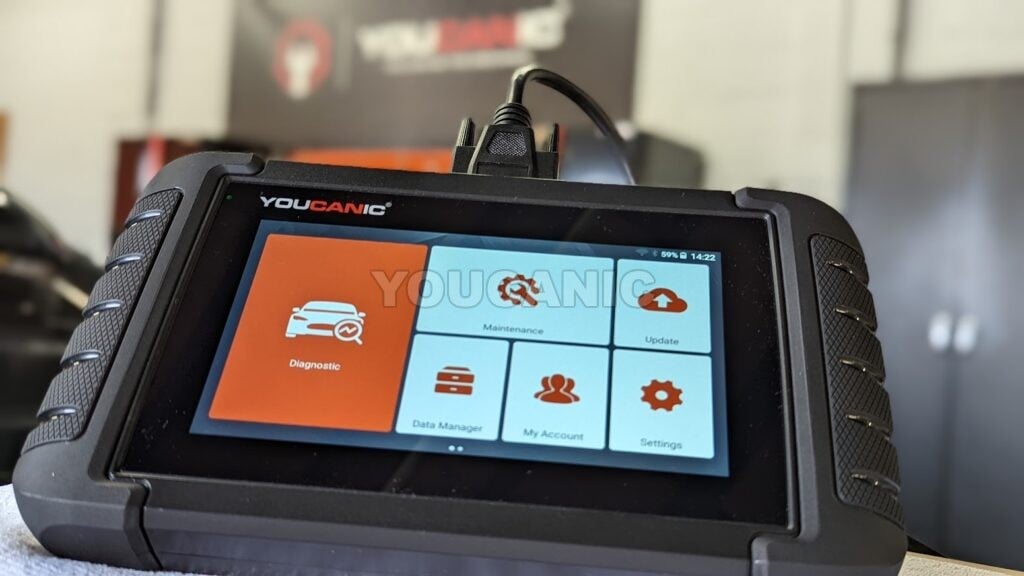
If the ABS Light is on after replacing the ABS wheel speed sensor, you can use the YOUCANIC UCAN-II Pro to reset the ABS light. This scanner can also read and clear fault codes in the engine and other control modules on supported vehicles.
What This Repair Costs
| Repair | Typical total cost |
|---|---|
| DIY, aftermarket sensor | $20 to $70 |
| DIY, genuine sensor | $70 to $160 |
| Independent shop, parts and labor | $160 to 320 |
| Dealer, parts and labor | $300 to 480 |
| Hub or bearing with integrated ring | $300 to 700 per corner |
Rough US estimates for planning, not quotes. Prices vary widely by model, parts brand and region, so get a written quote before committing.

🔧 Find out what is actually wrong before you pay someone to guess
Dealer level diagnostics at home with the YOUCANIC UCAN-II Pro.
- ✔ Covers most makes and models, including many luxury brands. Send us your VIN and we will confirm your car before you order
- ✔ Reads every module, not just the engine, so you find the faults a basic reader says are not there
- ✔ Commands the car: test a fan or pump, bleed ABS, retract an electronic parking brake, register a battery
- ✔ No subscriptions. Free lifetime updates, so the price you pay is the whole price
- ✔ Backed by real mechanics in the USA you can email before and after you buy
Featured in The Wall Street Journal
If the fault is the tone ring rather than the sensor, a new sensor will not fix it. That is the outcome worth ruling out before you buy anything, and live data is how you do it.
When to Stop and Hand It Over
- The sensor seizes in the knuckle and snaps off during removal.
- Live data points to the tone ring inside the hub, which needs a press.
- More than one sensor reads erratically, which points at the control module.
- The light returns after the repair with a known good battery.
Finding the Failed Corner Before You Buy a Part
The ABS light does not say which wheel, and guessing costs you a sensor and an afternoon. The code names the corner and it is stored in the ABS module, which a generic OBD2 reader cannot reach. Brakes are not an emissions system, so a basic reader shows a clean scan on a car with three warning lights on.
The YOUCANIC UCAN-II Pro reads Kia ABS codes and shows live wheel speed from all four sensors at once. Roll the car slowly with the data on screen and the failing sensor is obvious within a minute. It also clears the fault after the repair, which matters because many ABS codes latch and stay stored even once the circuit is fixed.
On the Forte the front sensors are reachable with the wheel off and no further disassembly. Rear access varies by trim and drum or disc setup, so check before committing to the job.
Frequently Asked Questions
Can you replace a Kia ABS sensor yourself?
Yes. Replacing the ABS wheel speed sensor on a Kia is easy and takes about 30 minutes.
How much does it cost to replace the Kia ABS sensor?
At the dealership, it costs between $250 to $400, but if you replace the ABS sensor yourself, you will spend under $100.
Can you drive with a broken ABS sensor?
Yes, you can drive with a broken ABS sensor, but it is not recommended. The vehicle may skid or require a longer distance to stop.
Check these troubleshooting and repair guides for more help on your Kia.
Related guides: Troubleshooting Kia ABS light: Common Causes & Problems · Kia ABS Module Pump ESC Control Unit Replacement