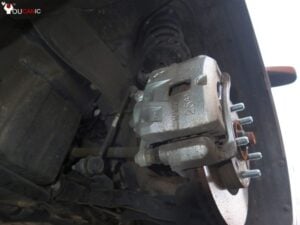

2014 to 2018 Toyota Highlander Rear Brake Pads & Rotor Replacement
Reviewed/Verified by:

Worn brake pads announce themselves with squealing or grinding, longer stopping distances, a brake pedal that sits lower than it used to and often a wear warning light on the dashboard. What they do not cause is a soft or spongy pedal. If your pedal feels springy, travels further than it should or sinks slowly toward the floor, that is air in the hydraulic system, a fluid leak or a failing master cylinder, and fitting new pads will not fix it. Find that cause before driving the car. If your symptoms are wear related, the procedure below covers the job.

What you will need
- Toyota Highlander Rear Brake Pads
- Toyota Highlander Rear Rotor
- Floor Jack
- Jack Stands
- Block
- Lug Wrench
- Mechanic Metric Toolset
- 14mm wrench
- 17mm wrench
- Brake Spreader
- Flathead Screwdriver
Procedure
- Park the vehicle on a safe flat ground surface and turn off the ignition. Do not set the emergency brake when replacing the rear brakes and rotors. Block front wheels using wheel chocks to prevent the vehicle from rolling.

- Loosen the lug nuts of the rear wheel by turning them counterclockwise using a lug nut wrench.
- Jack up the vehicle’s rear. Then support it with jack stands on the rear and block the front wheels.
- Remove the lug nuts and pull the wheel out of the vehicle.

- Remove the two 14mm on the backside of the brake caliper by turning them counter-clockwise using a 14mm wrench.


- Pull the caliper out from the vehicle. If it’s difficult to remove, insert a flathead screwdriver into the caliper and use it to push the piston in.


- Once the caliper is removed, place it where the brake cables won’t be stretched. Use a wire to hang the caliper.

- Remove the brake pads from the carrier by pulling them out.


- Remove the 17mm bolts on the backside of the carrier by turning them counter-clockwise using a 17mm wrench.


- Remove the carrier from the rotor by pulling it out.

- Remove the rotor by pulling it out from the vehicle. The rotor may be rusted. If that’s the case, spray penetrating oil and wait 5 minutes, then try again. Make sure the parking brake is released.


- Line up the new rotor and press it in to set it into place. Then reinstall the rubber grommet on the rotor by pressing it in.

- Remove the metal springs on the caliper by prying them out using a flathead screwdriver.

- Clean the carrier using a wire brush.
- Line up the new metal springs to the carrier and press them to set them into place. Make sure that the metal springs are in their proper orientation.


- Pull the guide pins out from the carrier and wipe them clean. Then add caliper grease to the guide pins and insert them back into the carrier.


- Place the carrier back to the rotor and reinstall its 17mm bolts by turning them clockwise using the 17mm wrench.

- Line up the new brake pads to the rotor and press them in to set them into place.

- Push the piston on the caliper using a brake spreader and the old brake pad.

- Line up the caliper back to the carrier and reinstall the 14mm bolts. Turn the bolts clockwise using a 14mm wrench.


- Carry the wheel back to the vehicle and reinstall the lug nuts.
- Remove the jack stands and release the floor jack.
- Tighten the lug nuts to the proper torque specification.
- Press the brake pedal a few times to put the pressure back on the brake caliper, then drive carefully to test the brakes.


Check these troubleshooting and repair guides for more help on your Toyota.