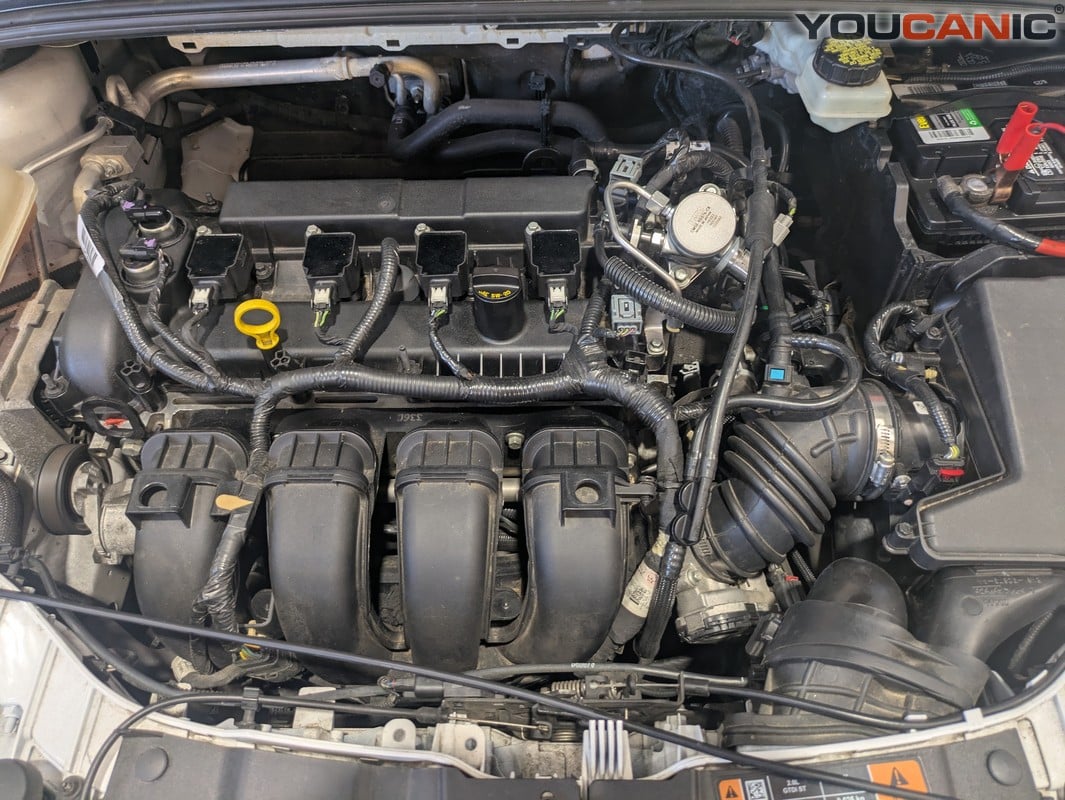
2017 Ford Focus 2.0 Cranking Issues: Diagnosis and Tricky Fix
Contributed by:

Reviewed/Verified by:

Today’s customer came in complaining that his 2017 Ford Focus was cranking for an extended period of time before finally starting. After replacing multiple parts and trying to address the issue himself, he decided to take it to a professional mechanic. Before pulling into the shop, the customer had cleared the check engine light, but upon my initial inspection, the check engine light had turned back on in the dashboard. The next step was to test-drive this Ford to confirm the reported issue. There were no other concerns present at the time, nor were there any during my test drive. The vehicle had 3/4 tank of fuel.

Using my full-system scanner to look for codes, I found a single code: P0087 “Low Fuel Pressure.” From there, I decided to check live fuel pressure data from the low-pressure and high-pressure fuel pumps to get to the bottom of this fuel pressure issue.
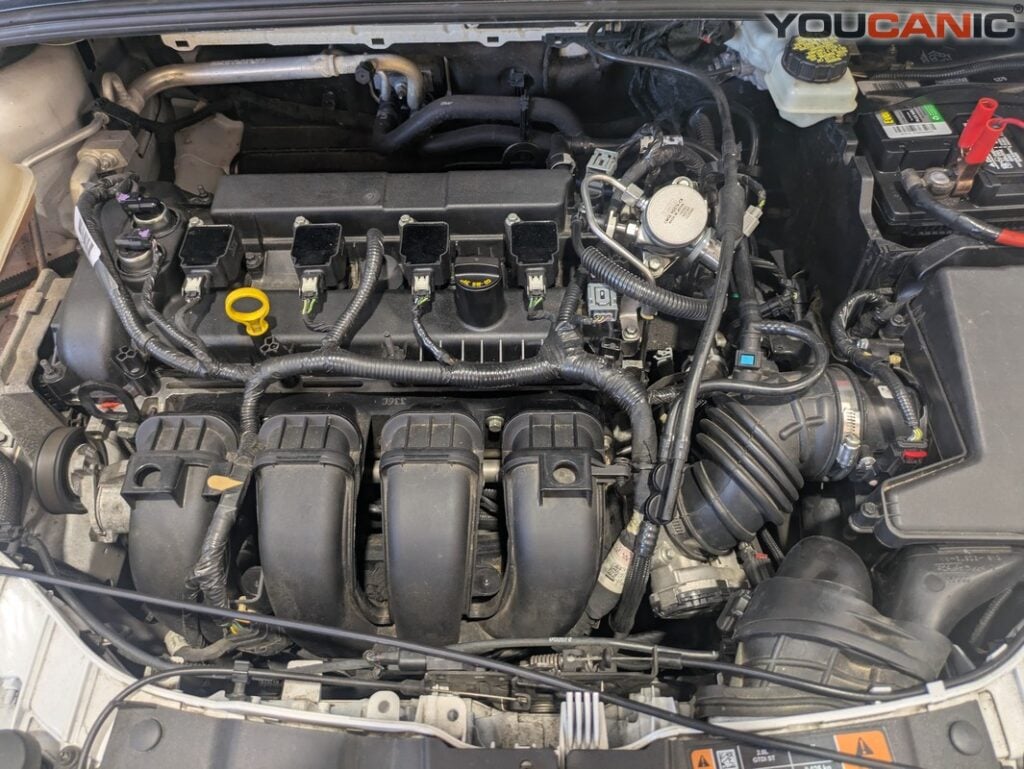
The fuel rail pressure was taking longer than usual to reach the recommended specifications, and further data revealed that the low-pressure fuel pump was also not meeting recommended specifications. While inspecting the high-pressure fuel pump, I noticed that it and the high-pressure fuel rail pressure sensor had been replaced. No external leaks were found in the high-pressure fuel system; however, I discovered that the fuel pump driver module had also been replaced.

🔧 Stop paying the dealer for every warning light
Get dealer level diagnostics at home with the YOUCANIC Full System Scanner.
- ✔ Works with all makes and models, including most luxury brands
- ✔ Topology map view shows all vehicle modules on one screen for faster diagnostics
- ✔ Bi directional controls to test fans, pumps, actuators and more so you do not have to guess
- ✔ Special resets and calibrations such as ABS bleed, EPB service, battery registration and more
- ✔ Free lifetime updates with no recurring fees
Inspecting the low-pressure fuel system was uneventful. I found no leaks or damaged fuel lines. While looking into the vehicle’s history, however, I learned that the low-pressure fuel pump had also been replaced.

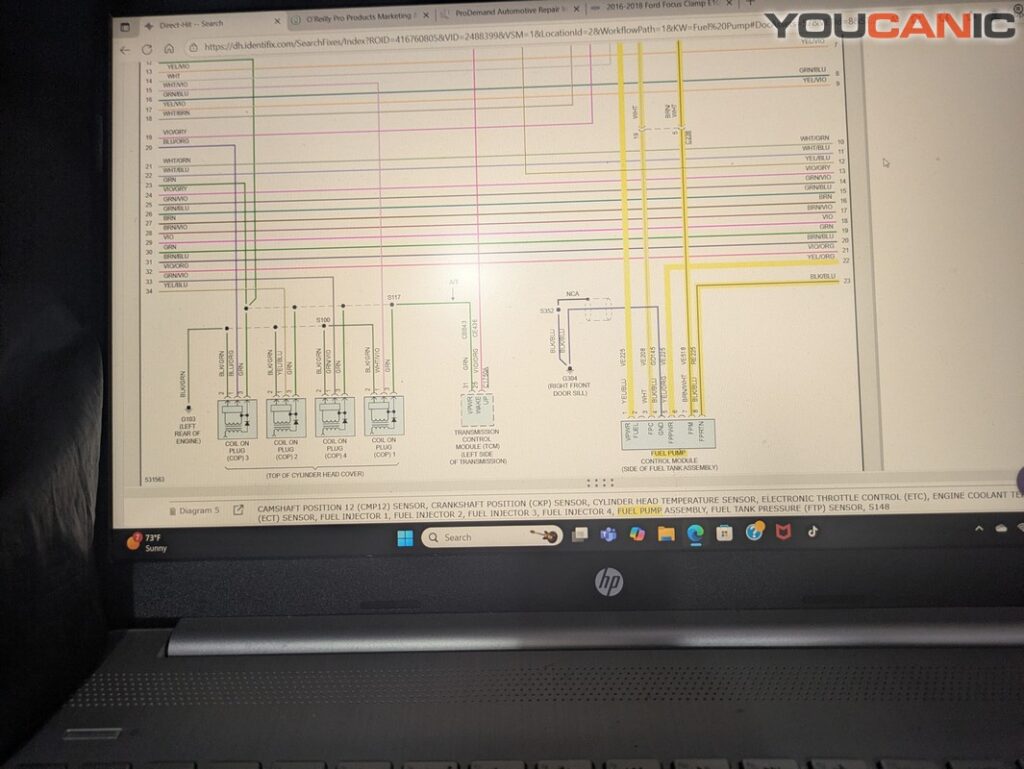
Using Identifix, I found the wiring diagram for the low-pressure fuel pump and the fuel pump driver module, and began testing for continuity between the low-pressure fuel pump and the fuel pump driver module. All connections tested good. Using a power probe, I also tested these connections for proper voltage and signal when commanded from the PCM. Finally, I tested continuity and signal at the low-pressure fuel pump and found all connections and signals were working properly.

After confirming that the issue wasn’t electrical, I removed the low-pressure fuel pump and tested it for fuel pressure using a manual gauge. Found that the low-pressure fuel pump was not creating enough pressure for the vehicle. The low-pressure fuel pump could not build enough pressure to supply the high-pressure fuel pump, resulting in a long cranking period before enough fuel could reach the high-pressure fuel pump. After testing a new low-pressure fuel pump to verify it would operate within the specifications required for optimal performance, it was time to replace the faulty unit.
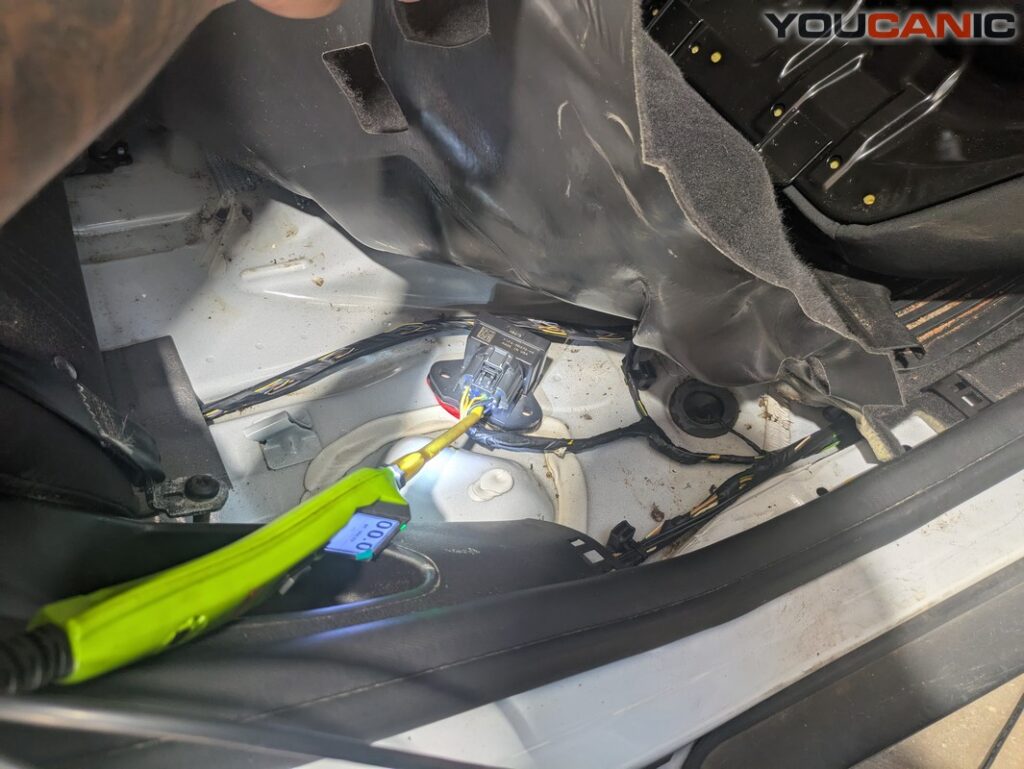
I started by removing the pressure fuel pump from the tank, making sure the tank was free of any debris or contamination. Then, I reinstalled the new low-pressure fuel pump and checked the fuel pressure using data from my full-system scanner. The fuel pressure was in spec, and the vehicle started up with normal cranking time. Tested all connections again to confirm the repair.
Bonus Tip
On direct injection systems, data from a scanner can not always be taken at face value. Manual fuel pressure gauge testing is recommended on the low-pressure pump to confirm adequate fuel pressure is achieved. The high-pressure fuel pump is usually not accessible to a high-pressure shrader valve to check pressure, as pressure exceeds 3000 psi at times.