Car Repairability Index 2025
Summary
In today’s rapidly evolving world of automotive technology, the race for innovation has led to vehicles becoming increasingly complex. While these advancements bring convenience and improved driving performance, they also introduce serious challenges, making car repairs more difficult, expensive, and often inaccessible for everyday drivers.
At YOUCANIC, a trusted authority in automotive repair and diagnostic services, we believe car ownership should not come with uncertainty about maintenance and repair. That is why we have developed the Car Repairability Index, a groundbreaking system that evaluates how easy or difficult it is to repair different vehicle makes and models.
This report will introduce the Car Repairability Index, detailing how repairability is measured and why it matters, not just for mechanics but for every car owner. We will explain the methodology behind the scoring system and share sample rankings, highlighting the best and worst performers when it comes to serviceability.

🔧 Stop paying the dealer for every warning light
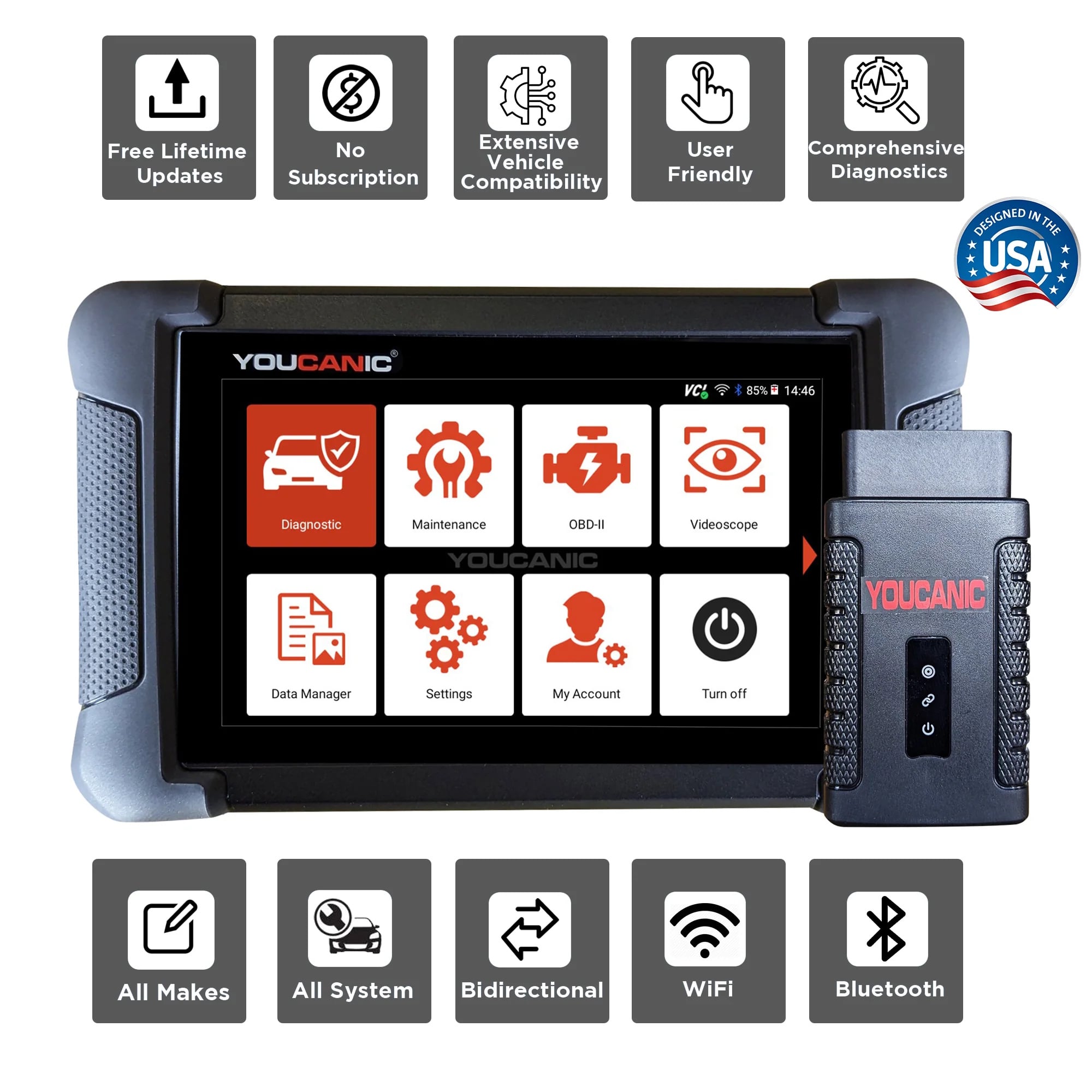
Get dealer level diagnostics at home with the YOUCANIC Full System Scanner.
- ✔ Works with all makes and models, including most luxury brands
- ✔ Topology map view shows all vehicle modules on one screen for faster diagnostics
- ✔ Bi directional controls to test fans, pumps, actuators and more so you do not have to guess
- ✔ Special resets and calibrations such as ABS bleed, EPB service, battery registration and more
- ✔ Free lifetime updates with no recurring fees
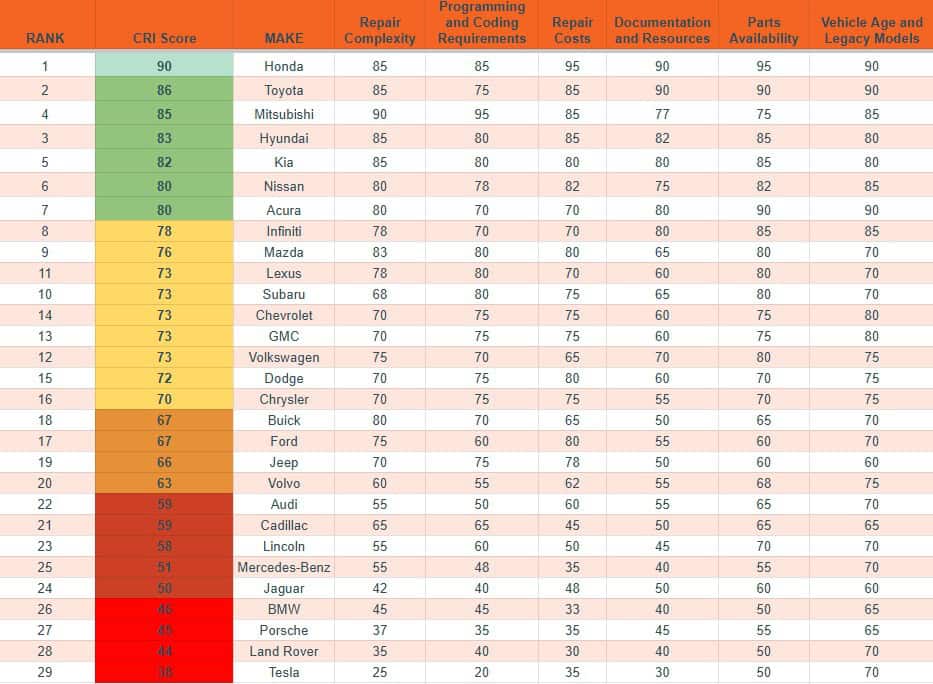
Scoring criteria:
| 91-100%: A+ (Exceptional) |
| 81-90%: A (Excellent) |
| 71-80%: B (Good) |
| 61-70%: C (Average) |
| 51-60%: D (Below Average) |
| 41-50%: E (Poor) |
| 31-40%: F (Failing) |
This Index is more than just numbers. It is about the real-world impact of vehicle design choices:
- The strain on household finances when repairs require dealership-only tools.
- The environmental consequences of prematurely scrapping vehicles that could be repaired.
- There is a growing divide between manufacturers who empower repair and those who do not.
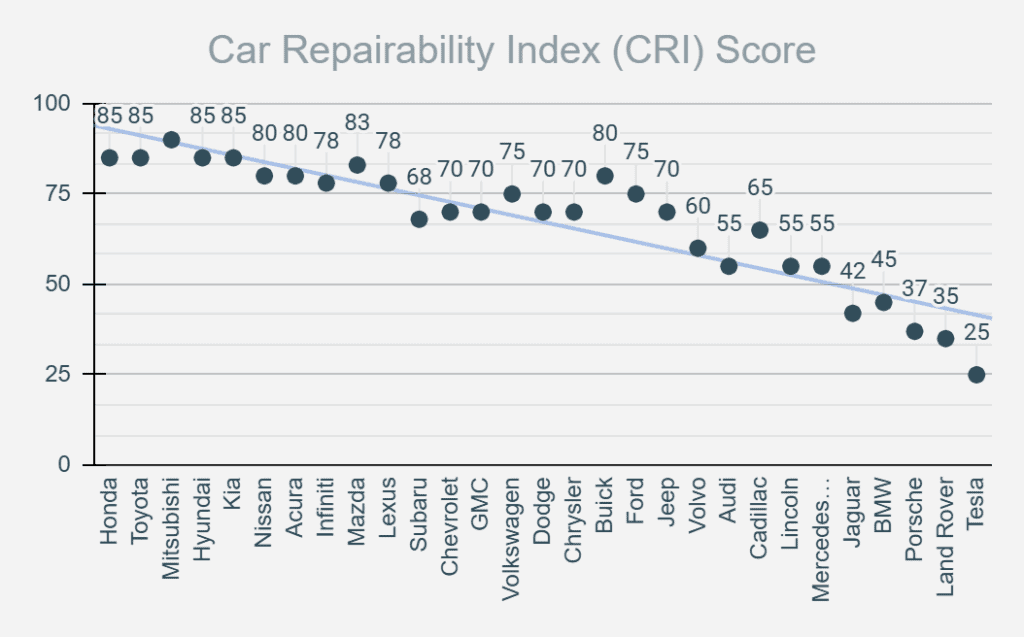
Ranked from best to worst.
Vehicle Repair Cost

Ranked from least expensive to most expensive vehicles to repair.
Throughout this report, we will highlight the barriers imposed by proprietary software, inaccessible automobile parts, and poor documentation, backed by real stories from technicians and car owners. We will also emphasize the crucial role manufacturers play in enabling repair, and how ethical design and transparent support can reshape the future of transportation.
Ultimately, the Car Repairability Index empowers consumers to make smarter, more sustainable vehicle choices. It is a rallying cry for transparency, accountability, and a return to common-sense design, where repair is a right, not a luxury.
Overview
The Car Repairability Index, developed by YOUCANIC, is an innovative scoring system that evaluates how easily different car makes and models can be repaired. Designed to meet the needs of consumers, mechanics, and policymakers alike, the index offers a transparent, data-driven look into the often-overlooked world of vehicle repairability.
As modern vehicles become increasingly complex — with proprietary electronics, tightly integrated systems, and software-locked components — repairing them has become more difficult, costly, and dependent on the manufacturers. That is where the Car Repairability Index delivers real value.
This system evaluates vehicles based on a wide range of criteria, including:
- Accessibility of repairs
- Availability of replacement parts
- Compatibility with aftermarket components
- Repair complexity
- Programming and coding requirements
- Estimated repair costs
- Availability of service documentation and resources
- Manufacturer warranty and support
- DIY-friendliness
- Long-term durability and reliability
By analyzing these factors, the Car Repairability Index identifies which cars are easier and more affordable to repair, helping consumers make smarter choices and avoid hidden ownership costs. For mechanics, it reveals how serviceable vehicles are in the real world. For policymakers, it offers insight into how design choices affect economic and environmental sustainability.
As the automotive industry continues to push the boundaries of technology, the Car Repairability Index serves as a beacon of accountability, encouraging manufacturers to design with serviceability in mind. It empowers consumers, supports repair professionals, and advocates for a more sustainable and repair-friendly future.
About YOUCANIC
YOUCANIC is a consumer-first automotive platform founded in 2016 to address a growing challenge: as vehicles become more complex, car owners are losing the ability to understand, maintain, and repair them. In response, the team at YOUCANIC is dedicated to bridging the knowledge gap by empowering drivers, DIYers, and independent mechanics with accessible, expert-backed repair guidance.
Our mission is simple: democratize automotive knowledge and promote repair transparency. By breaking down complex systems into actionable information, YOUCANIC helps drivers take control of their vehicles, saving time, reducing costs, and extending the life of their cars.
As the creator of the Car Repairability Index, YOUCANIC continues its mission to push the industry toward more sustainable, accessible, and ethical repair practices, advocating for both consumer rights and a more transparent repair ecosystem.
Why Repairability Matters: Financial, Practical, and Policy Impacts for Consumers
In the past, vehicles were relatively simple machines that were easy to maintain and repair. However, in today’s rapidly evolving automotive landscape, with fierce competition driving technological innovation, vehicles have become more complex than ever before. While these advancements improve performance and comfort, they also raise serious concerns about the accessibility, affordability, and sustainability of repairs.
Here is why repairability must be at the forefront of automotive design and policy today:
1. Cost-Effectiveness and Total Cost of Ownership
Vehicles that are easier to repair significantly lower the overall cost of ownership. Thoughtful design choices lead to fewer proprietary parts, less reliance on dealership-only tools, and reduced labor hours, benefiting consumers by:
- Minimizing maintenance bills.
- Increasing vehicle uptime.
- Extending the usable life of their cars.
2. Sustainability and Environmental Impact
Repairability is essential for reducing the environmental footprint of the automotive industry. When vehicles are built to be repaired, and not discarded, they:
- Reduce electronic and mechanical waste.
- Lower the demand for raw materials.
- Avoid premature scrapping of otherwise usable vehicles.
Which leads to a more balanced and eco-conscious automotive economy.
3. Consumer Choice and Market Freedom
Repair-friendly vehicles empower consumers to choose where and how they get their car serviced. Open access to parts, tools, and information:
- Encourages healthy competition among repair providers.
- Breaks down monopolies from automakers or dealer networks.
- Drives down prices and increases overall service quality.
4. Vehicle Longevity and Durability
Repairable vehicles naturally last longer. Easy access to components, straightforward diagnostics, and modular parts lead to:
- Better upkeep and reliability.
- Reduced frequency of replacements.
- Lower long-term financial strain is placed on the consumer.
5. Safety and Roadworthiness
Poor repairability can compromise safety. When key components, such as brakes, airbags, or steering systems, are too complicated or too costly to service, repairs may be delayed or skipped altogether. Prioritizing repair accessibility ensures:
- Safer vehicles on the road.
- Greater consumer confidence in vehicle upkeep.
6. Economic Impact on the Repair Industry
A repairable vehicle ecosystem supports a thriving, competitive repair and aftermarket industry by:
- Creating skilled jobs for technicians.
- Stimulating small business growth.
- Enabling innovation in tools and repair tech.
7. Consumer Empowerment and Ownership Rights
Vehicles that can be repaired without proprietary restrictions give consumers true ownership. When repairs are locked behind paywalls, coding barriers, or hidden documentation, it weakens consumer trust and raises long-term costs. Open repairability allows:
- DIY fixes and community-driven support.
- Independence from dealership monopolies.
- Transparency in repair decisions.
8. Ethical Manufacturing Practices
Designing vehicles that cannot be fixed is not just inconvenient; it is unethical. Automakers have a responsibility to:
- Support long-term ownership.
- Reduce environmental impact.
- Respect consumer rights.
Prioritizing repairability is a sign of ethical engineering and long-term thinking.
9. Regulatory and Policy Influence
Governments around the world are taking notice. The “Right to Repair” movements and laws are gaining momentum, with some regions mandating:
- Access to repair manuals and diagnostic tools.
- Easier availability of replacement parts.
- Fair repair practices.
Manufacturers who embrace this shift now are better positioned for long-term success.
10. Technology as an Enabler, Not a Barrier
The constant advancements in automotive technology do not mean cars should become more challenging to repair in the long run. Modern diagnostic tools, software updates, and open-source platforms can:
- Make repairs faster and smarter.
- Help mechanics and consumers stay informed.
- Bridge the gap between innovation and accessibility.
11. Advocacy and the Right to Repair
Beyond personal benefits, repairability has become a matter of consumer rights. As vehicles become more difficult to repair, thanks to complicated technological advancements and software updates that can only be done at the dealership, consumers and independent mechanics are pushing back and advocating for:
- Open access to repair manuals and diagnostic tools.
- Fair pricing for replacement parts.
- The ability to repair without manufacturer-imposed barriers.
Supporting repairable vehicles strengthens the growing Right to Repair movement, a global effort aimed at promoting transparency, fairness, and long-term consumer protection.
Repairability is no longer a side issue; it is a core factor that affects affordability, sustainability, safety, and consumer rights. As innovation continues to reshape the auto industry, the ability to maintain and repair vehicles must remain a priority.
The rising demand for transparent, ethical, and repairable vehicle design reflects a shift in how consumers, manufacturers, and policymakers view ownership. Supporting repairability means building a smarter, more resilient, and more responsible automotive future, one where vehicles serve not just today’s drivers but also generations to come.
Challenges in Modern Vehicle Repairability
Modern vehicles have become increasingly challenging to repair, largely due to the rapid pace of innovation and heightened competition among automakers. While new technology enhances performance and safety, it often comes at the expense of repair accessibility. Key challenges include the rise of proprietary software, complex electronic systems, and the growing dependence on specialized diagnostic tools. These factors can significantly increase the cost and complexity of repairs, discouraging both consumers and independent mechanics from taking on even basic maintenance tasks.
The Impact of Technological Advancements on Repairs
Technological progress has revolutionized vehicle design, but not always in favor of repairability. Modern vehicles often feature intricate systems that may require partial disassembly to reach a single component. From adaptive driver assistance systems (ADAS) to integrated infotainment and engine control modules, addressing even minor issues can require specialized training, expensive tools, and access to OEM repair procedures.
This complexity presents a growing challenge for DIY enthusiasts and independent repair shops, which may lack access to proprietary tools, software, or the necessary skills to perform complex repairs. As a result, the need for open, accessible repair documentation and standardized diagnostics has never been greater. Without it, even experienced professionals can be sidelined by increasingly locked-down systems.
Repairability as a Pillar of Vehicle Longevity and Sustainability
Vehicles designed with repairability in mind tend to last longer and have a lower overall environmental impact. When components are accessible and replacement parts are reasonably priced, owners are far more likely to keep their cars on the road longer and keep them in good condition, supporting:
- Extended vehicle lifespans.
- Reduced manufacturing demand.
- Less electronic and material waste.
Automakers can contribute to resource conservation and sustainable practices by making repairs easier and aligning vehicle ownership with broader environmental goals.
Proprietary Software and Diagnostic Tools: A Double-Edged Sword
As vehicles evolve, so too does the software that runs them. While proprietary software and advanced diagnostic tools can enhance performance and enable precision troubleshooting, they also pose a significant barrier to repair.
In many cases, independent mechanics and car owners are locked out of crucial systems because manufacturers restrict access through proprietary interfaces, which means:
- Basic diagnostic tools may be unable to communicate with key modules.
- Certain repairs may require expensive subscriptions or dealer-only equipment.
- Consumers may be forced into high-cost service centers that are against their preferences.
This shift raises important questions about ownership rights, fairness, and consumer access. Ensuring all parties—professionals and DIYers alike—can access the tools and knowledge needed to maintain their vehicles is critical for affordability, safety, and transparency.
The Role of Manufacturers in Supporting Repairability
Manufacturers play a critical role in shaping vehicle repairability. Their design choices determine whether a car is serviceable by everyday owners and independent mechanics or locked behind proprietary systems and unnecessary complexity.
To promote a fair and sustainable automotive future, manufacturers must:
- Design with accessibility in mind, ensuring key components can be serviced without excessive disassembly.
- Share repair information, including service manuals, wiring diagrams, and diagnostic protocols.
- Support independent repair shops, not just dealership service centers.
- Ensure aftermarket compatibility, so third-party parts and tools can be safely used.
- Avoid restrictive software locks that prevent owners from repairing their own vehicles.
Ethical Responsibilities in Automotive Design
Repairability is not just a technical issue—it is an ethical one. Consumers have the right to maintain and repair what they own, and manufacturers have a responsibility to uphold that right.
Key ethical considerations include:
- Planned Obsolescence: Avoid designing vehicles with artificial limits on lifespan or performance.
- Access to Repair Information: Provide open access to repair manuals, diagnostic tools, and software updates.
- Fair Pricing of Parts & Tools: Avoid inflated pricing that burdens consumers or makes repairs cost-prohibitive.
- Environmental Responsibility: Use recyclable materials and design vehicles for long-term serviceability to reduce waste.
- Consumer Rights: Allow freedom of choice in repair location, part selection, and repair method.
- Transparency: Be open about warranty limitations, repair restrictions, and software dependencies.
- Safety as Priority: Design systems so critical safety components remain accessible and maintainable throughout a vehicle’s life.
By aligning engineering decisions with these ethical principles, manufacturers can build trust, extend product life, and support a repair-friendly economy.
Car Repairability Index (CRI)
The Car Repairability Index, designed by the YOUCANIC team, with feedback from experienced automotive mechanics, is built upon a meticulous analysis of several key factors that collectively determine how easy and cost-effective it will be to repair any particular vehicle. It provides a comprehensive methodology to evaluate and score the repairability of various car brands and models. These factors include the complexity of repairs, availability of parts, programming and coding requirements, repair costs, documentation and resources, vehicle age, online support, and the network of experienced mechanics. Each factor is assigned a specific weight by its significance, and these weights are used to calculate the overall repairability score for each car brand and model. The data is collected from research, user experiences, and industry insights, ensuring the index’s methodology is comprehensive and objective.
Furthermore, YOUCANIC’s index relies on a continuous data collection process regularly updated to reflect the innovative automotive industry. This index employs a transparent and standardized approach in its methodology. This commitment to accuracy and transparency ensures that consumers, mechanics, and policymakers have access to reliable and up-to-date information, enabling them to make informed decisions regarding vehicle repair and maintenance.
This methodology provides a holistic and data-driven repairability assessment, aiding consumers in selecting vehicles that align with their needs and values while advocating for greater transparency and consumer rights within the automotive industry.
Ranking Categories
Repair Complexity
- The ease of repair for DIY enthusiasts without proprietary or specialized tools and equipment.
- The level of technical knowledge required for common and complex repairs.
- The manufacturer’s take on DIY repairs and modifications.
- Availability of user-friendly interfaces for accessing vehicle diagnostics and maintenance information.
Parts Availability
- The ease of sourcing OEM (Original Equipment Manufacturer) and aftermarket parts for specific brands or models.
- The diversity of suppliers and options available for replacement components.
- The aftermarket support for a brand, including the availability of aftermarket upgrades, accessories, and modifications.
- The variety of aftermarket brands and manufacturers offering compatible parts.
Programming and Coding Requirements
- The extent to which manufacturers require coding or programming when replacing parts (e.g., sensors, control modules).
- The availability and cost of diagnostic tools and software for DIY enthusiasts.
Repair Costs
- Average repair costs for common issues (e.g., engine, transmission, suspension).
- Cost of labor and specialized equipment needed for repairs.
Documentation and Resources
- Availability and quality of each brand’s repair manuals, service guides, and online resources.
- Access to technical support and customer service from the manufacturer.
- Vehicle Age and Legacy Models
- The manufacturer’s commitment to supporting and providing resources for older models.
- The availability of replacement parts and service support for legacy vehicles.
- User Community and Online Support
- The presence of active user communities, forums, and online support groups for sharing experiences for each brand or model.
- The availability of helpful online resources, tutorials, and user-generated content.
- Mechanic Network
- The accessibility and reputation of the manufacturer’s dealership and service network.
- The coverage of service centers in various geographic regions.
Empowering Consumers Through the Car Repairability Index
The Car Repairability Index is more than just a rating system — it is a tool for consumer empowerment. By providing clear, data-driven insights into how easy or difficult it is to maintain and repair different vehicles, the index enables consumers to make smarter, more sustainable choices.
Here is how the Index helps vehicle owners take control:
Informed Decision-Making
The index provides valuable insights into the repairability of various car brands and models. With this knowledge, consumers can confidently select vehicles that align with their long-term goals, technical comfort, and financial expectations.
Cost Savings
By identifying vehicles that are easier and more affordable to maintain, the index helps consumers avoid hidden repair costs. This allows for better budgeting and reduces the risk of unexpected, expensive repairs down the road.
Repair Accessibility
The Index highlights cars that are more DIY-friendly or supported by accessible repair tools and guides, empowering consumers to take charge of their own maintenance, minimize dealership dependency, and gain mechanical confidence.
Environmental Impact
Consumers looking to reduce their carbon footprint can use the Index to choose vehicles that are built to last. Repairable cars stay on the road longer, meaning fewer end up in landfills and less demand is placed on new manufacturing.
Advocacy and Consumer Rights
Armed with repairability data, consumers can push for greater transparency, fair repair practices, and open access to repair information. The Index becomes a tool, not just for individual empowerment, but for collective advocacy in the fight for the Right to Repair.
The Big Picture
Ultimately, the Car Repairability Index gives consumers the tools to:
- Make smarter buying decisions.
- Save money over the long term.
- Maintain control over their vehicles.
- Support a more sustainable, transparent automotive ecosystem.
By making repairability visible, YOUCANIC is helping put the power back in the hands of the consumer.
Cases
The following examples highlight how certain car manufacturers intentionally manufacture vehicles that are nearly impossible to repair outside of the dealership:
Jaguar Land Rover: Locked Diagnostics and Limited Access to Repair Data
Jaguar Land Rover (JLR) has developed a reputation among vehicles that are difficult and costly to repair, largely due to restrictive software practices and limited access to essential repair tools and data. Many systems in modern JLR vehicles require the use of the Pathfinder or SDD diagnostic software, which is proprietary, expensive, and often only available through official channels with licensing and security credentials.
Critical modules, such as the BCM (Body Control Module), engine ECUs, and infotainment units, often require VIN pairing, online programming, or dealer authorization to install or initialize. Used modules are frequently locked out or incompatible unless professionally reprogrammed, a task only the dealership or high-end specialty shops can perform.
To further complicate matters, JLR has been slow to provide full technical documentation and support to independent shops, limiting their ability to troubleshoot or perform programming tasks. Over-the-air updates and digital service records also centralize control at the manufacturer level, reducing consumer freedom and flexibility.
These practices make Jaguar and Land Rover vehicles less accessible for DIY owners and independent shops, significantly increasing ownership and maintenance costs, especially once the vehicle is out of warranty.
Mercedes-Benz: A Repairability Challenge
Mercedes-Benz vehicles exemplify the growing complexity in modern automotive repair. Known for their advanced engineering and luxury features, these cars often present significant challenges for repairability, particularly due to the manufacturer’s extensive use of VIN-specific coding.
Many Mercedes-Benz modules and electronic components are hard-coded to the original vehicle’s VIN, making it nearly impossible to install used parts without advanced reprogramming. Even authorized dealerships typically refuse to use salvaged modules due to these restrictions. Independent mechanics face similar roadblocks, as re-coding these parts requires specialized tools and expertise that are not widely accessible.
Real-world repair data from automotive diagnostic platforms—including YOUCANIC—reflects these challenges. In recent years, an increasing number of owners have sought help from specialists with deep experience in handling Mercedes-Benz electronic systems, often needing to send vehicles long distances for repairs. This trend underscores how limited repairability drives up costs and restricts consumer choice.
Mercedes-Benz serves as a clear example of how proprietary software and system integration can directly impact repair access and affordability, reinforcing the need for transparency, open diagnostic tools, and vehicle design that considers long-term serviceability.
FCA Group (Dodge, Chrysler, Fiat, Jeep): Security Gateway and Repair Restrictions
Fiat Chrysler Automobiles (now part of Stellantis) introduced the Security Gateway Module (SGW) in many of its vehicles in 2018 to improve cybersecurity. While the SGW helps protect against unauthorized access to vehicle systems, it also significantly restricts the ability of independent mechanics and car owners to perform routine diagnostics and repairs. Basic tasks, such as clearing a check engine light, accessing ABS or airbag systems, or running active tests, are blocked when using standard OBD-II scan tools unless they are registered and authenticated through FCA’s proprietary systems and pay FCA a fee.
This restriction forces many vehicle owners to rely on authorized dealerships or FCA-licensed tools for repairs that were once easily performed with aftermarket scanners. While the intention behind the SGW is valid from a security perspective, its implementation has created a barrier to repairability, raising costs, reducing service options, and limiting consumer freedom. The FCA case underscores a growing trend in the industry where digital protections, unless thoughtfully balanced, can unintentionally hinder transparency, independent repair, and long-term vehicle serviceability.
Tesla: Software Locks and the Closed Repair Ecosystem
Tesla vehicles present unique challenges to repairability due to the company’s heavy reliance on software locks and proprietary systems. Critical components, such as the battery management system (BMS), motor controllers, and central computer units, are tightly integrated with Tesla’s software ecosystem. Replacing or servicing these parts typically requires access to Tesla’s internal diagnostic tools and authorization protocols, which are not made available to independent mechanics or the public. As a result, even common repairs often require recalibration or reauthorization, exclusive to Tesla service centers.
For car owners, this creates a closed repair ecosystem. Routine services that could once be handled by independent garages or DIY enthusiasts are now restricted, leading to fewer repair options, longer wait times, and higher service costs. Tesla’s frequent over-the-air (OTA) updates further complicate this landscape, as system updates may alter the compatibility of parts or require post-update reconfiguration that only Tesla can execute. While this level of integration enables innovation and performance improvements, it also raises serious concerns about consumer choice, long-term serviceability, and the right to repair.
BMW: Proprietary Software and Locked Diagnostic Access
BMW has increasingly implemented restrictive repair practices that make servicing their vehicles challenging for independent mechanics and DIYers. Modern BMWs rely heavily on dealer-level diagnostic software such as ISTA (Integrated Service Technical Application), which is not openly accessible to the public. Even basic functions like clearing fault codes, registering a new battery, or calibrating electronic components often require access to this proprietary software and a subscription to BMW’s diagnostic ecosystem.
Additionally, BMW utilizes digital part matching and component initialization, where newly installed parts—such as an alternator, ECU, or headlight module—must be “coded” or “registered” to the car using BMW’s system. Without this step, the vehicle may not recognize the part or function properly. This practice effectively blocks used part reuse and makes aftermarket replacements or DIY installations more difficult, forcing customers to use OEM parts and dealership services.
The company also restricts access to online service manuals, wiring diagrams, and software updates, which are often behind paywalls or limited to certified shops. These barriers have led to higher service costs and fewer third-party repair options, resulting in increased frustration among car owners and independent technicians.
Volkswagen Group: Component Protection and Software Restrictions
Volkswagen (VW) and its subsidiaries (Audi, Porsche, etc.) have implemented a system called Component Protection, which restricts the installation and use of electronic parts in their vehicles. This system links specific modules—such as infotainment systems, ECUs, climate controls, and instrument clusters—to the vehicle’s VIN. If a part is replaced, even with a genuine used component, the system may disable it unless it is officially “unlocked” and coded using Volkswagen’s proprietary diagnostic software, ODIS (Offboard Diagnostic Information System).
Access to ODIS is limited to authorized service centers or requires costly licensing, subscriptions, and secure gateway clearance for independent shops, making it extremely difficult for independent mechanics or vehicle owners to perform even routine replacements or upgrades without dealer involvement.
Additionally, VW has implemented secure gateway modules (SGWs) in many newer models, especially Audi and Porsche vehicles, blocking communication from standard OBD-II scan tools, preventing functions like code clearing, live data viewing, and adaptations unless the scan tool is registered and authenticated by the manufacturer. These layers of digital restriction increase repair costs, limit parts reuse, and create significant barriers to independent servicing.
Conclusion: Repairability is a Right, Not a Luxury
In an era of increasingly complex automotive technology, the YOUCANIC Car Repairability Index highlights a simple truth: if you cannot repair it, do you really own it? This proposal makes the case for repairability as a cornerstone of ethical engineering, consumer empowerment, and environmental responsibility.
Restrictive design choices like software-locked parts, proprietary diagnostic tools, and hidden repair documentation quietly reshape car ownership, turning everyday maintenance into dealership dependence. These barriers do not just raise costs; they strip consumers of choice and threaten the sustainability and accessibility of transportation.
The Car Repairability Index does not just rank cars. It exposes a system that often prioritizes control over serviceability, giving power back to drivers, offering clear, data-backed insight into which vehicles are truly built to last, which are designed to be replaced.
Our message to automakers, regulators, and consumers is simple: transparency, accessibility, and repair-friendly design must define the future of mobility. When repairs are impossible, waste is inevitable, and ownership is an illusion.