Mitsubishi Outlander Stuck in Park & Won’t Move? Here’s the Mechanic’s Fix
Reviewed/Verified by:

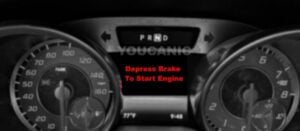
I had a good friend call me last week, saying she was detailing the inside of her vehicle. When she was done, she tried to move it, and the service parking brake light began flashing. The engine did start, and the transmission would engage, but her car would not move! She thought that since the car wouldn’t move and the transmission would not shift, she had a transmission problem. So I decided to drive over to her house to take a look at the vehicle, which is a 2018 Mitsubishi Outlander.

I first plugged in my cheap OBD scan tool, which I always keep in my truck, and tried to clear the codes. Nothing changed, and the car was still not movable. In order to properly scan the car, I needed to get it to my repair shop.
To help her save money on a towing service, I needed a way to make the electronic parking brake release. Since the car started and the transmission engaged, it was obvious that the parking brake was stuck engaged and was the reason the car would not move. I went to my truck, grabbed a 12VOLT Milwaukee battery and used the leads off of my multimeter, and unplugged the parking brake plugs behind the rear wheels.

🔧 Stop paying the dealer for every warning light
Get dealer level diagnostics at home with the YOUCANIC Full System Scanner.
- ✔ Works with all makes and models, including most luxury brands
- ✔ Topology map view shows all vehicle modules on one screen for faster diagnostics
- ✔ Bi directional controls to test fans, pumps, actuators and more so you do not have to guess
- ✔ Special resets and calibrations such as ABS bleed, EPB service, battery registration and more
- ✔ Free lifetime updates with no recurring fees

I put power to them, touching the leads to the hot and ground, and you could hear the electronic parking brake releasing.
Now that the car was free, I drove it to my garage with the parking brake light still on. I pulled the rear wheels off and the parking switch out of the center console to check for power and continuity. The rear modules tested well when sending voltage to them; they opened and closed, but when trying at the switch, nothing!
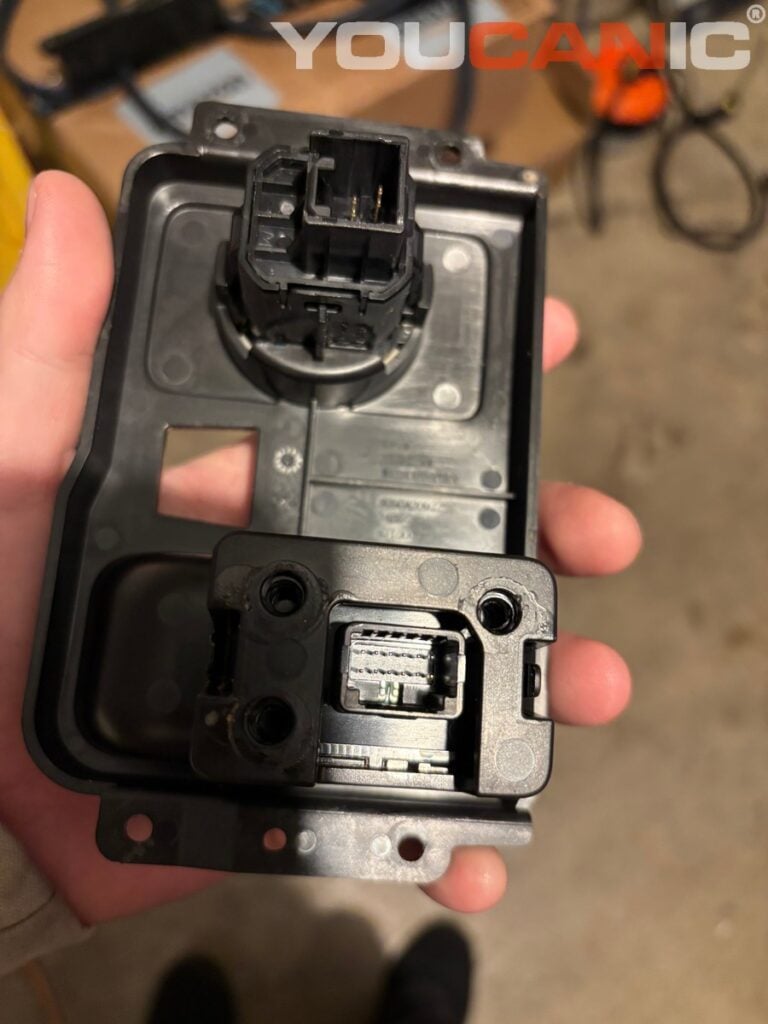
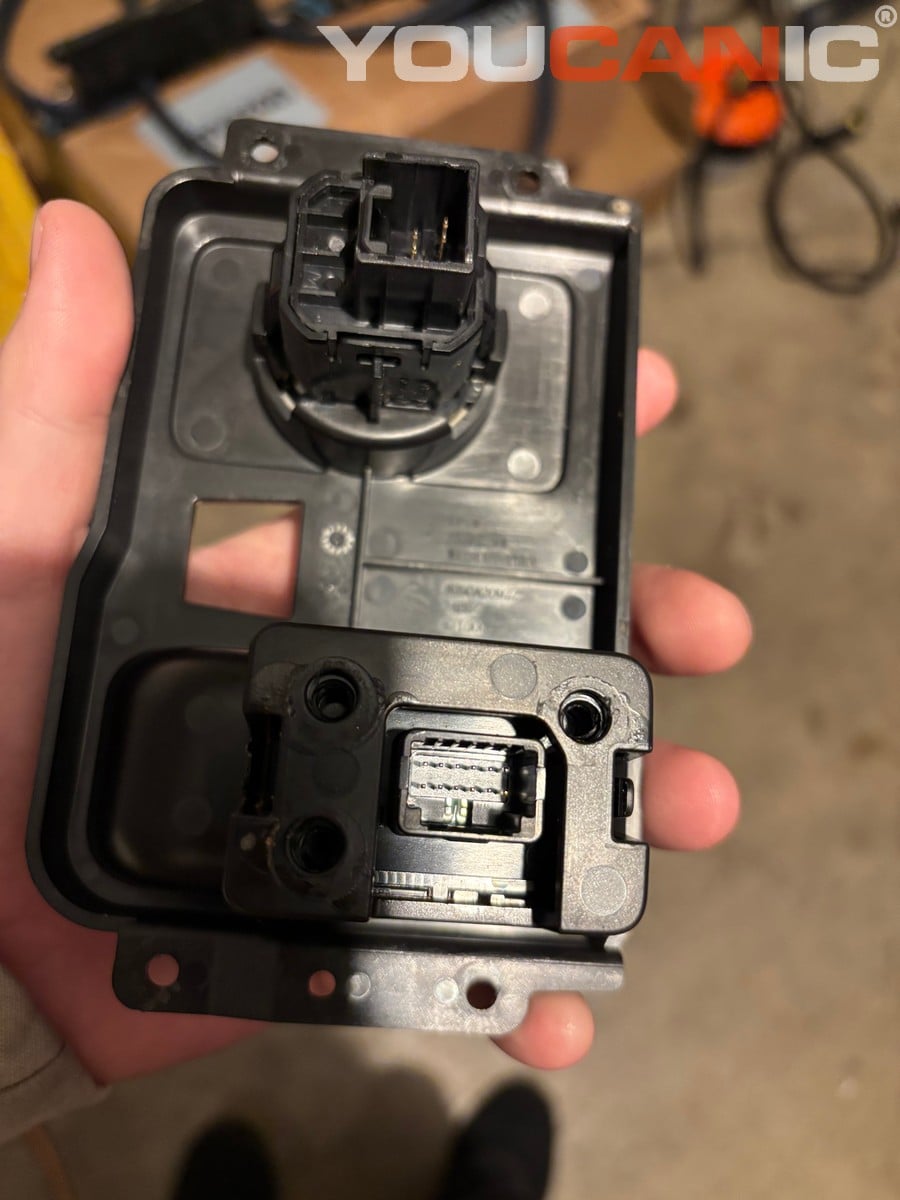
I tore apart the switch to find that it was gummy and smelled burnt. I called the customer and asked her what she had cleaned the center console with, and she said she had used a steam cleaner.

We needed a parking brake button, but no auto parts stores in the area had them or would be able to get one in. I ended up finding a used switch on eBay. When the switch arrived, I installed it into the center console, but the service parking brake continued to flash on the dashboard.
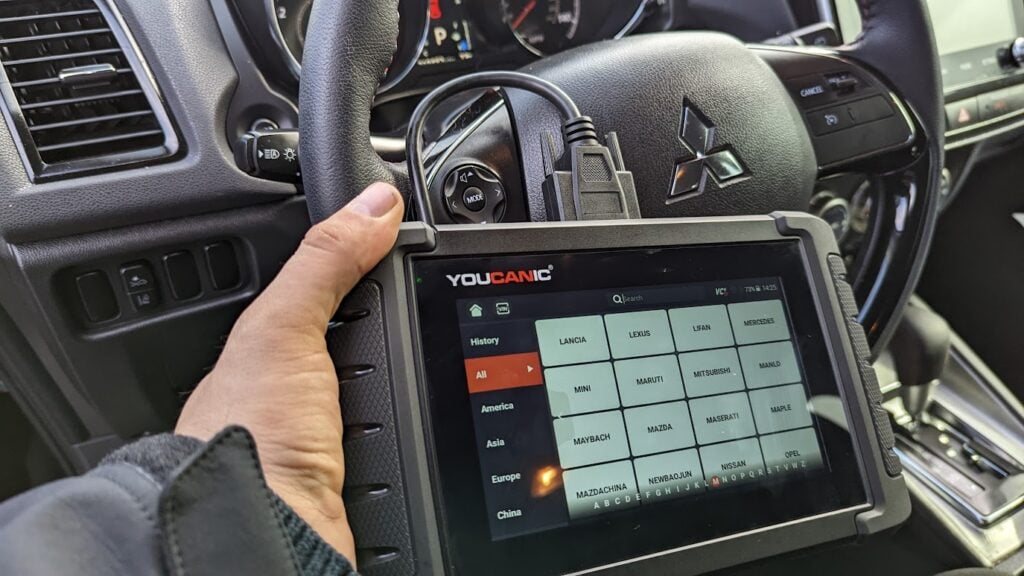
After performing a parking brake reset with my Full System scanner, boom, the parking brakes would engage and disengage using the switch on the center console. I also ended up replacing the rear brake pads, as they were almost worn down to metal-on-metal. Then, I test-drove the vehicle, and everything worked flawlessly as it should.

Bonus Tip
Never clean any electrical components with a steam cleaner. This would have cost her well over 400 dollars if she had to go to the dealer!
Related Symptoms
- Dash warnings
- “Service Parking Brake” flashing
- EPB/parking brake icon blinking (circle “P”)
- Sometimes “Auto Hold unavailable” or hill-start assist disabled
- Vehicle behavior
- Car won’t move in Drive/Reverse (rear brakes stuck applied)
- Drags or jerks when trying to move; may release and then re-apply on its own
- Parking brake switch unresponsive (press/pull does nothing)
- Switch light doesn’t illuminate or blinks erratically
- Smells/feel/sounds
- Burnt/electrical smell around the center console (failed EPB switch)
- No usual whirr/click from rear caliper actuators when the switch is pressed
- Repeated warning chime at startup
- Common triggers (when it started)
- After detailing/steam cleaning the center console
- After low battery / jump start
- After rear brake pad service done without EPB service mode
- Quick visual clues
- EPB switch feels sticky/gummy or heat-discolored
- Connector corrosion or moisture around the switch or rear actuator plugs
- Uneven rear pad wear (inner pad much thinner)
- Scan tool findings (typical)
- EPB/ABS module DTCs such as switch circuit fault, actuator jam/overcurrent, calibration incomplete, or low system voltage
- Freeze-frame showing low 12-V voltage during the fault
- EPB service/reset function required to clear the warning after repair
Safety Disclaimer
This content is for informational/educational purposes only and is not a substitute for the manufacturer’s service information or professional advice. Working on braking systems and vehicle electronics is hazardous. The electronic parking brake (EPB) can self-apply or release—keep hands and tools clear of calipers and moving parts. Always work on a level surface, chock wheels, and support the vehicle with properly rated jack stands (never rely on a jack).
Follow the OEM service manual for your exact vehicle (VIN), including torque specs and EPB service/calibration procedures. Applying external 12-volt power to EPB actuators or wiring can cause injury or module damage and should be performed only by trained professionals with correct wiring diagrams.