

Mercedes-Benz Air Suspension Control Module Replacement
Reviewed/Verified by:

Need to replace your Mercedes-Benz Air Suspension Control Module? By following the procedures below, learn how to remove and install your air suspension control module.
At a Glance
- Applies to: Airmatic control unit (N51) on the S-Class W221; about one hour.
- Symptom in this case: an ADS valve fault that stayed after a new strut, with the ride stuck firm.
- Test the strut wiring before condemning the module.
- Disconnect the battery, unplug the connectors, swap the module on its bracket.
- Back up the old module’s coding before removal if your tool can, then run the initial start up routine and calibrate the ride height.
- Used modules can work if the part number matches. On the car in this guide it worked with no programming at all, though that is one example rather than a rule.
This guide provides instructions on replacing the air suspension control module (Airmatic control unit, N51) on a Mercedes Benz S-Class W221. Replacing the airmatic control unit on a Mercedes Benz is relatively easy and takes about one hour.

Symptoms
This module was replaced because it displayed a fault code for a faulty air strut ADS valve. The suspension was stuck in SPORT mode, and the ride quality was rough. Even after replacing the “faulty” strut, the code still showed current in the airmatic control module. Wires from the air strut to the airmatic module were tested. Replacing the airmatic module itself fixed the problem.

🔧 Find out what is actually wrong before you pay someone to guess
Dealer level diagnostics at home with the YOUCANIC UCAN-II Pro.
- ✔ Covers most makes and models, including many luxury brands. Send us your VIN and we will confirm your car before you order
- ✔ Reads every module, not just the engine, so you find the faults a basic reader says are not there
- ✔ Commands the car: test a fan or pump, bleed ABS, retract an electronic parking brake, register a battery
- ✔ No subscriptions. Free lifetime updates, so the price you pay is the whole price
- ✔ Backed by real mechanics in the USA you can email before and after you buy
Featured in The Wall Street Journal
What you will need
Parts
- Mercedes Airmatic control unit
- Used modules can be installed, but ensure you use the correct part number.
Tools
- 10mm socket
- Ratchet wrench
Procedure
Follow these steps to replace the airmatic control unit on a Mercedes Benz S-Class W221.
Removal
- Disconnect the negative terminal on the battery. The battery on W221 is located behind the rear seat and can be accessed via the trunk.
- Locate the airmatic control module in the passenger footwell.
- Grab one side of the carpet, pull it towards you, and push the carpet down.

- Remove the 10mm plastic nuts of the module frame and pull down the metal plate.
- Using a 10mm socket remove the bolts on the metal bracket holding the control module.
- To disconnect the connectors from the control module, you must pull the connector lock and separate the connectors.


Installation:
- Align the connectors to the control module and push the tab to lock.
- Install the metal bracket and tighten the bolts.
- Return the metal plate, and tighten the plastic nuts.
- Install the scanner and program the module.


On this car the module worked without any programming, but transferring the coding from the old control unit is still the better practice where your tool supports it. See the section below on what is actually required, because the usual advice is stated with more certainty than the evidence justifies.
Notes:
- Make sure to disconnect the battery’s negative terminal every time you perform a module replacement.
- Make sure to scan the vehicle before performing the module replacement to know what codes are already in store before replacing the module and what occurred after replacing the module.
- Please back up the coding of the airmatic control module and restore it to the unit.
Troubleshooting Airmatic System
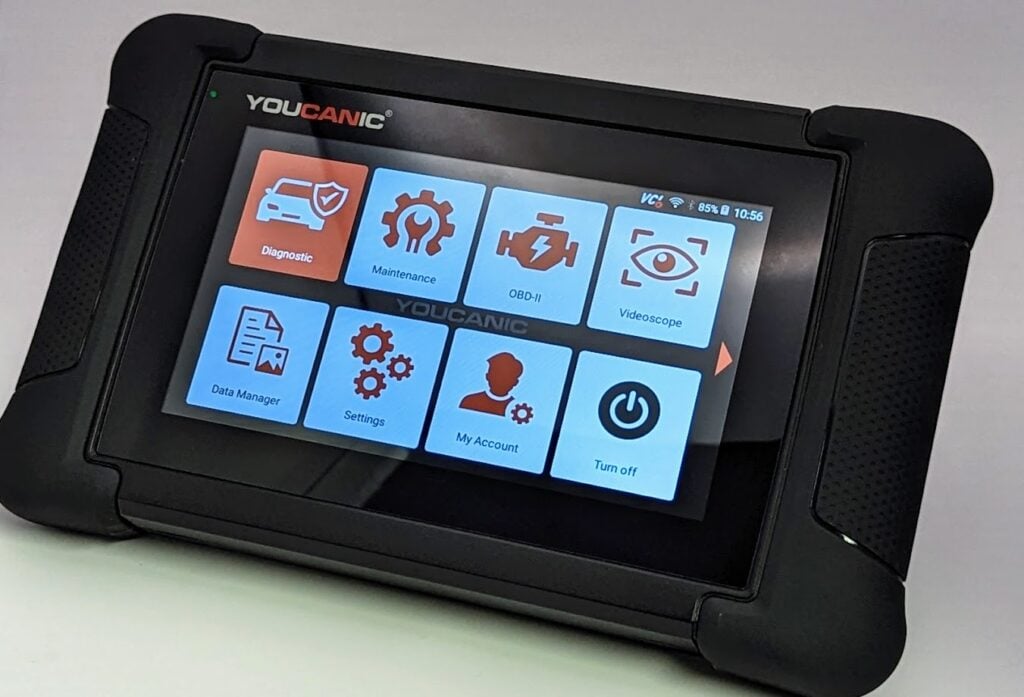
One way to determine if you have a faulty Airmatic Control Module is by scanning your vehicle with an OBD-II scanner. One good example of a multi-system scanner is the YOUCANIC UCAN-II Pro. This scanner can read and clear fault codes from all the systems in your Mercedes-Benz. It can also perform bi-directional tests, maintenance and repair resets, etc.
Module or Strut? How to Tell
- A fault that stays after the strut or valve has been replaced, and the wiring tests good, points to the module.
- Several unrelated Airmatic faults at once, such as valve, level sensor and compressor codes together, can point to the module or its power supply.
- Water damage or corrosion on the module connectors is a documented cause, not a folk theory, so inspect them before buying a new unit.
- A single strut that sags overnight is almost always a leak, not the module.
After the New Module Is In
Restore the coding from the old module, then clear the codes. The ride height may also need to be calibrated with a scan tool so the car sits level. Drive the car and check that the suspension raises, lowers and changes firmness without warnings.
Does a new module need coding? The honest answer
This is the question that decides whether a used or repaired module is a realistic route, and most sources answer it with more confidence than the evidence supports. Here is what we can and cannot stand behind.
What we saw ourselves: on the W221 in this guide, the replacement module worked without any programming. The suspension functioned and the fault cleared. That is one car, in our shop, and we are reporting it as that rather than as a rule.
What we could not establish: we could not find a Mercedes document stating whether AIRMATIC control unit replacement requires SCN coding, the online dealer authorised coding process, on any of these chassis. We also could not find one ruling it out. Anyone telling you definitively either way is not citing Mercedes.
What the evidence points to: aftermarket diagnostic tools expose a routine named “initial start up with manual settings input for new control module,” combined with level calibration, and technicians report completing module replacements with it. That is a start up and calibration routine rather than a server authorised coding request, which suggests SCN coding is not required here. Treat that as a strong indication, not a guarantee.
What to do in practice: back up the coding from the old module before you remove it, if your tool can. Fit the new unit, run the initial start up routine, then calibrate the ride height. If the car behaves correctly and holds its height, you are done. If it does not, that is the point at which a dealer visit becomes the answer, and you will have lost nothing by trying.
Part numbers and where the module lives
Mercedes calls this unit N51, or N51/3 on later cars, where the diagnostic tool labels it AIRMATIC. Location varies more than people expect:
| Chassis | Where the module is | Part number |
|---|---|---|
| W221 S-Class | Passenger footwell, under the carpet | Match to your car |
| W211 E-Class, W219 CLS | Right passenger footwell, under the carpet | A 211 545 31 32 reported |
| W212 E-Class | Footwell | A 212 900 65 14 reported |
| W220 S-Class | Left fuse box | Not sourced |
Two codes point at the module itself rather than the hardware it controls: C220C01, a general electrical fault in the suspension control unit, and C220C04, an internal control unit fault. Those are worth distinguishing from the valve, sensor and compressor codes, which describe things the module is reporting about other parts.
Water deserves its own mention, because it is the documented cause rather than a folk theory. Mercedes bulletin LI32.50-P-064601 covers moisture and corrosion in the connector at the air suspension compressor, overloading a fuse and producing a vehicle level warning, and the factory remedy begins by drying the connector with a heat gun. The same logic applies at the module end, and on a W221 the module sits in a footwell where a blocked drain or a leaking seal puts water exactly where you do not want it. A damp carpet is a reason to look at connectors before you buy anything.
Frequently Asked Questions
Where is the Airmatic control module on a W221?
It is in the passenger footwell. Disconnect the battery first; on the W221 it sits behind the rear seat and is reached through the trunk. A wet footwell carpet is a warning sign that water may have reached the module.
Can I use a used Airmatic module?
Yes, if the part number matches. Whether it then needs coding is less clear cut than most sources claim: on the W221 in this guide it worked without programming. See the section above for what we could and could not confirm.
Can a bad module cause the car to sit low?
It can, but a leaking air strut or line is far more common. Rule out leaks and the compressor before replacing the module.
Related guides
- Air suspension warning messages explained, and which ones let you drive
- Compressor replacement, and the Mercedes bulletin that says find the leak first
- Ride height level sensors, which cause faults that look like module faults
- Rear level sensor replacement on R, ML and GL
Check these troubleshooting and repair guides for more help on your Mercedes-Benz.


You may have a faulty strut or more exactly faulty ADS valve. Read this: https://www.youcanic.com/mercedes-benz-very-rough-stiff-bouncy-ride-cause/
Hello, great that you have written this guide, but the programming part isn’t detailed. How can I do this at home? I am willing to buy a programming tool if I have to as it is still cheaper than the dealer.
The ride in my 211 is pretty firm, every expansion joint is very jarring!
Cheers