
Nissan Oxygen O2 Sensor Replacement
Reviewed/Verified by:

Two things to get right before starting. The upstream sensor on most modern Nissans is an air fuel ratio sensor rather than a conventional oxygen sensor, and the two are not interchangeable even though both get sold as O2 sensors. And torque matters: M18 sensors take 26 to 33 lb-ft, M12 sensors 13 to 17 lb-ft. Upstream sensors are reached from above, downstream ones from under the car.
At a Glance
- Shown on: Nissan Quest; similar on the Altima, Maxima, Rogue and Frontier.
- Upstream sensors are reached from above; downstream sensors from under the car.
- Tools: O2 sensor socket and a metric tool set; penetrating oil helps.
- Torque: M18 sensors 26 to 33 lb-ft, M12 sensors 13 to 17 lb-ft.
- The upstream sensor on most Nissans is an air fuel ratio sensor; order the correct type.
- Heater circuit codes: check the fuse and relay before buying a sensor.
Your Nissan will have at least two oxygen sensors. Upstream of the catalytic converter there is one sensor on four cylinder engines (Bank 1 Sensor 1) and two on V6 engines such as the Quest (Bank 1 Sensor 1 and Bank 2 Sensor 1). These can usually be reached from the top of the engine.
One or two sensors will be downstream, B1S2 and B2S2. The procedure is similar for the downstream O2 sensors (Bank 1 & 2, Sensor 2). For the downstream sensors, you will find it easier to access the O2 sensor from underneath the car.

🔧 Find out what is actually wrong before you pay someone to guess
Dealer level diagnostics at home with the YOUCANIC UCAN-II Pro.
- ✔ Covers most makes and models, including many luxury brands. Send us your VIN and we will confirm your car before you order
- ✔ Reads every module, not just the engine, so you find the faults a basic reader says are not there
- ✔ Commands the car: test a fan or pump, bleed ABS, retract an electronic parking brake, register a battery
- ✔ No subscriptions. Free lifetime updates, so the price you pay is the whole price
- ✔ Backed by real mechanics in the USA you can email before and after you buy
Featured in The Wall Street Journal
Symptoms
When the oxygen sensor fails on your Nissan, you may notice some or all of the following issues:
- Check Engine Light is ON
- A decrease in fuel economy
- Engine Hesitation or misfire
- Rough Idling
What you will need
- Nissan Oxygen Sensor
- O2 Removal Tool
- Mechanic Tool Set Metric
Procedure
- Park the Nissan Quest and open the hood.
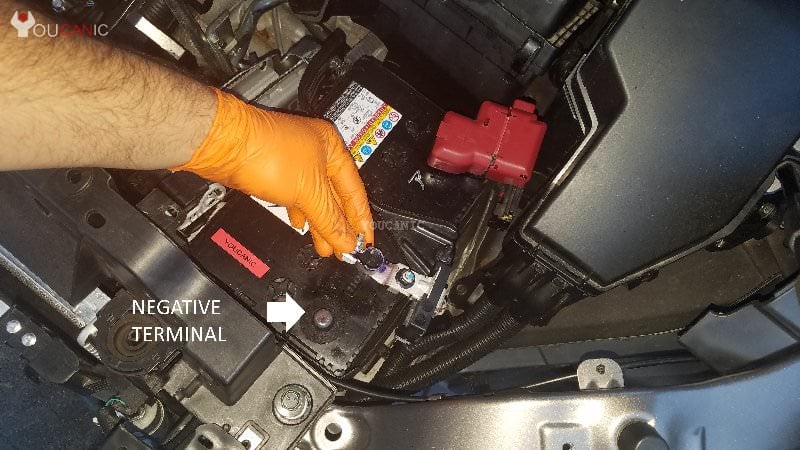
- Disconnect the negative battery terminal.

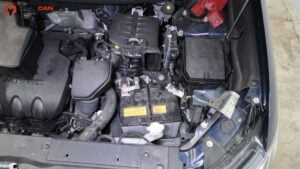
- Locate the oxygen sensor on your Nissan. Here is the location of the upstream O2 sensor or Bank1 Sensor1 on a Nissan Quest.
- The downstream oxygen Bank 1 Sensor 2 sensor has to be accessed from underneath the engine.

- You will need to remove the bottom splash shield.

- Disconnect the oxygen sensor electrical connectors. Press the connector and pull it away to unplug it from the oxygen sensor.

- Use an oxygen sensor wrench to remove the oxygen sensor.
- Install the new oxygen sensor. Tighten the oxygen sensor to 33 lb-ft
- Connect the oxygen sensor wire harness by simply plugging it in. If you use a universal oxygen sensor, you will need to use the diagram with the sensor to find out which wires to splice.


Torque Specifications
- M12 sensors: 13 to 17 ft-lbs
- M18 sensors: 26 to 33 ft-lbs
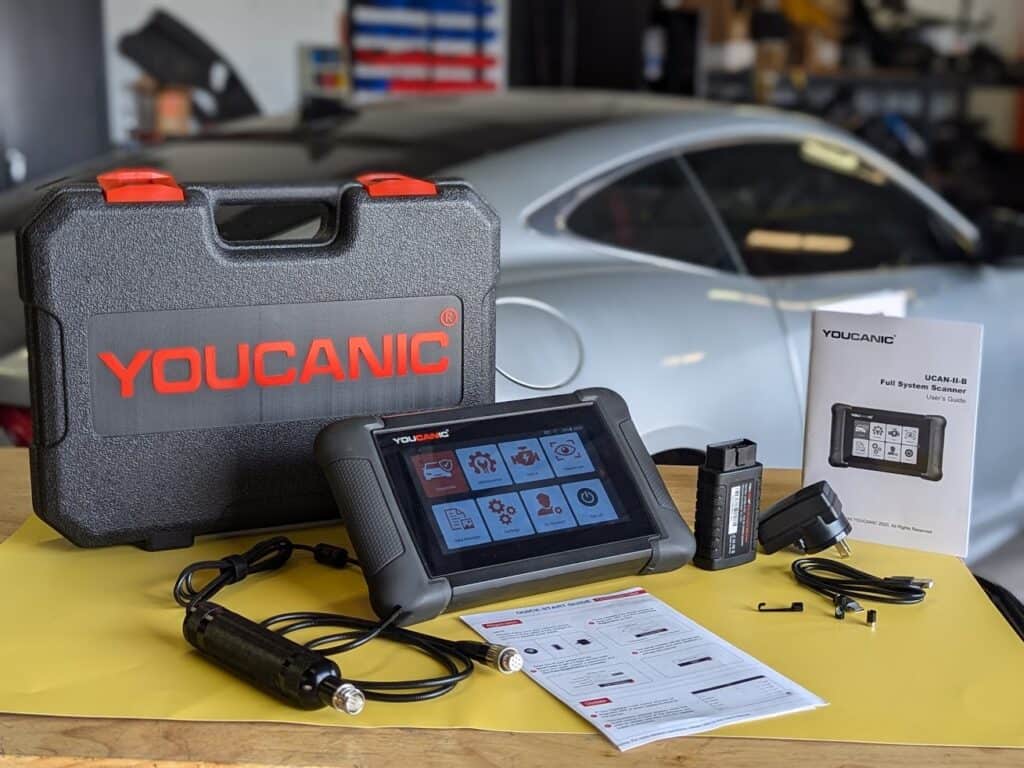
If the check engine light is still on after you replace the O2 sensor of your Nissan, you can use the YOUCANIC UCAN-II Pro to clear the stored codes on your vehicle’s ECU. This scanner can also be used on every control module of your Nissan, if it is supported.
The upstream sensor is probably not an oxygen sensor
This catches people out when ordering parts. On most Nissan models built in the last couple of decades, the upstream sensor is an air fuel ratio sensor rather than a conventional oxygen sensor, even though the dashboard code and most parts listings still call it an O2 sensor. The downstream sensor behind the catalytic converter is a conventional narrowband oxygen sensor.
They look alike and they are not interchangeable. An air fuel ratio sensor reports a continuous measurement of how rich or lean the mixture is across a wide range, where a narrowband sensor only swings between rich and lean either side of a single point. Fit the wrong one and the engine will run, badly, with codes you cannot clear. Buy against the part number for your exact engine and the specific position, upstream or downstream, bank one or bank two.
It also changes how you test them. The old advice about watching the voltage swing rapidly between roughly 0.1 and 0.9 volts applies to a narrowband sensor only. An air fuel ratio sensor is read as a current or as a calculated lambda value in live data and will not behave that way at all, so a sensor judged faulty by the wrong test is often perfectly healthy.
Many O2 codes are heater circuit faults
Every one of these sensors contains a built in heater, because the sensing element only works once it is hot and exhaust gas alone takes too long to get it there. A surprising share of codes relate to that heater circuit rather than to the sensing element, and those have different causes.
If the code names the heater circuit, check the fuse and the relay feeding it before condemning the sensor, since one blown fuse commonly takes several sensor heaters offline at once and produces a cluster of codes that looks much worse than it is. Check the connector for corrosion too. Only if the supply is present and the sensor still does not heat is the sensor itself the answer.
Fitting it without destroying it
These seize into the exhaust after a few years of heat cycling. Soak the threads in penetrating oil the night before, warm the exhaust slightly so it has expanded, and use a proper slotted oxygen sensor socket rather than an open end wrench, which will round the flats. Try nipping it tighter first to break the corrosion before backing it out. A sensor that shears off leaves you extracting the threaded remains, and that is a far larger job.
New sensors normally arrive with the correct anti-seize already applied to the threads. Do not add more, do not use ordinary copper grease, and above all keep any of it away from the sensing tip, because contaminating the element will ruin a new sensor immediately. Avoid touching the tip at all, and do not clean a sensor with solvent or a wire brush.
One last thing before you buy. A P0420 catalyst efficiency code is usually reporting a worn out converter rather than a faulty downstream sensor, and replacing that sensor to clear it is the most commonly wasted repair in this area. Our guide to O2 bank 1 sensor 2 explains how to tell the two apart, and a full system scanner showing both sensor traces side by side settles it in a couple of minutes.
Safety
- Work only on a cold exhaust; the sensors and pipes stay hot long after the engine is off.
- Support the car on jack stands if you work from underneath.
- Do not twist the sensor wire while turning the sensor; disconnect it first and use a slotted O2 sensor socket.
Frequently Asked Questions
Which Nissan O2 sensor do I need, upstream or downstream?
The code tells you. Codes ending in sensor 1 point to the upstream sensor before the catalytic converter, and sensor 2 to the downstream sensor after it. Bank 1 is the side with cylinder 1.
Can a bad O2 sensor make my Nissan fail emissions?
Yes. A failed sensor turns on the check engine light and can stop the readiness monitors from completing, which is an automatic fail in many states.
How long after replacing the sensor will the light go out?
You can clear it right away with a scanner. Left alone, it usually turns off after a few drive cycles once the computer confirms the new sensor works.