Chasing Down Engine Noise on a 2020 Ram 3500 6.7 Cummins
Reviewed/Verified by:

Issue: The customer brought in their 2020 Ram 3500 6.7 Cummins, concerned about a loud ticking noise. While most noticeable at idle, the noise was present at higher RPMs as well. The noise had a slow, rhythmic beat and seemed to be coming from somewhere near the turbo area.
Initial Diagnostics
The check engine light was off. Scanning for DTCs revealed no stored or active codes in any module. Continuing diagnostics, I took the Cummins out for a test drive to monitor noise conditions.

The ticking was present both at idle and under load. As the RPM climbed, the rhythm of the noise matched it exactly: clear evidence that this was tied to engine speed.

🔧 Find out what is actually wrong before you pay someone to guess
Dealer level diagnostics at home with the YOUCANIC UCAN-II Pro.
- ✔ Covers most makes and models, including many luxury brands. Send us your VIN and we will confirm your car before you order
- ✔ Reads every module, not just the engine, so you find the faults a basic reader says are not there
- ✔ Commands the car: test a fan or pump, bleed ABS, retract an electronic parking brake, register a battery
- ✔ No subscriptions. Free lifetime updates, so the price you pay is the whole price
- ✔ Backed by real mechanics in the USA you can email before and after you buy
Featured in The Wall Street Journal

Back in the shop, with the truck up on the lift and the engine steady at 2,000 RPM, I used a stethoscope to track it down. The sound was most dominant at the rear of the engine, where the bellhousing meets.
Isolating the Source
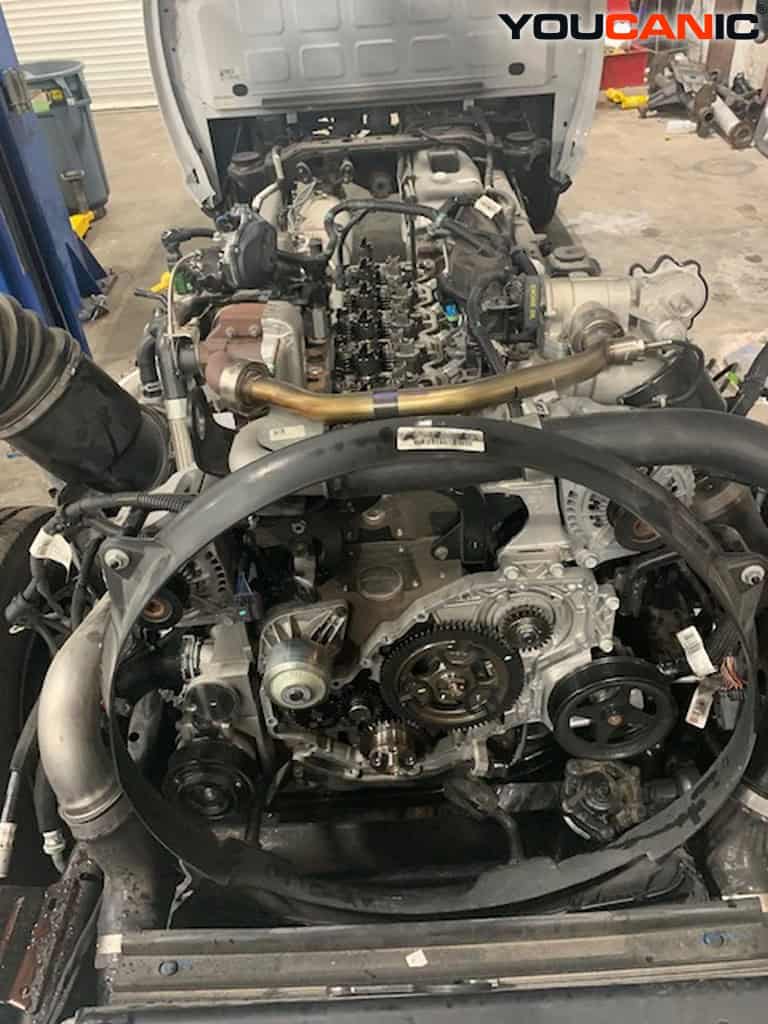
Following service procedures, I separated the transmission from the engine just enough to pull the torque converter away from the flywheel. The engine was run again: noise still present. That narrowed it: the problem was in the engine itself, possibly the valve train.
Digging In

I dropped the oil pan, expecting to see signs of trouble, metal flakes, debris, but it was spotless. Continuing the inspection, I removed the valve cover, rocker arms, and pushrods to check for any raw mating surfaces from oil starvation. No problem found.
After reinstalling the pushrods and rocker arms, I rotated the engine to inspect proper lifter operation and measured lash: everything was within spec, and all lifters moved as they should.

Main cap bearings came out next: no excessive wear. The camshaft and lifters followed: again, no visible damage or abnormal wear. Everything looked fine… yet the ticking persisted.
Root Cause
Even one faulty lifter that is unable to hold internal pressure can cause the tapping noise during engine operation. Replacing the lifters removed the engine noise.
Repair Performed / Solution

I consulted CUMMINS MC for a second opinion. Their specialist inspected all component photos and, like me, found no visible damage. His recommendation: replace the lifters as a first step.
We installed brand-new lifters, primed the oil system, and brought the 2020 Ram 3500 6.7 Cummins back to life. The rhythmic tick was gone: the big diesel purred like it should.
Tips for Future Repairs
Removing lifters and the camshaft on a 6.7 Cummins requires a special spring-assisted tool. Reinstalling lifters can be tricky due to friction: assembly lube makes the process faster and smoother.
In this case, the removed lifters showed no visible signs of failure: not even on the roller pins. Typically, noisy lifters are easy to spot, with collapsed springs or damaged rollers. But here, despite looking perfect, the lifters were the culprit. Sometimes, the trouble hides in plain sight.