P139C on a 2016 Transit: The Downstream EGR Hose Nobody Checks
Contributed by:

Today’s customer arrived with the check engine light illuminated on the dashboard of their 2016 Ford Transit. Thankfully, that was the only problem. There were no other noticeable drivability issues.

I started by reading codes with my full-system scanner and found the code, P139C (Exhaust Gas Recirculation (EGR) Sensor C Downstream Hose Off or Clogged), in the vehicle’s Powertrain Control Module (PCM). Now that I had a direction, the first step was to inspect the Differential Pressure Feedback Sensor EGR (DPFE) sensor harness for obvious signs of damage.
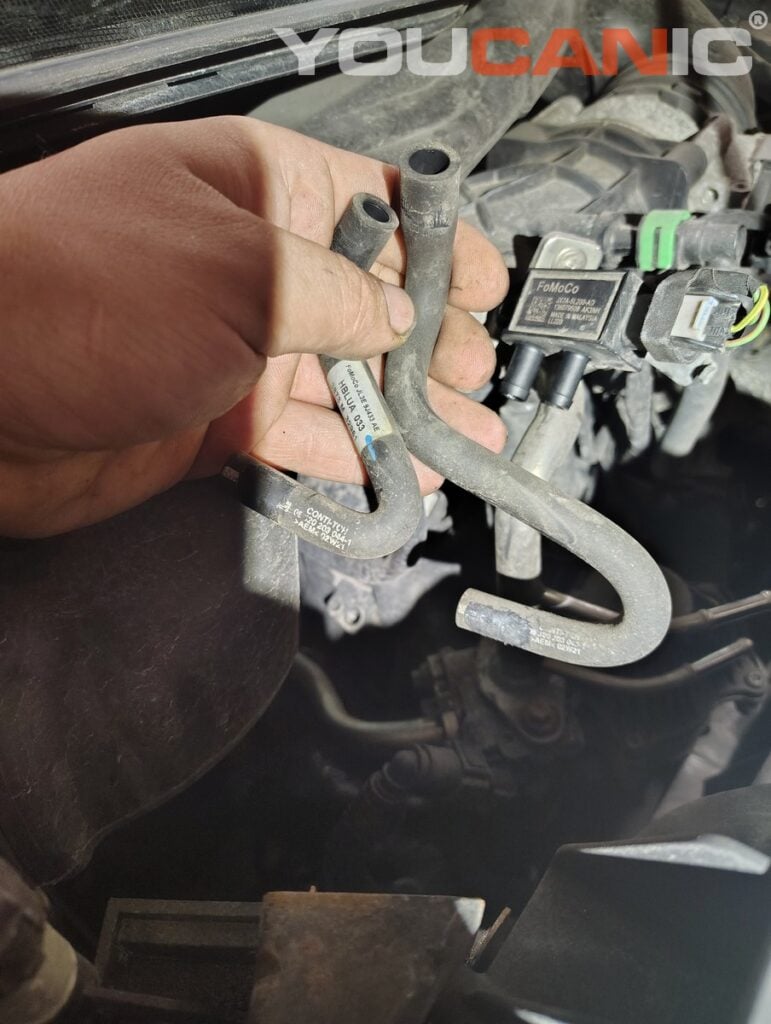
There were no visible issues; no obvious signs of corrosion or damage were visible, so I pulled out the hoses to check for water or carbon buildup. While I didn’t find any signs of carbon buildup, there were obvious signs of moisture in both the sensor and hoses.

🔧 Stop paying the dealer for every warning light
Get dealer level diagnostics at home with the YOUCANIC Full System Scanner.
- ✔ Works with all makes and models, including most luxury brands
- ✔ Topology map view shows all vehicle modules on one screen for faster diagnostics
- ✔ Bi directional controls to test fans, pumps, actuators and more so you do not have to guess
- ✔ Special resets and calibrations such as ABS bleed, EPB service, battery registration and more
- ✔ Free lifetime updates with no recurring fees
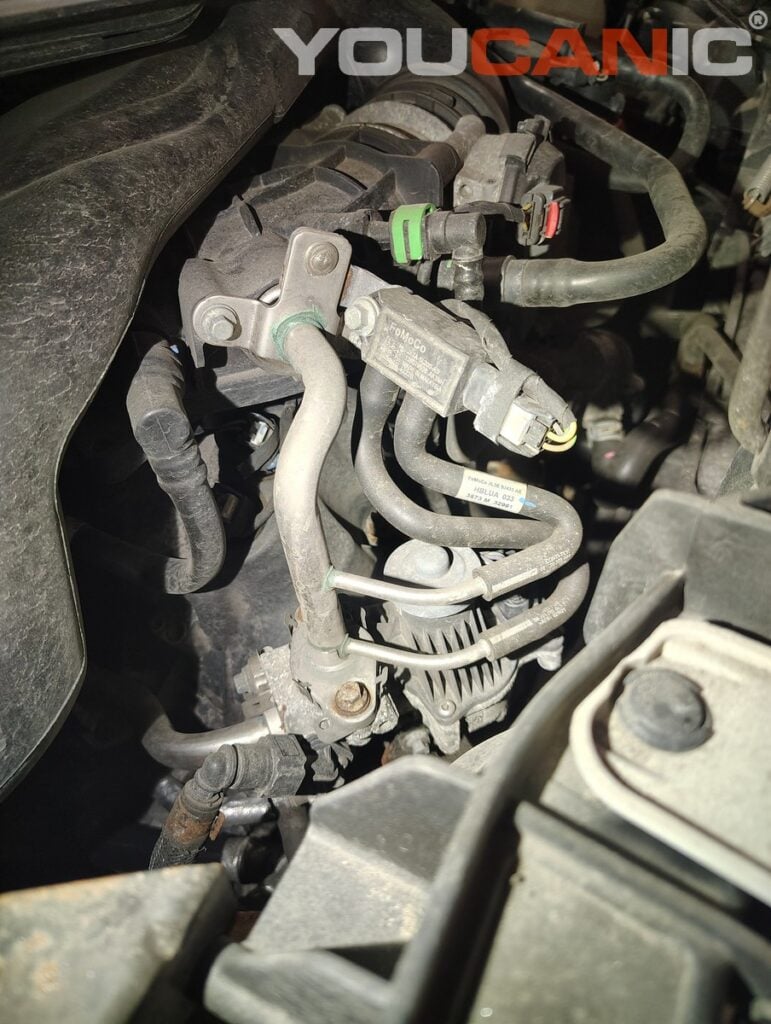
Service data suggested that I should replace the sensor at this point, but I really don’t trust such a short diagnosis resulting in “replace the part”. So, before completely replacing the sensor, I used an air nozzle to blow the water out of the hoses. (The hoses were still disconnected at this point.) Next, the DPFE voltage data needed to be pulled up on my full-system scanner. The DPFE raw can be loaded as well, but that was not a necessity at that time.
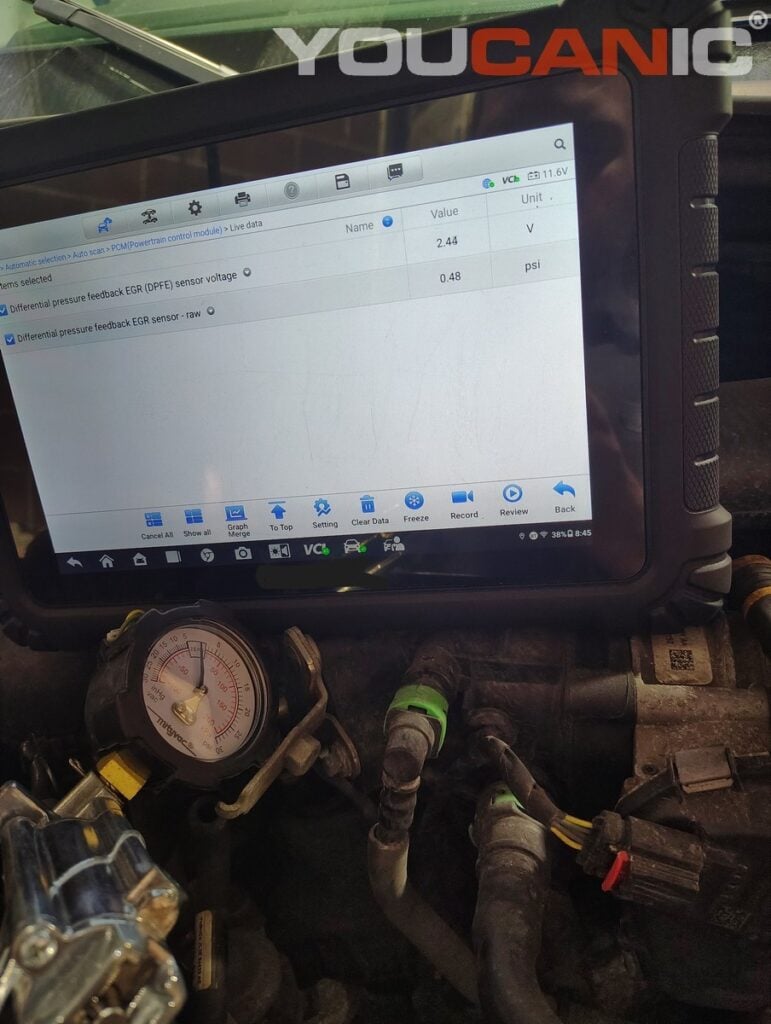
With the van key turned to position I (the vehicle is on, but the engine is not), the voltage should be between 3.2 and 3.8 volts. Anything outside this range indicates a failed sensor. This sensor showed around 2.5V at this stage. 2 marks for the sensor being bad, but make sure to follow your testing all the way to the end. Apply between 20 and 25 psi of vacuum pressure. The voltage should increase to over 4 volts. This one did. Release the vacuum, and watch the voltage. It should instantly drop back to between 3.2 and 3.8V again. This sensor dropped back to around 2.5V, but the reaction speed in the scanner was instant. Meaning that there was no delay in the current. Indicating the wiring is good. Strike 3 for the sensor.

That was it. The sensor was faulty and needed to be replaced. Once I got the new part installed, I performed the vacuum test again and got all proper readings. Fix confirmed. The check engine light on the dashboard vanished, and this 2016 Ford Transit was road-ready once again.
Bonus Tip
Don’t jump to the first indication that the part could be bad. That little bit of moisture could have been nothing, and the sensor could have been good. Maybe there was damage to a wire somewhere that was not immediately visible. Test, don’t guess.
That’s why I went through all the extra steps after the service data indicated that I should replace the sensor. Those extra steps prevent the fault from coming back. I recommend circle nose pliers for the hoses, and if you use an air nozzle to blow moisture out of the sensor and hoses, blow the hoses out first, reconnect them to the sensor, then blow air through the hoses again. This prevents too much air pressure from being blown straight into the sensor.