Volkswagen Flashing Glow Plug Warning Light? Vacuum Issue Led to Wrong Repair on this 2012 Jetta
Contributed by:

Reviewed/Verified by:

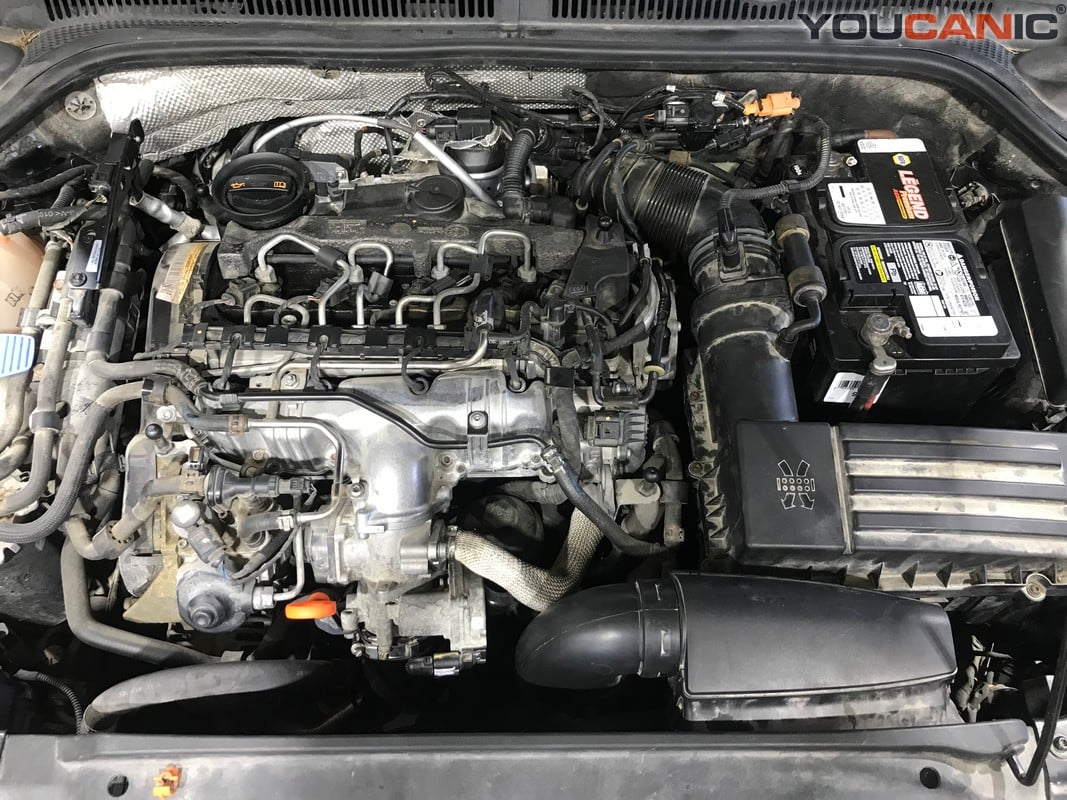
A diagnosis can take many twists and turns before one finally lands on the right solution. One such example of staying the course during troubleshooting came with the subject of this fix, a 2012 Volkswagen (VW) Jetta. This car, equipped with a 2.0L CJAA TDI engine, was referred to us from another shop. It was suffering from an intermittent flashing glow plug light, check engine light, and reduced power mode.
The turbocharger assembly had already been replaced, but the symptoms persisted. (I must admit that selfishly, I enjoy these kinds of repairs, as they often have interesting results, and this Jetta did not disappoint.) For those who don’t know, Volkswagen uses the glow plug light as a general failure warning; it does not specifically mean there is a problem with the glow plug system.
Glow plugs are the sparkplugs of diesel engines. They are heating devices found in diesel engines to help the car start. There may be a glow plug fault, but the warning light could also point to a number of other issues with the engine management, turbocharger, or even a faulty brake light bulb. Eventually, if the vehicle continues to be driven, the engine may enter reduced power mode to limit throttle response and engine RPMs.

🔧 Stop paying the dealer for every warning light
Get dealer level diagnostics at home with the YOUCANIC Full System Scanner.
- ✔ Works with all makes and models, including most luxury brands
- ✔ Topology map view shows all vehicle modules on one screen for faster diagnostics
- ✔ Bi directional controls to test fans, pumps, actuators and more so you do not have to guess
- ✔ Special resets and calibrations such as ABS bleed, EPB service, battery registration and more
- ✔ Free lifetime updates with no recurring fees
A road test, fault scan, and basic under-hood checks of fluid levels and battery condition were carried out. While the flashing glow plug light was not present on the test drive, we made a noteworthy discovery. The brake pedal felt hard at times, like the power booster was weak. I made a note of the issue for future reference.

The fault scan also did not disappoint. I found the code P2563 during the initial scan for the Turbocharger Boost Control Position Sensor Circuit Range/Performance. The Turbo Boost Position Sensor is mounted to the turbo assembly and is used to monitor the position of the variable turbo vanes. This sensor is part of the turbo assembly, which is the main reason the original shop replaced the turbocharger. Now it was time to try and verify the symptoms of this Jetta.
After recording the data from our initial scan, the code was cleared, and a second road test was conducted to try and duplicate the intermittently flashing warning light. The term ‘intermittent’ is really a misnomer; even the most random of problems have specific conditions under which they occur. The key is figuring out what conditions cause the problem to act up. When the conditions are determined, then the intermittent condition loses its power of randomness.
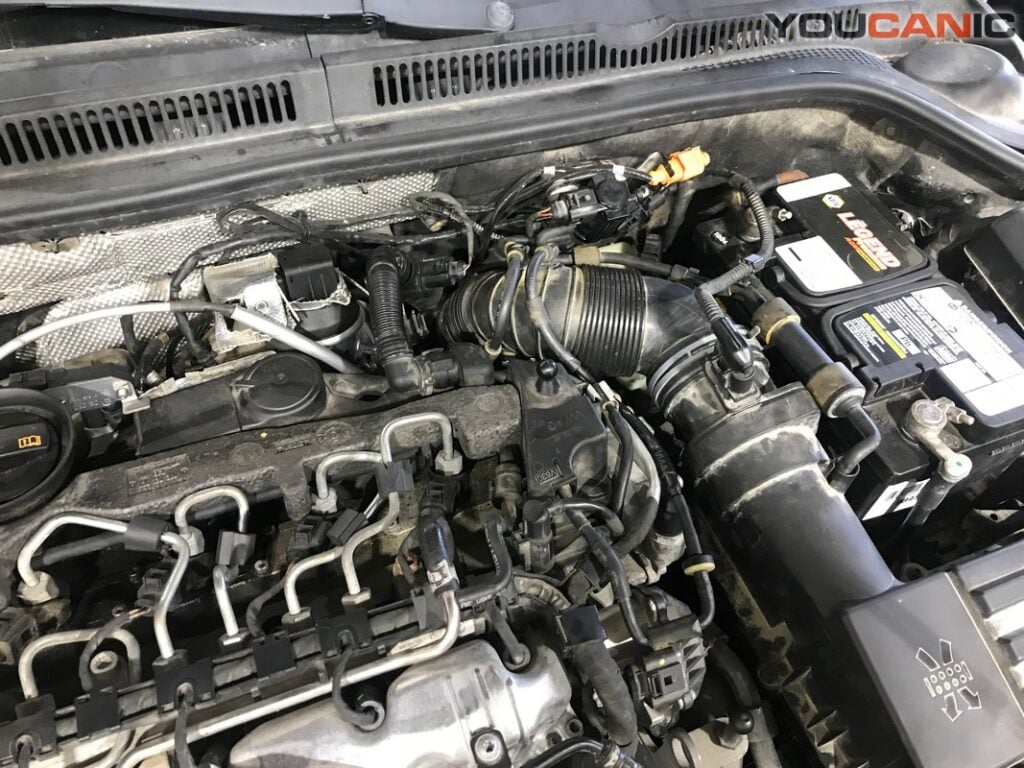
In this case, it took some trial and error, but I was able to replicate the fault conditions. By sitting at idle with the manual transmission in gear and pumping the brake pedal several times in succession, the glow plug light would start flashing, and the P2563 fault would be stored in the ECM. This was consistent and repeatable, and the jumping-off point for solving the Jetta.
This new clue turned my attention away from the turbocharger and towards the brake booster, or more precisely, towards the vacuum source for the brake booster. Since this was a diesel engine, a small vacuum was produced by the engine itself, unlike a gasoline engine, where a vacuum is created from the downward motion of the pistons pulling against the closed throttle blade.

This TDI (Turbocharged Direct Injection) engine used a mechanical vacuum pump driven off the back of the intake camshaft. The vacuum pump directly feeds the power brake booster and has a Tee fitting that is routed to the Turbo Boost Control Solenoid and Sensor.
I installed a vacuum gauge at the Tee fitting, and it showed a dismal 12 in. Hg of system vacuum. There was clearly a problem here. The specifications for the vacuum pump are 27 – 30 in Hg of vacuum. When pumping the brake pedal repeatedly, the vacuum dropped to almost zero. The turbocharger fault code was being set due to a low vacuum level, not an issue with the turbo position sensor. It was at this point that an overlooked note was discovered.
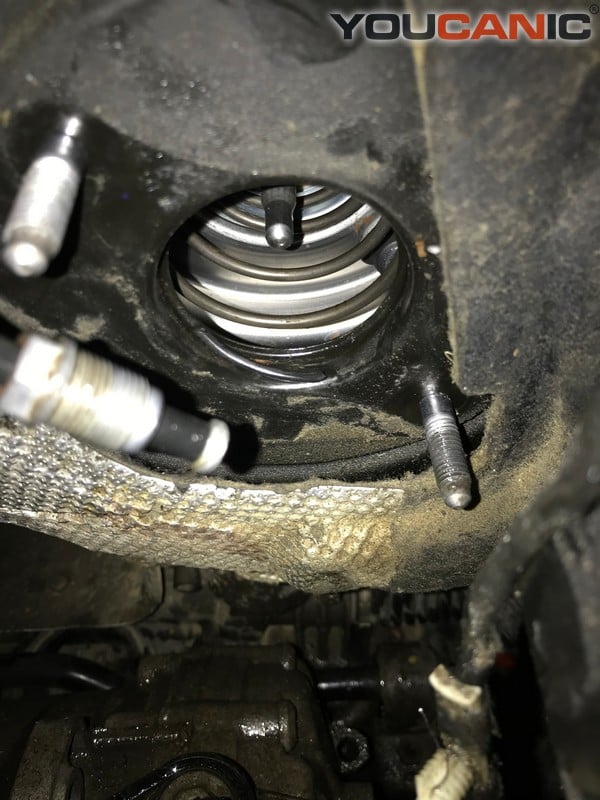
The repair invoice from the original shop noted that the vehicle’s owner had replaced the brake master cylinder and wanted someone to bleed the brakes. This was an important clue as to what was going on with this Jetta. Using a piece of vacuum tubing as a listening device, I could hear a strong sucking sound where the master cylinder was attached to the brake booster.
Removing the master cylinder confirmed that the O-ring that sealed the master cylinder to the power booster was torn in half. A large vacuum leak was present at the brake booster, resulting in a low vacuum condition that, in turn, caused the flashing glow plug light and turbocharger fault code.
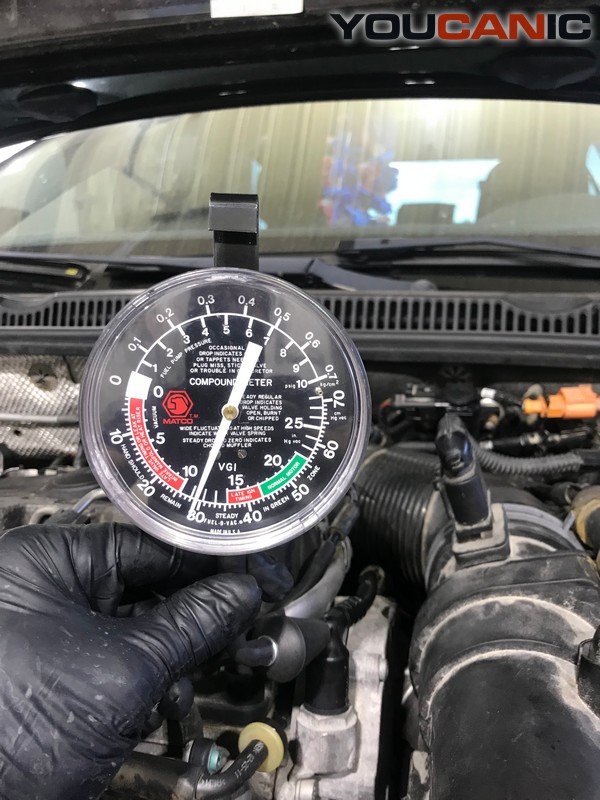
All of this was unique in the fact that on a gasoline engine, a vacuum leak of this size would cause the engine to have an erratic idle, run poorly, and likely set lean fuel trim codes. However, on this diesel engine, these symptoms were much more subtle and pointed towards a turbocharger failure. After ordering and installing a new booster O-ring, the fault was cleared once more, and a final road test was conducted. The TDI Jetta was now operating as intended with no warning lights and a brake pedal with normal brake assist.