2018 Jeep Grand Cherokee Misfire Problem – Causes, Diagnosis & Repair Tips
The Problem
A customer came into the shop with a 2018 Jeep Grand Cherokee with the 3.6L V6 Pentastar engine that was experiencing misfiring issues. The vehicle would run extremely rough, especially at startup, shake while idling at a stop light, and there was a noticeable lack of power when attempting to accelerate or pass another vehicle on the highway. The customer reported that the issue became progressively worse until the vehicle was no longer drivable and would even overheat if driven for an extended time. When the Jeep was brought into our shop, the engine was running rough, with noticeable hesitation, shaking at idle, and misfiring under light loads. The customer asked us to run a diagnostic to determine the cause of the problem, as they could no longer drive the vehicle in this condition.
Diagnosis

A full system diagnostic scanner like YOUCANIC UCAN-II was used to perform a complete system scan, allowing us to verify the presence of fault codes and monitor live data during testing. Additionally, we retrieved information from the factory repair information and wiring diagrams on platforms and databases of ProDemand and Mitchell, primarily to confirm specifications, verify timing alignment procedures, and ensure that all diagnostic steps were carried out in accordance with OEM guidelines. The advanced scan tool and the technical service database are essential for accurately checking the timing and conducting a diagnosis in cases like this. I confirmed that the timing system components had failed, which led to the misfire and drivability issues reported by the customer.
The Cause
When I connected the professional OBD-II scanner and retrieved a diagnostic trouble code from the engine control unit, I got P0017 – Crankshaft Position / Camshaft Position Correlation (Bank 1 Sensor B). A P0017 is never good news.

🔧 Stop paying the dealer for every warning light
Get dealer level diagnostics at home with the YOUCANIC Full System Scanner.
- ✔ Works with all makes and models, including most luxury brands
- ✔ Topology map view shows all vehicle modules on one screen for faster diagnostics
- ✔ Bi directional controls to test fans, pumps, actuators and more so you do not have to guess
- ✔ Special resets and calibrations such as ABS bleed, EPB service, battery registration and more
- ✔ Free lifetime updates with no recurring fees

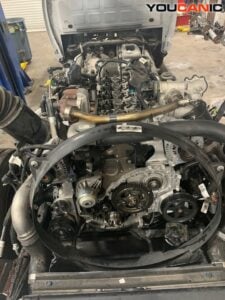
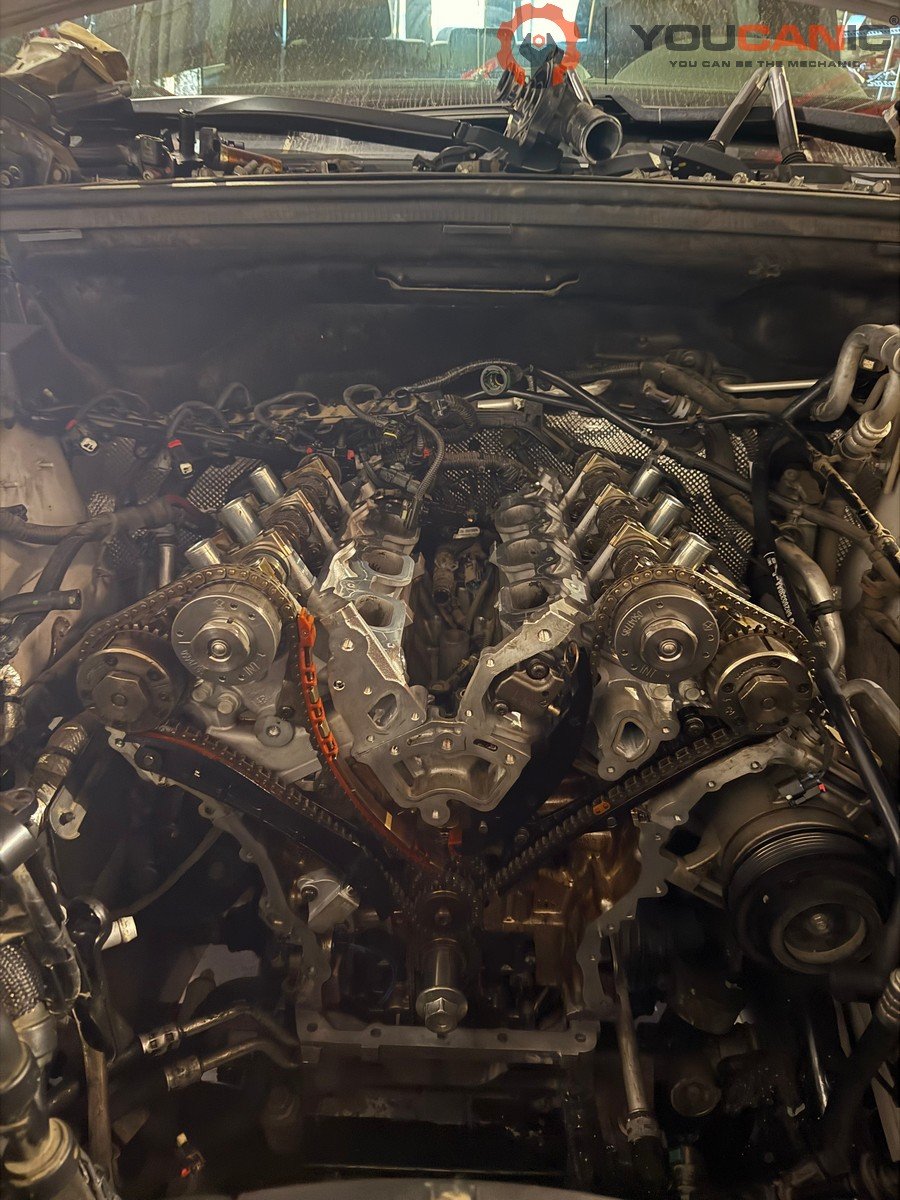
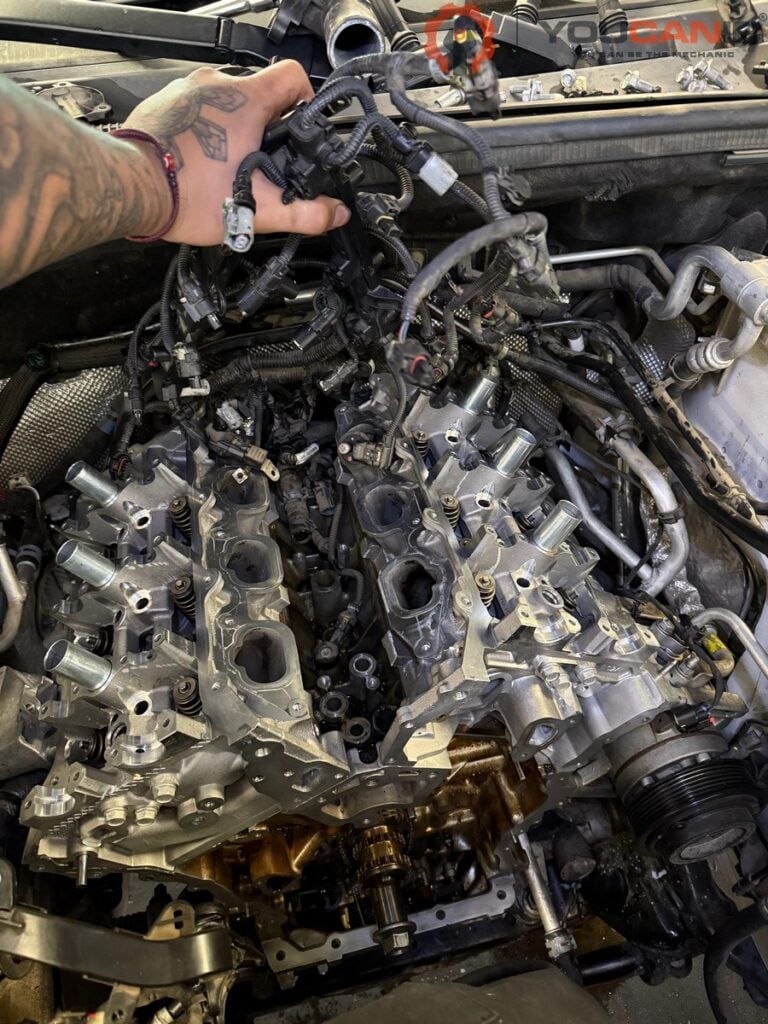
After reviewing live data and performing further inspection, including a compression test, I was confident that the engine timing had shifted. Testing revealed the timing chain had jumped teeth, which caused the camshaft and crankshaft to become misaligned. I was confident that the misalignment directly led to the customer’s misfire concern and severe rough running condition, as those are common symptoms of P0017.

During inspection, both intake cam phasers (Variable Valve Timing actuators) were also found to be faulty, further contributing to the timing deviation, poor performance, and overall drivability issues. It also makes sense to replace those components if you have a high-mileage Grand Cherokee and you are opening the engine to do timing chain work.
Fixing the Issue

I proceeded with the repair by replacing the timing chain, variable valve timing actuator, both intake cam followers, and oil control valves following all manufacturer-recommended procedures. The engine was disassembled, old worn components were removed. Customers preferred to use OEM parts, which we installed for peace of mind and to ensure long-term reliability. When you do this job, you need to pay special attention to aligning the crankshaft and camshafts precisely to factory timing specifications. Once all components were reassembled, we had to add all new fluids, including coolant. We started the car up and let it warm up for 15 minutes. Then turned it off and rescanned it for any fault codes. No active fault codes were present at this point, confirming that the repair was successful. The engine now starts immediately, idles smoothly, and accelerates with restored power and proper response.

Final Thoughts
When addressing a Jeep Grand Cherokee that shows the fault code P0017, it is important to look beyond just the timing chain itself. A thorough inspection of the Variable Valve Timing (VVT) system, including the cam phasers and oil control valves, is highly recommended since these components often fail in relation to one another. If only the timing chain is replaced, worn or sticking VVT components can quickly cause the chain to stretch or jump again, leading to the same drivability issues. By replacing the chain, cam phasers, and oil control valves together, you greatly reduce the risk of premature wear, prevent repeat failures, and ensure that the entire timing system operates smoothly and remains properly balanced for the long term.