
2013 Ford Escape in Limp Mode: How one small leak can lead to major issues!
Contributed by:

Reviewed/Verified by:

Today’s car slid into my shop at a snail’s pace. The customer reported that his 2013 Ford Escape was running rough and would not accelerate above 5mph (8 KPH). To start, I ran a full-system scan of the SUV to check for any diagnostic trouble codes (DTCs) related to this issue.
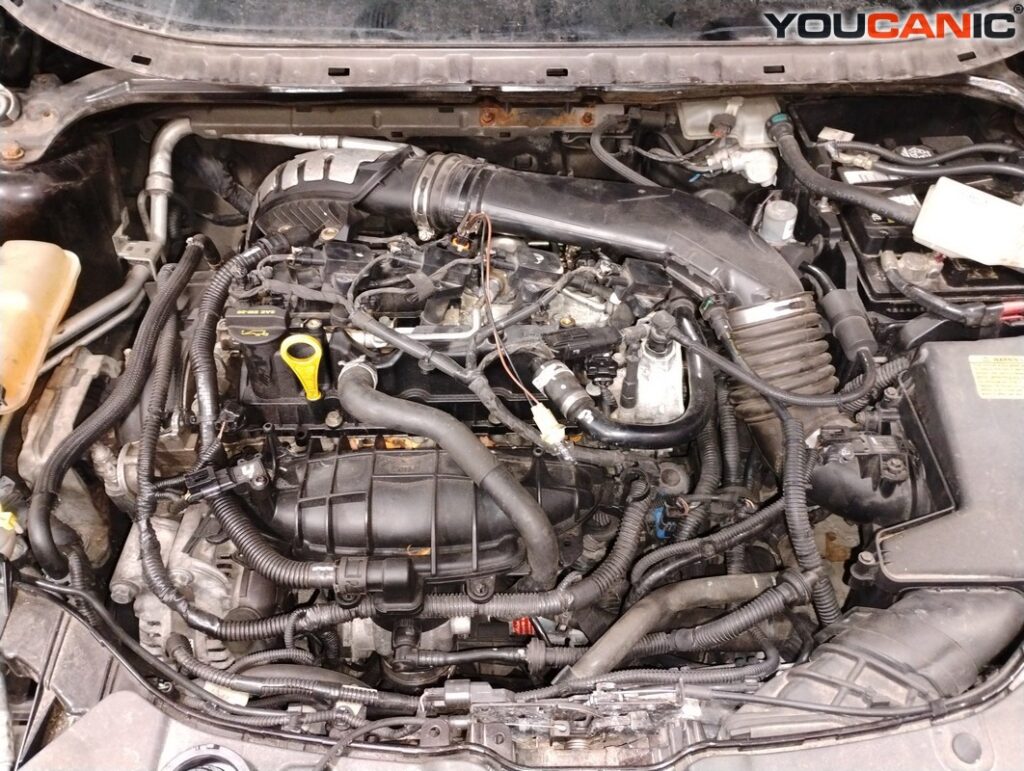
The scan revealed the code P0267: “Cylinder 3 Injector Circuit Low,” along with several other voltage-related codes on various other sensors. There was a final code for the reference circuit. Using service data for this Ford, I looked at a wiring diagram and found that all sensors that had codes stored used the vehicle’s 5V reference circuit. This all pointed to a single issue causing all of the voltage codes.
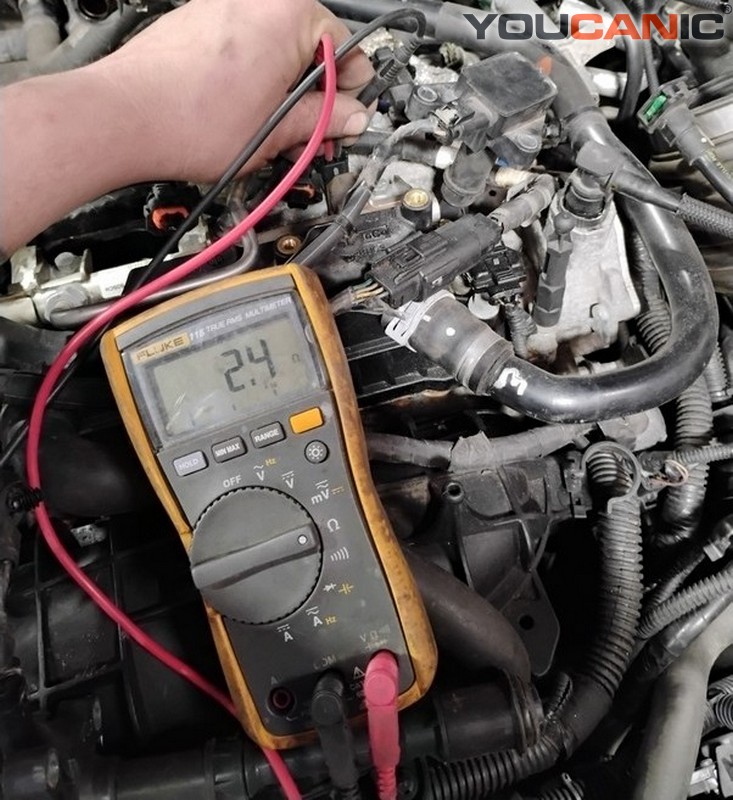
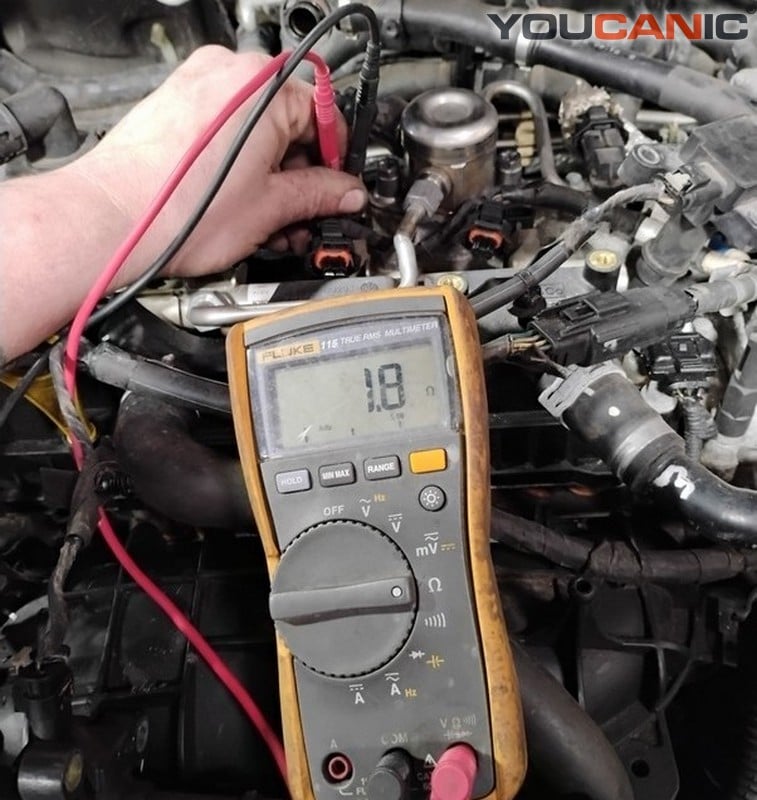
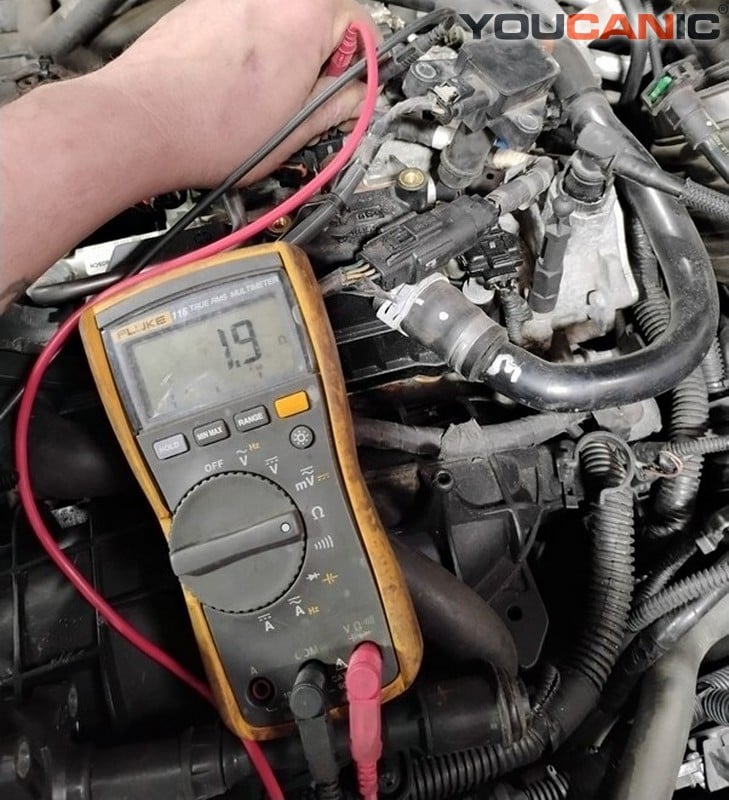
Before attacking the reference circuit issue, I decided to address the injector fault code. Once all necessary parts were removed to get to the injector, I unplugged it and used my multimeter to check the resistance of injector 3. Next, I measured the resistance of injectors 2 and 4 to compare. There was no significant difference in resistance, so no issue there.

🔧 Stop paying the dealer for every warning light
Get dealer level diagnostics at home with the YOUCANIC Full System Scanner.
- ✔ Works with all makes and models, including most luxury brands
- ✔ Topology map view shows all vehicle modules on one screen for faster diagnostics
- ✔ Bi directional controls to test fans, pumps, actuators and more so you do not have to guess
- ✔ Special resets and calibrations such as ABS bleed, EPB service, battery registration and more
- ✔ Free lifetime updates with no recurring fees
I then hooked up a test bulb to the connector. Then started the car. The bulb should blink when the vehicle is running; this one did not. This indicated an electrical issue somewhere between the injector plug and the PCM.
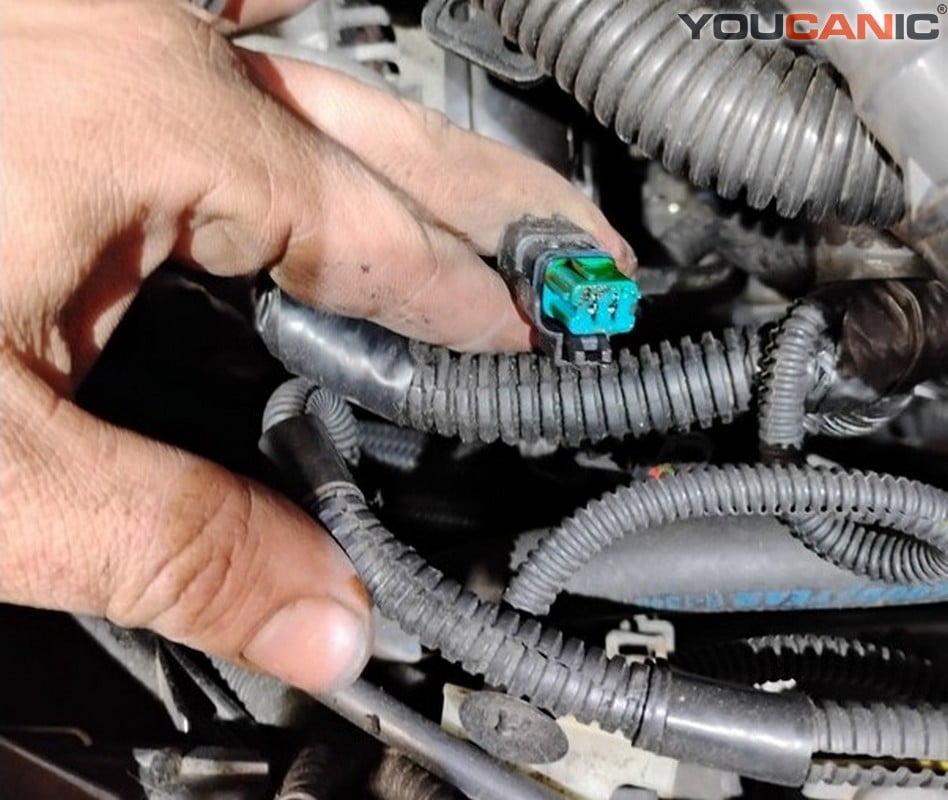
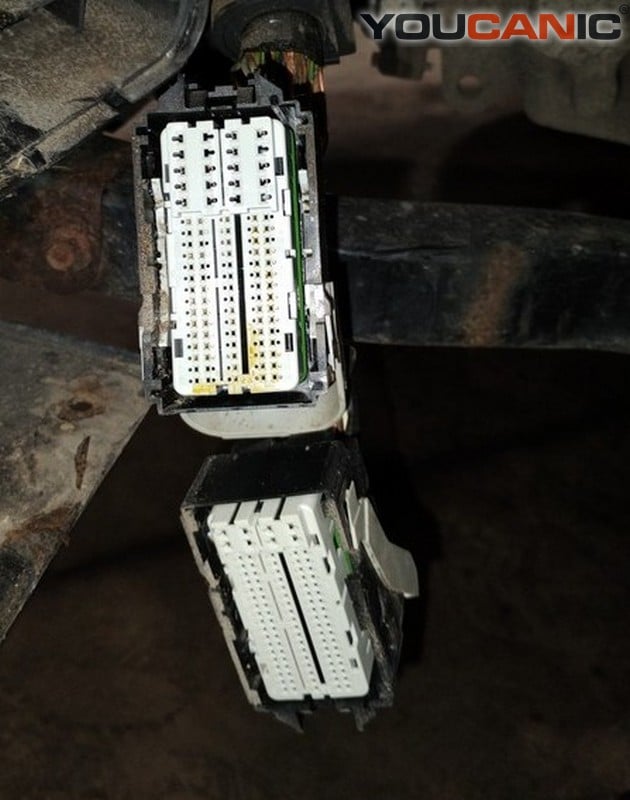
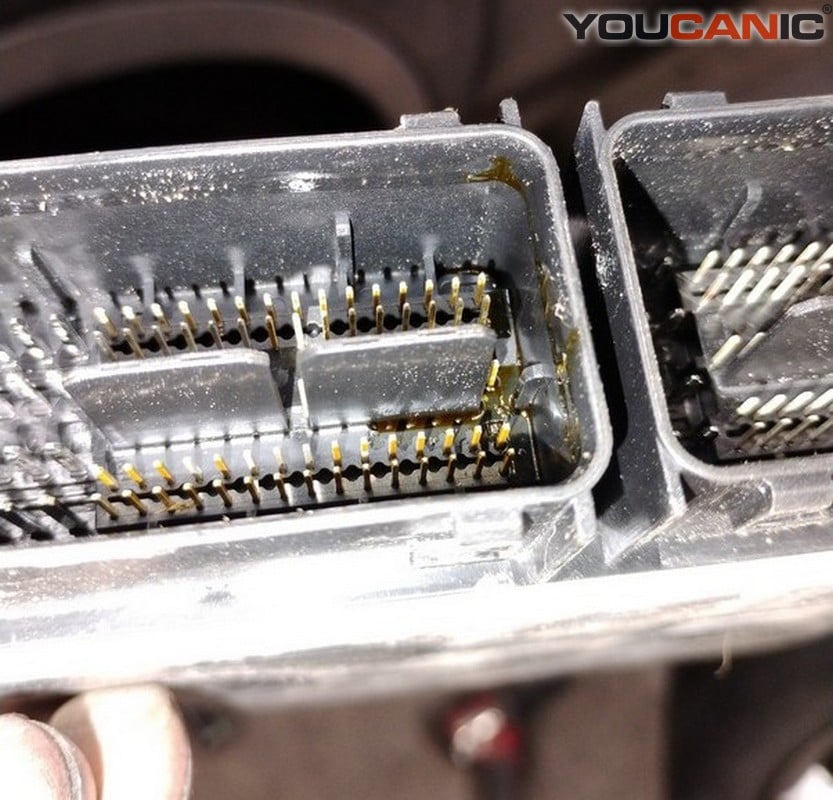
I moved on to the PCM to test continuity on both sides of the injector 3 circuit between the plug and the PCM. Upon unplugging the PCM, I found coolant buildup in the connector and PCM. Upon further investigation into the connector pinout, I discovered that the pins that were wet with coolant were actually the circuits that controlled injector 3 and the 5V reference circuit.
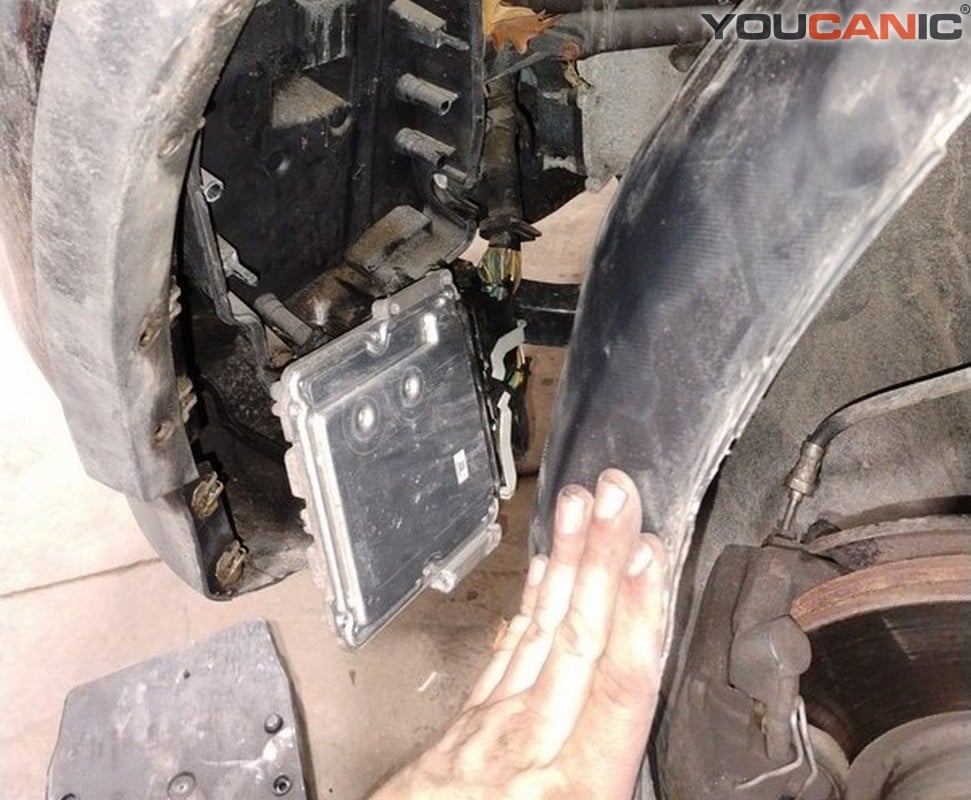
The PCM is non-serviceable, meaning it can’t be opened up to clean and check for damage, so the next step was to locate the source of the coolant entering the PCM. Unplugging all electronic items on the coolant system led to finding a valve leaking coolant through to the plug.
After replacing and programming a new PCM, replacing the leaky coolant shutoff valve, and making sure all connectors were coolant-free, it was time for a test drive. The car was running as it should, and accelerating over 5 MPH.
Bonus Tip
While not an everyday occurrence, it is not uncommon for coolant-related items, primarily coolant temp sensors, to leak through the connectors, forcing coolant through the wire insulation and into the PCM. If you find a liquid in the PCM, confirm whether it is oil or coolant, and check any sensors or valves related to that system. The plug on the offending component will also be wet with that same liquid.
Do you have a fix to share with our growing community of DIY enthusiasts?
Share your fix with us here! By sharing your fix and having it published on our website, you are encouraging and empowering others to try doing their own repairs. Join the movement and share your fix today!
Bonus Pictures