

Honda Civic O2 Sensor Replacement Guide
Reviewed/Verified by:

Is your Honda Civic’s check engine light on, are your emissions reaching high levels, or is fuel economy worse than usual? Learn how to fix the problem by replacing the Oxygen Sensor of your Honda Civic.
At a Glance
- Symptoms: check engine light, worse fuel economy, failed emissions test.
- Oxygen sensors are not scheduled maintenance but often wear out between 100,000 and 150,000 miles.
- Work with the engine cool; an O2 sensor socket and penetrating oil make removal easier.
- On many Civics the upstream sensor is an air fuel ratio sensor; order the exact part.
- Clear the codes afterwards and confirm the light stays off.
Oxygen sensors are not a scheduled maintenance item, but they do wear out. The sensing element is slowly contaminated by combustion deposits and the heater circuit inside eventually fails, so most of them become lazy or stop responding somewhere between a hundred and a hundred and fifty thousand miles.
Are you more of a visual learner? Check out our video guide below!

🔧 Find out what is actually wrong before you pay someone to guess
Dealer level diagnostics at home with the YOUCANIC UCAN-II Pro.
- ✔ Covers most makes and models, including many luxury brands. Send us your VIN and we will confirm your car before you order
- ✔ Reads every module, not just the engine, so you find the faults a basic reader says are not there
- ✔ Commands the car: test a fan or pump, bleed ABS, retract an electronic parking brake, register a battery
- ✔ No subscriptions. Free lifetime updates, so the price you pay is the whole price
- ✔ Backed by real mechanics in the USA you can email before and after you buy
Featured in The Wall Street Journal

Procedure
- Park your Honda on level ground and allow the engine to cool down.

- Open the hood when replacing the upstream oxygen sensor (Bank 1 Sensor 1 or Bank 2 Sensor 1). If you are replacing the downstream oxygen sensor (Bank 1 Sensor 2 or Bank 2 Sensor 2), you should jack up the vehicle as these sensors are accessed from the bottom of the engine.
- Locate the oxygen sensor on your Honda engine. The upstream oxygen sensor (Bank 1 Sensor 1) is mounted on the exhaust right before the catalytic converter. Bank 1 Sensor 2 is mounted after the catalytic converter and can be accessed from under the car.
- Disconnect the oxygen sensor wire harness. Use an oxygen sensor socket to remove it from the catalytic converter. Turn the socket counterclockwise to remove the O2 sensor.
 If it doesn’t come loose right away, spray penetrating oil near the threads and let it soak for at least fifteen minutes.
- Remove the oxygen sensor.
- Install the new part. Apply a small amount of anti-seize to the threads and hand-tighten the sensor in the exhaust. Using a torque wrench, tighten the new piece to 33 ft-lb. If you don’t have a torque wrench, use a ratchet to tighten the oxygen sensor until it is snug.

- Connect the electrical connector by pressing the two ends until they click.


 The upstream oxygen sensor (Bank 1 Sensor 1) is mounted on the exhaust right before the
 If it doesn’t come loose right away, spray penetrating oil near the threads and let it soak for at least fifteen minutes.


We replaced the upstream oxygen sensor, which is accessed from the top of the engine. You can follow these to replace the downstream oxygen sensor, but that sensor is easier to access from the bottom of the engine.
Symptoms
When your Honda oxygen sensor fails, you will usually notice a drop in performance, including:
- A decrease in fuel mileage.
- Difficulty starting.
- Check engine light on.
- Loss of power.
- Excessive smoke from the tailpipe.
- Failed emission (smog) test.
- Hesitation, poor acceleration.
- Rough idle.
- Possible codes P0420, P0135, P0141, P0155, etc.
Use an OBD-II scanner to read the codes via the OBD-II port under the dashboard to confirm the oxygen sensor is defective.
Check Engine Light Still On
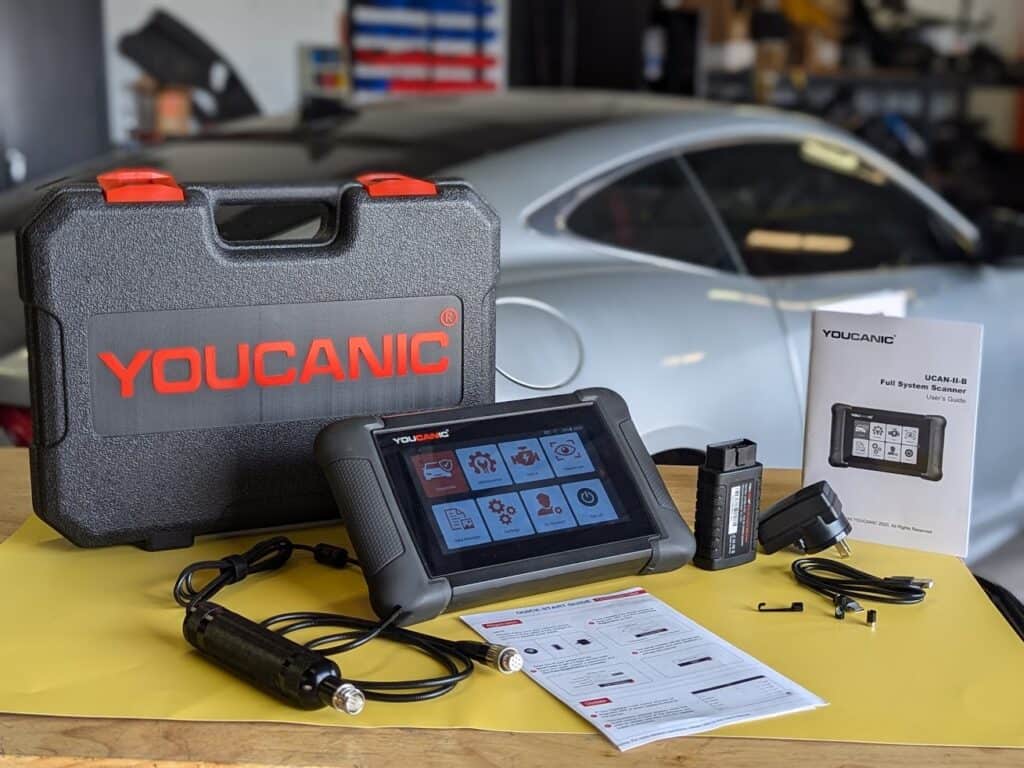
If the check engine light remains on after replacing the Oxygen Sensor, you can use the YOUCANIC UCAN-II Pro to clear the stored codes. This scanner can also read and clear fault codes in the engine and other control modules on supported vehicles of the Honda vehicle.
An O2 sensor code does not always mean a bad sensor
The sensor reports what it measures, so anything letting extra air into the exhaust ahead of it makes a healthy sensor report a lean mixture and set a code. A leaking exhaust manifold gasket, a cracked flex pipe or a loose sensor bung will all do it, and so will a vacuum leak on the intake side. Before buying a sensor, listen for a ticking exhaust leak on a cold start and check the live data: a working upstream sensor should swing up and down several times a second at idle, not sit at a fixed voltage.
Downstream codes usually point at the converter
The upstream sensor runs the fuel mixture; the downstream one exists to grade the catalytic converter. If the code names the rear or downstream sensor and specifically mentions catalyst efficiency, the sensor is normally fine and is telling you the converter has stopped working. Replacing the sensor in that case changes nothing and the light comes back after a few drive cycles.
Get the bank and sensor numbering right
Sensor 1 is always the one before the catalytic converter and sensor 2 the one after it, so sensor numbering follows exhaust flow and has nothing to do with which side of the car it is on. Bank 1 is the side containing cylinder number one. On the four cylinder Civic there is only one bank, which makes this simple, but it is the most common reason people replace the wrong sensor on a V6.
Fitting notes that save a snapped sensor
Loosen the old sensor with the engine warm but not hot, because the aluminum around the threads grips hard when cold and the sensor body is easy to shear off. Use a slotted oxygen sensor socket rather than a wrench. New sensors usually arrive with the correct anti seize already on the threads, so do not add more and keep all of it off the sensor tip, where it will poison the element. Tighten to the specified torque rather than as hard as it will go.
Frequently Asked Questions
How often should I change my oxygen sensor?
It should be replaced when it fails. In many cars, oxygen sensors typically fail between 100,000 and 150,000 miles.
Can a bad O2 sensor cause a P0420 code?
Yes. The P0420 code indicates that the catalytic converter is operating below its threshold. This code appears when the catalytic converter is faulty or the oxygen sensor is defective.
Can I use a universal oxygen sensor?
Yes, you can. You may have to splice wires and will need to connect all four wires correctly. The new connections tend to corrode and cause problems down the line. Make sure to insulate the wires properly.
What is the Honda O2 sensor thread size?
The most common Honda oxygen sensor thread is 18 mm x 1.5 mm.
What are some symptoms that my Honda oxygen sensor is bad?
Check engine light and poor fuel economy are the most common.
What socket size is used on the Honda oxygen sensor?
7/8″ or 22 mm socket.
Is it legal to use an oxygen sensor spacer?
No. In most countries, it is not legal to install an oxygen sensor spacer.
Honda oxygen sensor wire colors?
The typical color on the OEM Honda O2 sensor.
The ground will be green or gray.
The signal is white or black.


