

Everything You Need to Know about Toyota ECU
Reviewed/Verified by:

This guide covers the symptoms of a failing engine control unit (ECU) on a Toyota, how to try a reset, and how to replace the ECU step by step.
At a Glance
- Symptoms: no start, start and stall, no communication with a scanner, random misfires or stalling, immobilizer light on.
- Try first: battery cables off and touched together (away from the battery) for two minutes to drain the modules.
- Older models: the pins 4 and 13 jumper for 30 minutes can make the immobilizer accept the keys.
- A replacement ECU must be programmed to the car (dealer or Techstream).
- Repairing the original ECU keeps its programming and avoids coding.

Symptoms
The most typical symptoms of a failing Toyota Engine Control Unit include:
- Check engine light stays on.
- There is no communication via the OBD-II port.
- The ignition will not switch on.
- Toyota will not start.
- Engine stalling or misfiring and can’t be fixed.
- Randomly losing spark/power.
- Randomly losing injector pulse.
- Intermittent fuel pressure loss.
- Fuel pump not running.
- Intermittent starting problem.
- Transmission issues such as hard shifting.
- The immobilizer/Security light stays on.
- Trigger fault codes such as B2799.
- The engine cranks but cannot start.
How to Reset a Toyota ECU
If your Toyota ECU is failing, you can try to reset it.

🔧 Find out what is actually wrong before you pay someone to guess
Dealer level diagnostics at home with the YOUCANIC UCAN-II Pro.
- ✔ Covers most makes and models, including many luxury brands. Send us your VIN and we will confirm your car before you order
- ✔ Reads every module, not just the engine, so you find the faults a basic reader says are not there
- ✔ Commands the car: test a fan or pump, bleed ABS, retract an electronic parking brake, register a battery
- ✔ No subscriptions. Free lifetime updates, so the price you pay is the whole price
- ✔ Backed by real mechanics in the USA you can email before and after you buy
Featured in The Wall Street Journal
A straightforward method is to disconnect the negative and battery terminals. Then, touch the two cables you removed (not the battery posts) together for about two minutes. In most cases, this will reset the engine control units.

If the above doesn’t work, another method is to jump pins four and 13 in the OBD-II port. Use a paper clip between 4 and 13. Keep the paper clip connected for at least 30 minutes. Insert the key in the ignition, and you will notice P/S, airbag, ABS, and several other cluster lights. Then, remove the paper clip after thirty minutes, and the ECU will be reset. Pin 13 is Toyota’s diagnostic (TC) terminal and pin 4 is ground. On older models this procedure is mainly used to make the immobilizer accept the keys again, which is why it can cure a start and stall problem; it is not a universal reset for every ECU fault.
According to many Toyota/Lexus/Scion owners, this method has worked on numerous models, including the 2010 Toyota Tundra, 2003 Toyota Camry, 2005 Lexus LS430, 2003 Toyota Corolla, 2005 Toyota Sienna, Scion TC, 2011 Toyota Rav 4, 2007 Lexus ES350, 2009 Corolla, 2006 Lexus GX470, 2004 Camry, 2006 Toyota Prado, and 2004 Highlander. However, this procedure may not work for newer models.
This procedure can help, especially if your Toyota / Lexus starts and stalls immediately.
What you will need
- 8mm wrench
- 10mm wrench
- Engine Control Unit
How to Replace Toyota Engine Control Unit (ECU)
- Open the hood. Pull the hood release under the dashboard. Go to the front, unlock the hood latch, and pull the hood up until the hood struts are in hold position.

- Disconnect the negative terminal by loosening the 10mm bolt and pulling the terminal out from the battery post.

- Locate the Engine Control Unit (ECU) on the driver’s side of the engine compartment, near the air filter housing.

- Disconnect the connectors by pressing the tabs, sliding the lock, and pulling the connector out.


- With a wrench, remove the upper bolt on the right side of the ECU.

- Free the bolts on both sides of the ECU.


- Remove the ECU from the vehicle by pulling it up.


- Get the new Engine Control Unit and line it up to the metal plates holding the ECU.
- Tighten and reinstall the bolts on the left side and right side of the ECU.


- Reconnect the electrical connectors of the ECU by pushing it in and sliding the lock on its position.


- Reconnect the negative terminal of the battery.

- Using a paper clip, jump pins 4 and 13 at the OBD-II port. Leave the ignition on for 30 minutes with the paper clip connected to the OBD-II port. Turn off the ignition and remove the paper clip.
- Start car.


Remember that the new Toyota ECU must be programmed to work correctly with your vehicle. If the last step in the procedure does not work, you must visit a Toyota auto mechanic or access the tech stream tool.
Can you replace a Toyota ECU yourself?
Yes, you can replace a Toyota ECU, but it must be programmed once replaced. If the dealer sold you the ECU, they could program it for you for a small fee.
If you installed a used ECU, the dealer will likely not program it. You should find an independent repair shop to reprogram the used ECU.
Another option is to have your original ECU repaired instead of replaced. Because it keeps its original programming and immobilizer data, a repaired ECU usually plugs back in without any coding. Module Medics offers mail in module repair; check whether your ECU is supported before sending it.
How much does it cost to replace a Toyota ECU?
The average price to replace an ECU at a Toyota dealership can be more or less $1500 and $3500, depending on the year and model. A cheaper alternative is finding an independent shop to repair your existing Toyota ECU. You must remove the ECU from the car and ship it to the shop. The repair can range between $300 and $500.
How can I program a Toyota ECU?
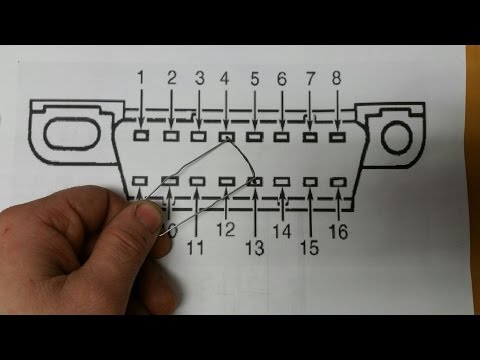
In the following video, George from Melnik Automotive shows you how to program a Toyota/Lexus ECU via the OBD-II port.
The procedure to program a Toyota ECU is straightforward. It requires 30 minutes and a paper clip.

- Replace ECM with factory new or used.
- Using a paper clip, jump pins 4 and 13 on the OBD-II port under the dashboard.
- Leave the ignition on for 30 minutes. P/S, ABS, traction, and other warning lights will stay on or flash.
- After 30 min, turn off the ignition. , remove the paper clip from the OBD-II port.
- Star the car
Can you drive a Toyota with a bad ECU?
It is not suggested to drive a Toyota with a defective Engine Control Unit. If the ECU even allows you to start the engine, the issue is that it can malfunction during use, which can be dangerous and could lead to an accident.
For more help with your Toyota, check these troubleshooting and repair guides.




I have a 2015 Toyota sienna with 57K miles on it that has “maintenance required Check charging system”. Charging system checks fine. When i start the vehicle it dies but then starts and runs the 2nd try. Think this is the ECU.
No way to reset it. You probably blew a fuse somewhere.
I put 50 amps wrong polarity when trying to charge my battery on my RAV4 (2011) and now the ECU seems to gone haywire (car won’t go into gear and go when you press the gas pedal, several yellow lights are appearing). Any chance that resetting ECU with the instructions that you give will solve the problem?