
Toyota P0010 Code: Camshaft Position A Actuator Circuit Bank 1
Reviewed/Verified by:

Is a P0010 fault code stored on the OBD-II Scanner when diagnosing your Toyota? Learn how to fix the problem by replacing the camshaft oil control valve (VVT solenoid) and resetting the codes on your YOUCANIC UCAN-II Pro scanner. This guide is a step-by-step procedure for replacing the camshaft oil control valve (VVT solenoid) for bank 1 on a Toyota Camry 2012 to 2017.
At a Glance
- Code: P0010, camshaft position A actuator circuit, bank 1
- Part: Intake camshaft oil control valve (VVT solenoid)
- Vehicle shown: 2012 to 2017 Toyota Camry
- Check first: Oil level and condition, then the valve connector and wiring
- Tools: 10mm wrench and a scan tool to clear the code
- Related codes: P0011 and P0012 relate to cam timing performance
Troubleshooting Toyota P0010 Code: Camshaft Position A Actuator Circuit Bank 1
What P0010 Means
P0010 stands for Camshaft Position A Actuator Circuit, Bank 1. The engine computer controls variable valve timing with an oil control valve (VVT solenoid) on the intake camshaft. P0010 means it found an electrical problem in that valve’s circuit, such as an open or shorted coil or a wiring fault.
Symptoms of P0010
- Check engine light
- Rough idle or stalling
- Reduced power and poor fuel economy
- Hard starting in some cases
What you will need
- Camshaft oil control valve (VVT solenoid)
- OBD II Scanner
- 10mm wrench
Procedure
- Open the hood. Pull the hood release under the dashboard, go to the vehicle’s front, unlock the hood latch, and pull the hood up.

- Remove the cover of the engine by pulling it up.

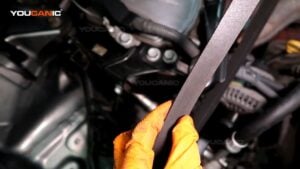
- Locate the camshaft oil control valve (VVT solenoid) for bank 1 behind the left side of the engine.

- Remove the connector of the sensor by pulling it out.

- Remove the bolt holding the sensor; use a wrench and twist it counterclockwise.

- Remove the camshaft oil control valve (VVT solenoid) by pulling it out.

- Get the new sensor and insert it into the engine.

- Reinstall the bolt and reconnect the electrical connector of the sensor.

- Start the vehicle and get the scanner.
- Unlock the vehicle and go to the driver’s seat.

- Connect the OBD II Scanner to the OBD II port under the dashboard.

- Insert the key to the ignition switch and turn it to accessories mode.

- Go to the diagnostics menu on the scanner to start the scan on the vehicle.
- Scroll down to the Erase Codes section. Return to the diagnostic menu, choose the erase code menu, and press ok to erase the code.
- Start the vehicle and check if the engine light is still on.


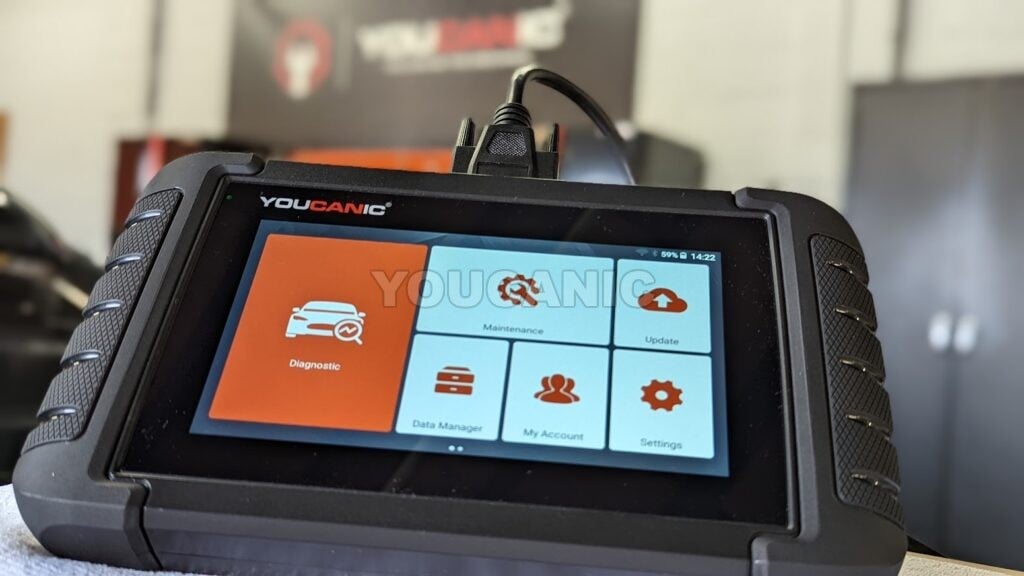
A generic OBD-II scanner can clear the check engine light. However, if you want a more professional OBD-II scanner, use the YOUCANIC UCAN-II Pro, which can read and clear fault codes in the engine and other control modules on supported vehicles.

🔧 Find out what is actually wrong before you pay someone to guess
Dealer level diagnostics at home with the YOUCANIC UCAN-II Pro.
- ✔ Covers most makes and models, including many luxury brands. Send us your VIN and we will confirm your car before you order
- ✔ Reads every module, not just the engine, so you find the faults a basic reader says are not there
- ✔ Commands the car: test a fan or pump, bleed ABS, retract an electronic parking brake, register a battery
- ✔ No subscriptions. Free lifetime updates, so the price you pay is the whole price
- ✔ Backed by real mechanics in the USA you can email before and after you buy
Featured in The Wall Street Journal
On a Toyota, check the oil first
Toyota’s VVT-i system varies camshaft timing using engine oil pressure, and the part that controls it, which Toyota calls the oil control valve or OCV, has a fine filter screen. That screen clogs with sludge and varnish. Low oil level, oil well past its change interval, or the wrong viscosity will all set P0010 with a perfectly serviceable valve fitted.
Before ordering parts, check the level and the service history. If the oil is dark and overdue, change it and the filter, clear the code, and drive the car before deciding anything else. On engines with a known history of oil consumption, check the level weekly rather than trusting the maintenance interval.
If the oil is clean, remove the OCV and inspect its screen. A blocked screen can often be cleaned rather than replaced, which turns a parts purchase into an afternoon with some solvent.
When it is not the valve
Beyond the OCV itself the common causes are a damaged connector or chafed wiring at the valve, and on higher mileage engines a stretched timing chain that has shifted cam timing far enough for the module to flag it. A chain that has stretched usually rattles for a second or two on a cold start, so listen for that before assuming an electrical fault.
Live data settles it quickly. A full system scanner shows commanded against actual camshaft position while the engine runs, which tells you whether the valve is being commanded and failing to respond, or never being commanded at all. For the code meaning across other makes, see our general P0010 diagnosis guide.
Frequently Asked Questions
What does P0010 mean on a Toyota?
It means there is an electrical fault in the bank 1 intake camshaft oil control valve circuit, the part that controls variable valve timing.
Can low oil cause P0010?
Low or dirty oil more often causes timing performance codes like P0011, but checking the oil first is a smart and free step.
Is it safe to drive with P0010?
For a short time, but expect rough running and poor fuel economy. Fix it soon to avoid further problems.
How do I fix P0010?
Check the oil, inspect the valve connector and wiring, test the valve coil, then replace the oil control valve if it has failed.