Symptoms of Bad Turbo in your Vehicle
Is your engine rattling or making some whining noises? As many as 93 percent of turbocharger failures are due to oil starvation. Common causes of oil starvation are blocked and leaking oil passages and poor maintenance. The turbo could seize within seconds without proper oil lubrication and cooling.
Understanding turbo failure and repair costs is crucial for determining the exact cause of the problem. The cost to fix the turbo system can vary greatly depending on the damage and the parts needed. This article will outline common causes and symptoms that can help you diagnose turbo problems.

Common Symptoms of a Bad Turbo
POWER LOSS
The engine uses the turbocharger to increase power by forcing a huge amount of air into the combustion chamber. When it breaks, the vehicle immediately loses power. This can be felt when the engine load is high or when the vehicle needs more power, for example, when climbing a steep hill. Symptoms include worn turbo bearings, abraded compressor blades, or stuck wastegates. Repair bills range from $500 for essential repairs to $2,500 for a new turbo.

🔧 Stop paying the dealer for every warning light
Get dealer level diagnostics at home with the YOUCANIC Full System Scanner.
- ✔ Works with all makes and models, including most luxury brands
- ✔ Topology map view shows all vehicle modules on one screen for faster diagnostics
- ✔ Bi directional controls to test fans, pumps, actuators and more so you do not have to guess
- ✔ Special resets and calibrations such as ABS bleed, EPB service, battery registration and more
- ✔ Free lifetime updates with no recurring fees
WHINING ENGINE
This usually indicates a failure of the bearings or damaged turbocharger blades. It is a sign that the turbo is not spinning at the proper speed, emitting a high-pitched sound.
RATTLING NOISE FROM THE TURBO
The turbo compressor and turbine use bearings to reduce friction. When the bearings wear out, the compressor and turbine become imbalanced and start to hit the housing. This produces a rattling sound that can be heard when starting the engine.
EXCESSIVE EXHAUST SMOKE
Oil or coolant leaking into the combustion chamber, usually from a defective turbo seal, creates a lot of smoke. Replacing the seal costs between $200 and $400, but it could cost more. Oil burning off causes blue smoke, while coolant leaks could cause white smoke.
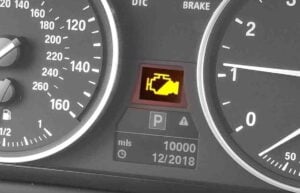
CHECK ENGINE LIGHT
A bad turbo can turn on the check engine light due to reduced power and an improper air-fuel mixture. Various sensors on the engine can detect these symptoms. The check engine light can be diagnosed using an OBD-II scanner, like a YOUCANIC scanner.
OIL LEAKS
Oil leaks can also be seen from the outside of the turbocharger. Typically, they are visible around the oil lines and air ducts, where they can leak out through the clamps. Minor leaks might be an easy fix for a few hundred dollars, but more extensive damage could mean that half or even the whole turbo needs replacing.
POOR FUEL ECONOMY
When the turbo fails, the engine cannot combust efficiently, resulting in poor fuel economy. Fixing the problem could involve restoring the turbocharger to its previous working order or replacing the whole unit; the price tag would depend on the nature of the problem.
Insufficient Boost
If the turbo doesn’t boost correctly, it could have vacuum line problems, a faulty wastegate, or internal damage. A vacuum line repair might be fairly inexpensive, around $100-$200, but other maintenance could easily cost more.
Common Causes of Bad Turbo
Oil Starvation
Like an engine, the turbocharger needs oil for lubrication. Oil Starvation means there is a lack of oil flowing through the turbo, causing it to seize. That lack of lubrication causes friction between the turbo’s internal parts, eventually damaging it. Clogged oil passages, bent or kinked oil lines, and oil leaks within the oil lines can cause oil starvation.
Oil Contamination
The engine oil, in addition to lubricating, is meant to flush carbon deposits from the engine, which is why it turns black over time. When an engine is poorly maintained, excessive carbon deposits build up on the engine and are pumped into the turbo. This causes oil starvation due to oil contamination.
Over-heating
The Turbocharger uses coolant from the car’s cooling system to maintain a stable temperature. The turbo can overheat without this, which can damage oil seals and moving parts. This can be the result of blocked coolant passages, mainly due to rust and other debris inside the cooling system.
Worn-Out Components
The Turbocharger components can fail due to regular wear and tear around the bearings and seals. These components often break due to prolonged use, improper maintenance and usage, and component defects.
Foreign Objects getting sucked into the turbo
The Turbocharger has a compressor wheel that compresses the intake air. This piece spins rapidly and can be damaged by foreign objects, most commonly air filter elements, especially if the air filter has been neglected and is clogged with other dirt and debris.
Repair Costs Overview
A turbocharger repair isn’t cheap. It can range from minor issues, like replacing oil and coolant lines, to major fixes, such as a turbo rebuild or replacement. Repairs that can cost up to $3,000 or more. Getting a specific diagnosis and estimate for the work you need in your vehicle from a professional mechanic or turbo specialist is an excellent cost-saving strategy. It is important to get your vehicle checked immediately if you experience the symptoms mentioned above to avoid damaging the engine.