2004 to 2013 BMW 3-Series Oxygen O2 Sensor Replacement
Reviewed/Verified by:

Need to replace the Oxygen O2 Sensor of your BMW? This guide provides instructions on removing and changing the upstream oxygen sensor on a 2006 to 2013 BMW 3-Series (E90, E91, E92 and E93).
At a Glance
- Fits: 2006 to 2013 BMW 3-Series E90, E91, E92 and E93.
- Disconnect the battery in the trunk first.
- Upstream sensor: reachable from above by the passenger side fender on six cylinder engines.
- Downstream sensor: raise the car safely and work from underneath.
- Order the sensor by VIN or engine code; the 335i has two upstream sensors.
- Clear the codes afterwards and confirm the light stays off.
Symptoms
- Check Engine Light is ON
- A decrease in fuel economy
- Engine Hesitation or misfire
- Rough Idling
What you will need
- BMW Oxygen Sensor
- Oxygen Sensor Tool
Procedure
- Park the BMW 3-Series and open the hood.

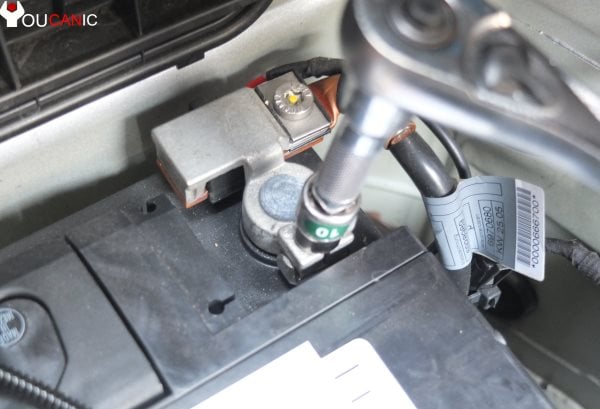
- Disconnect the negative battery terminal. The battery is located in the trunk of your car. Remove the trim on the trunk’s passenger side, and you can locate the battery-negative terminal.

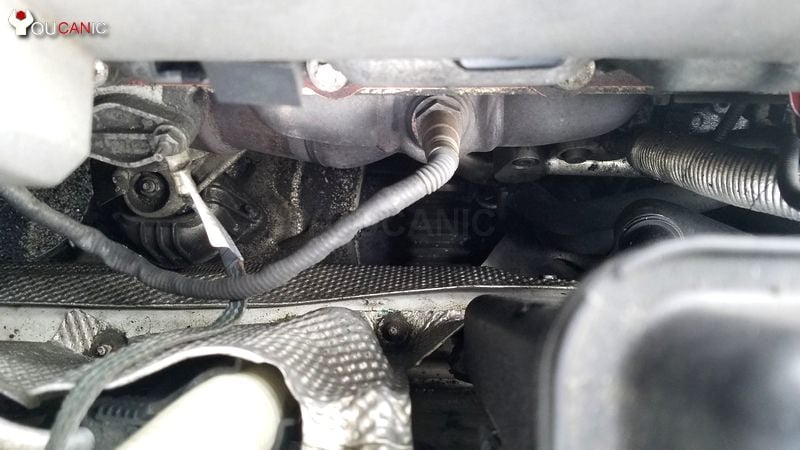
- Locate the oxygen sensor on your BMW 3-Series. In this picture, you can see the upstream oxygen sensor. This o2 sensor can be easily accessed by standing next to the front passenger fender. To replace the downstream (Bank 1 Sensor 2), you must jack up the car and access the sensor from underneath.
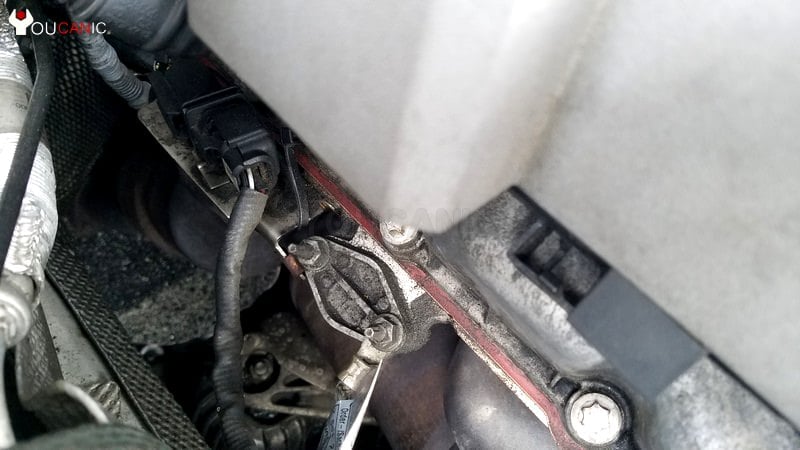
- Disconnect the O2 sensor. Press the connector and pull it away to unplug the oxygen sensor wire harness. The wire harness is secured to the engine block, as shown in this picture.
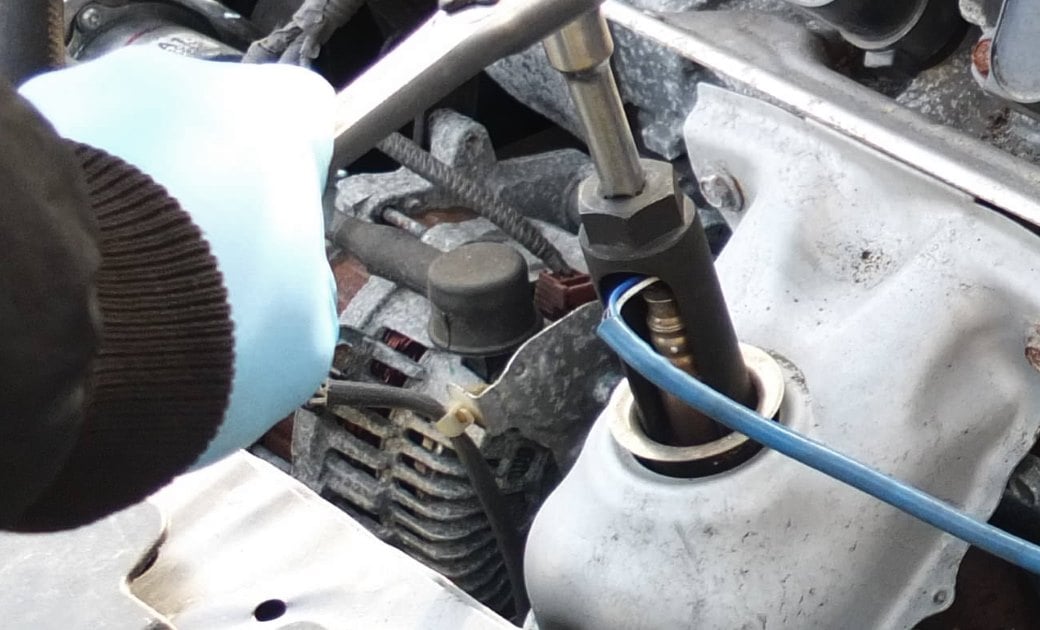
- Remove the O2 Sensor. Replace the oxygen sensor socket on the sensor and break it loose. Remove the old BMW 3-Series oxygen sensor.

- Install a new O2 sensor. Watch a video on how to replace the oxygen sensor. Install the new oxygen sensor and remember to torque the new BMW oxygen sensor to spec.

This guide applies to 3-Series such as
- 316i,
- 318i
- 320i
- 323i
- 325i
- 328i
- 330i
- 335i
- 325d
- 330d
- M3
- Applicable chassis include the E90, E91, E92, and E93.
Buy the right sensor for your engine
The upstream sensor on these engines is a wideband sensor, and the part differs between engines, so order by VIN or engine code rather than by model name. The twin turbo 335i has two upstream sensors, one after each turbocharger, and access differs from the six cylinder engines shown here. New sensors usually come with anti seize already on the threads; if so, do not add more, and keep it off the sensor tip.

🔧 Find out what is actually wrong before you pay someone to guess
Dealer level diagnostics at home with the YOUCANIC UCAN-II Pro.
- ✔ Covers most makes and models, including many luxury brands. Send us your VIN and we will confirm your car before you order
- ✔ Reads every module, not just the engine, so you find the faults a basic reader says are not there
- ✔ Commands the car: test a fan or pump, bleed ABS, retract an electronic parking brake, register a battery
- ✔ No subscriptions. Free lifetime updates, so the price you pay is the whole price
- ✔ Backed by real mechanics in the USA you can email before and after you buy
Featured in The Wall Street Journal
If the old sensor is seized, soak it with penetrating oil and try again with the engine slightly warm, because a sensor forced out of a cold exhaust can strip the threads.
Check Engine Light Still On
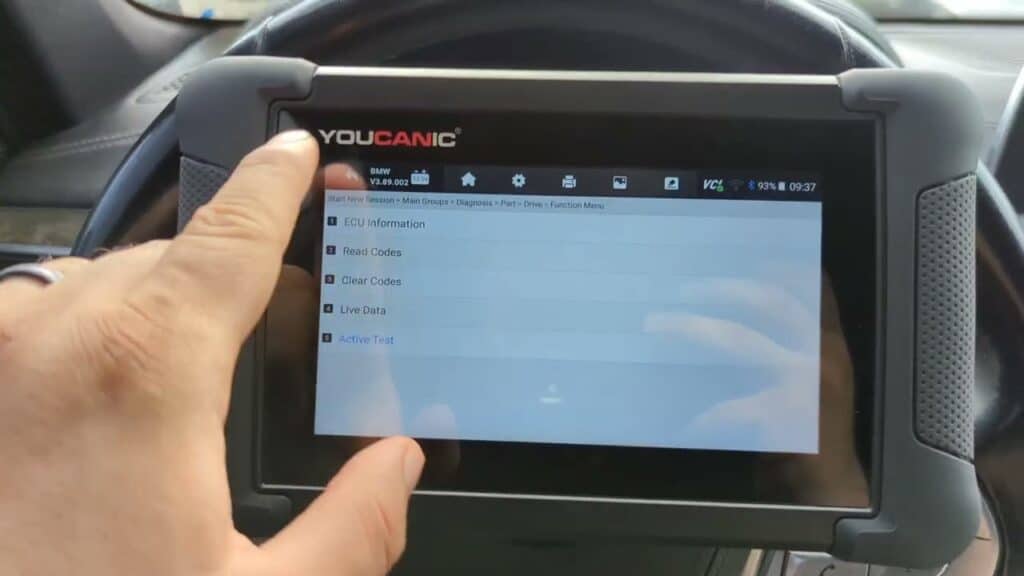
If the check engine light is still on after you replace the O2 sensor, you can use the YOUCANIC Full System Scanner to clear the stored codes. This scanner can also read and clear fault codes on every control module of your BMW vehicle, if your vehicle is supported.
Frequently Asked Questions
Which O2 sensor is bank 1 sensor 1 on a BMW 3 Series?
Sensor 1 is the upstream sensor before the catalytic converter. Many BMW inline sixes split the exhaust into two banks: cylinders 1 to 3 (bank 1) and 4 to 6 (bank 2), each with its own upstream sensor. Bank 1 sensor 1 is the upstream sensor for cylinders 1 to 3, toward the front of the engine. See our bank 1 sensor 1 guide.
What are the symptoms of a bad O2 sensor on a BMW E90?
A check engine light with O2 or heater codes, rough running, poor fuel economy, or a failed emissions test.
Do I need to reset anything after replacing a BMW O2 sensor?
Clear the codes and drive. The engine computer adapts on its own; some owners also reset the fuel adaptations with a scan tool.
Check these troubleshooting and repair guides for more help on your BMW.