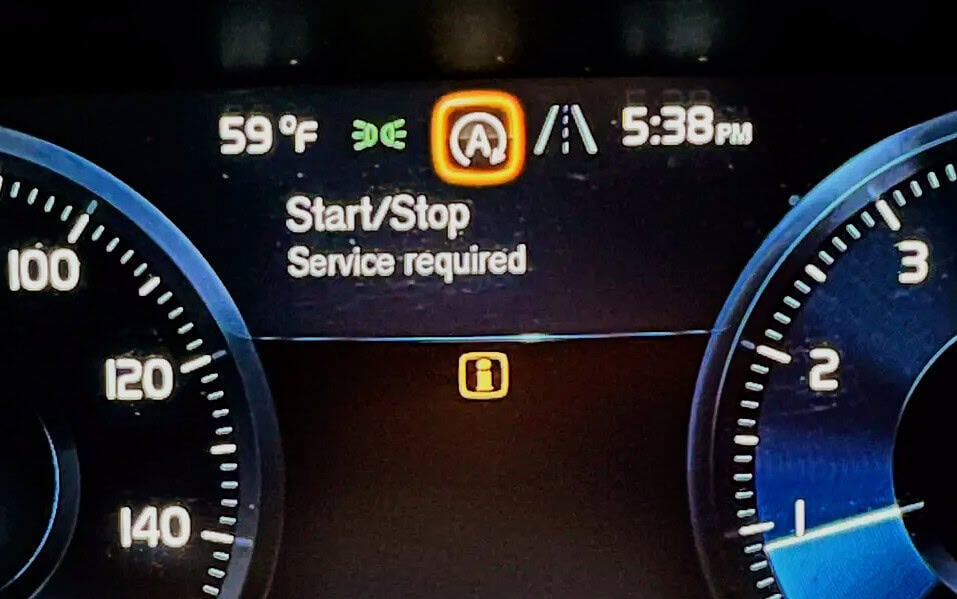
When the “Start/Stop Service required” warning message appears on the dashboard of your Volvo, it means there is an issue with the Start/Stop system or the systems connected to it that requires attention. Ignoring this warning will disable the engine from shutting off at a light or stop sign, which can lead to reduced fuel economy.
What Does the Start/Stop Service Message Mean?
Volvo Start Stop Service Required Warning on Dashboard
The Start/Stop system is a feature in your vehicle that helps reduce fuel consumption and emissions by automatically shutting off the engine when the car is not moving and restarting it when needed. When the warning message appears, your Start/Stop system is malfunctioning, implying that other vehicle systems might not work as they should.
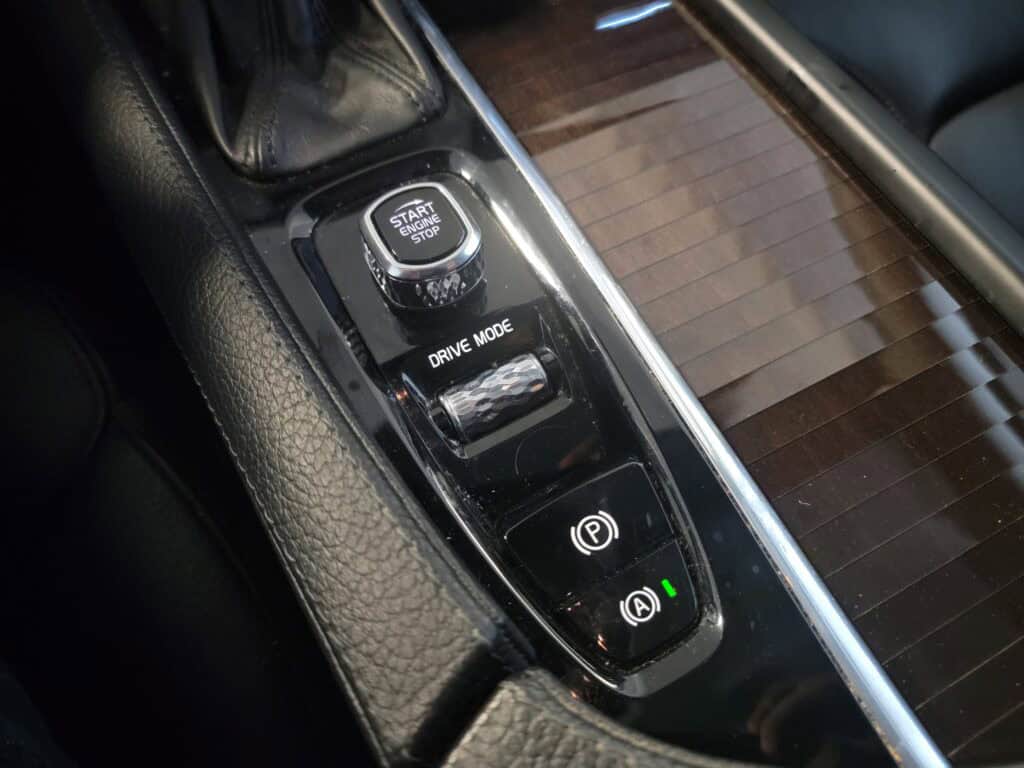
Volvo Start/Stop Enable Button on Center Console
⚠️ Why You Should Fix It As Soon As Possible:
Safety Risk – Sometimes, this error can cause the engine not to start after it stops.
Performance Issues – This error could prevent the engine from starting.
Costly Repairs if Ignored – Ignoring the issue may result in battery drainage and electrical failure.
Estimated Repair Cost – The repair cost could be between $200 and $1,450, excluding the towing service.
Common Causes
Weak or Depleted 12V Battery – The Start/Stop system heavily relies on a healthy 12V auxiliary battery to provide stable voltage during ignition cycles. A battery with diminished cold cranking amps (CCA) or state of health (SOH) below 70% can lead to insufficient power delivery. This will trigger system faults, as the Battery Management System (BMS) detects abnormal voltage drops under load, preventing the Start/Stop function from engaging.
⚙️ Technical Note: Battery internal resistance increases with age, typically after 3-5 years, reducing current delivery capacity. An idle voltage reading below 12.4V or a loaded voltage drop below 9.6V during cranking indicates a failing battery.
Loose, Corroded, or High-Resistance Battery Cables – Oxidized terminals or high-resistance cable connections disrupt current flow between the battery, starter, alternator, and various control modules (ECUs). Increased electrical resistance leads to voltage drops detected by the Powertrain Control Module (PCM), which disables the Start/Stop operation.
⚙️ Technical Note: Voltage drop testing across terminals (>0.2V under load) indicates excessive resistance. Look for sulfation, oxidation (white or green deposits), and loose terminal clamps.
Faulty or Open-Circuit Ground Points (Ground Loops) – Inadequate grounding at chassis or engine block points introduces ground loops and unstable reference voltages. This can cause data bus communication errors (CAN bus interruptions) and inhibit the Start/Stop system.
⚙️ Technical Note: Verify resistance between ground points and battery negative terminal (<0.1 ohm). Inspect grounding straps for corrosion or mechanical damage.
Blown Fuses or Defective Relays in Start/Stop Circuitry – The Start/Stop control module and associated components depend on intact fuses and functional relays. A blown fuse in circuits like the Battery Monitoring Sensor (BMS) or Starter Relay can disrupt power flow, disabling system activation.
⚙️ Technical Note: Verify fuse integrity using an ohm tester or multimeter. Inspect relay coil resistance (typically 50-120 ohms) and ensure proper switching function.
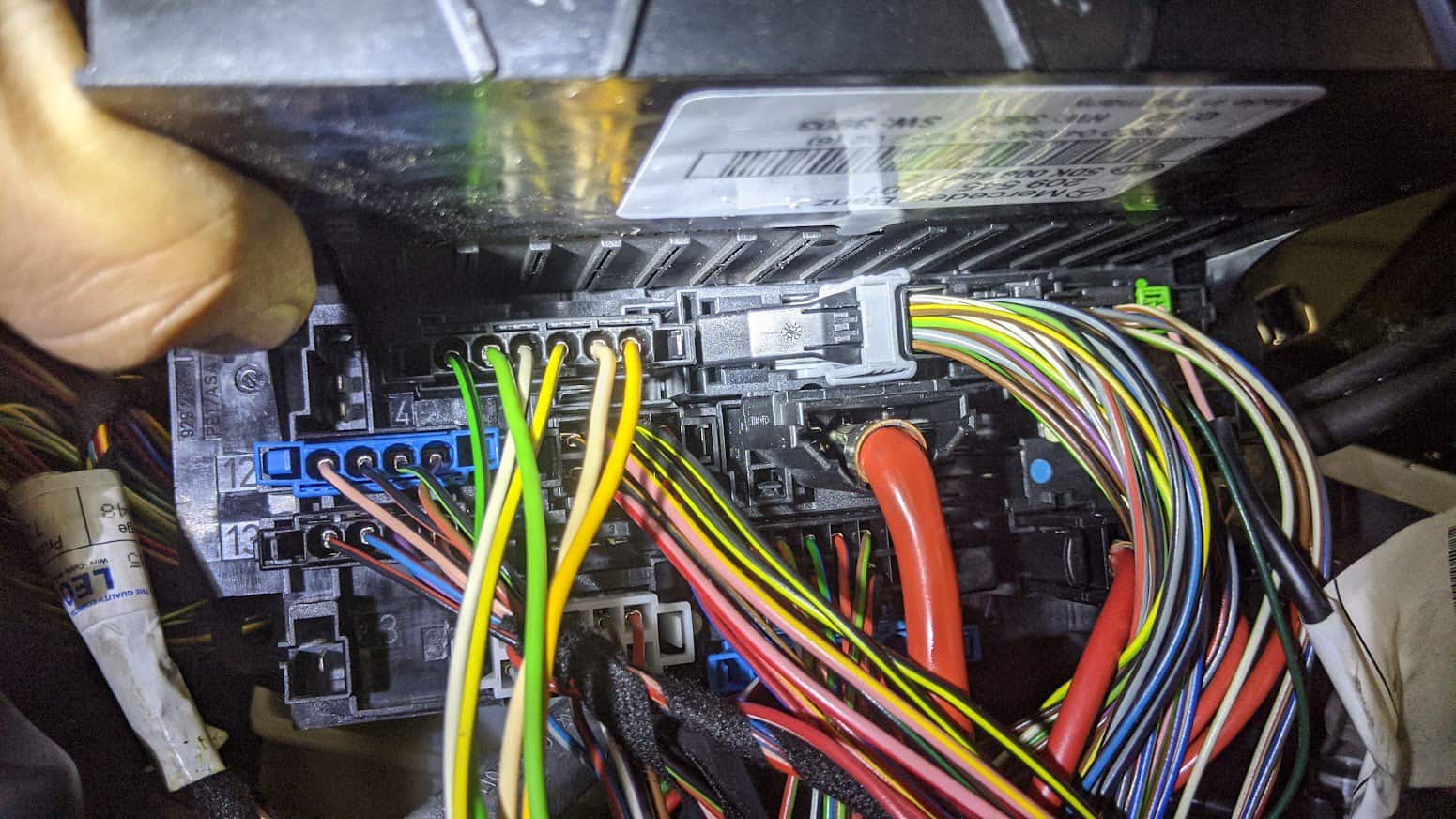
Damaged Wiring Harnesses or Short Circuits – Chafed or pinched wiring around the engine bay can lead to intermittent shorts or open circuits. Wiring faults in sensors like the Brake Pedal Position Sensor (BPPS), Hood Switch, or Engine Control Module (ECM) inputs will prevent Start/Stop from initializing.
⚙️ Technical Note: Perform continuity tests and insulation resistance checks on suspect wiring. Wiggle tests during diagnostic scans can reveal intermittent faults.
Degraded or Faulty Start/Stop Control Module (SSCM)– The SSCM processes inputs from multiple vehicle systems and determines Start/Stop eligibility. Internal faults, firmware corruption, or outdated software versions can lead to erroneous disabling of the function.
⚙️ Technical Note: Scan for Diagnostic Trouble Codes (DTCs) related to the Start/Stop system (e.g., P0562 – System Voltage Low). Check for Technical Service Bulletins (TSBs) regarding software updates.
Failing Starter Motor or Starter Solenoid – The Start/Stop system frequently cycles the starter motor, leading to accelerated wear of the brushes, bearings, or solenoid contacts. A high amperage draw or mechanical failure will trigger fault detection by the SSCM or ECM.
⚙️ Technical Note: Perform an amperage draw test during cranking. Normal starter draw is typically 125-150A (depending on engine type); excessive draw indicates internal wear.
Battery Monitoring Sensor (BMS) Malfunction – The BMS monitors battery voltage, current, and temperature, sending data to the ECM. A defective sensor or corrupted signal can prevent accurate battery condition assessment, causing the system to deactivate Start/Stop to protect against possible no-start conditions.
⚙️ Technical Note: Verify sensor operation through live data in diagnostics. The expected charging voltage should be in the range of 13.5-14.8V, and current readings should be accurately compared to clamp-meter measurements.
Intelligent Alternator (Smart Charge System) Fault – Modern Volvos use an intelligent alternator that adjusts charging rates based on battery state and vehicle load. If the alternator fails to maintain charge (low output or overvoltage), the system disables Start/Stop to prevent battery depletion.
⚙️ Technical Note: Measure alternator field current and output voltage under varying loads. Alternator duty cycle anomalies often require replacement or reprogramming.
Hood Switch Malfunction – Many Start/Stop systems require the hood to be securely closed. A defective or misaligned hood switch can falsely indicate an open hood, disabling the Start/Stop system for safety reasons.
⚙️ Technical Note: Inspect the hood latch switch for continuity when closed. This input can typically be monitored in live data within the Body Control Module (BCM).
Brake Pedal Position Sensor (BPPS) or Clutch Pedal Sensor Fault – The Start/Stop system relies on the BPPS (automatic transmissions) or clutch pedal sensor (manual transmissions) for proper engagement and restart authorization. Erroneous signals can inhibit the system.
⚙️ Technical Note: Verify sensor calibration and live position data. Fault codes may include P0571 (Brake Switch A Circuit).
Cabin Climate Control System Load Conditions – The Climate Control Module (CCM) can prevent Start/Stop activation if excessive cabin cooling or heating loads. This protects occupants from temperature discomfort due to a stationary, non-running engine.
⚙️ Technical Note: In diagnostic data, check A/C compressor demand, blower speed, and coolant temperature thresholds. A low refrigerant charge can increase the compressor duty cycle and inhibit Start/Stop.
High Electrical Load from Auxiliary Consumers – Excessive power from auxiliary components like heated seats, rear defrosters, or infotainment systems can override Start/Stop activation. The Energy Management System (EMS) prioritizes maintaining battery charge over engine shutdown.
⚙️ Technical Note: Monitor total vehicle current draw at idle. If greater than usual (20-30A), identify and disable high-load consumers.
CAN Bus Communication Errors – Communication faults between control modules via the Controller Area Network (CAN) can prevent the Start/Stop system from receiving necessary data. Common causes include failing gateway modules, terminating resistors, or shorted data lines.
⚙️ Technical Note: Use an oscilloscope to verify CAN high/low signals (typically 2.5V differential at 500kbps). Look for voltage anomalies or reflections indicating line integrity issues.
Disabled by user – Many drivers don’t like having the start/stop enabled and may have performed software modifications or other hacks such as seat belt bypass to disable the start/stop. These can be harder to troubleshoot at times.
🛠️ Pro Tip:
Perform a full vehicle health scan using a Volvo-compatible diagnostic tool (VIDA or YOUCANIC Scanner) to identify and clear fault codes across all related modules: ECM, SSCM, BCM, BMS, and CCM. Always update the vehicle software to the latest version, as some Start/Stop issues are resolved through reprogramming and module updates outlined in Volvo Technical Service Bulletins (TSBs).
Common Symptoms
Start/Stop Warning Message or Start/Stop Indicator Light On – If the system detects a fault in any component, it will send an error message or activate the dashboard warning light on the dashboard.
Engine Won’t Start After It Stops – A common reason the engine won’t restart after stopping is driver Interactions, such as disengaging the seatbelt. In this case, the engine may need to be restarted manually. Other common causes include a defective battery or system failure.
Hard Starting – The starter may wear out over time and become damaged due to motor overheating.
Troubleshooting
Before taking your car to a mechanic, try these DIY fixes:
Check Battery Health – Use a battery tester, multimeter, or scanner to check for low voltage. If the battery output is below 12.4 volts, it must be tested and recharged. Check the battery terminals for corrosion. Corroded battery terminals will not be able to supply the car with enough power due to a faulty connection. You can clean these terminals with a wire brush and battery cleaning solution.
Inspect Wiring & Connections – Look for loose or frayed wires around the battery and alternator. Damaged wires will need to be replaced so that the electrical components in your car receive the proper amount of electricity.
Inspect Fuses – look for damaged or melted fuses in your vehicle’s fuse box. This could be an indicator of an electrical issue in your car. ONLY REPLACE OLD FUSES WITH NEW ONES OF THE SAME AMPERAGE. If the new fuse trips, other electrical problems in your vehicle must be addressed.
Reset the System – If the warning light/error message was caused by a glitch in the system, it can also be cleared by disconnecting the battery for 30 minutes.
Need some help reading and clearing fault codes? Check out our YouTube guide, and diagnose your Volvo’s problems like a pro!
Common OBD-II Fault Codes
DTC
Description
P0560
System Voltage Malfunction (Battery voltage out of range—affects all electrical systems).
P0562
System Voltage Low (Battery voltage too low for proper operation—shown in your chart).
P0563
System Voltage High (Battery voltage too high—can damage sensitive electronics and BMS).
P1602
Battery Voltage Interruption (Loss of power supply—shown in your chart).
P2503
Charging System Voltage Low (Alternator undercharging detected).
P2504
Charging System Voltage High (Alternator overcharging detected—may cause system shutdowns).
P0516
Battery Temperature Sensor Range/Performance Problem (Inaccurate readings disrupt charging strategy).
P0517
Battery Temperature Sensor Circuit High (Sensor outputs implausibly high temperature).
P0514
Battery Temperature Sensor Circuit Malfunction (Listed in your chart).
U0111
Lost Communication with Battery Energy Control Module (Listed in your chart).
U012A
Lost Communication with Battery Monitoring Sensor (Sensor feeds critical data to the Start/Stop system).
B11CF
Battery Management System Malfunction (Internal failure in BMS disrupts energy management).
FAQs
Will my battery discharge quickly because of the Start/Stop system?
➡️Not necessarily. The Start/Stop system can cause your battery to drain rapidly in some cases due to module malfunction.
What are the conditions for the Start/Stop system to operate correctly?
➡️The Start/Stop system will activate or function properly if the driver’s seatbelt is fastened, the vehicle has been driven and comes to a complete stop, the A/C temperature is at the set level, and the battery voltage is sufficient to provide the necessary power.
Can I disable the Start/Stop feature?
➡️Yes, Start/Stop is an additional feature designed to be enabled or disabled by the user on many Volvos. Usually you have a start/stop button next to the shifter.
Can I still start and drive the vehicle if the Start/Stop function is faulty?
➡️Yes, the system will not restrict the ignition button from starting the vehicle through user interaction. However, if you cannot start the car, it may indicate a faulty connection to the starter, a defective starter, or a discharged battery.
Why is the Start/Stop system sometimes not functioning?
➡️The Start/Stop system monitors various factors, with battery supply being a key component. If the system detects insufficient battery power to restart the engine, it will prevent engine shutoff, even if the Start/Stop function is enabled. Additionally, certain conditions must be met first for the system to operate.
Final Thoughts
The Start/Stop system is integral to your Volvo’s efficiency and emissions control strategies. A “Start/Stop Service Required” warning on a Volvo often signals underlying electrical, battery management, or control module issues that should not be overlooked. These faults can lead to diminished vehicle performance, reduced fuel economy, and potential no-start conditions. By conducting thorough diagnostics—such as voltage testing, inspecting wiring integrity, and retrieving fault codes—you can accurately identify and resolve the root cause. Proactively addressing these issues restores Start/Stop functionality and ensures the overall reliability and safety of your vehicle’s electrical system.
Experts Who Contributed to This Article
Elbert Nonog, Automotive National Cert., BS Mechanical Eng.
Diagnostic Specialist13+ years of experience
Elbert G. Nonog is an Automotive Technical Writer and Training Manager with over 10 years of experience across major brands including Chevy, MG, Ford, Volkswagen, and Toyota. Rising from technician to leadership roles, Elbert excels at transforming complex automotive concepts into accessible training materials and documentation. His expertise spans conventional and electric vehicle systems, nationwide dealership training, and aftersales operations management. With TESDA certification and pursuing further education from the Technological University of Philippines, Elbert effectively bridges the gap between automotive engineering and practical application for industry professionals and enthusiasts.
rhila, ASE Certified
Diagnostic Specialist15+ years of experience
Rushit Hila is a dedicated automotive engineer with ASE G1 certification and specialized training from an esteemed Automotive Specialty School. His hands-on experience and technical expertise in advanced diagnostics, system integration, and performance optimization make him a trusted voice in the industry.