Mazda Miata CEL Fix: O2 Sensor Heater Circuit Code Diagnosed on a Miata
Contributed by:

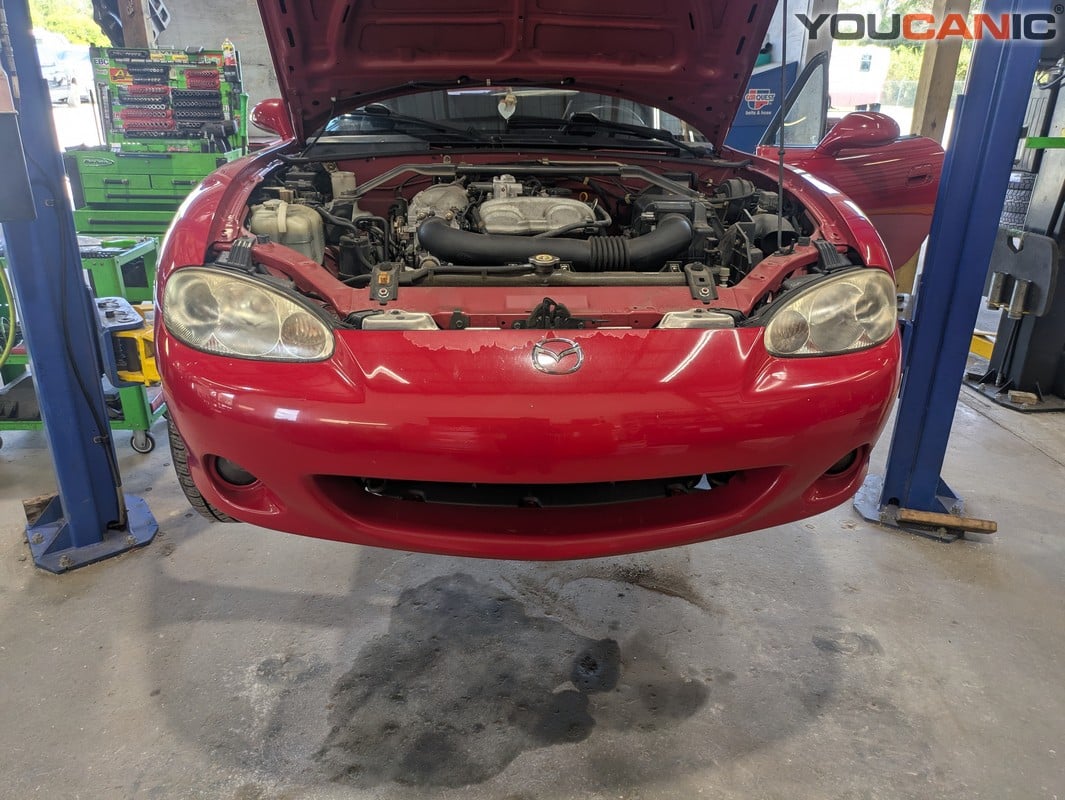
Today’s customer brought their car in because the check engine light was on. This, on its own, wasn’t completely out of the ordinary, but other than a lit-up check engine light, there were no other driveability concerns of note. Before bringing the car to the shop, the customer had a local autoparts store scan his 2005 Mazda Miata for fault codes, and they found one fault code related to the O2 sensor: an O2 sensor heater circuit 2 code. Other than the check engine light being on in the car’s dashboard, no other drivability concerns were present.

After a quick test drive to confirm there were no drivability concerns, I scanned this Mazda for fault codes and monitored live engine data to identify the fault. The vehicle only had 82000 miles on the odometer.
Using my full-system scanner, I scanned for fault codes and monitored live engine data to observe the O2 sensor 2, heater control, and voltage.

🔧 Stop paying the dealer for every warning light
Get dealer level diagnostics at home with the YOUCANIC Full System Scanner.
- ✔ Works with all makes and models, including most luxury brands
- ✔ Topology map view shows all vehicle modules on one screen for faster diagnostics
- ✔ Bi directional controls to test fans, pumps, actuators and more so you do not have to guess
- ✔ Special resets and calibrations such as ABS bleed, EPB service, battery registration and more
- ✔ Free lifetime updates with no recurring fees

The sensor heater circuit showed 0 volts as the engine warmed up, but reached operating temperature.
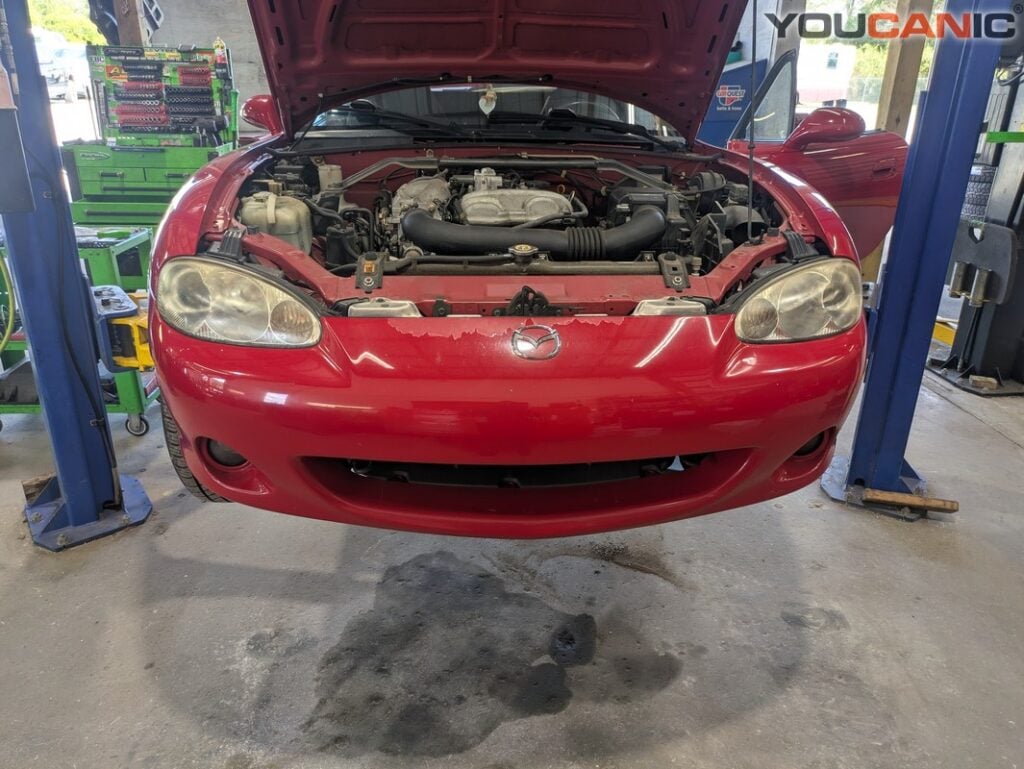
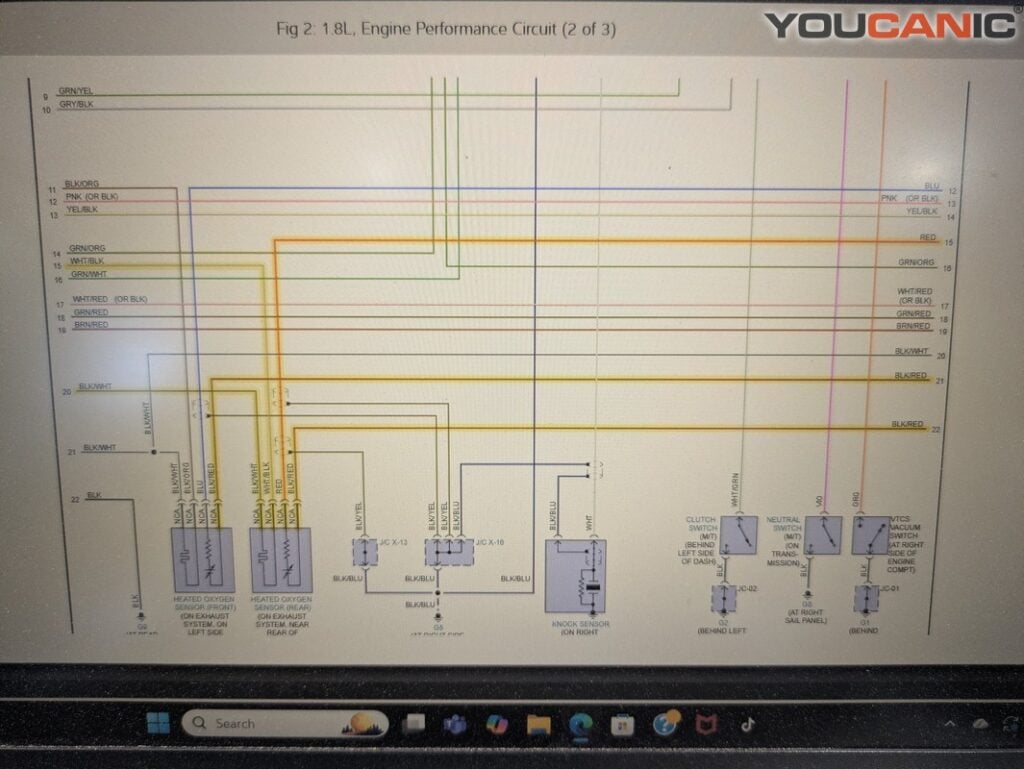
The vehicle was raised, and I began the repair by inspecting the exhaust system, the sensor, and its wiring. No noticeable damage to the sensor or to the wiring was present. Using ProDemand, I pulled up the vehicle’s wiring diagram to find the location of this Mazda’s O2 wiring harness and its connection points, and how it communicated with the ECM.

After checking continuity between the ECM and O2 sensor connections, I confirmed that the wiring was undamaged and that there was no poor connection between the two components. From there, I decided to check resistance through the connections for ground, power, on the O2 sensor, and the heater control circuit. No connection was above .06 ohms. The only thing to check was the sensor component itself. I removed the O2 sensor from the exhaust to inspect the sensor end for any damage. No noticeable damage was found.

After a thorough inspection, all tests pointed to a faulty O2 sensor. The sensor on this Mazda was the factory original, and after roughly 20 years, the sensor had just failed on the heater circuit. A new sensor was ordered and installed.

After replacing the O2 sensor and clearing the check engine light, I test-drove the vehicle and double-checked live engine data using my full-system scanner to verify everything was working properly. The voltage to the sensor on the heater circuit remained in the 3-5 V range while the vehicle was in operation. No codes returned, and there were no driveability concerns of note.
A faulty O2 sensor is a common problem, but it is important to thoroughly inspect circuits for other issues before just replacing the sensor.

Bonus Tip
The driver’s seat had to be moved fully forward to access the O2 sensor connection, as it runs up through the floor and is underneath the carpet in the vehicle. If you’re a bigger guy or girl, it’s just easier to remove the driver’s seat to test the connection. These vehicles are kind of small and can be tight to work on, so take the extra steps if needed to get a thorough diagnosis and enough room for the job.
Bonus Images