

Ford Fusion Replace Rear Brake Pads & Rotors DIY
Reviewed/Verified by:

Worn brake pads announce themselves with squealing or grinding, longer stopping distances, a brake pedal that sits lower than it used to and often a wear warning light on the dashboard. What they do not cause is a soft or spongy pedal. If your pedal feels springy, travels further than it should or sinks slowly toward the floor, that is air in the hydraulic system, a fluid leak or a failing master cylinder, and fitting new pads will not fix it. Find that cause before driving the car. If your symptoms are wear related, the procedure below covers the job.
At a Glance
- Vehicle: 2013 to 2020 Ford Fusion
- Parts: Rear brake pads and rotors
- Critical step: Put the electronic parking brake in service mode before retracting the pistons
- Tools: 7mm Allen, 15mm wrench, brake retractor tool, jack and stands
- Torque: Caliper bracket bolts 100 ft-lb (135 Nm)
- Soft pedal? That is air or a leak, not worn pads
Guidelines for Rear Brake Pads & Rotors Replacement on Ford Fusion
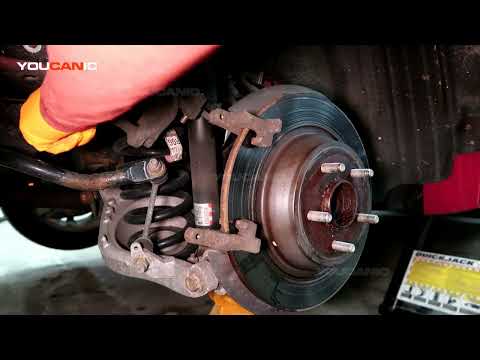
Electronic Parking Brake Service Mode
The 2013 to 2020 Fusion uses an electronic parking brake built into the rear calipers. The motor must be put in service (maintenance) mode before you push the caliper pistons back, or you can damage the motor or the caliper. Use the in car procedure from your owner’s manual, or a scan tool such as the YOUCANIC UCAN-II Pro, which can retract the electronic parking brake on supported models. Take it out of service mode once the job is done.
What you will need
- Floor jack
- Jack stands
- Power Handle or a breaker bar
- 7mm Allen wrench
- 15mm wrench
- Brake retractor tool
- Hammer
- Flat screwdriver
- Ford Fusion rear brake pads
- Ford Fusion rear rotor
Procedure
- Park the vehicle on a flat-level ground surface.

- Set the vehicle in service mode. See the step-by-step process on how to set the vehicle to service mode.


3. Loosen the lug nuts on the rear wheel using a breaker bar.

🔧 Find out what is actually wrong before you pay someone to guess
Dealer level diagnostics at home with the YOUCANIC UCAN-II Pro.
- ✔ Covers most makes and models, including many luxury brands. Send us your VIN and we will confirm your car before you order
- ✔ Reads every module, not just the engine, so you find the faults a basic reader says are not there
- ✔ Commands the car: test a fan or pump, bleed ABS, retract an electronic parking brake, register a battery
- ✔ No subscriptions. Free lifetime updates, so the price you pay is the whole price
- ✔ Backed by real mechanics in the USA you can email before and after you buy
Featured in The Wall Street Journal
4. Jack up the vehicle’s rear and support the car with jack stands.
- Remove the rear wheel by removing the lug nuts and pulling the wheel out.

- Remove the metal clip on the brake caliper using a flat screwdriver by popping it out.

- Loosen the top and bottom guide pins behind the brake caliper using a 7mm Allen wrench.


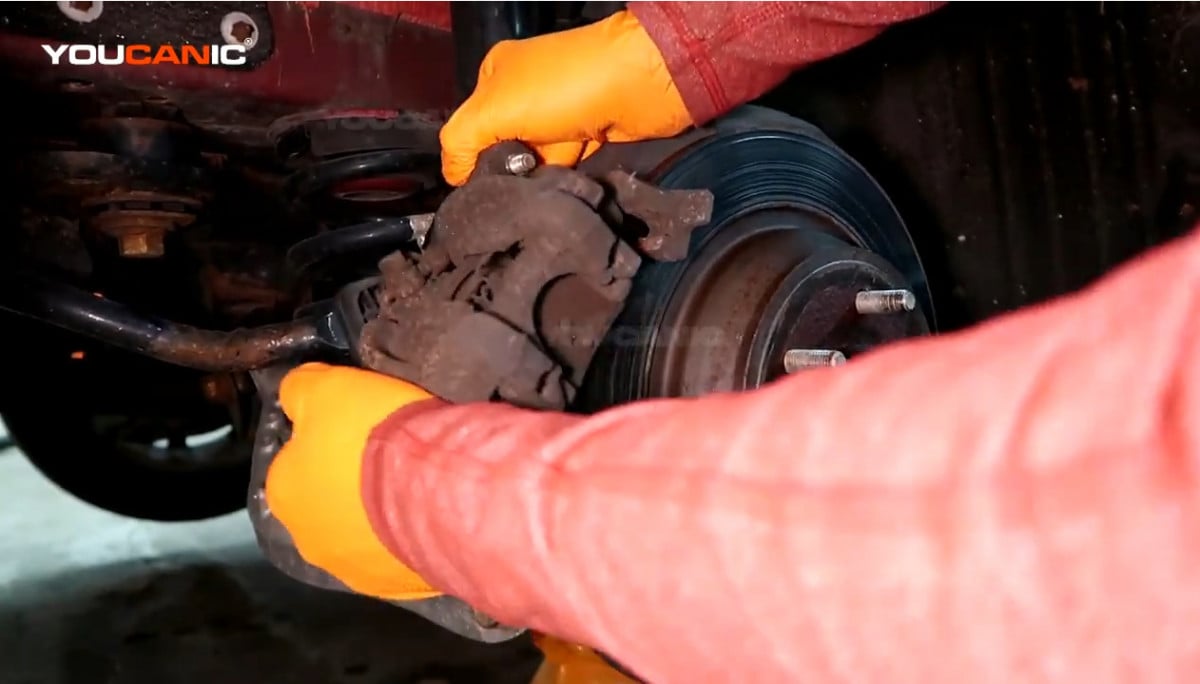
- Pull the piston caliper out away from the carrier.

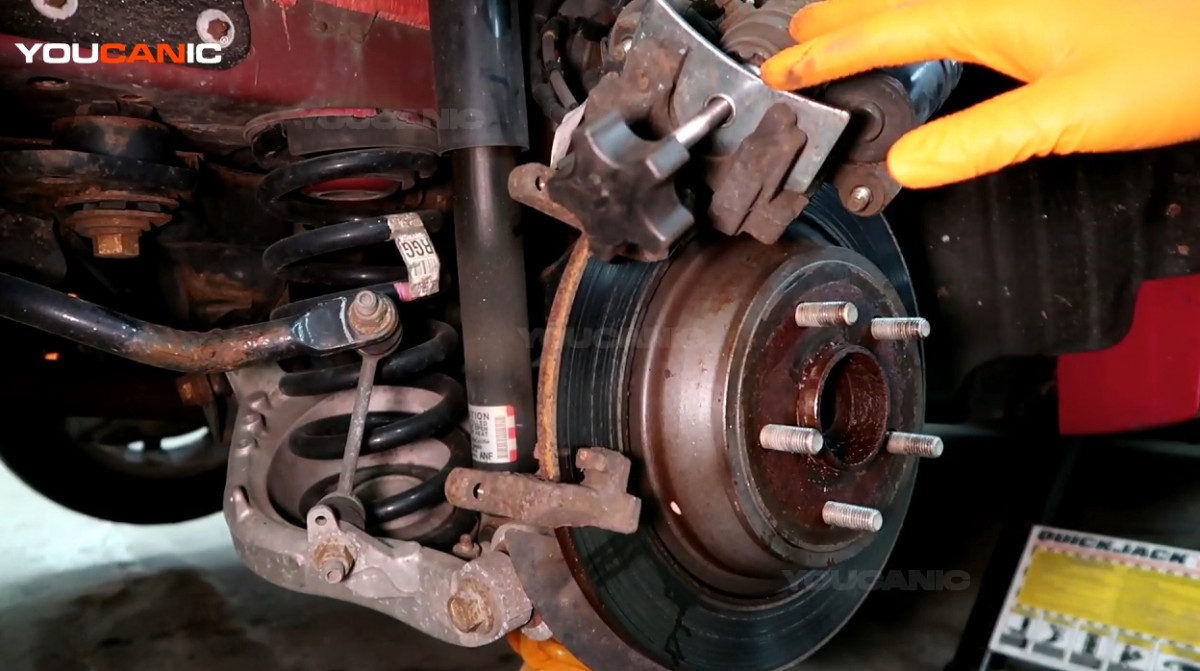
- Remove the brake pads from the caliper. If the brake pad does not come out easily, pry them out using a flat screwdriver.

- Press the piston back using a retractor tool.

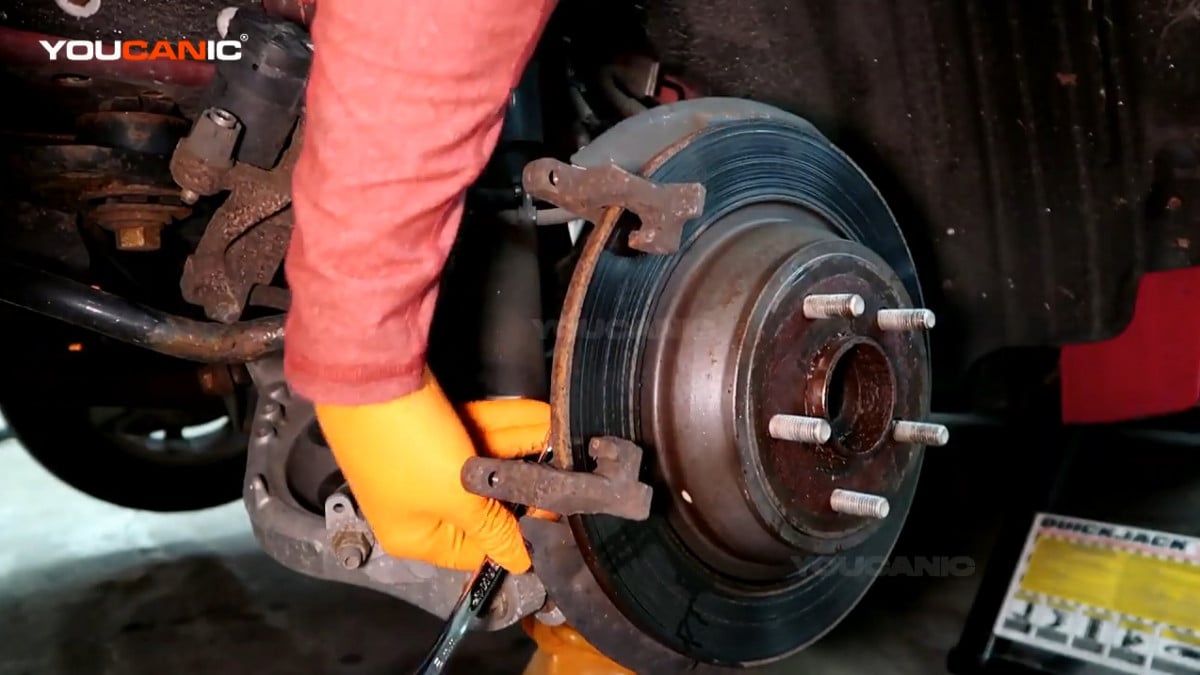
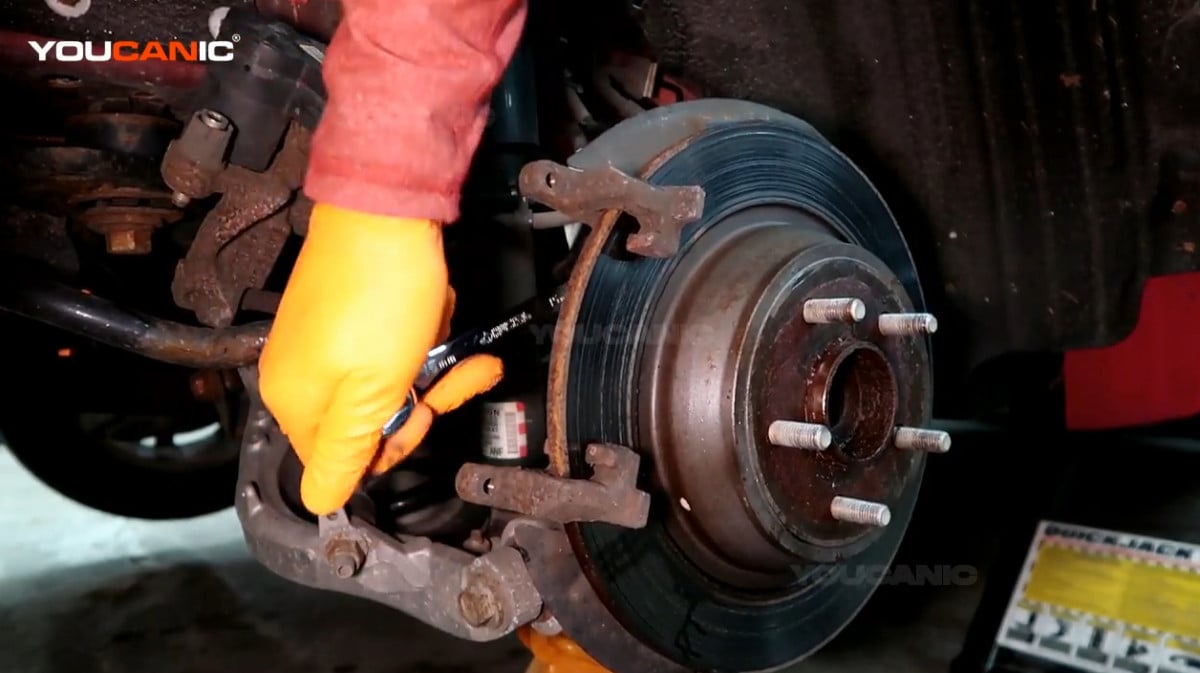
- Use a 15mm wrench to loosen the bolts and remove them behind the bracket.


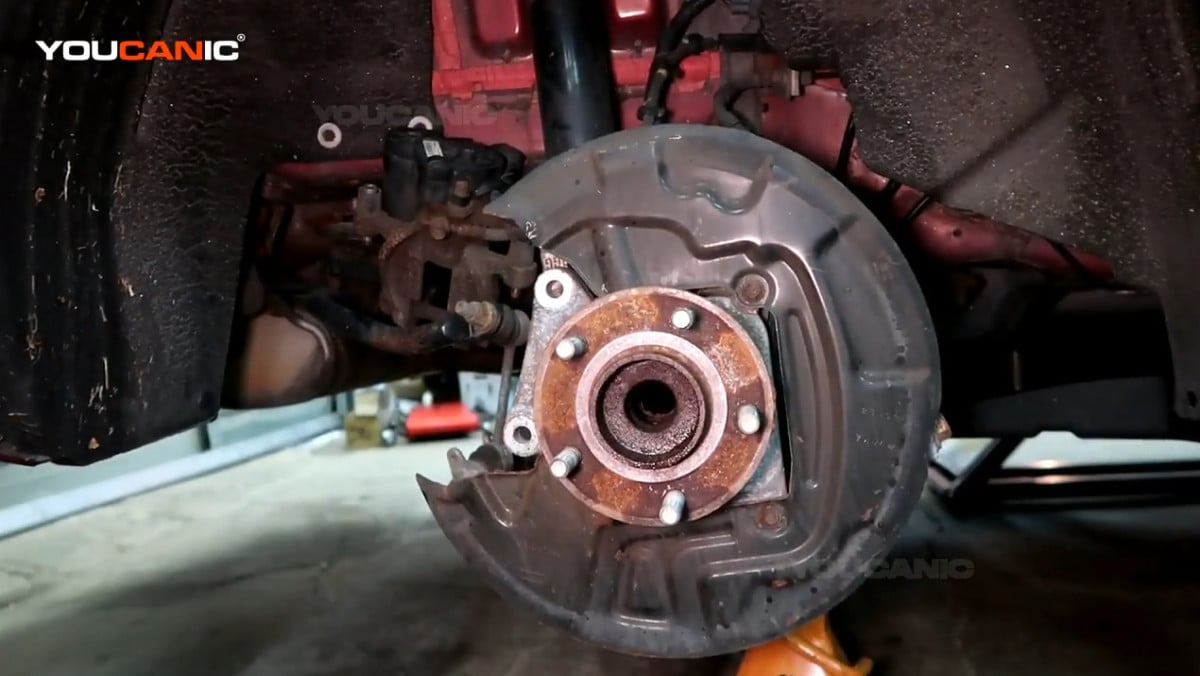
- Separate the carrier bracket out from the vehicle.
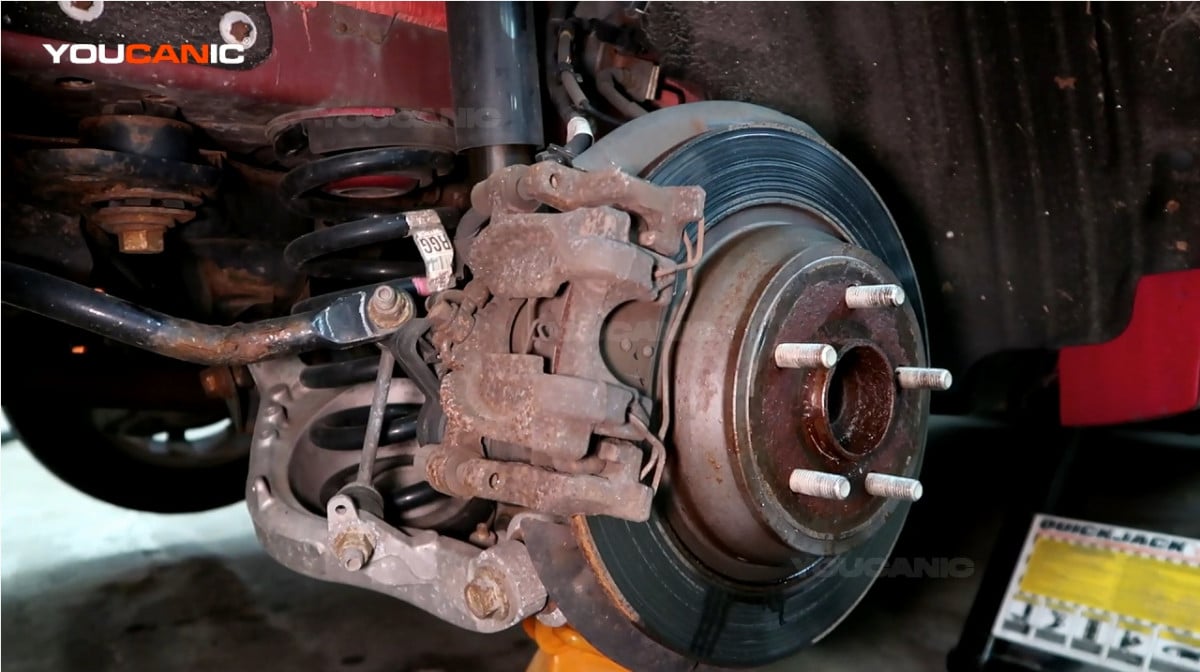
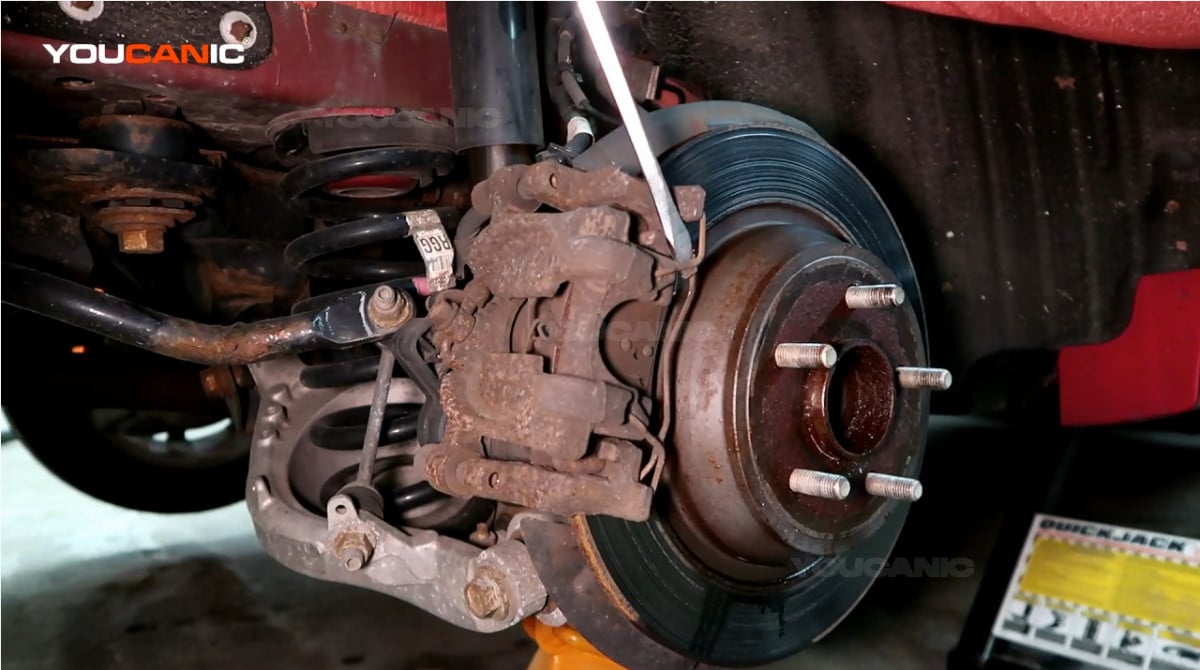
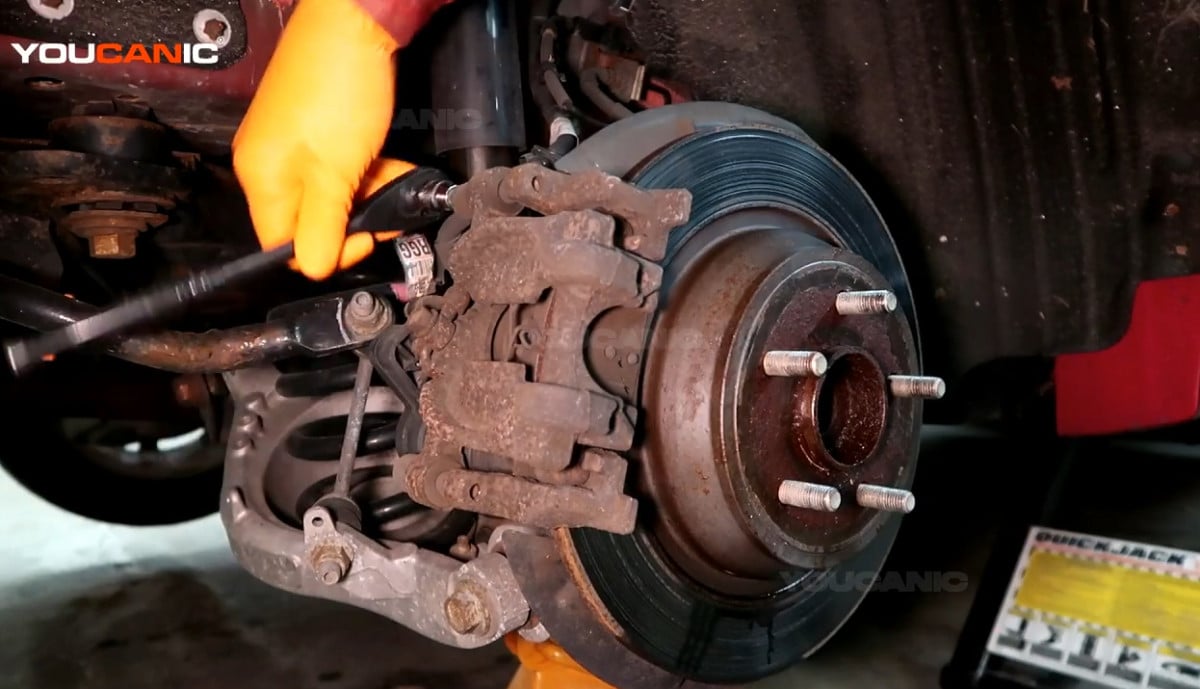


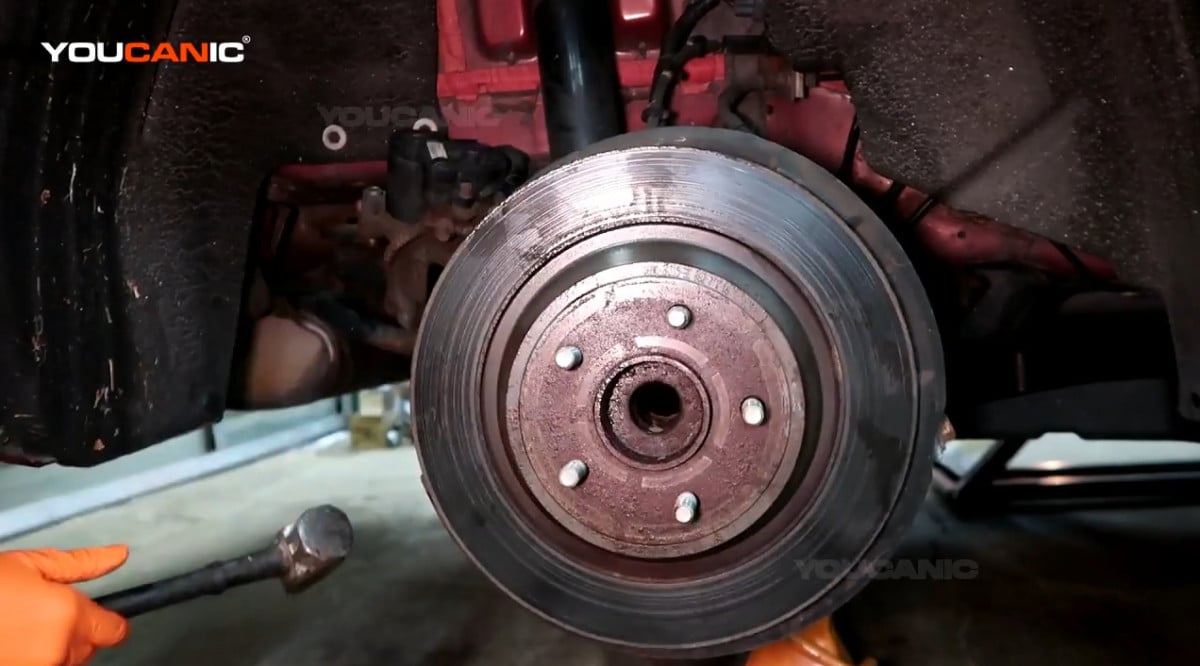
- Remove the rotor by pulling it out. If the rotor does not come off easily, use a hammer to get it out. Penetrating fluid can help make this process more manageable if the rotor is rusted.


- Clean the brake caliper and rotor’s installation port using a wire brush.
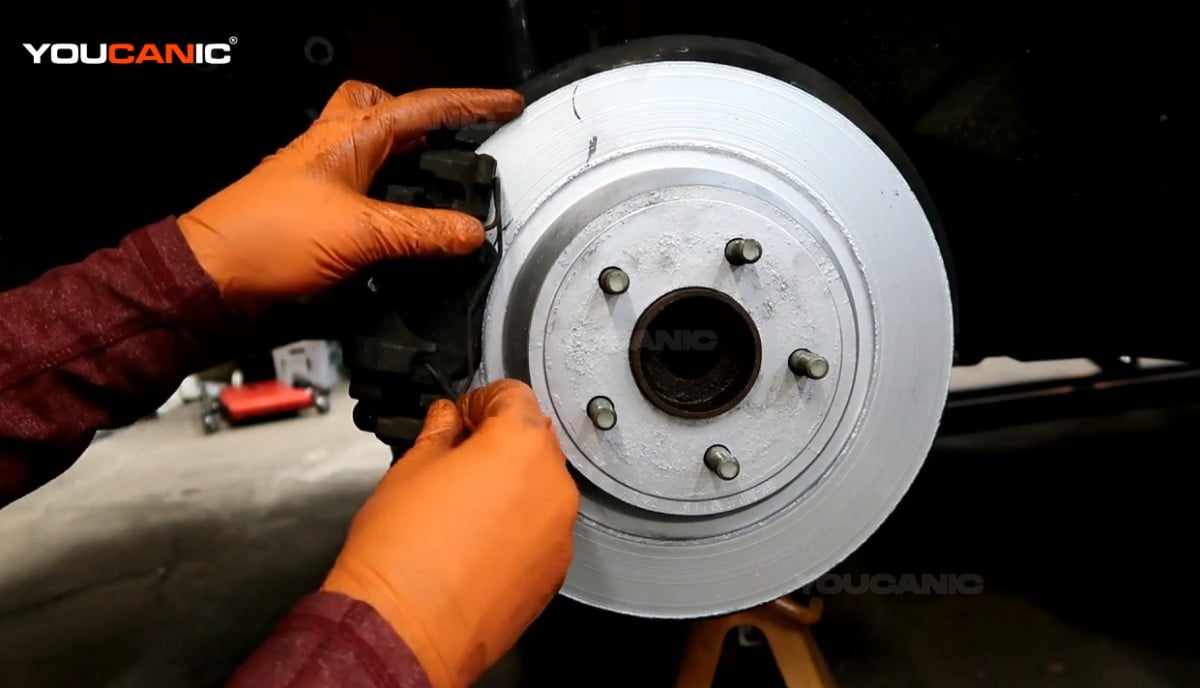
- Install the new rotor on the vehicle.
- Put the carrier bracket back into the rotor and reinstall the 15mm bolts of the carrier.
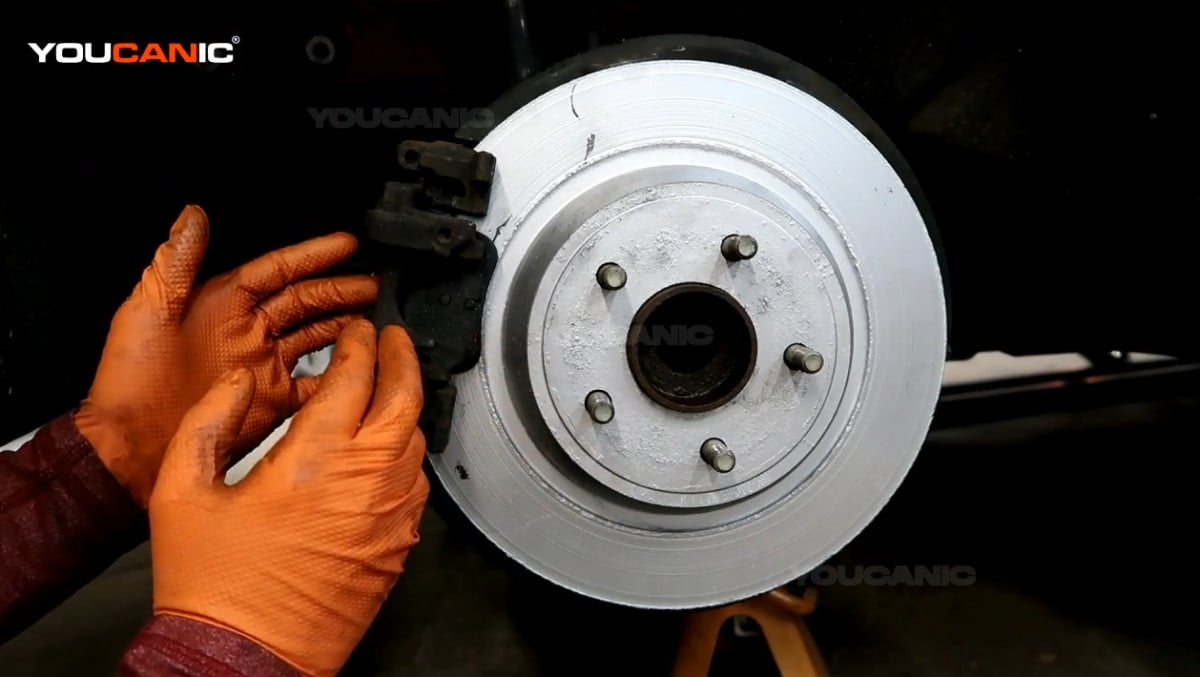
- Confirm the orientation of brake pads into the caliper and push them in place.
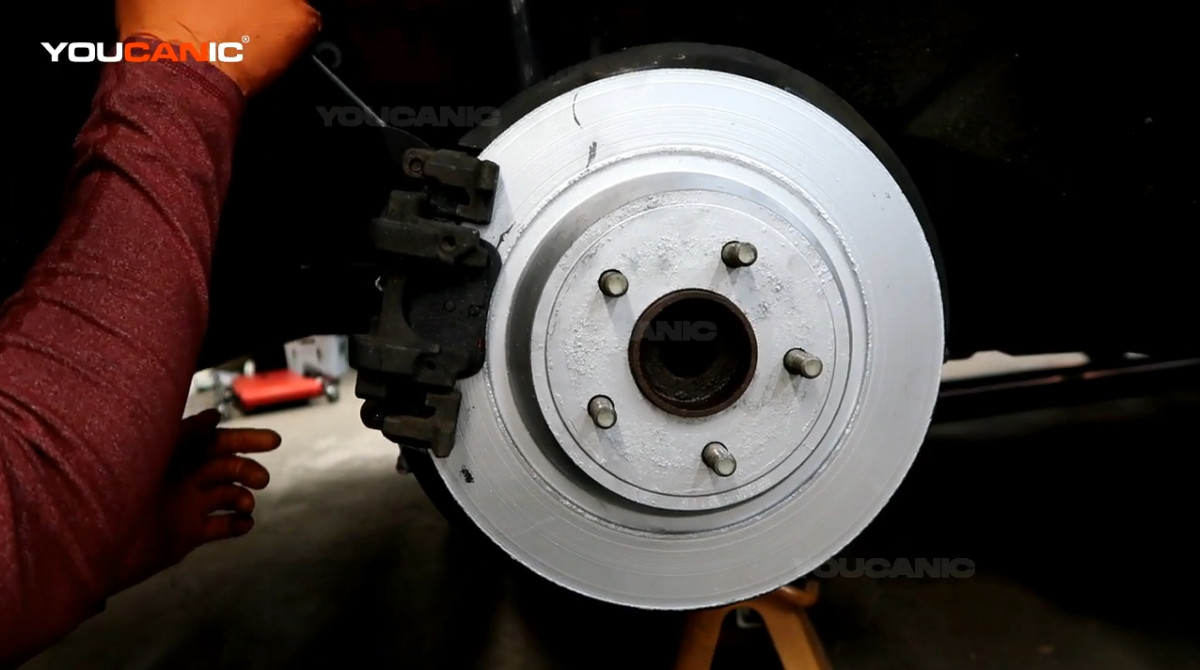
- Reposition the piston caliper back into the rotor, then tighten the guide pins to lock the caliper.

- Line up the metal clip back to the caliper and press it in to set it into place.

- Reinstall the wheel back in the vehicle and tighten the lug nuts.
- Pump the brake pedal.
- Set the parking brake out of maintenance mode.
Torque Specifications
- Caliper mounting bracket bolts
- Front 2013 and later: 111 ft lbs
- Rear 2013 and later: 66 ft lbs
- Caliper mounting bolts (these go into the guide pins)
- Front 2013 and later: 22 ft lbs
- Rear 2013 and later: 21 ft lbs
- Lug nuts
- 100 ft-lbs (135 N·m)
Check these troubleshooting and repair guides for more help on your Ford.
Frequently Asked Questions
Do I need a scan tool to change the rear brakes on a Ford Fusion?
The electronic parking brake must be put in service mode first. Some cars allow an in car procedure, and scan tools can do it on supported models.
What is the Fusion rear caliper bracket torque?
The guide lists 100 ft-lb (135 Nm) for the caliper mounting bracket bolts.
What are the signs of worn rear brake pads?
Squealing or grinding, longer stopping distances, a lower pedal and often a brake wear warning.
Why is my brake pedal soft after changing pads?
Pump the pedal until it is firm before driving. A pedal that stays soft points to air in the system or a leak.
Related Guides
- Set Ford Fusion Rear Parking Brakes on Maintenance Mode
- 2013 to 2020 Ford Fusion Check Level & Add Brake Fluid
- Brake Pedal Sinks at Stop on 2012 Ford Edge: The Hidden Cause
- 2013 to 2020 Ford Fusion Door Panel Removal


