
Subaru OBD2 Port Location
Reviewed/Verified by:

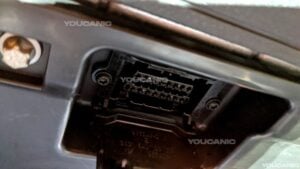
On every 1996 and newer Subaru, the OBD-II port is under the dashboard on the driver’s side, usually high up above the brake pedal or toward the door side of the lower dash. It sits deep, so a flashlight helps.
At a Glance
- Location: deep under the driver’s side dashboard, above the brake pedal, on all 1996 and newer Subarus.
- Models: Forester, Impreza, WRX, Legacy, Outback, Crosstrek and Ascent.
- Not working: check the fuse first, then the plug seating, then battery voltage.
- Factory tool: Subaru Select Monitor (SSM); full system scanners cover most of the same functions.
Location of the OBD-II Port in Subaru

You must look deep under the dashboard (above the brake pedal) for the 16-pin connector shown below. All Subaru vehicles from 1996 and newer have an onboard diagnostic (OBD) port.

This includes Forester, Impreza, WRX, Legacy, and Outback models.

🔧 Find out what is actually wrong before you pay someone to guess
Dealer level diagnostics at home with the YOUCANIC UCAN-II Pro.
- ✔ Covers most makes and models, including many luxury brands. Send us your VIN and we will confirm your car before you order
- ✔ Reads every module, not just the engine, so you find the faults a basic reader says are not there
- ✔ Commands the car: test a fan or pump, bleed ABS, retract an electronic parking brake, register a battery
- ✔ No subscriptions. Free lifetime updates, so the price you pay is the whole price
- ✔ Backed by real mechanics in the USA you can email before and after you buy
Featured in The Wall Street Journal
Subaru OBD-II Port Not Working
There are several common causes for a Subaru OBD-II port not working properly:
- Loose or corroded connections: The OBD-II port may not be properly connected to the vehicle’s onboard computer, or the connections may be corroded.
- Faulty OBD-II port: The OBD-II port itself may malfunction and need to be replaced.
- Fuse issues: A blown fuse for the OBD-II port may be causing the issue, which will need to be replaced.
- Onboard computer malfunction: The vehicle’s onboard computer may malfunction, preventing the OBD-II port from functioning properly.
- Battery and power-related issue: If the car battery is weak or does not provide enough power, it can cause the OBD-II port not to work.
Check the fuse first. It is the most common cause and the cheapest fix.
Do all Subarus have an OBD-II port?
Yes. All 1996 and newer Subaru vehicles are equipped with an OBD-II (On-Board Diagnostics II) port. This port is used for diagnostics to retrieve vehicle information and troubleshoot issues.
What scan tool does Subaru use?
Subaru uses the Subaru Select Monitor (SSM) as its official scan tool. The SSM is a factory scan tool designed to work with Subaru vehicles. It can diagnose and troubleshoot issues, read and clear diagnostic trouble codes, and access vehicle information. The SSM is typically only used by authorized Subaru dealerships and certified Subaru technicians.

Third-party scan tools like the YOUCANIC UCAN-II Full System Scanner are compatible with Subaru vehicles. This powerful scanner can read and clear codes from different systems in your vehicle. It can also perform many functions of the factory tool, such as bi-directional controls, maintenance reset functions, and many more.
These tools can perform many of the same functions as the SSM and are typically more affordable and easier for the independent mechanic or car enthusiast.
What to do once you have found the port
With the ignition off, push the connector in until it clicks. A loose plug is the most common reason a scanner powers up but will not communicate. Then turn the key to position II so the dash lights come on without starting the engine, since most Subaru control modules will not respond with the ignition fully off.
If the scanner stays dark, check the fuse that feeds the OBD2 port before assuming the port has failed. On most Subaru models that same fuse also supplies the cigarette lighter socket, so a dead 12 volt socket alongside a dead scanner points straight at the fuse rather than the connector.
A generic code reader will only show engine codes on a Subaru. To read ABS, airbag, transmission and body control modules, which is where most Subaru faults actually log, you need a full system scanner that supports the manufacturer specific protocols.
What to Do After You Connect
- Record every code and the freeze frame data first.
- A flashing check engine light on a Subaru often means a misfire; avoid hard driving until it is fixed.
- If the cruise control light flashes along with the check engine light, the car has turned cruise off because of an engine fault. Read the engine codes first.
What to do next: scan wider than the engine
The port location is standard across the Subaru range. What differs is how much of the car a given tool can see, and the systems Subaru owners actually ask about tend to sit outside the engine computer.
- Read the transmission, brake and body modules too. Drivetrain and ABS complaints store their codes in their own controllers, which a basic reader will not open.
- Note whether more than one module reports a fault. On these cars a single root cause often shows up in several places at once, and that pattern points at the cause faster than any single code.
- Confirm battery condition before diagnosing anything electrical. It is the cheapest step and it explains a surprising share of multi module faults.
- Check whether your repair needs a driver assistance calibration before you start. Some camera and radar work requires equipment beyond a scan tool, and it is better to know that now than halfway through.
The YOUCANIC UCAN-II Pro reads the full module list on these vehicles and performs the available service functions, with a seven day rental for one off jobs. Subaru driver assistance work in particular varies by model year, so email support with your VIN and tell us the procedure. If it needs dealer level equipment we will say so rather than sell you a tool that cannot finish the job.
When you do not need a scan tool
If the light is on and you want the code, a cheap reader is fine. If you are fitting a tracker or a logger, the port location above is the entire answer.
Frequently Asked Questions
Where was the diagnostic port on older Subarus?
Subarus built before OBD2 used a Select Monitor connector under the dash, and some had green test mode connectors nearby. These need a different tool or adapter.
Will a Bluetooth OBD2 adapter work on my Subaru?
It reads engine codes and basic live data. ABS, airbag, transmission and EyeSight faults need a scanner with Subaru coverage.
Why does my Subaru show several warning lights at once?
On many Subarus an engine fault switches off the traction and EyeSight systems, so several lights come on together. Fix the engine fault first, and the others usually go out.
Related guides: Master Your Subaru: Easy Guide to Reading Clearing Fault Codes · Subaru Dashboard Warning Lights Explained