Land Rover ABS Light On – Common Causes & Problems
When the Anti-lock Braking System (ABS) light comes on in a Land Rover, it can indicate a range of issues that require attention. This article will help you determine the root cause of the ABS error light. By understanding common causes, vehicle owners can address ABS malfunctions independently, ensuring their safety on the road. We will tackle sensor malfunctions, ABS module failure, and other possible causes to understand what is wrong with your Land Rover.
What does the ABS light mean on a Land Rover?
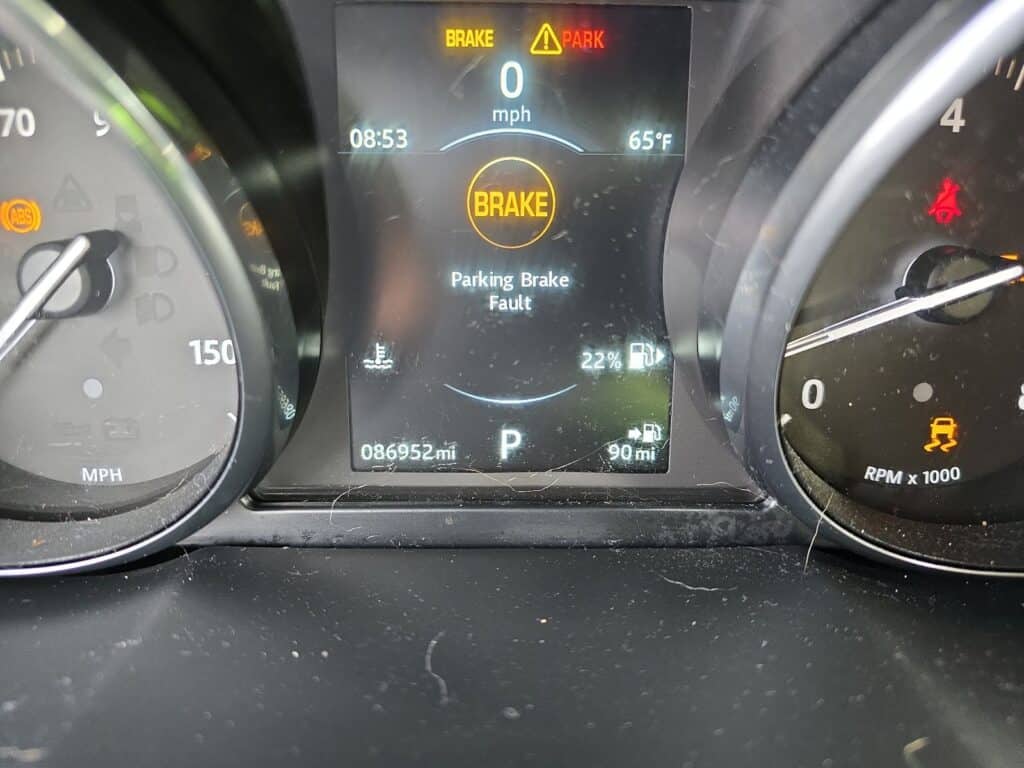
The ABS light on a Land Rover refers to the Anti-lock Braking System, a safety feature designed to prevent the wheels from locking up during braking. When the ABS light turns on, it indicates a problem with the ABS, and it may not function properly in an emergency brake situation. The ABS light is always an important alert that requires immediate attention. During an ABS malfunction, the vehicle can skid and be difficult to control during emergency braking, leading to serious accidents.
Symptoms
- ABS light is always ON
- ABS and Traction control warning lights come on
- Hill descent is deactivated
- Brakes may feel different, either softer or harder than usual.
- Possible activation of the Traction Control (TC) or DSC (Dynamic Stability Control) warning light.
- Some Land Rovers share ABS sensors with the speedometer, causing erratic readings.
- A failing ABS pump might produce a humming or grinding noise.
- The Check Engine, Brake Warning, or Traction Control light may also be illuminated depending on the issue.
Common Causes
Broken or Dirty ABS Wheel Speed Sensor

The ABS uses wheel speed sensors to detect the rotational speed of each wheel and sends that information to the ABS module. The ABS module then uses that information to determine when to activate. If one or more of these sensors fail or malfunction, it can cause the ABS light to come on.

🔧 Stop paying the dealer for every warning light
Get dealer level diagnostics at home with the YOUCANIC Full System Scanner.
- ✔ Works with all makes and models, including most luxury brands
- ✔ Topology map view shows all vehicle modules on one screen for faster diagnostics
- ✔ Bi directional controls to test fans, pumps, actuators and more so you do not have to guess
- ✔ Special resets and calibrations such as ABS bleed, EPB service, battery registration and more
- ✔ Free lifetime updates with no recurring fees
If one or more wheel speed sensors are damaged, it can affect the ABS, and the light will turn on. Many factors can contribute to a faulty speed sensor. One example is the harsh weather conditions that can wear out the sensor due to its location on the wheel hub.
Another factor that could lead to faulty speed sensors is that they are covered with debris. If a sensor is dirty, it may not be able to have an accurate reading of the wheel’s rotational speed. This can cause the ABS to activate unnecessarily. Cleaning the sensor can sometimes solve the problem.
Malfunctioning ABS Module

The ABS module is a critical component of the Anti-lock Braking System. It receives information from the wheel speed sensors and uses that information to determine when to activate the ABS. If the ABS module malfunctions, the ABS light can come on.
Many factors can contribute to a faulty speed sensor. For example, harsh weather conditions can wear out the sensor because of its location on the wheel hub. However, an ABS module can be damaged for various other reasons. One of the most common causes is electrical issues, like a short circuit inside the main circuit board.
Some Land Rover models have reported more issues with the ABS module than others. Some models reported issues with the ABS module, including failure and pump motor issues.
- Land Rover Discovery 2 (1999-2004)
- Range Rover P38 (1995-2002)
- Land Rover Freelander (1997-2006)
- Range Rover Sport (2005-2013)
Steering Angle Sensor Malfunction

The steering angle sensor sends information about the direction the vehicle is turning to the ABS module. The ABS module needs this information to accurately regulate the braking pressure. A malfunctioning steering angle sensor can cause issues with the ABS, including turning on the warning light.
When the Steering Angle Sensor malfunctions, the ABS module cannot detect which direction the vehicle turns and will turn on the ABS light. The ABS might engage randomly while driving or not activate when needed.
Weak Battery
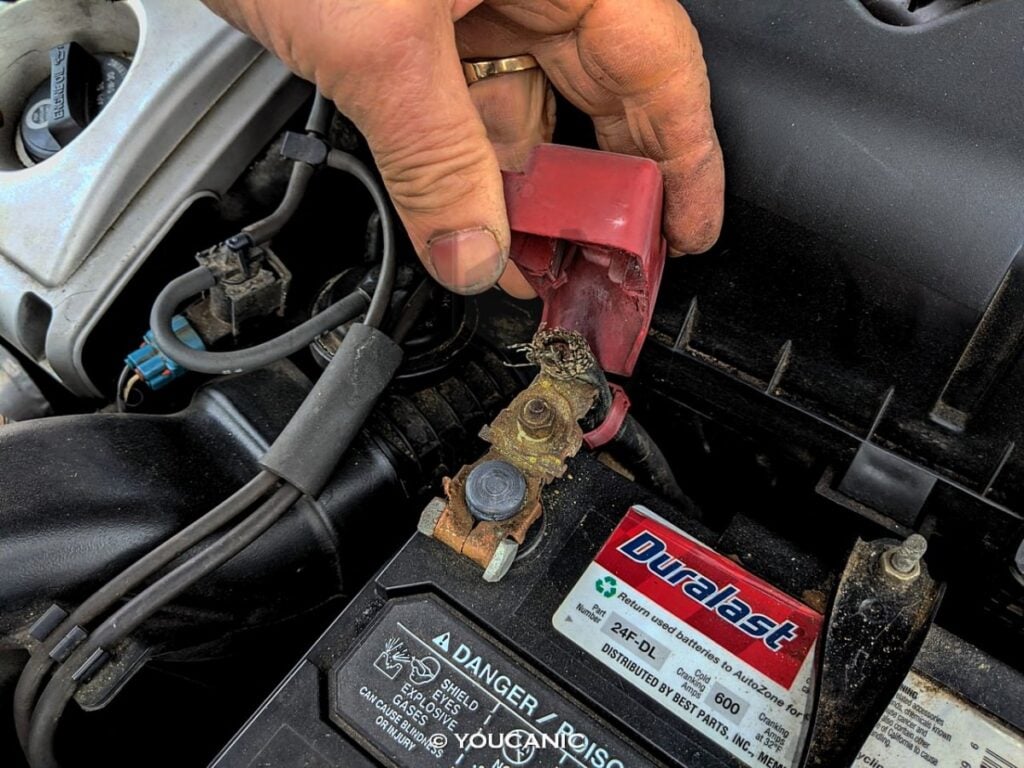
A weak battery may not be able to provide the necessary voltage and current to power the ABS’s various components, including the ABS module and wheel speed sensors. As a result, the ABS may not function correctly, leading to reduced braking performance, loss of vehicle stability, and higher risk of collision. This can trigger the ABS light to come on.
A weak battery may also trigger other warning lights in a Land Rover, such as the battery warning light, check engine light, or other electrical system warning lights.
Damaged Wires

Wires transmit signals and power between various ABS components, such as the ABS module and the wheel speed sensors. If any of these wires become damaged, it can prevent the proper flow of information and power, causing the ABS to malfunction and the ABS light to come on.
Several causes can damage the wires, such as debris from the road. Debris can damage and cut exposed wires under the vehicle. Another common reason for damaged wires is an animal chewing off the wires. Rodents and rabbits like to chew on wires, which could be the reason for the problem.
Blown Fuse

Fuses are designed to protect the electrical system by preventing electrical overload. If the current flowing through an electrical circuit exceeds the maximum level, the fuse will blow, cutting off power to the affected component, including the ABS. This will turn the ABS light ON. It is important to locate the problem to avoid blowing a new fuse.
Low Brake Fluid Level
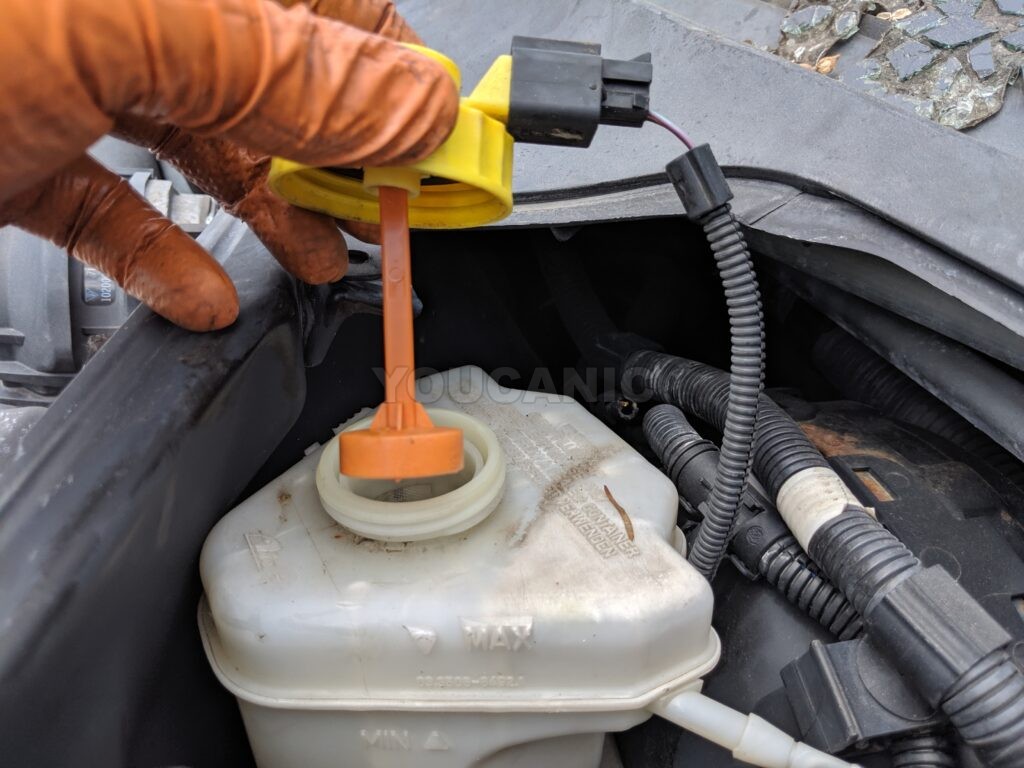
Brake fluid is important in the anti-lock braking system. It is regulated by the ABS pump to prevent the lockup of wheels during braking. When the brake fluid is low, there is not enough fluid to be pressurized, which may result in the ABS not engaging.
Brake fluid decreases due to the wearing out of brake pads over time or if there is a leak in the system. Knowing the cause of the problem is important to avoid brake failures while driving.
Frequently Asked Questions
Can you drive with the ABS light on?
You can still drive a Land Rover with the ABS light on, but it is not recommended. When the ABS light is illuminated, it indicates that the ABS is not functioning properly, which can compromise the vehicle’s ability to brake effectively in emergencies.
While the regular braking system will still function, the ABS may not engage in the event of a sudden stop or loss of traction, which can increase the risk of an accident. It is important to have the issue diagnosed and repaired as soon as possible to ensure the vehicle’s safe operation.
Can dirt cause ABS light to come on?
Yes, dirt can cause the ABS light to come on in a Land Rover. Dirt and other debris can accumulate on the ABS wheel speed sensors, which are responsible for providing information to the ABS module about the rotational speed of each wheel. If the sensors become dirty, it can affect their ability to accurately detect wheel speed, which can cause the ABS to malfunction and trigger the ABS warning light.
What can cause the ABS warning light to come on in your Range Rover Classic?
When the ABS warning light comes on in a Range Rover Classic, it can indicate several underlying issues. One of the most common causes is a faulty ABS sensor. These sensors are responsible for detecting the speed of each wheel and relaying that information to the ABS control module. If one or more of the sensors malfunction, it can cause the ABS warning light to come on. Sometimes, the issue may be resolved by cleaning or replacing the sensor.
How much does it cost to reset the ABS light in a Land Rover?
The cost of resetting the ABS light in a Land Rover can vary depending on several factors, such as the repair shop’s location, the type of diagnostic tool used, and the underlying cause of the warning light. In general, resetting the ABS light is a relatively quick and straightforward process that may cost between $20 to $300.
Common Land Rover ABS Fault Codes
Wheel Speed Sensor Issues:
- C0031, C0034, C0036, C0039 – Front or rear wheel speed sensor malfunction.
- C0040, C0041, C0045, C0046 – ABS sensor circuit failure (specific wheel).
- C003A, C003B, C003C, C003D – Signal inconsistencies between sensors.
ABS Pump & Module Issues:
- C0110 – ABS pump motor circuit failure.
- C1300 – ABS control module failure.
- C1110 – ABS hydraulic unit issue.
Communication & CAN Bus Errors:
- U0121 – Lost communication with ABS control module.
- U0415 – Invalid data received from ABS module.
- U3000 – Control module failure or software issue.
Brake & Traction Control System Issues:
- C1A20 – Pressure sensor failure.
- C1A55 – Brake fluid level low or sensor failure.
- C1A67 – Brake light switch issue affecting ABS.
- C1A75 – Brake pedal position sensor issue.
Specific Land Rover Models May Show:
- C1B00 – Steering angle sensor fault (affecting ABS & traction control).
- C1B01 – Yaw rate sensor failure.
- C1B02 – Lateral acceleration sensor failure.
- C1091 – ABS hydraulic pump motor circuit failure
- C1116 – ABS sensor circuit failure (front left)
- C1117 – ABS sensor circuit failure (front right)
- C1121 – ABS pump motor relay circuit failure
- C1130 – ABS failure
- C1175 – ABS pump motor internal failure
- C1194 – ABS valve fault (rear left)
- C1195 – ABS valve fault (rear right)
- C1233 – ABS control module malfunction
- C1288 – ABS brake fluid pressure sensor circuit failure.