5 Most Common Electrical Problems
The thought of your car having an electrical problem can feel overwhelming. You’re always hearing on the television how expensive car diagnostic and electrical repairs are.
Rest assured, it’s not as earth-shattering as the media wants you to believe. Quite honestly, common electrical repairs are simple to diagnose (even with a standard multimeter) and sometimes even simpler to repair. As the old adage goes, the hardest part is finding the problem; the easy part is fixing it.
I will organize this into sections, from what I believe is the simplest electrical fault to the ones you need to put more time into testing.
1. Bad/Weak/Dead Battery
Symptoms
- The lights don’t turn on.
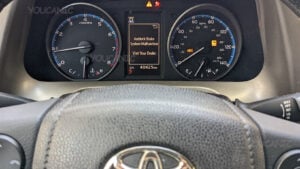
- The battery warning light comes on.
- Multiple warning lights come on.
- The engine turns over slowly.
This could be the simplest thing to check for. It is so simple that it is often overlooked at first. Especially if a person is convinced that their battery is in good condition. Even if your car started the day before, you always want to start your diagnosis with the battery.

🔧 Stop paying the dealer for every warning light
Get dealer level diagnostics at home with the YOUCANIC Full System Scanner.
- ✔ Works with all makes and models, including most luxury brands
- ✔ Topology map view shows all vehicle modules on one screen for faster diagnostics
- ✔ Bi directional controls to test fans, pumps, actuators and more so you do not have to guess
- ✔ Special resets and calibrations such as ABS bleed, EPB service, battery registration and more
- ✔ Free lifetime updates with no recurring fees
Leaving your lights or accessories on too long can drain the battery. Not only this, but some people don’t notice if their car happens to start cranking longer to get the car started, or if their crank from the starter is slower due to a bad battery. Because their vehicle ultimately started, they weren’t alarmed by those battery-related bad symptoms.
How to test a car battery

To test the battery, you want to follow these steps:
- Turn your multimeter to DC volts and check that the battery is in spec (12.6v-12.8v)
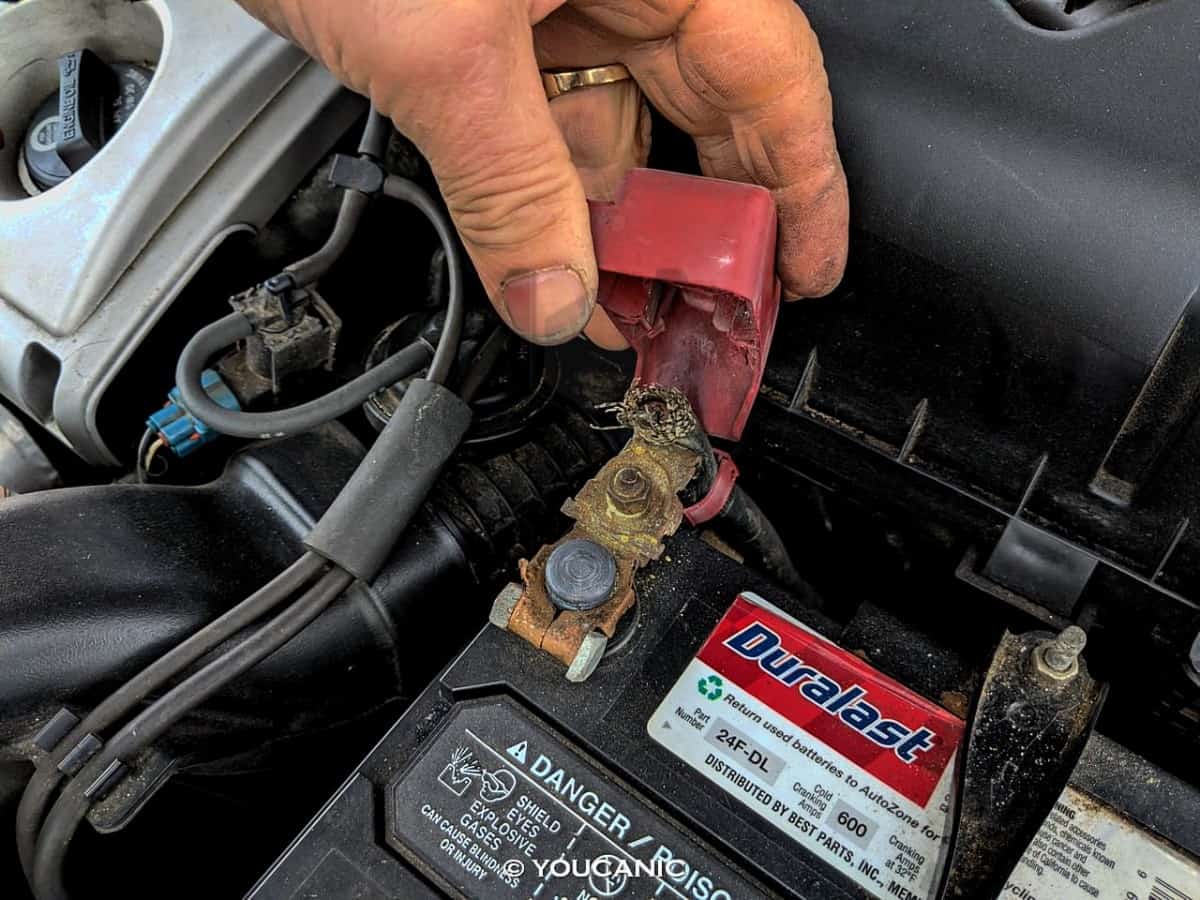
This spec can be a bit tricky. It is for a fully charged battery. If you were cranking your car beforehand, you might get a reading less than this. So, use your best judgment. If you are unsure, hook a battery charger up to your battery and get a full charge before you begin your diagnostics. - Confirm that your positive and negative battery connections are tight and not corroded onto your battery posts.
- Make sure you see no physical damage or leaking from the battery.
- Check the date on your battery. Batteries should be replaced every 5-7 years. Sometimes, just changing an old battery is just what you need.
- Once you’ve confirmed that the physical appearance of the battery checks out, you want to hook your multimeter up to the battery and confirm your reading is still in the 12.6-12.8v spec. Then, do the same thing with the car running. If you get a reading above 14v but below 15v, your battery gets a charge from the alternator. Lastly, you want to shut your car down and watch for a parasitic draw. As mentioned before, your resting car battery spec is 12.6-12.8v. When you shut your car down, your voltage should not drop below this.
It’s common to see your battery drop around the 12.4v range. You just don’t want your battery to get below 12v, especially if your voltage drops rapidly.
2. Bad Battery Cables

If you have ruled out the battery being at fault, the next step is to check to see that your battery cables don’t have excessive resistance.
- Put your multimeter in the DC volts setting, and check your reading across the positive and negative battery posts.
- Once you have that reading, take your positive lead from the positive post and move it to the connector of the positive battery post.
The spec for this test is .2 volts. You do not want your reading to drop less than .2 volts from your battery’s resting voltage. That doesn’t necessarily mean you have a bad cable if it does. If your terminals are corroded, clean them off with a battery cleaner and a wire brush and do the test again. If cleaning the terminals doesn’t change your reading, then you’ll have to move further with testing the cables. - You can perform the above test on both the positive and negative sides.
- Disconnect the positive battery cable from the battery terminal and the starter.
Ensure your negative cable is disconnected from the battery so you don’t arc the starter when removing the positive cable. - Turn your multimeter from DC volts to Ohms. Stick one lead on one end of the removed cable and one end at the other. (You should use alligator clips so you have your hands free.) You should read no more than .6 ohms. If you’re spec, try wiggling the cable with your meter still hooked up to it and see if your reading changes drastically. Your reading should not fluctuate much. If it does jump excessively, the cable needs to be replaced.
You can do this test on both the positive and negative cables. Note: The negative cable is usually connected to the car’s frame. So, don’t look for the end of the negative battery cable at the starter.
3. Blown Fuses

When diagnosing an electrical problem, your fuses are one of the first things you should check. You shouldn’t just check the fuse with the multimeter during your test. You should always pull and inspect the fuse itself. A fuse can still make contact, even when broken, if the fuse isn’t blown. This causes intermittent electrical issues.
The following steps are what you should take when testing a fuse:
- Pull the fuse panel cover off the fuse panel and confirm the fuse you need in the circuit you’re testing.
If your car didn’t start, you would check the fuses associated with the starting circuit. - Take your multimeter and check for battery voltage at the fuse.
- Pull the fuse out with needle-nose pliers (whether you have voltage or not) and inspect the contacts. Make sure they are not loose or burnt.
- Inspect the contact within the plastic piece of the fuse for a burnt or broken connection.
- Also, ensure that the amp reading matches the OEM-recommended value in your service or operator’s manual.
4. Spark Plug

Spark plugs are a crucial maintenance item that you must look at just as closely as other high-priority maintenance items. (I.e., air filter, oil change intervals)
Without properly maintained spark plugs, you can experience symptoms common to many automotive electrical issues. So, it is important to keep up on your maintenance to rule out the spark plug as the cause, as it is faster.
However, if you suspect your spark plugs may be the culprit, the following steps will help you cover all the bases.
- Ensure all your spark plug wires are intact and secure on your plugs and distributor cap.
- Pull the wires off (one at a time, so you don’t confuse which spark plug they correspond with), remove the spark plug, and confirm the electrode is intact and doesn’t have excessive carbon build-up.
- Obtain a spark plug gap measurement tool and confirm that your spark plug gap meets OEM standards.
- Next, grab your multimeter, set it to the ohm reading setting, and connect one test lead to one end of the plug and the other to the top of the exposed electrode.
The electrode runs within the sparkplug from the end; you can see it when you remove it from the end and insert it into the spark plug wire. - A normal reading for an automotive spark plug is between 500 and 3000 ohms. As the sparkplug ages, the ohm reading may decrease. This is normal. However, the sparkplug must be replaced if your reading exceeds 5000 or O.L. on your meter.
5. Alternator
Symptoms
When your alternator is starting to go bad, you can notice:
- Dimming lights
- Your battery light on the dashboard is constantly on
- Difficulty starting or frequent stalling
- Your battery continues draining after only being turned off for a few hours.
- Headlights are dim or flickering.
- Random electrical failures.
- The car stalls or has difficulty starting.
- The battery dies while driving.
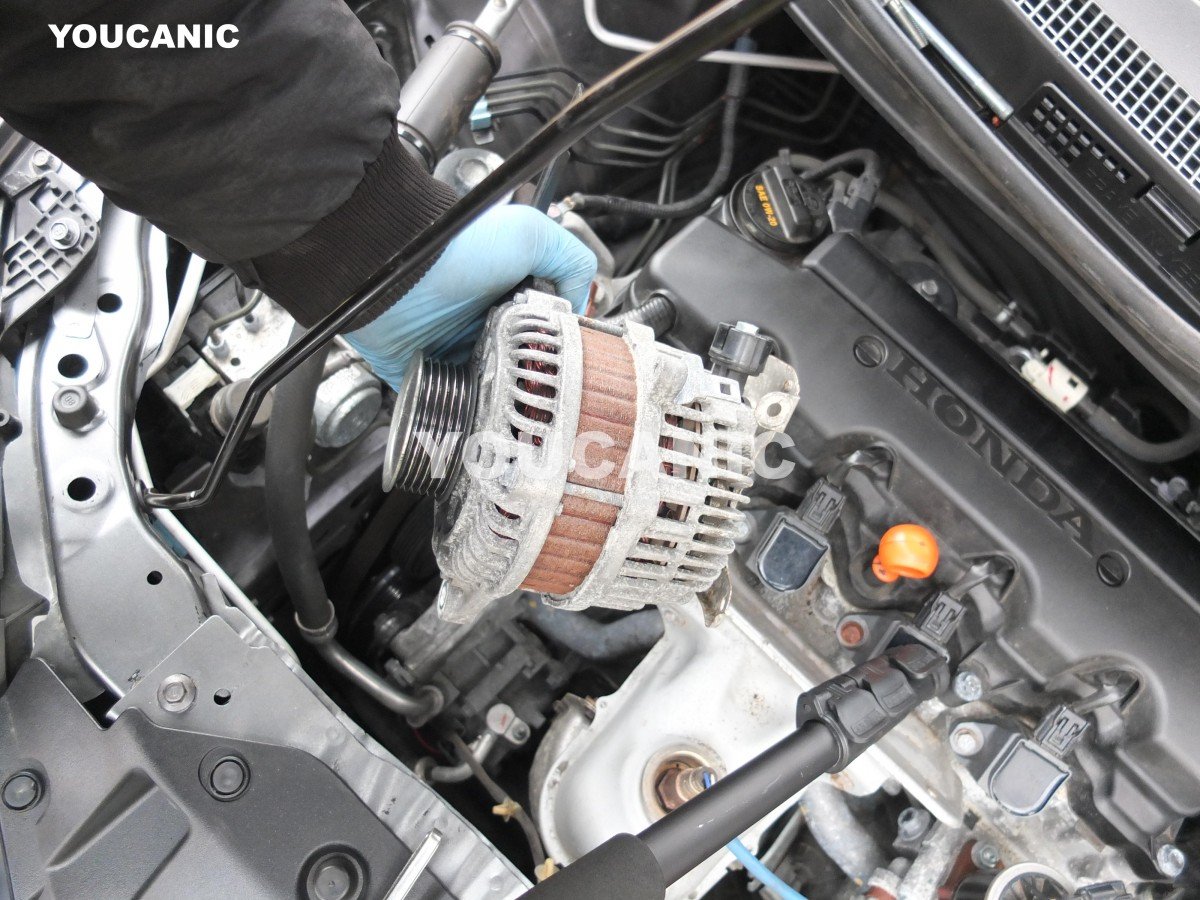
A failing alternator has many symptoms. Thankfully, they are often obvious. These symptoms are easy to trace if you are new to being a mechanic. The job of your alternator is to recharge your battery. When you start your car, the cranking amps from your battery must be replenished.
The alternator test is similar to the bad battery test.
- Hook your multimeter up to the positive and negative posts of the battery.
- Confirm that your resting battery voltage is between 12.0V and 12.8V
- Then, start your car and do the same test. At this time, you should be reading about 14V. This shows that the alternator is charging your battery. If you’re not getting a similar reading and your battery has excessive draw once the car is shut down, then you know the alternator is no good.
Ensure that your drive belt is in good order; if it is missing ribs or stretched out, your alternator will not perform as it should.
All these tests are performed with a multimeter because multimeters can be relatively inexpensive and perform multiple functions. However, there are tools out there that will test your battery, starting system, and charging system all in one.
These tools are nice, but not always accurate. To get the most accurate results, it’s better to know how to perform all these tests with a multimeter.
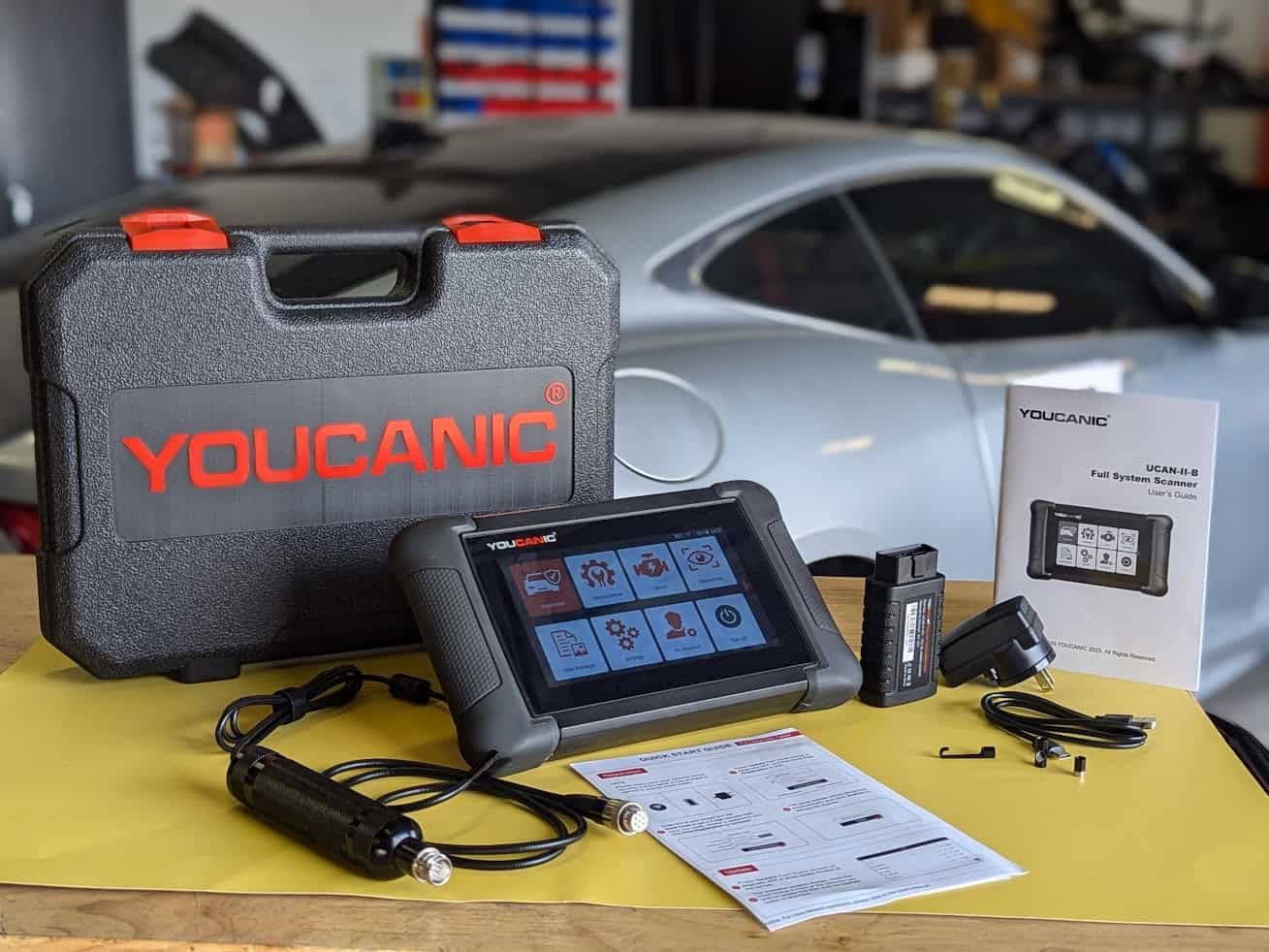
If you still have problems after checking the battery, cables, and alternator, the next step is to read fault codes from the vehicle. Use an all-system OBD-II scanner to read fault codes from the various modules. Most scanners can run a full system scan and show all the present codes. The fault codes will often point you in the right direction.
The YOUCANIC Full System Scanner is a perfect example of an OBD-II scanner for troubleshooting your vehicle. This powerful device can read and clear fault codes from all the systems, perform bidirectional tests, perform maintenance and repair resets, and perform many more professional-grade functions that can help you determine the cause of your vehicle’s problem.
We hope you find the 5 Most Common Electrical Problems guide helpful. Check these troubleshooting and repair guides for more help on your vehicle.