Chevy Colorado 3.6L (2015–2022) AC Not Blowing Cold – Diagnosed & Fixed
Contributed by:
Customer Complaint
The customer brought the vehicle in, concerned that the air conditioning wasn’t cooling. We verified the concern and found the vent temperature reading 80⁰ with the AC on, set to vent position, and the fan on high.

Initial Inspection
We began by visually inspecting the AC clutch for operation and found the clutch would not engage even when the A/C was set on MAX at the lowest temperature setting and blower fan on high.

System Pressure Check
To determine whether the system was low on refrigerant, we checked the AC system’s static charge using the AC service machine and manifold gauge set. Always check both low and high side to get a good understanding of the charge of the A/C system. The static pressure was around 90 psi on both the high and low sides, with ambient air temperature at 82⁰—indicating the system was fully charged.

🔧 Stop paying the dealer for every warning light
Get dealer level diagnostics at home with the YOUCANIC Full System Scanner.
- ✔ Works with all makes and models, including most luxury brands
- ✔ Topology map view shows all vehicle modules on one screen for faster diagnostics
- ✔ Bi directional controls to test fans, pumps, actuators and more so you do not have to guess
- ✔ Special resets and calibrations such as ABS bleed, EPB service, battery registration and more
- ✔ Free lifetime updates with no recurring fees

Diagnostic Scan and Electrical Signal Check
Next, we grabbed our OBD-II scan tool and performed a code scan. No related codes were found in the A/C control unit. We then monitored the data parameter in the PCM for the AC request signal. We observed that the parameter changed from “yes” to “no” when pressing the AC button, confirming that the PCM received the request from the HVAC control unit.

Fuse and Relay Testing
Moving forward, we checked fuse F3 (AC clutch, 10 amp) in the underhood fuse block for power with the AC switched on. It tested okay at 12 volts. To further confirm circuit integrity, we inspected the AC clutch relay (K1) operation in the same fuse block.
With the AC switch on, we removed and reinstalled the relay while feeling for a click. The relay clicked on installation, indicating good power and ground to the relay’s coil side.
Clutch Connector and Power Verification
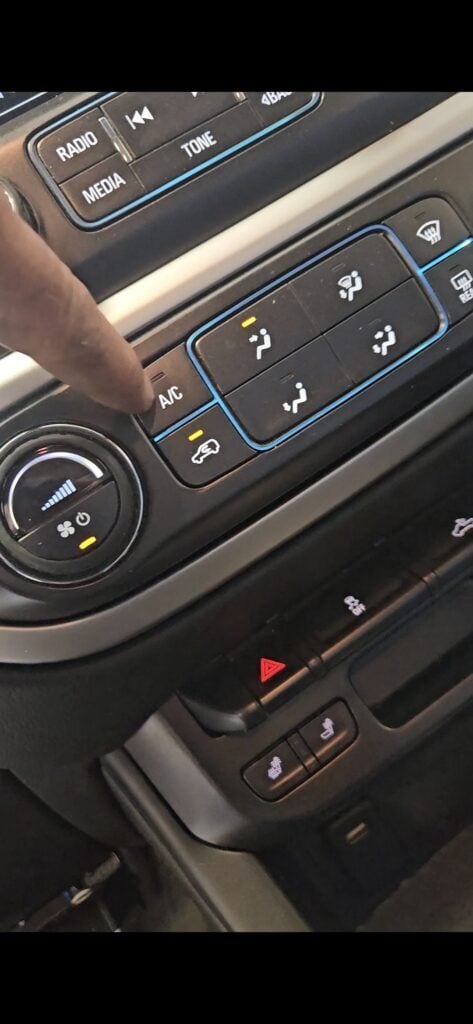
We then gained access to the AC compressor and inspected the clutch connection. It was plugged in and securely in place. After unplugging the connector at the AC compressor clutch, we examined the terminals for bent pins, corrosion, or damage—no issues were found.
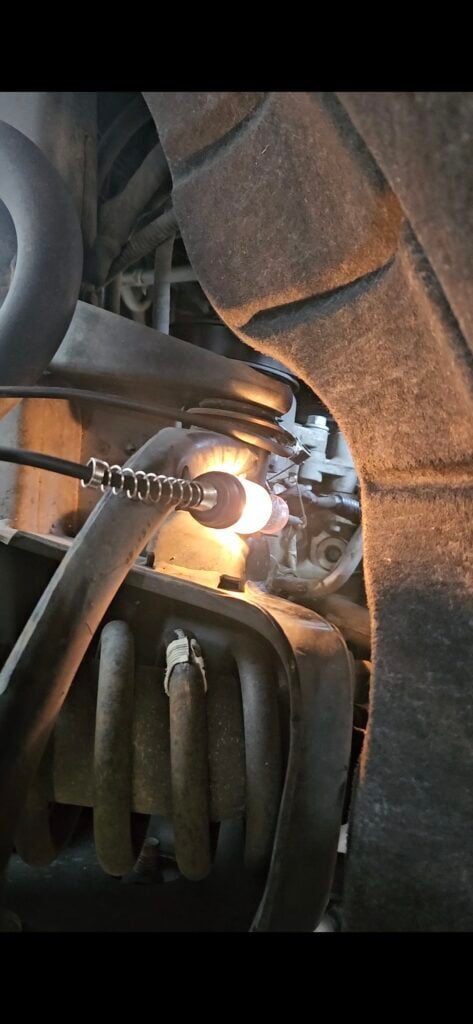
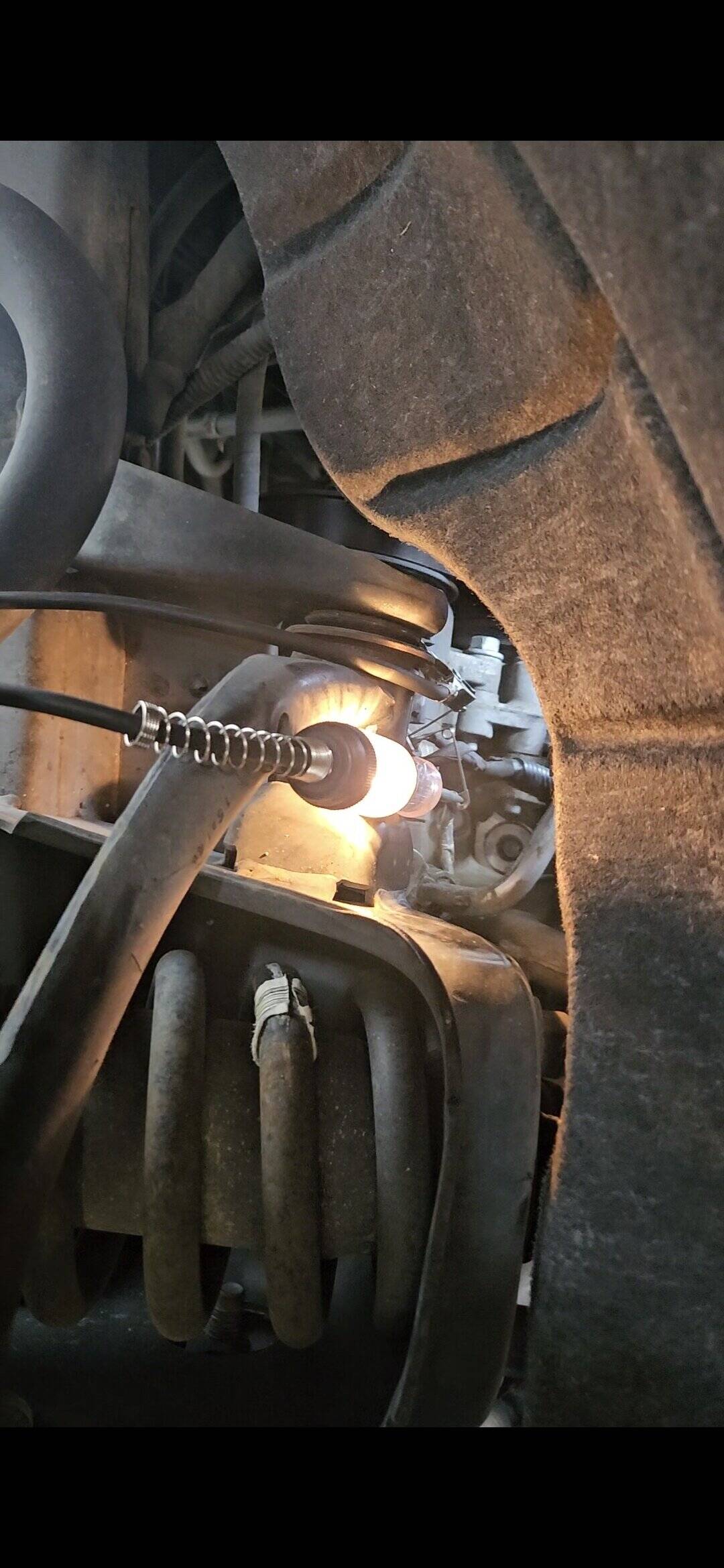
To test the power and ground at the compressor clutch, we back-probed the connector and installed a test lamp. With the AC switch turned on, the test lamp lit up, confirming good power and ground at the clutch.
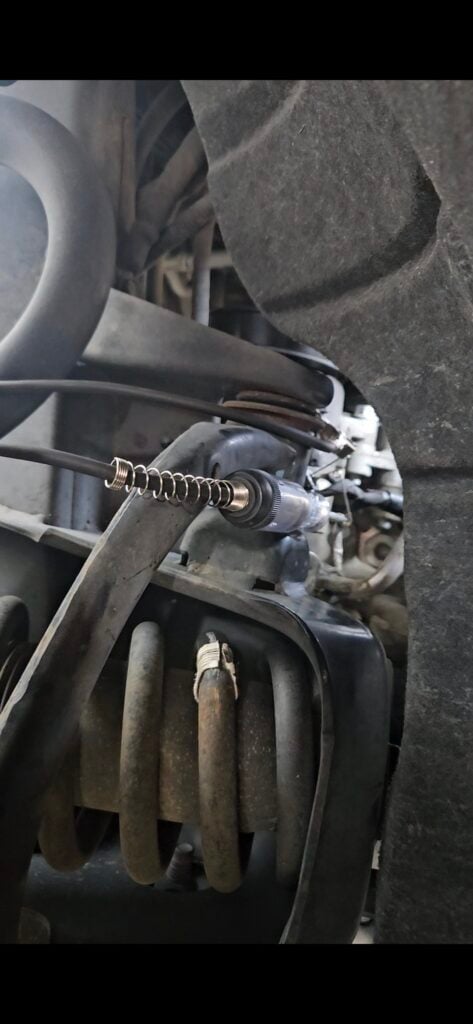
Turning the AC switch off extinguished the lamp, indicating the circuit from the HVAC control head to the PCM and then to the compressor was functioning correctly, with no short or open.
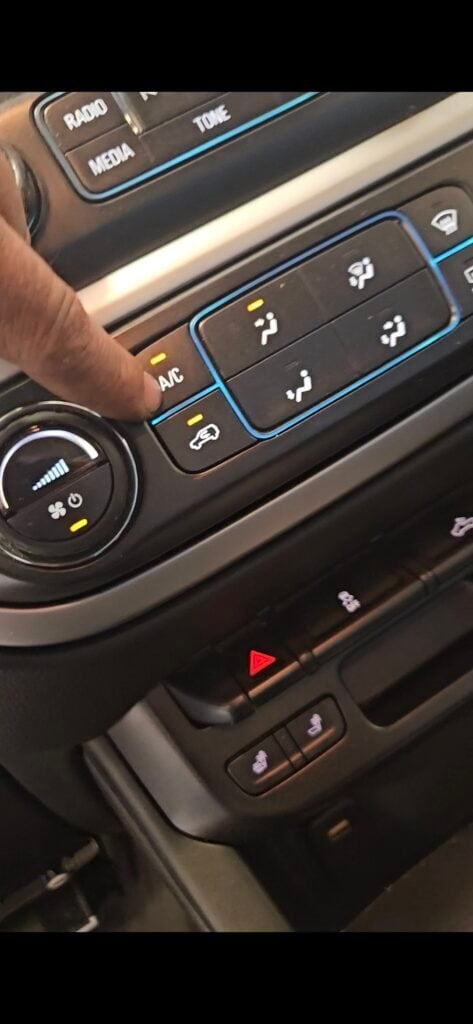
Final Electrical Test – Clutch Coil
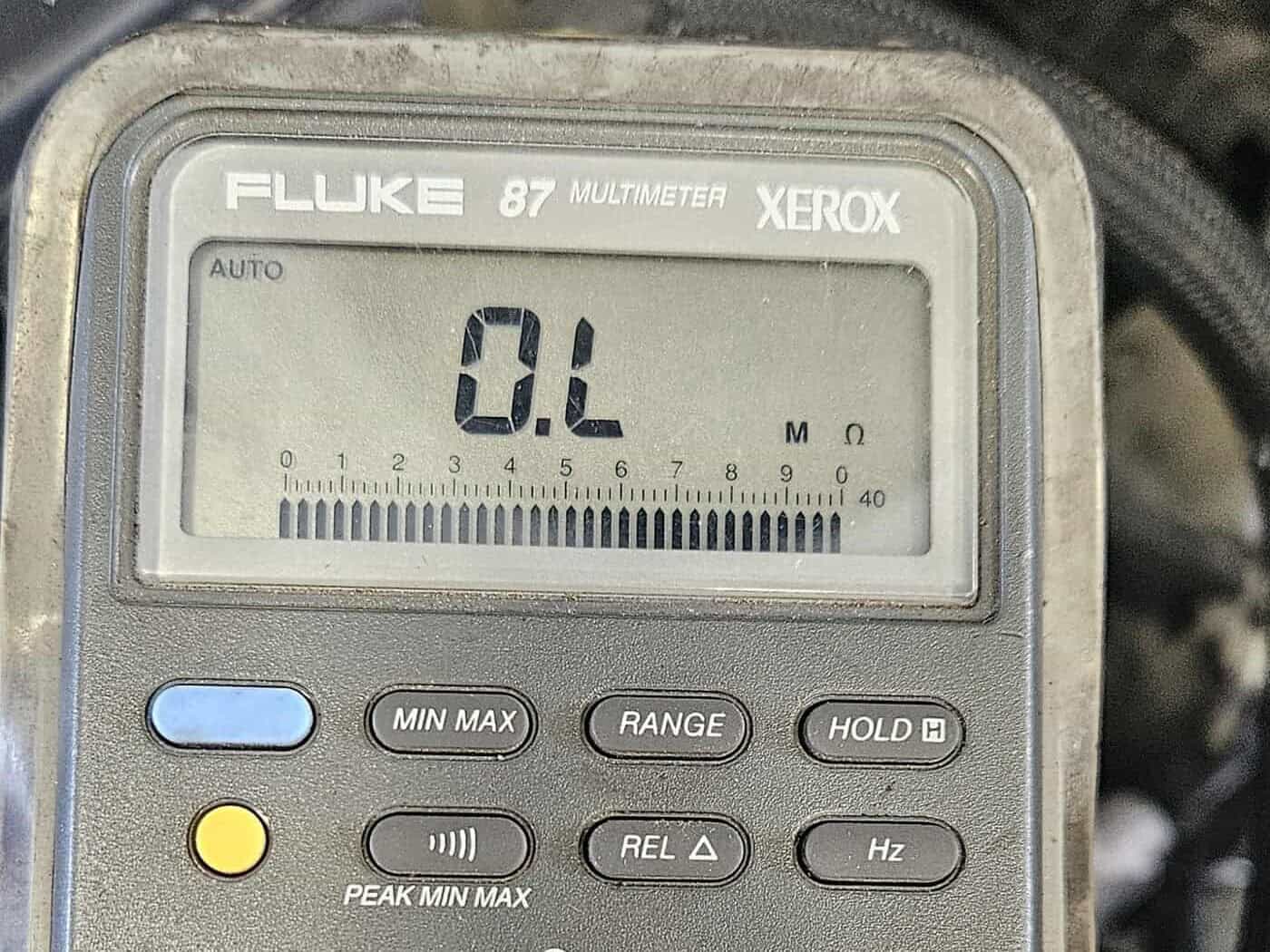
For final verification, we used a DVOM across the terminals of the AC compressor clutch and checked for continuity across the clutch coil. A DVOM across test uses a Digital Volt-Ohm Meter (DVOM) to measure resistance (ohms) across the terminals. The DVOM showed an OL (out of limit) reading, indicating an open circuit inside the compressor clutch.
Diagnosis
At this point, the diagnosis was confirmed as a faulty A/C clutch. The continity test verified that the AC compressor clutch was inoperative due to an internal open circuit.
Repair Performed
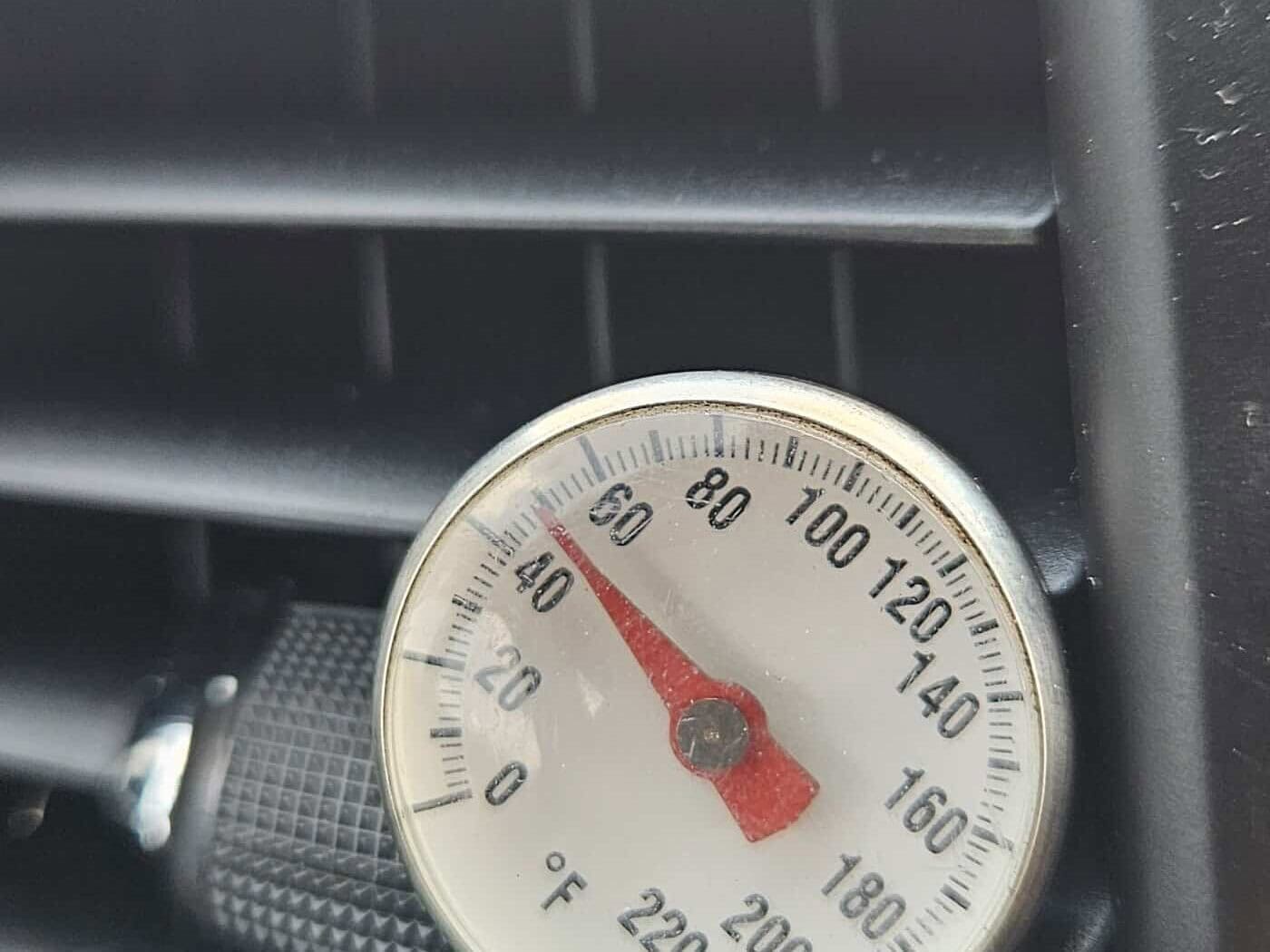
We proceeded with replacing the AC compressor and clutch assembly, recharged the system to the proper level, and performed a final test. After the repair, the vent temperature dropped to 42⁰—confirming the AC system was now operating properly.
- Verify Customer Concern
- Confirmed AC not cooling properly.
- Vent temperature measured at 80⁰F with AC set to vent mode and fan on high.
- Visually Inspect AC Compressor Clutch Operation
- Observed that the AC clutch did not engage when the AC system was turned on.
- Check AC System Static Pressure
- Found static pressure at 85 psi, with both high and low sides at 82⁰F ambient temperature, indicating a likely full charge.
- Connected AC service machine and manifold gauge set.
- Scan for Diagnostic Trouble Codes (DTCs)
- Installed scan tool and scanned all modules.
- No related AC codes were found.
- Monitor AC Request Signal at the PCM
- Observed data stream in PCM.
- The AC request parameter toggled between YES and NO as the AC button was pressed, indicating proper signal from the HVAC control module.
- Check AC Clutch Fuse (F3 – 10A)
- Located Fuse F3 in the underhood fuse box.
- Verified 12 volts present with AC turned on. Fuse is OK.
- Test AC Clutch Relay (K1)
- With AC on, removed and reinstalled Relay K1 while feeling for a click.
- Relay clicked, indicating good power and ground to the relay coil.
- Inspect AC Compressor Clutch Connector
- Gained access to AC compressor.
- Connector was secure, with no bent pins, corrosion, or damage found.
- Back-Probe Clutch Connector and Check Power/Ground
- Installed test lamp to clutch connector.
- AC switch ON: lamp illuminated, indicating proper power and ground.
- AC switch OFF: lamp extinguished, confirming control circuit is functioning properly.
- Test Clutch Coil Continuity
- Measured resistance across clutch coil terminals using DVOM.
- Found OL (open loop) reading, indicating open circuit in clutch coil.
- Diagnosis
- Determined AC compressor clutch is inoperative due to an internal open circuit in the clutch coil.
- Repair Performed
- Replaced the AC compressor and clutch assembly.
- Recharged the AC system to correct the refrigerant level.
- Post-Repair Verification
- Re-tested the system.
- Vent temperature dropped to 42⁰F, confirming successful repair and restored AC function.
Troubleshooting Videos